[stock-market-ticker symbols=" ^NYA;CRYPTO:BTC;CRYPTO:ETH;CRYPTO:USDT;CRYPTO:USDC;CRYPTO:BNB;CRYPTO:ADA;CRYPTO:XRP;CRYPTO:SOL;CRYPTO:DOGE " stockExchange="NYSENASDAQ" width="100%" transparentbackground=1 palette="financial-light"]

Home Blog Page 19

Crypto Market 2026: Bitcoin, Ethereum & DeFi Trends 

0

In this episode, FinTech TV welcomes back longtime guest Joseph Chalom, CEO of SharpLink Gaming, for an in-depth discussion on the current state of the crypto market and the long-term outlook for digital assets. With Bitcoin hovering around the $70,000 level after significant volatility and a major deleveraging event that began in October, Shalom explains how excessive leverage in perpetual futures markets triggered a sharp pullback across the industry. While prices remain below previous highs, he notes that such cycles are common in crypto markets and believes liquidity could return within the next few quarters as the market stabilizes.

The conversation also explores the broader macro trends shaping the future of crypto and blockchain. Shalom highlights three key forces: the rapid adoption of stablecoins, the accelerating tokenization of real-world assets like stocks and bonds, and the migration of traditional finance onto decentralized infrastructure. At the center of these developments is Ethereum, which currently holds a dominant share of activity across stablecoins, tokenized assets, and decentralized finance. With roughly 60% of these markets running on its network, Ethereum is increasingly positioned as the foundational settlement layer for the next generation of financial rails.

Chalom also discusses SharpLink’s strategy to deploy $200 million into decentralized finance, leveraging Ethereum’s staking capabilities and exploring long-term opportunities in DeFi protocols. By working with Anchorage Digital as a qualified custodian, the firm is pioneering a model that keeps DeFi activity within regulated custody frameworks—an approach rarely seen at institutional scale. The interview concludes with insights on evolving crypto regulation, including the potential impact of the GENIUS Act and the proposed CLARITY Act, which could pave the way for banks to hold digital assets and stablecoins directly on their balance sheets as global jurisdictions race to modernize financial infrastructure. 

Inside Unit: The Fintech Powering Banking for SaaS Companies

0

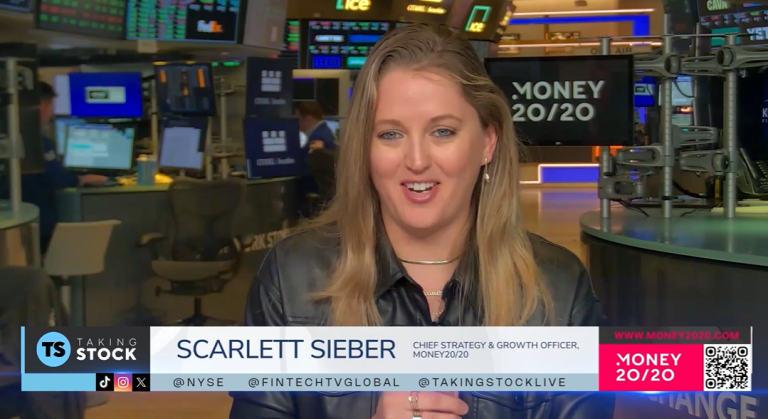
In this episode of How FinTech Companies Actually Make Money, Scarlett Sieber from Money20/20 breaks down the business model behind Unit, a platform that enables software companies to embed financial services directly into their products. Often described as a banking-as-a-service (BaaS) infrastructure layer, Unit allows SaaS platforms, marketplaces, and logistics companies to offer accounts, cards, payments, and lending without managing the heavy regulatory and compliance burden themselves. By partnering with sponsored banks, Unit abstracts complex financial regulations and provides the compliance-first infrastructure that lets companies focus on building their core products rather than navigating financial rules and oversight.

Unit generates revenue through several key channels. The platform charges subscription and platform fees for access to its financial infrastructure, including ledgering systems, compliance tooling, dashboards, and operational workflows. It also earns usage-based transaction fees across services such as ACH transfers, wires, instant payments, card transactions, and deposits. Additional revenue comes from interchange sharing on card spending, lending partnerships when embedded credit products are offered, and compliance-related services like KYC and KYB checks, risk automation, and ongoing monitoring. As embedded finance continues to expand, Unit has become a go-to platform for companies looking to transform financial workflows into scalable revenue streams while maintaining strong compliance standards.

Dogecoin zoom, Crypto winter, Stablecoin payments, Circle rally? 

0

In today’s Crypto Daily Download, we break down the biggest headlines shaping the digital asset space. Elon Musksparked market speculation after announcing an April launch date for the new payments platform X Money, sending Dogecoin briefly soaring as much as 8% on hopes of future crypto integration. While the platform is currently described as a fiat-focused payments product similar to Venmo, it will offer peer-to-peer transfers within X (Twitter) and a 6% yield on balances, putting it in direct competition with emerging digital payment and stablecoin services. Meanwhile, BitMine Immersion Technologies made its largest weekly purchase of Ethereum this year, acquiring nearly 61,000 ETH—valued at around $120 million—bringing the company’s total Ethereum treasury to roughly $9.14 billion.

Elsewhere in the crypto ecosystem, stablecoin payments firm Cast has raised $80 million in a new funding round as venture capital continues to flow into companies building digital dollar infrastructure. The new capital will support global expansion across North America, Latin America, and the Middle East, while also funding hiring, licensing, and product development. Analysts at Bernstein also see strong upside for Circle, suggesting the company’s valuation could climb as stablecoin adoption grows—especially as digital dollars begin powering new areas like AI-driven financial services. Increasingly, analysts say stablecoins are evolving beyond traditional crypto trading to become a core part of the global digital payments ecosystem.

The evolving landscape of prediction markets, institutionalization of crypto and the impact of regulatory developments

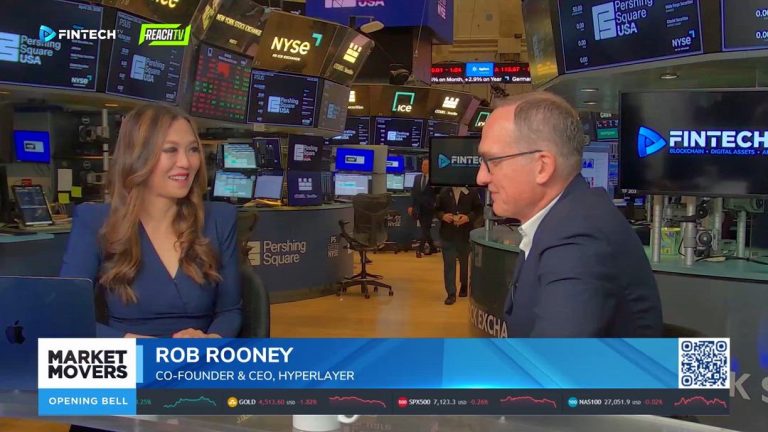
Rob Hadick, a General Partner at Dragonfly, joins Remy Blaire to share valuable insights on the evolving landscape of prediction markets, the institutionalization of crypto, and the impact of regulatory developments. We dive into the current state of the digital asset market, particularly focusing on Bitcoin’s recent rebound and the broader implications for the industry.

Rob highlights the growing significance of prediction markets, noting that platforms like PolyMarket are achieving record highs in interest and volume. He emphasizes how these markets are becoming essential sources of truth across various asset classes, including equities and even weather events.

We also discuss the dual nature of the crypto market today: the institutional side, which is seeing significant advancements in tokenization and real-world assets (RWAs), and the more speculative long tail of crypto assets. Rob points out that regulatory clarity, particularly with the potential passage of the Clarity Act, could greatly enhance the trading environment for alt tokens.

As we explore the future of finance, Rob shares Dragonfly’s focus on stablecoins, decentralized finance, and the intersection of AI and blockchain technology. He mentions exciting developments in stablecoin settlements and the potential for AI to revolutionize how we interact with financial systems.

Looking ahead, Rob anticipates a restructuring of traditional financial rails through tokenization and stablecoins, leading to lower costs and greater access to diverse assets for consumers.

Actuarial Warfare: How Insurance is Halting Oil Tankers in the Persian Gulf

Chris Whalen, Chairman of Whalen Global Advisors, joins Remy Blaire to shed light on the concept of “actuarial warfare,” explaining how the insurance industry’s refusal to cover oil tankers is halting traffic in the Persian Gulf and driving prices up. We dive into the ongoing Middle East conflict, now in its twelfth day, and its significant impact on global oil prices. With the International Energy Agency proposing the largest release of oil reserves in history to combat soaring crude prices, we discuss the implications of the near-total closure of the Strait of Hormuz.

We also explore the ramifications of rising oil prices on the Federal Reserve and global central banks, particularly regarding interest rates and borrowing costs for Americans. Chris emphasizes that military conflicts often complicate central banks’ ability to manage inflation, suggesting that we may see higher gas prices as we approach the summer and midterm elections.

Shifting gears, we discuss the commodities market, particularly gold and silver. Chris argues that gold is becoming an essential hedge for central banks against the dollar, while silver is experiencing a surge in demand, especially in Asian markets. He shares his bullish outlook on both precious metals and explains his recent investment strategies.

Finally, we touch on the private lending sector and the potential risks associated with private credit. Chris expresses concern about the lack of liquidity for retail investors in this space but reassures us that while there may be significant losses, the major banks are not likely to be affected.

Navigating Market Volatility: Insights on Stagflation and Fixed Income Opportunities

Jason Bloom, Head of Fixed Income ETF strategy at Invesco, joins Remy Blaire to provide valuable insights into the concerns surrounding stagflation. We dive into the current volatility in the markets, particularly focusing on U.S. Treasury yields and the implications of rising oil prices. Jason argues that the term is being used too loosely, as current economic indicators—such as a GDP growth rate exceeding 5% and low unemployment at around 4.4%—do not align with the traditional definition of stagflation.

We also discuss the latest Consumer Price Index (CPI) data, which, while higher than expected, is still the slowest annual print we’ve seen in some time. Jason emphasizes that the Federal Reserve tends to focus on medium to long-term trends rather than reacting to single data points, which adds to the uncertainty regarding future rate cuts or hikes.

For investors looking to hedge against inflation and geopolitical risks, Jason highlights the potential of Treasury Inflation-Protected Securities (TIPS) and short-duration bonds. He believes that these instruments, particularly zero to five-year TIPS, offer a good risk-reward profile in the current environment.

Finally, we explore the opportunities in fixed income, with Jason advocating for short to intermediate duration products. He notes that despite the higher inflation regime, credit spreads remain historically tight, indicating that corporate balance sheets are in good shape. This presents a unique opportunity for active managers to navigate the market effectively.

Understanding the Impact of Geopolitics on U.S. Markets with Jonathan Corpina

Jonathan Corpina, Senior Managing Partner at Meridian Equity Partners, joins Remy Blaire to discuss the current state of the U.S. stock market, which is experiencing a downturn following the latest Consumer Price Index (CPI) figures and ongoing tensions in the Iranian conflict.

Jonathan emphasizes that the situation in Iran is dominating market sentiment, overshadowing other important economic data and corporate earnings. He notes that while the conflict is a significant concern, the fundamentals of the economy remain strong, and we should not lose sight of them. He believes that oil prices will eventually stabilize once the situation de-escalates, allowing us to refocus on interest rates, consumer spending, and overall economic health.

We also touch on sector performance, highlighting that energy stocks are currently outperforming, while financials are under pressure due to exposure to private credit. Jonathan cautions that while we may be seeing isolated incidents in the financial sector, there could be broader implications if volatility continues.

Stablecoin payments company KAST Raises $80 Million at $600 Million Valuation

0

KAST, a Singapore-based financial platform built on stablecoin rails, has secured $80 million in Series A funding, valuing the company at $600 million just 18 months after launch, Bloomberg has reported. 

The round was co-led by QED Investors and Left Lane Capital, with returning investors Peak XV Partners, HSG and DST Global Partners also participating. The raise is one of the largest early-stage rounds in stablecoin payments to date, and arrives as institutional appetite for digital-dollar infrastructure reaches a new high.

KAST was founded by Raagulan Pathy, a former Circle executive, and is positioning itself as a neobank built for a globally mobile, digitally native user base that demands faster and more flexible financial tools than traditional banking can offer. The platform already serves more than one million users and processes nearly $5 billion in annualized transaction volume.

Both revenue and user numbers are expanding at roughly 15 to 20 percent month-on-month, with revenue doubling since the end of September 2025. The company expects to hit a $100 million annual revenue run rate by year-end.

The fundraise lands against a backdrop of surging stablecoin adoption. According to Artemis Analytics, global stablecoin transaction volume climbed 72% last year to more than $33 trillion — surpassing the combined on-chain settlement volumes of major global card networks, a threshold investors are increasingly reading as a structural shift rather than a cyclical one.

Pathy said the fresh capital will fund expansion across North America, Latin America and the Middle East, alongside licensing, compliance and headcount growth. KAST has already hired more than 250 employees, with talent from Stripe, Revolut, Binance, Circle and Airwallex. 

Circle Has Already Doubled This Year. Bernstein Thinks It’s Just Getting Started.

0

Circle Internet Financial has had a remarkable 2026 – and Wall Street’s most bullish analyst on the USDC issuer is not done yet. Bernstein reiterated its “Outperform” rating on Circle’s shares this week with a price target of $190, implying roughly 60% additional upside from the stock’s current level near $120. 

Since bottoming near $50 a share in early February, Circle’s stock has more than doubled, closing Tuesday at $118.17 and giving the company a market capitalization of approximately $30 billion. Circle shares are now up about 49% year to date, outperforming a flat S&P 500 and a roughly 1% decline in the Nasdaq 100 over the same period.

The thesis from Bernstein analysts, led by Gautam Chhugani, rests on a structural argument: stablecoins are no longer a creature of the crypto market cycle, and Circle is best positioned to benefit from what comes next. USDC supply has rebounded to just shy of a record $78 billion even as bitcoin and the broader crypto market remain well below their highs, while the total market for US dollar-backed stablecoins has held steady at around $270 billion throughout the crypto bear market. Adjusted stablecoin transaction volumes, the analysts noted, grew more than 90% year-over-year, with rising transaction velocity suggesting the tokens are increasingly used for real economic activity rather than crypto speculation.

Payments are the engine of that growth. Visa now supports more than 130 stablecoin-linked cards across 50 countries, processing roughly $4.6 billion in annualised settlement volume. Circle’s own payments network — which allows institutions to send USDC across borders and convert it into local currencies through banking partners — now covers corridors spanning the EU, Singapore, India, the Philippines, and the United States, with approximately 55 enrolled institutions and annualised volumes of $5.7 billion as of February 2026.

The longer-term growth driver that Bernstein finds most compelling is less familiar: AI-powered agentic finance. As autonomous software agents increasingly transact online, stablecoins could serve as the natural payment rail for machine-to-machine micropayments, covering everything from API calls to automated digital services. 

To capture that opportunity, Circle is building Arc, a high-throughput blockchain designed for fast, low-cost transactions at scale. The timeline for commercialization remains undefined, but Bernstein views it as a credible long-term catalyst that the market has not yet fully priced in.

The regulatory backdrop has also shifted in Circle’s favour. The GENIUS Act, which passed in 2025, established a federal framework for stablecoins, setting standards for reserve backing, disclosures, and oversight — removing a layer of legal uncertainty that had historically weighed on the sector. 

Bernstein analysts described Circle as “a long-term category winner,” citing its regulatory positioning, exchange partnerships, and expanding global payments infrastructure.

With stablecoins increasingly embedded in mainstream financial infrastructure and a macro environment that may yet turn more favourable, the argument that Circle’s rally has further to run is one that more than a few institutional investors appear willing to entertain.

Dogecoin Jumps 8% on X Money Hype –But Crypto Isn’t in the Product

0

Elon Musk confirmed on Tuesday that X Money, the payments platform embedded in his social media app X, will enter early public access in April – and Dogecoin responded immediately, surging more than 8% on speculation that the launch could pave the way for crypto integration. The enthusiasm, as CoinDesk reports, is running well ahead of the facts.

X Money, as currently described, is a fiat-only product offering peer-to-peer transfers, bank deposits, a Visa-backed debit card with cashback rewards, and a yield on cash balances. So far, it is closer in design to Venmo than a crypto wallet. X’s head of product, Nikita Bier, stated in February that cryptocurrency tools would arrive via Smart Cashtags, but clarified that the platform would not execute trades or act as a brokerage, only redirecting users to exchanges. Musk’s own contribution to the crypto speculation amounts to a reposted third-party forecast. The company has confirmed nothing.

Beta testing has been championed by actor William Shatner, personally invited by Musk, who has been demonstrating the app’s early capabilities – including buying coffee at Dunkin’ – and auctioning off beta access for charity.

The feature attracting the most serious fintech scrutiny is not the payments rail but the yield. A proposed 6% annual return on balances held inside a social media app is higher than virtually any US savings account, and arrives just as Congress debates the CLARITY Act on yield-bearing products, raising pointed questions about whether non-banks should be permitted to offer deposit-like returns.

For Dogecoin traders, the calculus is riskier still. Much of DOGE’s price narrative revolves around Musk; if X Money launches as a straightforward fiat app, the hype premium could unwind as quickly as it was built. The meme coin’s 8% single-day rally, driven by speculation rather than product confirmation, underlines how exposed retail positioning remains to a simple absence of news.