[stock-market-ticker symbols=" ^NYA;CRYPTO:BTC;CRYPTO:ETH;CRYPTO:USDT;CRYPTO:USDC;CRYPTO:BNB;CRYPTO:ADA;CRYPTO:XRP;CRYPTO:SOL;CRYPTO:DOGE " stockExchange="NYSENASDAQ" width="100%" transparentbackground=1 palette="financial-light"]

Home Blog Page 9

FINTECH.TV Partners with Canadian University Dubai to Launch New Studio for Middle East Coverage

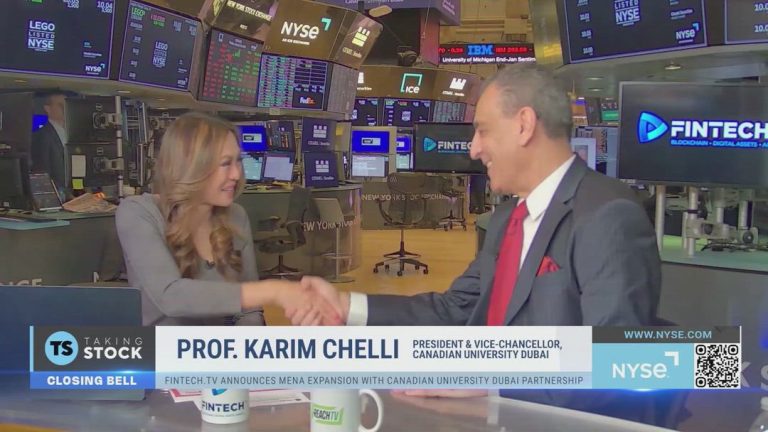
FINTECH.TV announced a new partnership with Canadian University Dubai, reinforcing the network’s rapid expansion across the Middle East and its strategy of embedding real-world financial media operations directly in academic environments. The collaboration was formally launched during a signing ceremony at the New York Stock Exchange, home to FINTECH.TV’s marquee broadcast studio and the network’s global headquarters for market coverage.

Speaking from FINTECH.TV’s flagship studio at the NYSE, anchor Remy Blaire sat down with Prof. Karim Chelli, President and Vice-Chancellor of CUD, to discuss the strategic intent behind the partnership. The conversation centered on Dubai’s emergence as a global hub for financial innovation and the growing need to align higher education with the realities of modern financial markets.

As part of the agreement, CUD will host a dedicated FINTECH.TV studio on its campus, creating a direct extension of FINTECH.TV’s global newsroom into the Middle East. The studio will support coverage of fintech, blockchain, digital assets, and global markets, while connecting students in Dubai to live international programming produced in partnership with FINTECH.TV’s teams in New York and other global financial centers.

Prof. Chelli described the New York Stock Exchange as the “mecca of finance,” noting the significance of launching the partnership from FINTECH.TV’s flagship NYSE studio. He framed the collaboration as more than a traditional academic partnership, positioning it as a convergence of finance, media, and education rooted in Dubai’s expanding innovation ecosystem.

A central component of the collaboration is experiential learning. By situating a live financial media operation on campus, students will gain firsthand exposure to professional newsroom workflows, live broadcasts, and real-time market coverage. Rather than simulated classroom exercises, students will observe and participate in the daily operations of a global financial news network.

The partnership is designed to prepare students not only for employment but for entrepreneurship in a rapidly evolving financial landscape. With access to professional production facilities and global market content, students will be able to apply classroom learning across disciplines, including finance, marketing, communications, and advertising—developing skills directly relevant to careers in fintech, media, and digital assets.

The collaboration also aligns with broader Sustainable Development Goals by promoting innovation, entrepreneurship, and responsible participation in global financial systems. By integrating education, technology, and financial media, FINTECH.TV and CUD aim to cultivate graduates equipped to address real-world challenges through applied knowledge and practical experience.

As Dubai continues to strengthen its position as a center for fintech, blockchain, and AI-driven innovation, the partnership provides a platform for knowledge transfer and skill development at an early stage. With the addition of the FINTECH.TV campus studio, CUD students gain early exposure to the industries shaping global finance—and the mindset required to succeed within them.

The partnership between FINTECH.TV and Canadian University Dubai reflects a broader shift toward experiential education that bridges academia and industry. By extending FINTECH.TV’s global newsroom from its marquee NYSE studio into the Middle East, the collaboration positions students at the intersection of education, technology, and live financial markets—helping shape the next generation of leaders in finance and innovation.
Markets Regain Balance as Trade Fears Fade and Rates Hold

Global markets are showing signs of stabilization after a volatile stretch driven by geopolitical uncertainty. President Donald Trump stepped back from earlier aggressive rhetoric around potential tariffs and military action tied to Greenland, easing investor nerves. During a meeting with NATO Secretary General Mark Rutte in Davos, President Trump suggested negotiations with NATO allies are moving forward on a longer-term framework focused on Arctic defense, access to critical minerals, and countering Russian and Chinese influence. At the same time, expectations for strong U.S. economic growth are making near-term interest rate cuts by the Federal Reserve appear unlikely, particularly as inflation remains above the 2% target and questions persist around political pressure on the Fed.

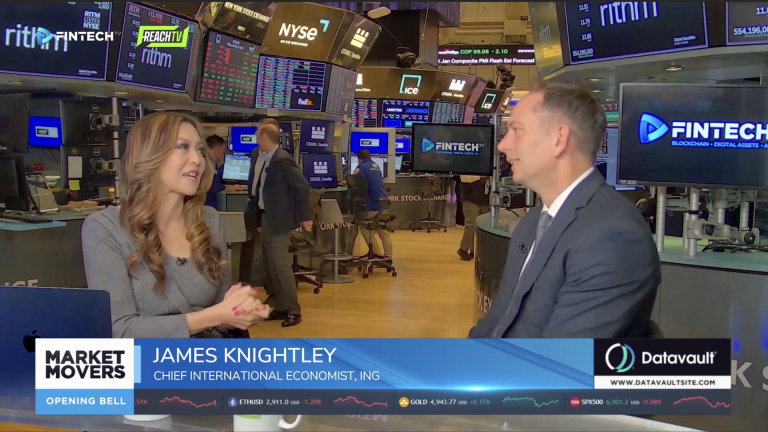
Speaking Friday morning from the New York Stock Exchange, ING Chief International Economist James Knightley offered perspective on the shifting landscape. While acknowledging recent geopolitical volatility, Knightley said markets appear encouraged by signs of de-escalation between Europe and the United States, especially as discussions involving Denmark progress. He noted that investors are now turning their attention to the Federal Reserve’s first meeting of 2026 next week. Although no rate changes are expected, comments from Fed Chair Jerome Powell will be closely watched for clues about the policy path ahead.

Inflation and labor conditions remain central to the outlook. Knightley said the U.S. economy continues to perform well overall, with unemployment still low, but inflation remains stubbornly above target. He also flagged concerns about the narrow concentration of job growth. Over the past three years, more than five million jobs have been added in the U.S., with 93% of those gains coming from just three sectors: government, leisure and hospitality, and private education and healthcare services. That lack of breadth raises questions about the durability of the labor market.

As the World Economic Forum in Davos wraps up, Knightley said attention is shifting toward global bond markets and diversification opportunities. For years, global markets largely moved in step with the U.S. economy. Now, different regional stories are emerging, particularly in Japan, where interest rates are rising, in contrast to expected cuts in the U.S. and Europe. This divergence could reshape bond market dynamics and create new opportunities for investors.

Precious metals are also drawing increased interest. Gold and silver have reached record highs amid fluctuating Treasury yields and changes in the U.S. dollar. Knightley explained that the traditional role of U.S. Treasuries and the dollar as safe havens during periods of uncertainty appears to be shifting, prompting investors to look elsewhere for protection. That shift has helped fuel demand for precious metals as part of broader diversification strategies.

Looking ahead, Knightley expects the U.S. dollar to face downward pressure in 2026 as interest rate differentials widen. Anticipated Federal Reserve cuts, steady rates in Europe, and hikes in Japan point to potential dollar weakness. That environment could support emerging markets, while parts of Europe and Japan may benefit from greater policy stability.

Overall, the discussion underscores the delicate balance between geopolitics and economic policy as markets move deeper into the year. As Knightley suggested, investors are entering a period defined by shifting narratives, greater diversification, and evolving global dynamics, making flexibility and close attention to policy signals increasingly important.

Crypto Regulation Momentum Signals Deeper Institutional Shift

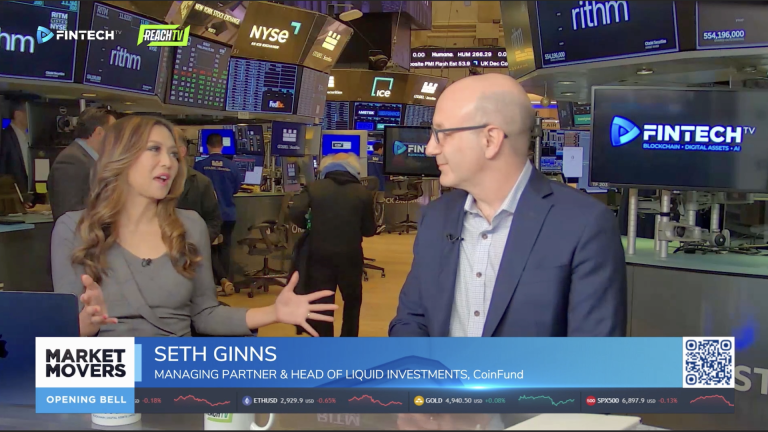
In a pivotal moment for the crypto industry, Seth Ginns, Managing Partner and Head of Liquid Investments at CoinFund, shared his perspective on how digital assets are increasingly colliding with traditional finance. Speaking from the New York Stock Exchange, Ginns outlined the major shifts underway as momentum builds in Washington around crypto market structure legislation. As 2026 unfolds, these developments are becoming more consequential for institutions, investors, and the broader financial system.

Ginns noted that recent bipartisan legislative efforts, while still dependent on Democratic support, signal a meaningful change in the regulatory tone toward cryptocurrency. The Senate committee’s openness to measures that support decentralized finance points to a growing willingness to engage with innovation rather than resist it. Even with ongoing volatility in crypto prices, Ginns believes a clearer regulatory framework could unlock the stability institutions have been waiting for.

One milestone Ginns highlighted was the public debut of BitGo, which he views as a strong signal of the market’s readiness for tokenized assets. He also pointed to protocols like Ondo enabling tokenized equity listings and to Superstate, which recently raised $80 million to advance primary tokenization. Together, these moves suggest the industry is approaching an inflection point, where tokenization transitions from concept to standard market practice.

Access to crypto is also expanding rapidly. Ginns observed that major financial institutions such as UBS and Morgan Stanley are beginning to offer crypto exposure to wealth management clients, while firms like BlackRock are broadening participation through crypto ETFs. As traditional finance integrates more deeply with digital assets, liquidity improves, setting the stage for stronger price performance across the sector.

On Bitcoin specifically, Ginns acknowledged that it has recently lagged gold and global liquidity measures. Still, he expressed confidence that this gap could close. As institutional participation stabilizes and the market continues to recover from past shocks, he expects Bitcoin to realign more closely with traditional macro assets.

Ginns also credited favorable regulatory signals from the current administration with supporting crypto’s growth. He pointed to initiatives like the GENIUS Act, which focuses on stablecoins, as evidence that policymakers are laying groundwork for scale. With the Treasury Department reportedly envisioning a future that includes more than $2 trillion in stablecoins, regulation is becoming a catalyst rather than a constraint.

Looking ahead, Ginns drew parallels between crypto today and the internet 25 years ago. Just as the internet reshaped commerce and communication, he believes crypto technologies will become foundational across payments, capital formation, and data privacy. Companies are already experimenting with these use cases, hinting at how deeply integrated digital assets could become.

Ginns’s outlook underscores how quickly the crypto landscape is changing. As traditional finance and digital assets continue to converge, and as regulatory clarity improves, the coming years could redefine how capital moves and how markets function. For investors and institutions alike, 2026 is shaping up to be a defining period in crypto’s evolution into the financial mainstream.

Major U.S. Banks Deliver Strong Q4 Results as Trading Surges

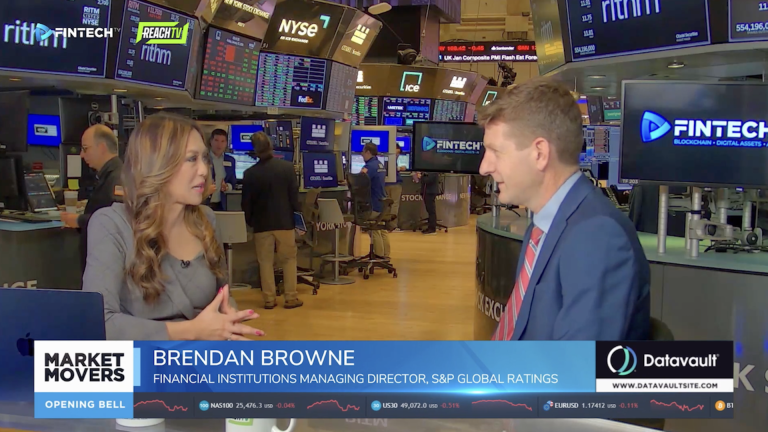
The 4th quarter earnings season for 2025 got off to a strong start as major U.S. banks delivered results that came in well ahead of expectations. Despite lingering economic uncertainty, the industry showed resilience, supported by active deal-making, steady borrowing demand, and robust trading activity. Brendan Browne, Financial Institutions Managing Director at S&P Global Ratings, offered perspective on what drove these results and what lies ahead for the banking sector.

In total, the six largest U.S. banks, Goldman Sachs, Morgan Stanley, JPMorgan Chase, Bank of America, Citigroup, and Wells Fargo, generated roughly $583 billion in revenue in 2025. Combined profits reached about $157 billion, an 8% increase that points to a banking sector on solid footing. Goldman Sachs and Morgan Stanley stood out, each posting record annual revenues in investment banking and trading, underscoring how profitable those businesses can be during periods of market volatility.

Browne pointed to trading desks as a key driver behind the strong performance. Elevated volatility and high trading volumes helped fuel gains across both equity and fixed income trading in 2025. While those conditions created an unusually favorable environment, Browne cautioned that it remains difficult to predict whether the same momentum will carry into 2026, particularly if markets stabilize.

Beyond trading, investment banking activity is clearly picking up, with mergers and acquisitions showing renewed strength. Advisory revenues are improving, and loan growth remains healthy. Browne noted that rising net interest income has also become an important support for bank earnings, potentially helping to offset any slowdown in trading-related revenue.

Still, risks remain. Browne highlighted ongoing concerns around leverage, especially as banks underwrite debt and compete more directly with private credit firms. Broader economic pressures tied to inflation and geopolitical uncertainty could also influence performance as the industry moves through 2026.

Technology is another area shaping the outlook. Browne discussed how banks are increasingly investing in artificial intelligence to streamline operations, strengthen risk management, and improve customer engagement. While AI adoption is still in its early stages, institutions are optimistic about its ability to drive efficiencies and unlock new growth opportunities over time.

From a credit perspective, the near-term outlook remains stable. S&P currently has no negative outlooks on the major banks it rates. That said, Browne urged caution around regulatory developments. Proposed changes to capital standards could present challenges, particularly if they limit lending capacity. While equity investors may view regulatory easing favorably, credit analysts tend to take a more cautious stance given the potential impact on balance sheets.

Overall, Browne’s insights highlight a banking sector that entered 2026 from a position of strength, supported by diversified revenue streams and improving investment activity. At the same time, economic uncertainty, regulatory shifts, and evolving technology will continue to shape the path forward. As future earnings seasons unfold, those factors will be key to understanding how sustainable the current momentum proves to be.

Digital Asset Infrastructure Advances With NYSE and BitGo Moves

It has been a notable week at the New York Stock Exchange as momentum continues to build around digital assets and tokenization. The NYSE announced plans for a blockchain-based platform that would allow trading of tokenized securities, a move that could significantly modernize how markets operate. The proposed system is designed to support 24/7 operations with instant settlement, a shift that would streamline processes and reduce friction across trading workflows. At the same time, BitGo delivered a strong market debut, with its Class A shares jumping roughly 36% shortly after pricing its IPO at $18, valuing the company at more than $2 billion. Together, these developments underscore how quickly tokenization is moving from theory into real-world market infrastructure.

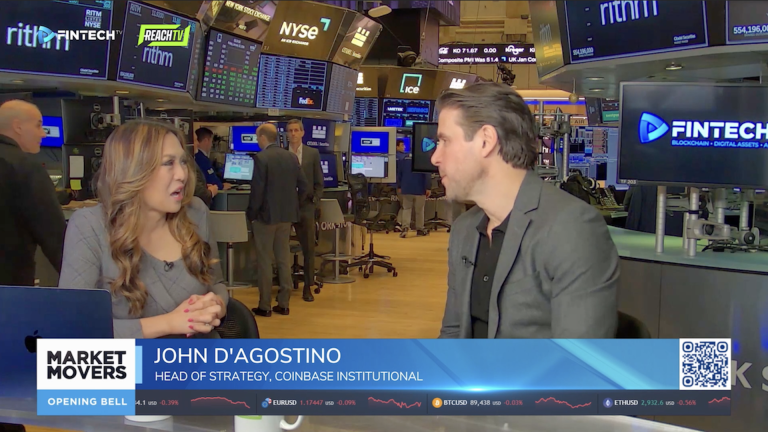
Against this backdrop, John D’Agostino, Head of Strategy at Coinbase Institutional, offered perspective on what these announcements signal for the broader financial system. He said the moves by major exchanges like the NYSE point to a much larger digital transformation underway in finance. While some crypto purists view these initiatives as little more than private ledger systems, D’Agostino sees them as an important bridge toward something much bigger. “It wasn’t that long ago when these booths were staffed with human beings… I think this is the beginning,” he said. As one of the most influential exchanges in the world, the NYSE stepping into tokenization sends a clear message that 2026 could mark a turning point for institutional adoption.

D’Agostino also pointed to institutional participation as a defining theme for the year ahead. According to Coinbase’s latest market outlook, three core drivers are expected to shape this next phase: maturity, value, and privacy. He described maturity as the growing acceptance of crypto and blockchain across corporations and governments, a trend that should naturally lead to clearer regulatory frameworks and broader institutional comfort.

Value represents another inflection point. D’Agostino compared the current phase of tokenization to the early internet era, when companies were often valued on traffic rather than earnings. He suggested that phase is ending. Going forward, simply issuing tokens will not be enough. Tokens will need to demonstrate real utility and tangible use cases to justify their place in the market.

Privacy is emerging as a third critical pillar, particularly as AI accelerates debates around data ownership and usage. D’Agostino noted that tokenization could give individuals more control over their data, allowing them to secure it and potentially monetize it in ways that are transparent and compliant.

Turning to the broader crypto market, D’Agostino acknowledged recent volatility across major digital assets but maintained a constructive outlook. He described Bitcoin and gold as complementary assets rather than rivals, suggesting both could benefit from a “mean reversion trade” as markets normalize. He also emphasized the importance of high-quality firms like Coinbase, pointing to strong earnings performance and continued engagement with regulators as signs of long-term resilience.

On the policy front, D’Agostino expressed confidence that momentum is building in Washington. He highlighted the GENIUS Act as a meaningful bipartisan effort that reflects growing alignment among lawmakers, regulators, and industry participants. He stressed that getting the details right is critical, adding, “We want the American consumer to be paid what they’re owed,” a goal he believes can be achieved through thoughtful legislation.

Taken together, the developments at the NYSE and the insights from leaders like John D’Agostino point to a pivotal moment for digital assets. Tokenization, blockchain infrastructure, and institutional engagement are no longer fringe concepts. As 2026 approaches, the focus will remain on regulatory clarity, real-world utility, and responsible data practices as finance continues its shift toward a more digital and integrated future.

BitGo Debuts on NYSE as Infrastructure Focus Pays Off

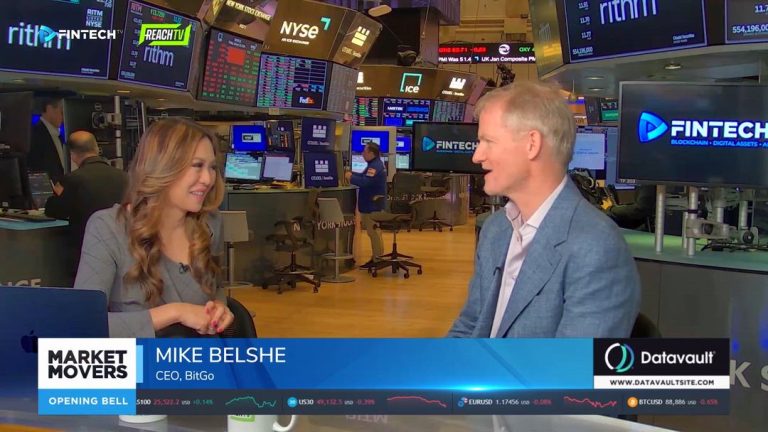
In a major moment for cryptocurrency infrastructure, BitGo made its long-awaited public debut on the New York Stock Exchange under the leadership of CEO Mike Belshe. Shares surged nearly 25% in early trading, reaching an intraday high of $24.50, marking a strong reception from investors and signaling growing confidence in digital asset infrastructure companies.

BitGo’s initial public offering priced above expectations, valuing the company at more than $2 billion. The debut highlights the expanding role cryptocurrencies are playing within traditional finance, as institutional adoption continues to accelerate. With more than a decade of experience in the space, BitGo has steadily built a reputation as a critical backbone of the crypto ecosystem rather than a speculative retail platform.

Unlike consumer-facing exchanges, BitGo operates behind the scenes as an infrastructure provider. The company works closely with U.S. exchanges, international trading venues, and crypto-native businesses. As Belshe explained, “We work with tokenization of stocks and stablecoins,” positioning BitGo as a foundational layer supporting a wide range of digital asset activity.

Proceeds from the IPO will allow BitGo to expand key areas of its business, including trading, staking, and custody services. Security remains central to that strategy. “We’ve built world-class custody systems with the highest level of regulatory oversight,” Belshe said, underscoring the firm’s focus on safety in an industry often criticized for operational risk.

Looking ahead, Belshe sees stablecoins and tokenized equities as core drivers of BitGo’s next phase of growth. “Stablecoins are [becoming] a better payment rail than the banking system,” he noted, pointing to faster settlement times and global accessibility as major advantages. As adoption grows, stablecoins are increasingly viewed as a practical alternative for cross-border payments and financial infrastructure.

Belshe is also optimistic about the regulatory environment in the United States, particularly as it relates to tokenized equities. With the SEC showing more openness to modernizing market structures, he believes innovation could move quickly. “That is coming fast and furious,” he said, suggesting that traditional finance and blockchain-based systems are on the verge of deeper integration.

Risk management is another area where BitGo aims to differentiate itself. “We manage risk better than anybody,” Belshe stated, highlighting the firm’s disciplined approach to pricing and trade execution. BitGo incorporates asset costs and risk exposure into every transaction, a practice that remains uneven across the broader crypto industry.

Security measures such as off-exchange settlement and cold storage custody are central to that approach. “The money stays in cold storage, qualified custody,” Belshe reiterated, emphasizing BitGo’s focus on protecting client assets even during active trading.

BitGo’s IPO represents more than a successful market debut. It reflects a broader shift in how digital assets are being integrated into traditional finance. As blockchain technology, AI, and crypto continue to reshape financial services, BitGo’s role as a trusted infrastructure provider places it in a strong position to benefit from long-term industry growth.

As regulatory clarity improves and institutional participation deepens, companies like BitGo are helping define the next phase of financial innovation. With established leadership, a focus on security, and expanding product capabilities, BitGo enters the public markets positioned to play a lasting role in the future of digital finance.

Market Volatility Reverses as Trade Tensions With Europe Ease

After a sharp sell-off earlier in this week driven by geopolitical uncertainty, particularly surrounding President Donald Trump’s trade tensions with European allies, markets staged a notable rebound. Investor sentiment shifted quickly as headlines moved from tariff threats tied to Greenland to a potential cooperative framework with NATO leaders on the Arctic island. While Denmark’s Prime Minister reiterated that Greenland’s sovereignty is not negotiable, markets appeared relieved by signs of de-escalation.

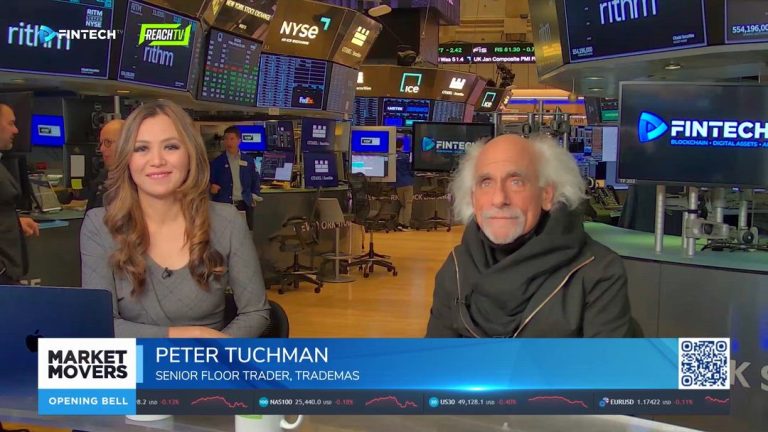
Joining FintechTV’s Remy Blaire to break down the week was Peter Tuchman, senior floor trader at TradeMas. Tuchman described the week as extraordinary, pointing to how tariff uncertainty continues to trigger outsized market reactions. January, he noted, often starts on a softer footing, especially when bank earnings fail to impress. This season’s results reflected backward-looking performance rather than forward guidance, leaving markets vulnerable to volatility sparked by Trump’s aggressive trade posture.

Tuchman reflected on Trump’s negotiating style at past international gatherings, including Davos, where the President has frequently opened with confrontational rhetoric before pivoting toward cooperation. That pattern, he said, has repeatedly led to sharp sell-offs followed by powerful rebounds once tensions ease. Investors have learned to expect sudden reversals when high-stakes negotiations dominate the news cycle.

The latest example played out this week as President Donald Trump raised the prospect of asserting control over Greenland on national security grounds. The comments unsettled global leaders and markets alike. Once the President floated the idea of a compromise framework with NATO, however, markets quickly recovered much of their losses, underscoring how sensitive trading has become to geopolitical signals.

Looking ahead, Tuchman said attention now turns to the Federal Reserve’s January meeting, where no immediate rate changes are expected. Markets will be listening closely to comments from Fed Chair Jerome Powell for clues about future policy direction. Any hint of a more dovish stance could fuel expectations for rate cuts later in the year, which would carry broad implications across asset classes.

Tuchman also pointed to ongoing sector rotation within the S&P 500, particularly into energy, materials, and industrials. If the Fed maintains its current posture, he expects those trends to remain intact as investors balance short-term positioning with longer-term allocations. Recent IPO activity, including Bitcoin-related companies, has also supported sentiment in the technology space, reinforcing demand for growth and innovation.

External factors remain in play as well. Tuchman noted that a winter storm forecast for the East Coast could affect market operations and trader attendance in the days ahead. Even so, the broader takeaway from the week is clear. Political developments continue to exert powerful influence over markets, and rapid shifts in tone can drive equally rapid changes in price action.

As January draws to a close, investors are once again reminded of the fragile balance between politics and economics. With Federal Reserve policy, geopolitical negotiations, and sector leadership all in focus, maintaining discipline and perspective remains essential in navigating an increasingly unpredictable market environment.

Exodus Marks Milestone for Tokenized Public Equity

0

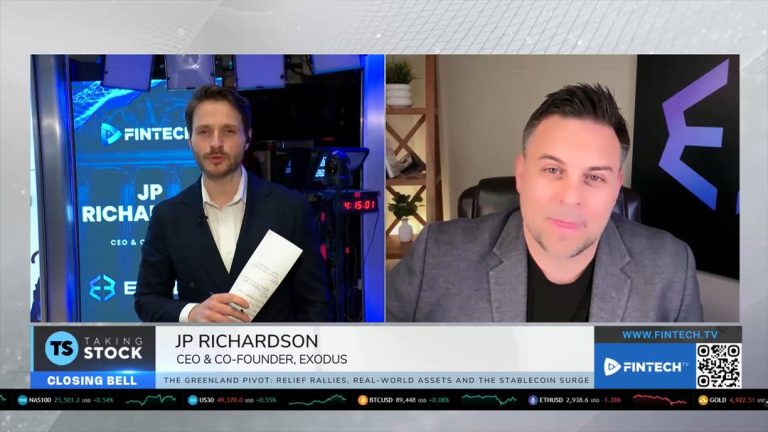
The latest guest on FintechTV’s Taking Stock was JP Richardson, CEO and Co-founder of Exodus. In a conversation with J.D. Durkin, Richardson discussed his role in advancing financial technology, particularly through tokenized stock offerings. Exodus recently made history by becoming the first company to launch an SEC-qualified tokenized stock offering in the United States. The discussion focused on what that milestone means for markets, what it took to reach it, and why tokenization could reshape how public equity functions.

Richardson said the impact of putting public equity on blockchain rails is difficult to overstate. Tokenization allows shareholders to hold, transfer, and settle shares more efficiently, with faster settlement times and on-chain functionality. That efficiency improves the investor experience while strengthening trust in market infrastructure. Growing attention from major industry figures has added momentum, including comments from Larry Fink, CEO of BlackRock, who has publicly acknowledged the long-term significance of tokenization for asset management.

Richardson also pointed to the New York Stock Exchange’s recent announcement that it is developing its own tokenization platform as further validation of the trend. By exploring blockchain-based settlement and trading tools, the NYSE is signaling a willingness to modernize market infrastructure and expand real-world utility across asset classes, from equities to digital assets. That move reflects broader institutional acceptance of tokenization as more than a theoretical concept.

Instant settlement was another key topic in the conversation. Richardson noted that tokenized equities could eliminate many of the friction points exposed during the GameStop trading episode in 2021. Immediate settlement reduces counterparty risk and removes bottlenecks that can restrict trading during periods of high volatility. Beyond efficiency, tokenized shares also open the door to more flexible dividend distributions and enhanced shareholder engagement.

The discussion also highlighted how tokenized stock offerings could broaden access to investing. By lowering operational costs and reducing reliance on legacy systems, companies can reach a global investor base more easily. Richardson explained that digital shareholder records can replace paper-heavy processes, cutting costs tied to proxy voting and investor communications while improving transparency and speed.

Looking ahead, Richardson sees tokenization as a bridge between traditional finance and digital assets. As platforms such as Exodus and Robinhood continue to integrate crypto and equity offerings, investors are likely to expect seamless experiences that combine traditional stocks, tokenized assets, and digital payments in one place. Features like regular dividend payments and simplified custody could become standard as demand grows.

Overall, Richardson’s comments underscore a shift already underway in capital markets. Tokenized equity is moving from concept to execution, with Exodus playing a leading role in that transition. As blockchain infrastructure becomes more deeply embedded in public markets, the line between crypto and traditional finance continues to blur. The result could be a more efficient, accessible, and globally connected investment landscape in the years ahead.

Stablecoins and IPOs Signal Shift Toward Crypto Infrastructure

0

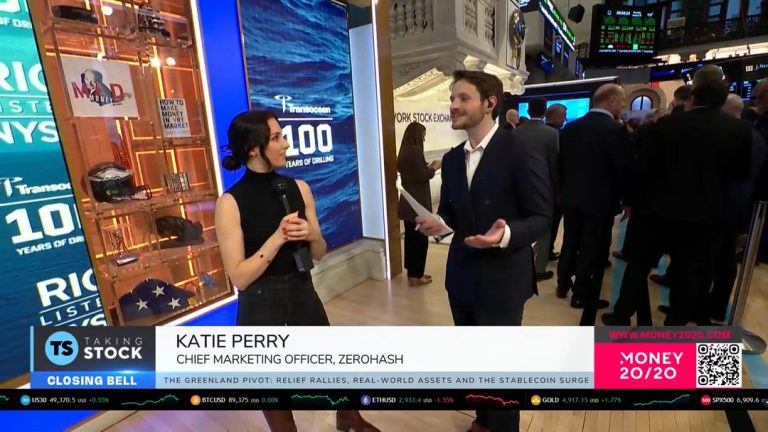
The cryptocurrency landscape continues to mature, and few capture that shift as clearly as Katie Perry, Chief Marketing Officer at zerohash. In a recent conversation, Perry offered a grounded look at where the market is heading, pointing to infrastructure, stablecoins, and high-profile IPOs as signs that crypto is entering a more durable phase.

Perry pointed to the launch of BitGo’s IPO as a meaningful moment for the industry. Rather than focusing on token prices or short-term speculation, she said the spotlight is finally turning toward the foundational plumbing that supports digital assets. “It’s really cool to see the boring side of crypto get the hype,” Perry said, noting that retail investors are showing growing interest in custody, payments, and infrastructure rather than just volatile altcoins.

That shift, she explained, reflects a broader maturation of the crypto market. With earlier IPOs from companies like Circle and Bullish paving the way, infrastructure firms are gaining recognition as essential components of the ecosystem. As traditional financial institutions and digital asset platforms increasingly intersect, investors are being offered clearer entry points into crypto as part of diversified portfolios.

Stablecoins, in particular, were a central theme in Perry’s remarks. She emphasized how deeply embedded they have become in everyday financial activity. “Stablecoins are really part of the day to day of a lot of apps,” she said, adding that many users may not even realize they are interacting with blockchain-based rails. According to zerohash data, roughly 1.4 billion accounts could potentially use stablecoins for payments, with platforms such as Cash App and Gusto playing a role in that adoption.

Corporate interest is also accelerating. Perry highlighted a 290% year-over-year increase in stablecoin mentions in EDGAR filings, signaling that companies are increasingly recognizing blockchain technology as a core part of modern financial operations. This trend aligns with the broader move toward digital payments, where stablecoins are quietly becoming a backbone for transactions across multiple platforms.

Beyond crypto-specific developments, Perry cautioned that macroeconomic signals still matter. With key employment data approaching and companies like Procter & Gamble signaling cautious consumer behavior, she stressed the importance of monitoring how traditional economic pressures interact with digital finance. These dynamics can influence everything from investor sentiment to product adoption.

Perry also connected the rise of stablecoins and crypto infrastructure to larger themes in sustainability and economic resilience. She pointed to technologies such as Artificial Intelligence (AI) as tools that can reshape financial operations and decision-making, especially when aligned with the Sustainable Development Goals (SDGs). For entrepreneurs, she suggested, the opportunity lies in using these technologies responsibly while building scalable and inclusive financial products.

As crypto continues to evolve, Perry’s perspective reflects an industry moving beyond hype and toward long-term utility. From the BitGo IPO to the growing role of stablecoins and the influence of global economic conditions, the convergence of technology, finance, and sustainability is becoming harder to ignore. For investors and businesses alike, adapting to these shifts may prove just as important as the innovations themselves.

Hedera Aligns Web3 Investment With Governance and Scale

0

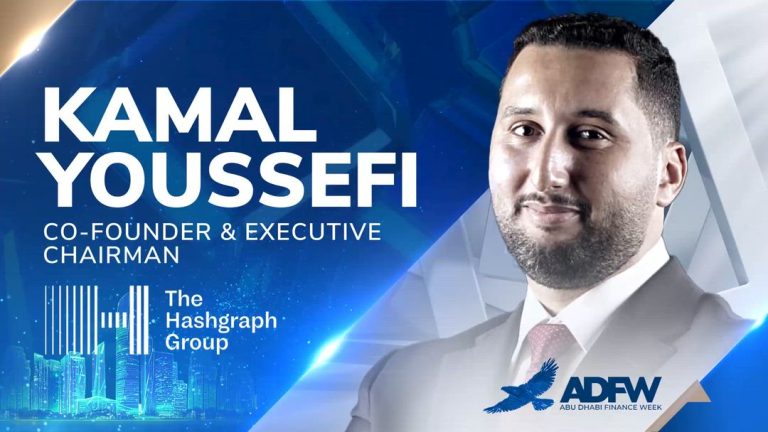
In a wide-ranging conversation at Abu Dhabi Finance Week, FintechTV’s Lawrence Wintermeyer spoke with Kamal Youssefi, Co-founder and Executive Chairman of Hashgraph Ventures, to discuss the evolution of distributed ledger technology and the long-term vision behind Hedera Hashgraph.

Youssefi outlined the origins of Hedera Hashgraph, which was founded in 2016 by Dr. Leemon Baird and Mance Harmon with the goal of building a next-generation public ledger governed by a council of leading global enterprises. That governance structure, which includes major Fortune 500 companies, was designed to ensure trust, stability, and accountability while maintaining decentralization on behalf of the broader community.

He explained that Hashgraph Ventures was created to accelerate adoption and innovation across the Hedera ecosystem, particularly as developers, startups, and enterprises migrate from Web2 to Web3. Backed by well-established institutional partners, the fund supports projects built on Hedera’s technology and is underpinned by a long-term allocation of approximately $5 billion aimed at attracting talent, funding startups, and strengthening the network’s capabilities.

A defining feature of Hashgraph Ventures is its dual-mandate approach. Youssefi noted that the fund is structured to support both ecosystem growth and commercially viable investments. Projects are evaluated not only on their ability to drive network usage and community value, but also on their potential to deliver meaningful returns, ensuring alignment between innovation and investment discipline.

Looking ahead, Youssefi identified three primary areas of focus for new investments: on-chain finance, sustainability, and Web3 gaming. He pointed to Hedera Hashgraph’s energy-efficient architecture as a natural fit for sustainability-driven use cases. Transactions on the Hedera network consume significantly less energy than traditional payment rails such as Visa or Mastercard, while offering predictable and low transaction costs that appeal to enterprises building scalable business models.

Sustainability, he added, is increasingly influencing decision-making across both finance and technology. As companies seek environmentally responsible infrastructure, Hedera’s design positions it as an attractive option for organizations looking to align performance with environmental considerations.

Web3 gaming and digital engagement also represent a major growth opportunity. Youssefi emphasized that gaming, loyalty programs, and community-driven applications play a crucial role in driving user adoption and network activity. Hedera’s performance and cost certainty make it well suited for these use cases, while also offering investors exposure to fast-growing consumer-facing sectors.

Throughout the discussion, Youssefi returned to the idea that collaboration across the ecosystem is essential for long-term success. By connecting innovators, investors, and enterprises on a common platform, Hedera Hashgraph and Hashgraph Ventures aim to build an environment where technological progress and financial returns can advance together. As Youssefi put it, “We will all win if the Web3 industry wins.”

The conversation underscored Hedera Hashgraph’s growing role in the blockchain landscape and highlighted Hashgraph Ventures’ strategy of pairing sustainability, innovation, and investment discipline. As adoption of distributed ledger technology continues to expand, the approach outlined by Youssefi positions the firm as a key participant in shaping the next phase of digital finance.