[stock-market-ticker symbols=" ^NYA;CRYPTO:BTC;CRYPTO:ETH;CRYPTO:USDT;CRYPTO:USDC;CRYPTO:BNB;CRYPTO:ADA;CRYPTO:XRP;CRYPTO:SOL;CRYPTO:DOGE " stockExchange="NYSENASDAQ" width="100%" transparentbackground=1 palette="financial-light"]

Home Blog Page 10

Stablecoin Adoption Accelerates as Finance Shifts to 24/7

A major shift is underway in the financial technology space as payment infrastructure company Stripe announced its integration with Ethereum, enabling businesses to accept cryptocurrency payments directly. The move highlights the accelerating convergence between traditional finance and decentralized financial networks, underscoring how global payment systems continue to evolve. Over the past year alone, more than $33 trillion in stablecoins has flowed across blockchain networks. Yet despite that scale, e-commerce payments remain largely underpenetrated, pointing to significant room for expansion.

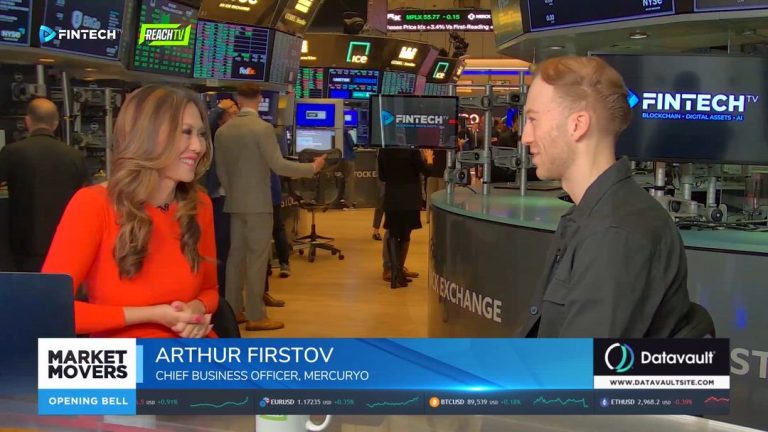
That opportunity is gaining attention. A recent study from Rapyd found that 64% of businesses, including large retailers and e-commerce platforms, plan to adopt stablecoins within the next three years. The trend reflects growing comfort with cryptocurrency-based payments for everyday transactions. Offering perspective on where the market is heading, Arthur Firstov, Chief Business Officer of Mercuryo, joined the discussion live from the New York Stock Exchange.

The opening months of 2026 have already delivered volatility across financial markets, driven by geopolitical instability, macroeconomic shifts, and a surge in IPO activity. Stablecoins are now emerging as a central part of that narrative. Firstov pointed to the NYSE’s recent announcement around 24/7 trading and the tokenization of digital assets as a signal that stablecoins are moving closer to the core of global finance. Adoption is expanding across payments, remittances, and payrolls, setting the stage for what many view as the early phase of a much larger growth cycle.

Institutional behavior is also shifting. Banks and financial firms are increasingly adopting decentralized blockchain infrastructure and transitioning toward native decentralized exchanges. This enables self-custodial asset management and multi-collateral trading while laying the groundwork for broader stablecoin-based payment adoption. Firstov noted that 2026 could represent a turning point for mass adoption, with these technologies becoming more accessible across borders.

Momentum is not limited to the U.S. In 2025, Robinhood began enabling European customers to trade securities using blockchain technology. That development expanded access for non-U.S. investors, particularly to assets such as Treasury bills and stablecoins, and highlighted the growing international footprint of tokenized finance.

Emerging markets are seeing some of the most immediate impact. Crypto and stablecoin networks are increasingly being used for cross-border payments, treasury management, and the shift from 24/5 to 24/7 trading. The appeal lies in decentralized finance’s permissionless, open-source infrastructure, which lowers barriers and broadens access to financial tools.

Regulation remains a critical piece of the puzzle. Firstov emphasized how quickly regulatory frameworks are evolving, noting that adaptation across the ecosystem has moved faster than many expected. At Mercuryo, compliance remains a priority, with systems designed to align with emerging policies while helping companies in developing markets offer more sophisticated financial products.

Looking ahead, expectations for 2026 include improved liquidity, clearer regulatory guidance, and greater interoperability across global financial systems. While emerging markets may benefit first from decentralized finance adoption, developed economies also stand to gain as traditional and blockchain-based systems increasingly intersect.

As platforms like Stripe integrate directly with Ethereum and regulatory clarity continues to improve, digital assets are moving closer to mainstream financial use. For businesses both large and small, these developments are reshaping how payments, treasury operations, and global commerce are approached. The growing collaboration between legacy financial institutions and blockchain technology points toward a more inclusive and resilient financial ecosystem, one that aligns with long-term sustainability goals and the broader Sustainable Development Goals (SDGs).
Crypto Markets Navigate Volatility Amid Regulatory Gridlock

Bitcoin has spent recent weeks hovering around the critical $90,000 level as rising geopolitical tensions ripple through global markets. The volatility has not been limited to crypto, with equities, bonds, and commodities also reacting to uncertainty tied to tariffs and international relations. These pressures came into sharp focus during a Davos panel discussion, where Coinbase CEO Brian Armstrong clashed with France’s central bank chief over stablecoin yields and the U.S. approach to crypto regulation. The exchange highlighted growing questions about the future direction of digital assets and the regulatory clarity needed for the market to mature.

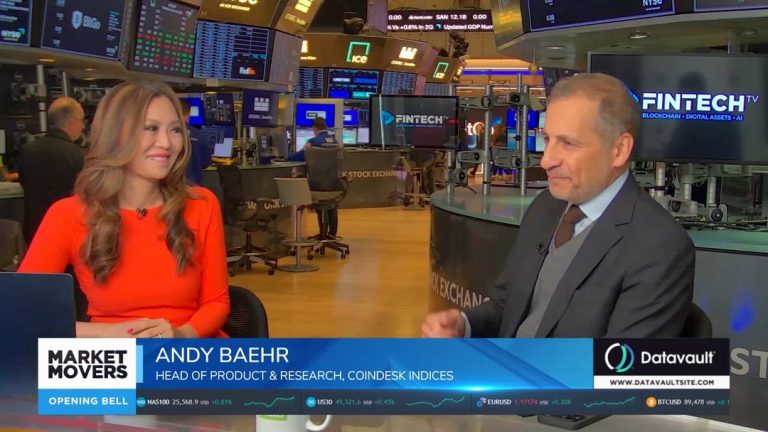
Joining Remy Blaire to unpack the implications was Andy Baehr, Head of Product and Research at CoinDesk Indices. Baehr pointed to ongoing frustration within the industry, particularly surrounding delays to the Clarity Act in the Senate Banking Committee. The legislation would allow companies to share yields earned by stablecoin issuers from Treasuries and other yield-bearing assets while preserving the non-yielding nature of stablecoins themselves. Its continued stalling has weighed on sentiment as 2026 begins with expectations of renewed momentum across the crypto sector.

Baehr described the current stage of crypto’s evolution as a “college sophomore year,” reflecting an industry still growing into itself. Just over a year after the inauguration, crypto has experienced sharp swings, including a difficult first quarter in 2025, followed by strong Ethereum-driven rallies, before ending the year on a softer note. These cycles, he said, underscore the tension between rapid innovation and the regulatory oversight that must evolve alongside it.

The recent IPO of BitGo marked another milestone, signaling progress toward broader acceptance and institutional integration. As a key crypto custodian, BitGo plays a vital role in enabling asset tokenization and stablecoin adoption. Baehr emphasized that custodians are foundational to expanding crypto infrastructure and making these tools accessible to a wider range of market participants. He noted that the year ahead could bring meaningful progress as firms adapt to shifting conditions.

The conversation also turned to emerging data trends shaping the crypto market. Baehr highlighted a growing divide between large-cap digital assets and smaller tokens within the CoinDesk 20 index. The addition of BNB to the index reflects this shift, signaling that assets with scale, liquidity, and clearer growth trajectories are increasingly driving investor attention. This concentration could bring greater stability and bolster confidence as institutional participation continues to expand.

Given these dynamics, investors are being encouraged to focus on established names as capital flows continue to realign. Stability remains critical as the market evolves, particularly with newly introduced ETF products offering broader exposure to the asset class. The expanding range of investment vehicles suggests crypto’s role in portfolios is likely to grow as adoption deepens.

As the crypto market moves through this volatile but formative period, regulatory developments, macroeconomic forces, and technological innovation will play decisive roles. Understanding how these factors intersect will be essential for investors navigating a landscape defined by rapid change and long-term potential. The ongoing debate over crypto regulation and stablecoin frameworks is set to remain central, shaping not only market direction but also crypto’s integration into broader economic systems tied to impact investing and the Sustainable Development Goals (SDGs).
Crypto Markets React to Escalating Stablecoin Rules Fight

As 2026 continues, cryptocurrency markets are facing renewed uncertainty following key legislative developments in the United States. Tensions escalated after Coinbase withdrew its support for a major piece of crypto legislation, prompting CEO Brian Armstrong to raise concerns about how proposed rules could limit stablecoin yields and weaken competition. Those concerns spilled onto the global stage during the World Economic Forum in Davos, Switzerland, where Armstrong publicly debated the chief of the Bank of France over the future of stablecoins, Bitcoin, and U.S. regulatory direction.

Armstrong argued that allowing stablecoin yields is essential to fostering innovation and competition, while the Bank of France’s leadership emphasized the risks such yields could pose to monetary sovereignty and financial stability. Despite their differences, both sides agreed on one point: innovation and regulation must work together if the sector is to mature responsibly.

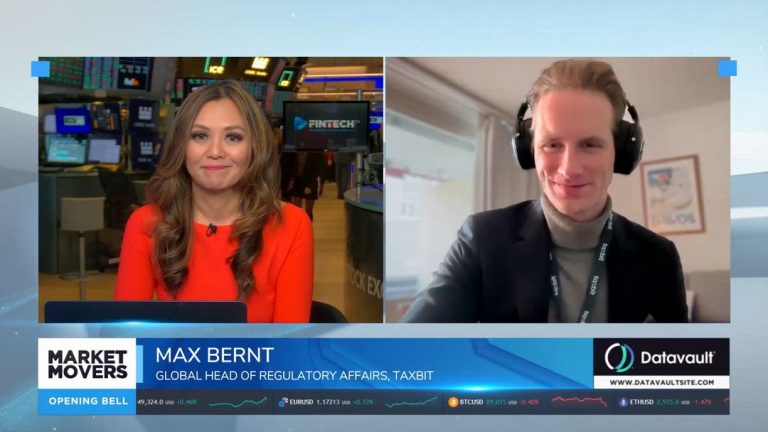
That regulatory perspective was reinforced by Max Bernt, Global Head of Regulatory Affairs at Taxbit, who also participated in discussions at Davos. Bernt said the atmosphere at this year’s forum felt notably different, in large part due to the presence of President Donald Trump and the attention surrounding his comments. While topics like AI, longevity, and environmental sustainability featured prominently, Bernt noted that cryptocurrency drew heightened focus, especially following Trump’s remarks on digital assets.

As global policymakers grapple with crypto’s growth, the question of regulatory alignment has become increasingly pressing. Bernt observed that several jurisdictions are moving more decisively toward coordinated frameworks. In Europe, regulators have taken a proactive stance, while the U.S. has advanced the GENIUS Act and begun outlining clearer rules for stablecoins. Those efforts, Bernt said, are likely to influence how other countries approach regulation.

According to Bernt, 2025 marked a turning point for stablecoins, building on regulatory groundwork laid in earlier years. As rules become clearer, institutional participation in crypto is expected to increase. The shift from adapting traditional financial regulations to developing crypto-specific frameworks reflects broader acceptance of digital assets within the global financial system.

Bernt contrasted the U.S. approach with Europe’s regulatory model, pointing to the European Union’s Markets in Crypto-Assets Regulation (MiCA) as the first comprehensive, multi-jurisdictional framework for stablecoins. By comparison, the GENIUS Act introduces an equivalence regime that allows non-U.S. stablecoin issuers to operate domestically if they meet defined compliance standards, opening the door to foreign participation in the American market.

In Europe, however, MiCA does not include similar equivalence provisions, creating challenges for firms without a physical presence in the region. That contrast highlights the regulatory complexity facing global operators and underscores the importance of international coordination as the market evolves.

Looking ahead, Bernt questioned whether these developments represent true transatlantic alignment or merely partial convergence. While differences remain, particularly around prudential oversight, he noted growing consistency in compliance areas such as anti-money laundering and counter-terrorist financing. Initiatives like the OECD’s Crypto-Asset Reporting Framework point to increasing global cooperation aimed at improving transparency.

Max Bernt’s insights from Davos reflect a crypto sector at a critical crossroads. As lawmakers and industry leaders continue to debate how best to regulate digital assets, the balance between innovation, competition, and financial stability will shape the next phase of growth. With regulatory frameworks still taking form, the coming years will be decisive in determining whether cryptocurrency can achieve sustainable expansion while meeting rising expectations for safety and compliance.

Stocks Push Higher as Investors Balance Inflation and Earnings

U.S. stock markets are building on recent gains, extending a rally that has been supported by strength across both equities and cryptocurrencies. The advance comes ahead of the closely watched release of the November core Personal Consumption Expenditures (PCE) price index, the Federal Reserve’s preferred inflation gauge that excludes food and energy. Markets also drew support from comments by President Donald Trump suggesting progress toward a potential trade deal with Europe that could ease tariffs, helping calm some of the geopolitical concerns that have weighed on sentiment in recent months.

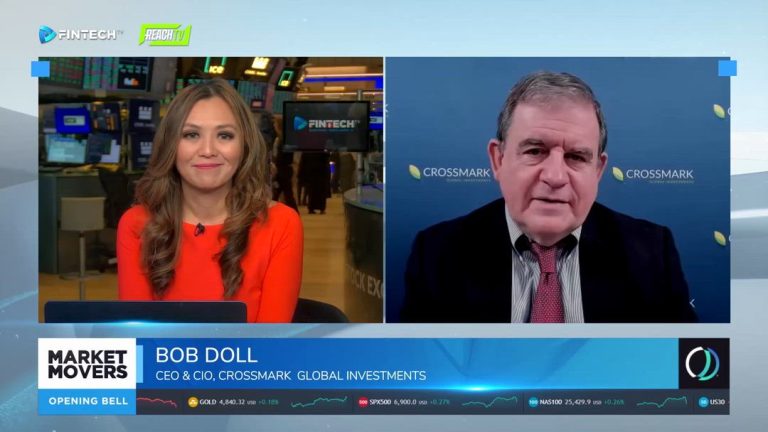
Offering perspective on the current backdrop, Bob Doll, CEO and Chief Investment Officer at Crossmark Global Investments, said recent market leadership has come from small and mid-cap stocks rather than large-caps. He noted that this trend could continue if earnings improve, but added an important caveat. Roughly 40% of companies in the Russell 2000 are currently unprofitable. For small-cap leadership to be sustainable, Doll said that figure needs to come down.

Inflation remains a key variable shaping investor expectations. Doll acknowledged that price pressures have proven more persistent than the Fed’s 2% target, with inflation running closer to 3%. That reality matters, he said, because current stock valuations reflect optimism that inflation will ease further. If inflation remains anchored near 3%, it could limit upside for equities and put pressure on price-to-earnings multiples.

Looking ahead, Doll pointed to historical patterns tied to midterm election years. The second year of a presidential term has often delivered strong GDP growth, but it has also tended to be one of the more challenging periods for stock market performance. While economic growth could benefit from supportive policy and legislative momentum, Doll cautioned that translating that growth into strong market returns may be more difficult.

Outside of equities, metals have outperformed U.S. stocks, with gold and silver posting notable gains. Doll said he favors industrial metals, particularly copper, which he views as a barometer of both U.S. and global economic activity. At the same time, he warned that precious metals could see increased volatility in the months ahead, suggesting investors should be prepared for potential pullbacks.

As investors consider the outlook for 2026 and beyond, Doll urged realistic expectations. He said the outsized returns of recent years are unlikely to be repeated, but opportunities remain for those who focus on companies with solid earnings growth, strong cash flows, and reasonable profitability. In his view, selectivity and discipline will be increasingly important as markets navigate a more uneven path.

Overall, the current environment reflects a mix of optimism and caution. Inflation remains above target, policy and political factors continue to influence markets, and volatility is likely to persist. For investors, staying focused on fundamentals and maintaining flexibility will be essential as the market moves through the next phase of the cycle.

College Football Enters New Era of Competitive Balance

The college football landscape continues to shift at a rapid pace, and this season offered a clear reminder of how quickly fortunes can change. With the Indiana Hoosiers firmly established at the top, the year delivered a true underdog story that reflects the broader transformation underway across the sport. Monday night’s dramatic matchup against Miami closed the season on a high note, sending fans into a long seven month wait before the next kickoff. As attention now turns to upcoming events like the NFL’s Final Four, the Winter Olympics, and March Madness, the bigger story lies in the evolving economics and innovation shaping sports as a whole.

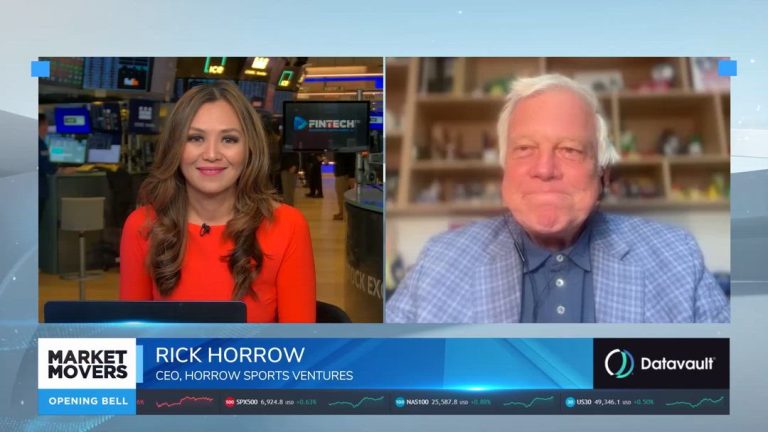
To unpack those changes, Remy Blaire sat down with Rick Horrow, CEO of Horrow Sports Ventures. Horrow described a college football environment that is more competitive than ever, noting that depth and financial growth are rewriting the old hierarchy. According to him, teams across the top 75 programs now have a realistic path to winning under the right circumstances. A recent CNBC report supports that view, showing those programs generated a combined $51 billion in revenue, a 13% increase. That influx of capital is expanding opportunity and narrowing the gap between traditional powerhouses and emerging contenders.

Horrow also pointed to insights coming out of the World Economic Forum in Davos, Switzerland, where discussions centered on the intersection of artificial intelligence, blockchain, and sports economics. He said the U.S. sports industry, currently valued at roughly $1.3 billion annually, has the potential to double or even quadruple by 2030. The blending of technology, media, and traditional business models is creating fertile ground for innovation and long term investment.

The conversation then shifted to the NFL, where franchise values continue to climb. Horrow noted that the average team valuation now stands near $7.6 billion, up about 18%. That growth highlights how critical both performance on the field and strategy in the boardroom have become. “We’re not holding a bake sale for any of the owners,” Horrow said, underscoring just how serious the financial stakes have become. Teams such as the New England Patriots and the Denver Broncos were cited as examples of how strong ownership and smart investment can amplify a franchise’s reach and influence.

Golf also plays a major role in the broader sports economy. Horrow shared observations from the PGA Show in Orlando, where he was attending during the interview. The event draws around 1,000 exhibitors and more than 33,000 industry professionals from 94 countries. With retail sales approaching $2 billion, Horrow said golf has not only weathered the challenges of the pandemic but has emerged stronger, more diverse, and more commercially resilient.

Across college football, the NFL, and global sports markets, Horrow emphasized that financial strength and competitive performance are deeply connected. Understanding that relationship is increasingly important for entrepreneurs and investors looking to participate in the sports business ecosystem, whether through ownership, sponsorship, technology, or media.

As the curtain closes on a college football season defined by surprise contenders and reinforced leaders, optimism surrounds what comes next. The sports industry is entering a period of accelerated growth driven by new economic models, technological integration, and enduring competitive spirit. With voices like Rick Horrow offering insight into where the industry is headed, the future of sports appears poised for continued evolution and opportunity.

New York Boat Show Signals Shift Toward Easier Boating Access

0

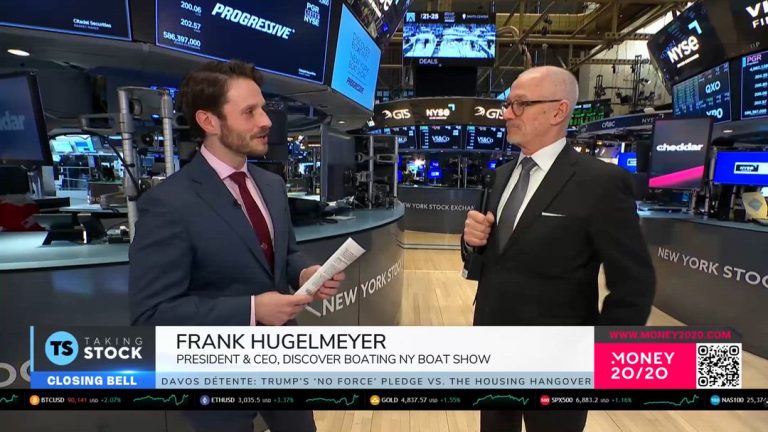
Frank Hugelmeyer, President and CEO of the Discover Boating New York Boat Show, joined FintechTV’s J.D. Durkin to discuss how recreational boating is evolving and why this year’s show reflects a broader shift in accessibility and innovation across the industry. The historic event, held at the Javits Center, continues a legacy that dates back to 1905, making it the oldest boat show in North America.

This year’s show places a strong emphasis on technology and ease of entry. Hugelmeyer highlighted how advances such as AI-assisted navigation and self-docking systems are lowering the barrier for new boaters while enhancing the experience for seasoned enthusiasts. The focus is not just on showcasing boats, but on demonstrating how modern technology can make boating safer, simpler, and more approachable for a wider audience.

The New York Boat Show is known for its range, offering everything from family-friendly vessels to sport fishing boats, alongside hands-on access to the latest marine innovations. Hugelmeyer said accessibility is a central theme this year, especially for those who may feel intimidated by boating. “You can talk to experts, learn about boating basics, and even explore opportunities through local boat clubs,” he said, pointing to the educational aspect of the show as a key draw.

The broader recreational boating market has been adjusting since the pandemic-driven surge in demand. After record activity during lockdowns, consumer spending cooled as conditions normalized. Still, Hugelmeyer noted encouraging signs. Early data from boat shows in January and February suggests renewed interest. “When consumer energy is high, we see hikes in boat sales,” he said, signaling cautious optimism for the months ahead.

One of the fastest-growing areas continues to be rentals and shared boating models. Hugelmeyer pointed to double-digit growth in this segment, describing it as an important on-ramp for new participants. Many first-time renters eventually become owners, making the sharing economy a critical entry point that benefits the entire industry.

Technology remains central to that growth. AI-driven tools and autonomous features are reshaping how people interact with boats, particularly newcomers. Advanced navigation systems and self-docking capabilities reduce the learning curve and build confidence, allowing first-time users to enjoy boating without extensive prior experience. Hugelmeyer said these innovations reflect a broader commitment to inclusion and modernization within the marine industry.

For those who have been curious but hesitant, Hugelmeyer encouraged attending the show as a low-pressure way to explore the lifestyle. The event offers direct access to industry professionals who can answer questions and explain what ownership or membership looks like in practical terms. He also pointed to Discover Boating’s online resources as a way for newcomers to continue learning after the show.

As the industry looks ahead, optimism remains steady. Seasonal events like the New York Boat Show often serve as indicators of overall market health. By combining education, technology, and hands-on experiences, the show is helping attract a new generation of boaters and support sustainable growth.

More than a showcase of vessels, the New York Boat Show reflects how boating is changing. With technology closing the gap for first-time users and shared access models expanding participation, the industry is becoming more inclusive than ever. Hugelmeyer’s message was clear: whether experienced or just getting started, there has never been a more welcoming time to step into the boating community.

Market Volatility Intensifies as Policy and Ad Markets Shift

0

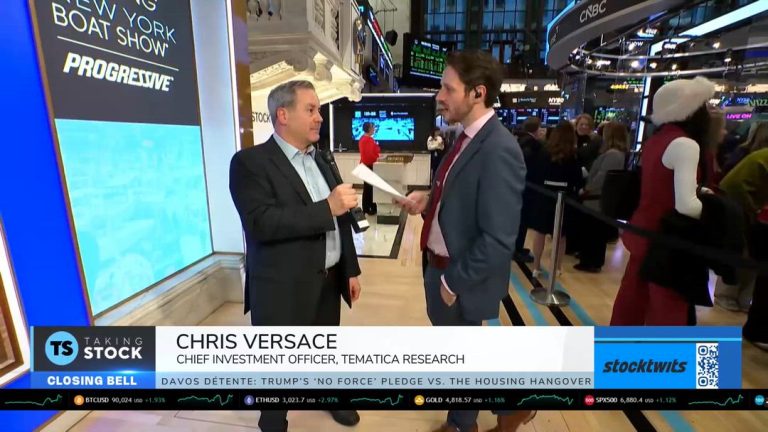
In a market environment shaped by political headlines, shifting economic data, and rapid change across technology and media, informed perspective is essential. That was the focus of a recent conversation between FintechTV’s J.D. Durkin and Chris Versace, Chief Investment Officer at Tematica Research. Versace offered a wide-ranging look at current market conditions, touching on everything from macro signals and political messaging to the evolving digital advertising landscape.

As investors sort through mixed signals from Washington and the economy, Versace stressed the importance of patience. Despite heightened volatility, his message was straightforward: stay disciplined and avoid overreacting to short-term noise. He acknowledged that political developments can move markets quickly, particularly when comments from policymakers inject uncertainty. Referencing remarks made by President Donald Trump at the World Economic Forum in Davos, Versace noted that while the messaging lacked specifics, the tone around tariffs appeared more constructive. That shift, he suggested, may be part of a broader strategy influencing investor expectations.

Versace also addressed recent developments in the entertainment and streaming space, pointing to Netflix as a prime example of how unpredictable competitive dynamics have become. With Netflix reassessing its capital allocation and pausing its share buyback program, the company is signaling a more cautious approach to liquidity management. Investors, he said, are watching closely as Netflix navigates its next steps, including uncertainty tied to Warner Bros. Discovery and broader industry consolidation. The situation underscores how closely technology, media, and finance are now intertwined.

Another major theme was the shifting digital advertising landscape. Versace highlighted how companies like Netflix and Meta Platforms are accelerating their push into advertising, creating new competitive pressures for established players such as The Trade Desk. With Netflix projecting that its ad revenue could double by 2026 and Meta expanding ad placements across its ecosystem, the balance of power in digital marketing is evolving. Versace cautioned that these moves could create headwinds for pure-play ad tech firms, a factor entrepreneurs and investors should factor into their strategies.

Looking ahead, Versace said upcoming economic data will be critical in shaping market expectations. He pointed specifically to the Purchasing Managers’ Index (PMI) and inflation readings, noting that while headline numbers often attract attention, the details matter more. Commentary on inflation trends and job creation will be closely watched by policymakers. Because the Federal Reserve remains data dependent, stronger economic signals could alter assumptions around the timing and pace of future interest rate cuts.

For investors focused on cryptocurrency and blockchain, these dynamics carry added weight. Versace noted that shifts in monetary policy and Federal Reserve communication often ripple through digital asset markets. Inflation control, interest rates, and confidence in fiat currencies all influence crypto valuations and adoption trends. Staying attuned to policy signals, he said, is essential for navigating regulatory expectations and market sentiment in the digital asset space.

Overall, Versace’s message was one of vigilance and adaptability. Whether operating in traditional equities, digital advertising, or cryptocurrency, investors and entrepreneurs face a landscape that is constantly evolving. Understanding how macro data, policy decisions, and competitive forces intersect can make the difference between reacting late and positioning early. As markets continue to adjust, Versace’s insights serve as a reminder that disciplined analysis remains a cornerstone of sustainable investing.

Tokenization Surge Reshapes Global Payments Landscape

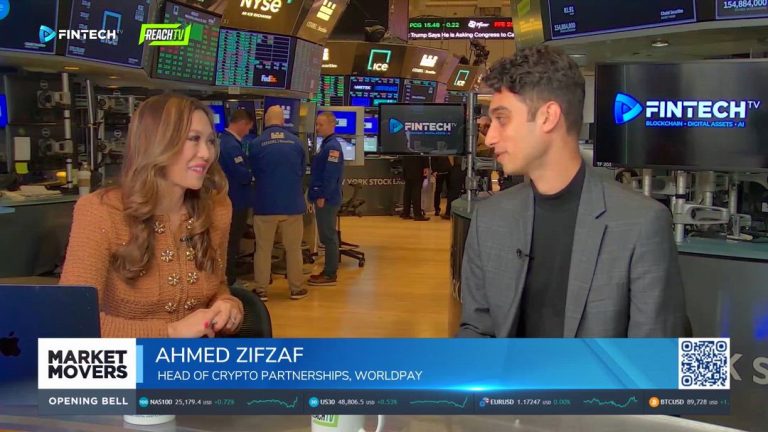
Tokenization is quickly becoming a defining theme in the cryptocurrency market, with the value of tokenized real-world assets tripling over the past year. As digital finance undergoes structural shifts amid persistent macroeconomic risks, industry leaders are increasingly focused on how blockchain technology is reshaping global payments. Speaking with FintechTV’s Remy Blaire, Ahmed Zifzaf, Head of Crypto Partnerships at Worldpay, outlined how tokenization and stablecoins are changing the way businesses manage capital and access financial infrastructure.

Worldpay, which was recently acquired by Global Payments in a multibillion-dollar transaction led by GTCR, sits at the center of this transformation. Zifzaf described how crypto is opening doors for companies that have historically struggled to access global financial systems. “Companies that traditionally lack access to currencies like the U.S. dollar are now utilizing stablecoins, allowing them to tokenize their treasuries and streamline their financial operations,” he said. According to Zifzaf, blockchain-based rails are enabling transactions and efficiencies that were previously out of reach for many businesses.

Artificial intelligence is also playing a growing role alongside blockchain. Zifzaf pointed to the emerging synergy between distributed ledgers and AI-driven tools, describing blockchain as a global ledger and AI as an intelligent agent that can act on that data. “Blockchains can enable a new wave of intelligent commerce,” he said, while noting that challenges remain around fraud detection and determining whether solutions should be primarily consumer-facing or enterprise-focused.

Stablecoins were another major focus of the discussion. Zifzaf said interest in stablecoin integration is rising rapidly, as companies look to accept digital dollars alongside traditional fiat payments. “This interoperability across different geographies and asset classes is indicative of a promising trend,” he said, adding that broader adoption could significantly expand the role of stablecoins in global commerce.

Institutional adoption of crypto continues to accelerate, particularly in emerging markets. Zifzaf observed that consumers in these regions are increasingly turning to cryptocurrencies and stablecoins for everyday transactions. At the same time, businesses are using crypto for settlement, improving the speed and efficiency of treasury operations. “These developments demonstrate a significant shift in how financial transactions are conducted, particularly regarding capital access and yield acquisition,” he said.

Regulation remains a key variable shaping the future of crypto payments, and the landscape differs widely by region. In countries like India and Brazil, national payment rails are gaining traction and competing directly with stablecoins. In Europe, the introduction of Markets in Crypto-Assets Regulation (MiCA) is setting clearer rules, while the United States continues to debate how digital assets should be classified and regulated. Zifzaf also pointed to Singapore and Dubai as examples of jurisdictions taking proactive steps to integrate crypto into their financial infrastructure, contributing to a fragmented but highly competitive global environment.

Within the U.S., experimentation is happening at the state level. Zifzaf highlighted initiatives in Wyoming and North Dakota, where local stablecoin projects are being explored. He also noted that community and regional banks are increasingly using stablecoins to attract low-cost deposits and improve cross-border payment capabilities. “Community and regional banks are also utilizing stablecoins to attract low-cost deposits and expedite cross-border payment options,” he said.

As adoption grows, Zifzaf stressed the importance of safeguards. He emphasized the need for strong “guardrails” in financial services, raising questions around whether new technologies are battle-tested and sufficiently liquid. Worldpay, he said, plays a key role as a protective layer by evaluating enterprise-grade solutions before bringing them to clients.

Taken together, Zifzaf’s comments point to a critical moment for crypto, stablecoins, and digital payments. Tokenization is moving from concept to execution, institutional interest is expanding, and regulatory frameworks are gradually taking shape. While challenges remain, the momentum behind blockchain-based finance suggests the push toward broader financial inclusion and more efficient global payments is well underway.

Stocks Under Pressure as Investors Reassess Fed Outlook

U.S. markets opened under pressure as stock futures fell, setting a shaky tone for investors. The decline was driven in part by renewed geopolitical concerns, including comments from President Donald Trump about acquiring Greenland, which reignited fears of a broader global trade conflict. Overseas, anxiety was also building in Japan, where long-term bond yields climbed to record highs amid expectations of tax cuts following recent elections.

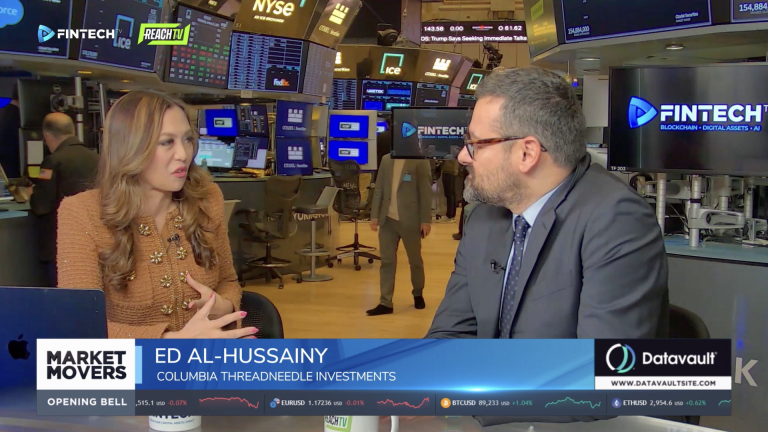
Against this unsettled backdrop, attention has also turned to developments at the Federal Reserve. Federal Reserve Governor Lisa Cook has come under scrutiny, while Chair Jerome Powell is preparing to make arguments before the Supreme Court regarding the administration’s authority to influence his position. With monetary policy, inflation, and political pressure converging, Ed Al-Hussainy, Portfolio Manager of the Total Return Bond Fund at Columbia Threadneedle Investments, weighed in on what the current environment means for markets.

Al-Hussainy began with the global fixed income picture, stressing the value of diversification during periods of heightened volatility. He noted that credit spreads across both investment-grade and high-yield corporate bonds have remained relatively contained, even as interest rates have swung sharply. That contrast points to lingering uncertainty in rate markets, while also suggesting that corporate balance sheets remain on solid footing as 2026 begins.

Turning to the Federal Reserve, Al-Hussainy outlined what he sees as a deliberate strategy that has taken shape over the past year and a half. The central bank moved to add accommodation as signs of labor market cooling emerged. Now, he said, policymakers appear comfortable pausing, giving themselves room to assess a wide range of economic outcomes without rushing into further rate cuts. That stance aligns with expectations for U.S. growth to settle between 1.5% and 2%, a moderation from last year’s stronger pace.

Inflation, however, remains a central concern. Al-Hussainy pointed out that price pressures have eased considerably over the past year, falling from earlier highs to a range between 2.5% and 3%. He expects that trend to continue gradually toward the Fed’s target. At the same time, labor market data warrants close attention. Hiring momentum has slowed, and unemployment has crept up to nearly 4.5%. That softness could prompt additional scrutiny from policymakers as they weigh how best to manage inflation without undermining growth.

Political dynamics are adding another layer of uncertainty. Al-Hussainy noted that pressure from the White House on the Federal Reserve is highly unusual and raises questions about the central bank’s independence. The relationship between the administration and the Fed could introduce additional volatility, particularly if Congress does not take steps to reinforce the Fed’s autonomy.

Trade policy and geopolitical risk continue to weigh on markets as well. U.S. equities have struggled, while the dollar has come under pressure, a pattern often seen during periods of political and trade uncertainty. Foreign investors tend to hedge currency exposure in such environments, influencing broader asset pricing. In contrast, the 10-year Treasury yield, hovering around 4.5%, is becoming more attractive for investors seeking stable income at a time when valuations for risk assets remain elevated.

As early 2026 unfolds, investors are confronting a complex mix of moderating inflation, labor market headwinds, and geopolitical tension. Ed Al-Hussainy’s assessment highlights the careful balancing act facing policymakers and market participants alike. With multiple forces pulling in different directions, resilience and adaptability remain essential as investors navigate an environment defined by uncertainty and rapid change.

Water Garden Farms Shows Profit and Impact Can Align

0

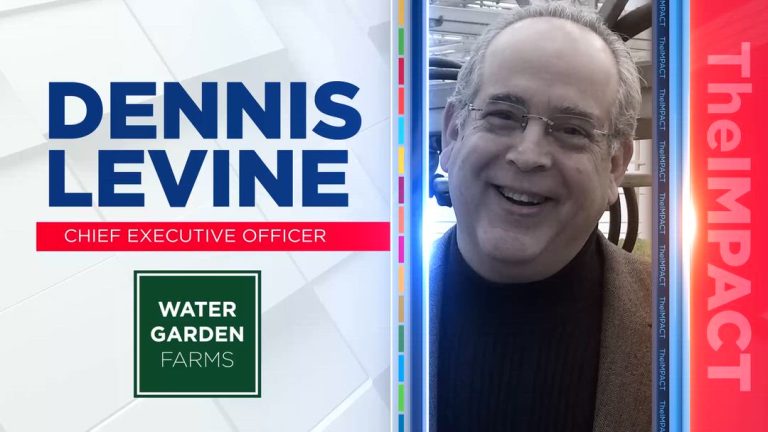
In a recent episode of TheIMPACT on FintechTV, host Jeff Gitterman sat down with Dennis Levine, CEO of Water Garden Farms, for a wide-ranging discussion on how sustainable business models can address some of the world’s most pressing challenges. The conversation explored how profitability and environmental responsibility can coexist, with a focus on technology-driven solutions aligned with the Sustainable Development Goals.

Levine describes himself as an eco-capitalist, someone who believes the capitalist system can and must be used to solve global problems. His approach centers on building companies that generate strong returns while also improving outcomes for the planet. In his view, sustainability is no longer optional. “Doing good using the capitalist system” is a necessity, especially as food security, water scarcity, and energy constraints intensify worldwide.

Those challenges are already severe. Levine pointed out that roughly one billion people currently face hunger, a figure expected to grow without meaningful changes to how food is produced and distributed. Water Garden Farms was created to address that reality by rethinking agriculture from the ground up. The company operates indoor hydroponic systems capable of producing fresh, organic food using up to 98 percent less water than traditional farming.

“Water is the canary in the coal mine of climate change,” Levine said, noting that only a small fraction of the planet’s water is suitable for human use, while agriculture consumes a disproportionate share. By recapturing rainwater and integrating AI-driven automation, Water Garden Farms grows food closer to where people live. That proximity reduces transportation costs, cuts emissions, and lowers overall environmental impact.

Levine also emphasized improvements in food safety and quality. Traditional agriculture often involves multiple intermediaries, increasing the risk of contamination and shortening shelf life. Water Garden Farms’ indoor model keeps production under one roof, resulting in fresher products that last longer and reach consumers with fewer handling steps.

Vertical farming has faced skepticism in the past, largely due to high energy costs and scalability issues. Levine acknowledged those challenges but said his operation takes a different approach. By using the sun as a primary light source and combining it with advanced automation, the facilities achieve high yields while keeping costs under control. That balance, he said, makes the model both sustainable and scalable.

Looking ahead, Levine outlined plans to build a network of six facilities across the United States, positioning the company for national expansion. Partnerships with firms such as Siemens are expected to further enhance automation, efficiency, and product quality as new sites come online.

The broader implications of the model extend beyond agriculture. Levine sees opportunities to rethink food production in water-stressed regions like Texas, while also prioritizing renewable energy use and local workforce development. His operations employ veterans and emphasize community engagement, helping the business resonate across political and economic lines.

Levine’s work reflects a growing movement toward eco-capitalism, where companies pursue the Sustainable Development Goals without sacrificing profitability. By combining technology, finance, and environmental stewardship, Water Garden Farms offers a blueprint for addressing food and water insecurity in a changing climate.

As global pressures around resources continue to mount, Levine’s message to entrepreneurs is clear. Sustainable practices are not a constraint on growth but a catalyst for it. By building resilient, technology-driven business models, companies can generate strong returns while delivering solutions that matter on a global scale.