[stock-market-ticker symbols=" ^NYA;CRYPTO:BTC;CRYPTO:ETH;CRYPTO:USDT;CRYPTO:USDC;CRYPTO:BNB;CRYPTO:ADA;CRYPTO:XRP;CRYPTO:SOL;CRYPTO:DOGE " stockExchange="NYSENASDAQ" width="100%" transparentbackground=1 palette="financial-light"]

Home Blog Page 11

The IPO Report Card: Analyzing 2025 and Looking Ahead to 2026

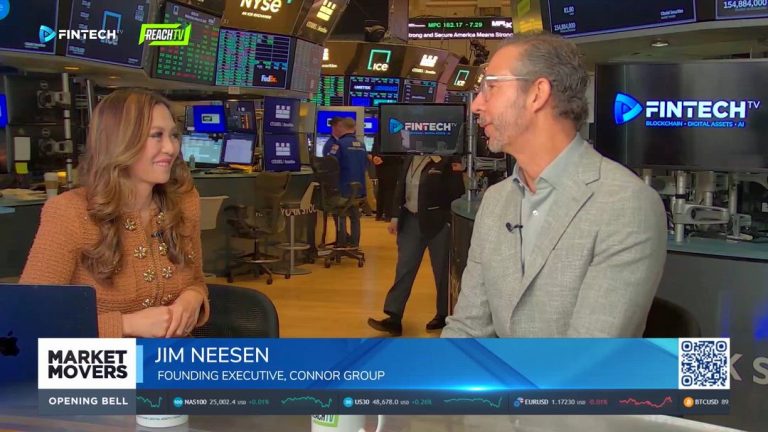
Remy Blaire is joined by Jim Neesen, IPO expert and Founding Executive at Connor Group, to discuss the current landscape of the IPO market as 2025 comes to a close. The conversation begins with an overview of the recent slowdown in IPO activity, which has been significantly impacted by the longest U.S. government shutdown in history and a more cautious approach from investors. Despite this downturn, Remy and Jim note that demand for new offerings remains strong, as investors are on the lookout for more affordable entry points in a market that still appears expensive.

Jim shares insights from the Connor Group’s recently released IPO report card for 2025. He highlights that SPACs have made a notable comeback, comprising 40% of the deals, but the trading performance has been less impressive, with only 51% of IPOs trading above their initial prices.

The discussion shifts to the backlog of deals with the SEC, with Jim pointing out that there are currently 436 deals on file, an all-time high. He likens the situation to a caffeine jolt after a long shutdown, suggesting that strong demand and positive earnings surprises from companies could lead to a vibrant IPO market in 2026.

Remy and Jim reflect on past IPOs, such as Figma, which have seen their stock prices decline post-debut. Jim emphasizes the importance of effective pricing strategies and the need for companies to balance the interests of institutional and retail investors.

Looking ahead, Jim outlines the characteristics of companies that are best positioned to go public in 2026. He identifies four essential elements for stability: revenue, profitability, a compelling story, and readiness for public company status. Additionally, he notes that integrating AI into business models is becoming increasingly crucial for companies seeking to attract investor interest.

Aptos on the Rise: Exploring October’s Record Growth and Future Innovations

Remy Blaire engages in a compelling discussion with Ryan Zega, the Head of Structured Finance at Aptos Labs. The conversation centers around the recent advancements and growth of the Aptos blockchain network, which has experienced one of its strongest growth months to date.

Remy opens the segment by highlighting Aptos’s impressive performance in October, noting a nearly 50% increase in stablecoin supply compared to September. This surge is attributed to significant investments, including a $500 million expansion of BlackRock’s Biddle fund on the Aptos network. Ryan elaborates on the ecosystem’s growth, emphasizing the importance of partnerships with high-quality stablecoin issuers such as PayPal, Tether, and Circle. He discusses Aptos’s strategic focus on expanding its reach into various regions, including Africa, Latin America, and the Asia-Pacific.

The conversation then shifts to Aptos’s newly announced licensing model, which aims to make its code publicly accessible for research while delaying full commercial use for four years. Ryan explains how this model is designed to facilitate innovation and collaboration within the ecosystem, allowing developers easier access to Aptos and its Move programming language. He also mentions the launch of Decibel, a decentralized exchange currently in testnet, and a decentralized file storage solution called Shelby, both of which are part of Aptos’s initiative to incubate high-quality projects.

As they look ahead to 2025 and beyond, Ryan expresses enthusiasm for the potential innovations within the blockchain space. He emphasizes Aptos’s commitment to global markets and the transition of traditional finance products onto the blockchain. The discussion touches on the anticipated emergence of new stablecoin issuers and the expanding use cases for blockchain technology beyond stablecoins.

Finally, Remy and Ryan address the challenges and risks associated with rapid growth in the blockchain sector. Ryan reassures listeners that Aptos is dedicated to maintaining a rigorous due diligence process when selecting partners, ensuring the development of a high-quality product and the network’s position as a leading blockchain.

Investing in Resilience: The Financial Implications of FEMA’s Proposed Changes

Remy Blaire engages in a thought-provoking discussion with Jeff Gitterman, CEO of Gitterman Asset Management, about the future of the Federal Emergency Management Agency (FEMA) amid contrasting perspectives from Trump administration officials.

The segment opens with an overview of the current debate surrounding FEMA, highlighting the Homeland Security Secretary’s proposal to reduce the agency’s role, shifting its focus from direct disaster response to brand distribution. This proposal has sparked significant discussion, especially as a Trump-appointed panel advocates for elevating FEMA to a cabinet-level department, emphasizing the need for greater authority and independence.

Jeff Gitterman provides insights into the divided opinions on FEMA’s future, noting that the panel produced a comprehensive 160-page report recommending the maintenance of FEMA’s existing reinsurance programs while enhancing support for local and rural communities. In contrast, Remy points out that Governor Christine Noem has condensed these recommendations into a more limited 20-page document, raising questions about what will ultimately be presented to President Trump.

As the conversation shifts to the current state of disaster relief, particularly in light of the 2025 hurricane season, Jeff emphasizes FEMA’s broader responsibilities when disaster response is not the immediate concern. He discusses the importance of grant-making, utility work, and infrastructure development, warning that proposed changes could reduce FEMA’s financial coverage from 75% to 50%. This reduction could significantly burden states and municipalities that are already struggling to recover from disasters, particularly in rural and tribal areas.

The discussion also explores the intersection of climate adaptation and investment strategies. Jeff highlights the growing interest in sustainable infrastructure and the potential for substantial returns on investments in resilience and adaptation. He cites reports indicating that for every dollar invested in these areas, there could be up to ten dollars in returns, underscoring the critical need for proactive measures rather than reactive support after disasters occur.

Finally, Remy and Jeff delve into the role of artificial intelligence in climate adaptation and risk mitigation. Jeff explains how AI can assist in energy grid decentralization and improve disaster recovery efforts, while also addressing the challenges posed by increasing energy demands. The segment concludes with reflections on the outcomes of COP30 in Brazil, where the focus on adaptation and resilience took precedence over fossil fuel mitigation, highlighting the ongoing challenges faced by developing countries in the wake of climate-related disasters.

Kraken IPO?, Bullish earnings, HSBC Tokenization, Kenya Bitcoin

0

In this episode of the Coin Street headlines, we dive into the latest headlines from the cryptocurrency world. We discuss how the U.S. cryptocurrency exchange Kraken has announced the confidential filing of a draft registration statement for a proposed initial public offering (IPO). Bullish has reported its strongest quarter since going public, driven by increased institutional activity. We analyze their impressive turnaround from a loss to a net income of $18.5 million, despite a dip in stock price. As global banks race to keep up with the stablecoin trend, HSBC is set to offer tokenized deposits to corporate clients in the U.S. and UAE. We explore the implications of this move for the banking sector. Finally, following Kenya’s implementation of its first comprehensive cryptocurrency law, Bitcoin ATMs have emerged in major shopping malls. We discuss the significance of this development amidst regulatory challenges. Jane King with the latest from the NYSE.

Exploring the Legacy of Gulf Business: Insights from Manish Chopra

Vince Molinari returns to Riyadh for day three of Cityscape Global, where he engages in a compelling conversation with Manish Chopra, the Publishing Director of Gulf Business.

Vince opens the discussion by inviting Manish to share insights about Gulf Business, the oldest English business monthly in the region, which has been a prominent publication for 45 years and is nearing its 30th anniversary. Manish highlights the magazine’s success and its deep-rooted connection with its audience, noting that print media continues to thrive in the region as people enjoy seeing their stories and achievements reflected in high-quality publications.

The conversation shifts to the Gulf Business Awards, which Manish describes as a prestigious recognition for business leaders across various industries. He explains that the awards, now in their 14th edition, are evaluated by a credible third-party jury, reinforcing the authenticity and significance of the accolades.

Vince and Manish then discuss the Gulf Business Saudi Summit, a pioneering initiative aimed at fostering engagement and dialogue around Saudi Vision 2030. Manish elaborates on the summit’s role in connecting top-tier experts with business leaders to discuss the future of Saudi Arabia and its evolving business landscape.

As the segment comes to a close, Manish mentions Gulf Business’s strategic partnership with the organizers of Cityscape, emphasizing their role as the exclusive publishers of the official Cityscape magazine, which is being distributed at the event.

Investing in Dubai: Prashant Sharma on Dugasta Properties’ Unique Offerings

Remy Blaire welcomes Prashant Sharma, the Head of International Business at Dugusta Properties, to discuss the company’s innovative approach to real estate development at Cityscape Global 2025 in Riyadh.

Prashant provides an overview of Dugusta Properties, a Dubai-based real estate developer known for its high-quality residential offerings that encompass both affordable housing and luxury developments. He emphasizes the unique selling proposition of their products, which not only focus on architectural excellence but also serve as financial investments that maximize cash flow for investors. Prashant highlights their standout offering, “10 on 10,” which guarantees a 10% rental return on properties for ten years, along with waiving service charges during that period. This model is designed to attract overseas investors from regions such as North America and Europe, ensuring they receive a solid return on their investments without the burden of maintenance fees.

With a rich history of 35 years in property management, Dugusta Properties transitioned into development in 2016, creating a comprehensive sell-to-manage model. This approach allows investors to enjoy a seamless experience, as the company not only sells properties but also manages them, providing peace of mind.

Prashant discusses the strategic locations of their properties, particularly near the upcoming Al Maktoum Airport, which is poised to become the world’s largest airport. He explains how infrastructure development, such as the Etihad Rail Network and future metro stations, plays a crucial role in driving capital appreciation, making their properties even more attractive to investors.

Looking to the future, Prashant shares Dugusta Properties’ plans for expansion, including new offices in India, Singapore, and New Cairo, Egypt, as well as a dedicated office in Saudi Arabia. He confirms the company’s participation in Cityscape Global 2026, inviting potential investors to connect with them in the coming years.

Crypto Market Update: Extreme Fear and the Impact of AI on Digital Assets

Remy Blaire is joined by Nic Roberts-Huntley, the CEO and Co-Founder of Blueprint Finance. Nic explains that the recent price action in Bitcoin can be attributed to a substantial amount of ETF outflows over the past month, which has created significant structured selling pressure. He mentions that long-term holders are beginning to divest their positions, a trend that, while healthy in the long run, contributes to the current market dynamics.

As the conversation broadens to encompass the overall crypto market, Remy and Nic discuss how Ethereum is also experiencing a notable decline, with ETH down around 10%. Nic points out a resilience in the altcoin market, particularly in BTC pairs, due to less structured sell pressure from ETF outflows. He emphasizes the importance of rebalancing and reorientation as the financial year comes to a close, which often impacts risk assets like cryptocurrencies.

The discussion then shifts to the recent earnings report from NVIDIA and its implications for the risk landscape. Despite a strong performance from NVIDIA, concerns about a potential AI bubble have emerged, drawing capital away from digital assets. Nic shares his perspective that the AI sector, being capital-intensive, will continue to attract investment, which may affect the flow of capital into cryptocurrencies.

Remy and Nic also explore the regulatory landscape for cryptocurrencies, especially following the recent government shutdown. Nic reflects on the progress made in 2025 regarding regulatory clarity around securities and commodities, particularly with stablecoin legislation. He expresses hope for further clarity and frameworks in 2026 that extend beyond stablecoins and ETFs, allowing for a more comprehensive understanding of digital assets as an investment class.

The Future of NVIDIA: Analyzing Q3 Results and Market Expectations

Remy Blaire welcomes Melissa Otto, the Head of Visible Alpha Research at S&P Global Market Intelligence, to discuss NVIDIA’s recent earnings report and its implications for the company’s future.

Melissa provides her insights on the earnings report, noting that while the numbers were strong, there was a lack of clarity regarding the margins for NVIDIA’s data center business moving forward. This uncertainty may have contributed to the stock’s volatility. She emphasizes the importance of understanding the profitability of NVIDIA’s next-generation chips, particularly Blackwell and Rubin, as the market anticipates a gross margin increase in the data center segment from 74% this year to 76.3% in 2026.

The conversation shifts to the sustainability of these projected margins, especially in light of increasing competition and rising costs associated with AI build-outs. Melissa references comments from NVIDIA’s CEO, Jensen Huang, indicating that demand remains strong, but the profitability of that demand is still uncertain.

As they explore NVIDIA’s valuation, Remy and Melissa discuss the wide range of earnings estimates for the upcoming year. Melissa suggests that actual earnings could vary significantly based on the company’s margin performance in the next quarter.

Towards the end of the episode, they touch on the broader implications of the nearly $400 billion expected in AI capital expenditures this year. Melissa expresses uncertainty about whether this level of investment is justified or if the industry risks overbuilding, likening the current situation to an arms race among cloud service providers.

Finally, they examine NVIDIA’s current price-to-earnings (PE) ratio, which stands just below 45, and discuss what to expect as they approach 2026. Melissa emphasizes the need for more clarity on profitability and earnings growth to provide a clearer picture of NVIDIA’s valuation trajectory.

Navigating the Housing Market: Insights from Better’s CEO Vishal Garg

Remy Blaire is joined by Vishal Garg, the CEO and Founder of Better.com, an AI-driven home lending company. The discussion centers around Better’s recent strategic partnerships and their implications for growth and profitability in the current housing market.

Remy begins by highlighting the recent drop in mortgage rates, which is significant for the approximately 20 million homeowners currently locked into loans with rates between 7 to 8 percent. Vishal shares his optimism about the potential for increased activity in the housing market if these rates continue to decline. He reveals that Better is already experiencing a monthly loan volume of about $500 million, an increase from $400 million in the previous quarter, and confidently projects that they could reach $1 billion in monthly loan volume within the next six months.

The conversation shifts to the role of artificial intelligence in Better’s operations. Vishal explains the development of Tinman, a machine learning-driven platform, and Betsy, the world’s first AI loan officer. He emphasizes how these technologies enhance customer service by providing 24/7 support and streamlining the loan processing, underwriting, and closing stages. This efficiency not only improves the customer experience but also significantly reduces the cost of loan origination, allowing Better to pass savings on to their customers.

Remy and Vishal discuss Better’s growth strategy, particularly the importance of partnerships. Vishal notes that there are millions of potential customers who have been sidelined in the housing market due to rising rates. To reach these customers, Better is expanding its platform to include local loan officer teams, large fintech companies, and major mortgage firms. He reflects on the previous cycle from 2019 to 2021, during which Better experienced a remarkable 12x growth, and expresses hope to surpass that this time around.

The conversation also addresses potential risks that could impact Better’s ambitious growth targets, such as slower ramp-up from partners or unexpected fluctuations in mortgage rates. Despite these challenges, Vishal remains confident in their trajectory.

In the closing moments, Remy asks Vishal for his insights on the future of the housing market, particularly as it relates to 2026 and beyond. Vishal underscores the importance of homeownership as a hedge against inflation, encouraging listeners to consider the long-term benefits of owning a home over renting.

NVIDIA Earnings: Market Reactions and Future Predictions!

“Everyone’s fear was that we had new Palantir head earnings that came out. They were stellar and the stock went down 8%.” – 01:14

Remy Blaire discusses the current dynamics of the U.S. stock market with Peter Tuchman, Senior Floor Trader at TradeMas. The segment opens with a focus on the positive movement in U.S. stock futures, which have risen following comments from New York Fed President John Williams, who advocates for a potential rate cut in December. The probability of this rate cut is noted to be above 70%, generating interest among investors.

Remy and Peter reflect on the previous day’s market activity, where major stock averages initially rallied due to strong earnings from NVIDIA and favorable jobs data. However, the momentum quickly dissipated, leading to a significant sell-off by the end of the trading day. The delayed September jobs report reveals that the U.S. added 119,000 jobs—more than double the expectations—though the unemployment rate increased to 4.4%. NVIDIA’s record quarterly sales of $57 billion and Walmart’s raised financial outlook contribute to the initial optimism in the market.

Peter shares his insights on the volatility observed in the market, particularly highlighting the unexpected drop in Palantir’s stock, which fell 8% despite reporting stellar earnings. He explains the classic Wall Street adage of “buy the rumor, sell the news,” emphasizing how market behavior can often defy expectations. The conversation shifts to the ongoing debate about the AI sector, with Peter dismissing claims that it is a bubble, citing substantial investments from major tech companies like Microsoft, Google, and Oracle.

As the discussion progresses, Remy and Peter analyze the recent volatility in the cryptocurrency market, particularly Bitcoin, which has fallen below $81,000. Peter explains that this decline is linked to high leverage in crypto brokerage firms and significant margin calls that forced traders to liquidate positions in stocks like NVIDIA and Palantir to cover their losses.

Looking ahead to the upcoming holiday-shortened week, Remy and Peter highlight the MSCI global index rebalance scheduled for Monday, which is expected to bring increased trading volume and market rotation. Peter expresses optimism about the potential for the Dow to reach 50,000 and the S&P to hit 7,000 if the Fed proceeds with a rate cut.