[stock-market-ticker symbols=" ^NYA;CRYPTO:BTC;CRYPTO:ETH;CRYPTO:USDT;CRYPTO:USDC;CRYPTO:BNB;CRYPTO:ADA;CRYPTO:XRP;CRYPTO:SOL;CRYPTO:DOGE " stockExchange="NYSENASDAQ" width="100%" transparentbackground=1 palette="financial-light"]

Home Blog Page 12

Navigating the Housing Market: Insights from Better’s CEO Vishal Garg

Remy Blaire is joined by Vishal Garg, the CEO and Founder of Better.com, an AI-driven home lending company. The discussion centers around Better’s recent strategic partnerships and their implications for growth and profitability in the current housing market.

Remy begins by highlighting the recent drop in mortgage rates, which is significant for the approximately 20 million homeowners currently locked into loans with rates between 7 to 8 percent. Vishal shares his optimism about the potential for increased activity in the housing market if these rates continue to decline. He reveals that Better is already experiencing a monthly loan volume of about $500 million, an increase from $400 million in the previous quarter, and confidently projects that they could reach $1 billion in monthly loan volume within the next six months.

The conversation shifts to the role of artificial intelligence in Better’s operations. Vishal explains the development of Tinman, a machine learning-driven platform, and Betsy, the world’s first AI loan officer. He emphasizes how these technologies enhance customer service by providing 24/7 support and streamlining the loan processing, underwriting, and closing stages. This efficiency not only improves the customer experience but also significantly reduces the cost of loan origination, allowing Better to pass savings on to their customers.

Remy and Vishal discuss Better’s growth strategy, particularly the importance of partnerships. Vishal notes that there are millions of potential customers who have been sidelined in the housing market due to rising rates. To reach these customers, Better is expanding its platform to include local loan officer teams, large fintech companies, and major mortgage firms. He reflects on the previous cycle from 2019 to 2021, during which Better experienced a remarkable 12x growth, and expresses hope to surpass that this time around.

The conversation also addresses potential risks that could impact Better’s ambitious growth targets, such as slower ramp-up from partners or unexpected fluctuations in mortgage rates. Despite these challenges, Vishal remains confident in their trajectory.

In the closing moments, Remy asks Vishal for his insights on the future of the housing market, particularly as it relates to 2026 and beyond. Vishal underscores the importance of homeownership as a hedge against inflation, encouraging listeners to consider the long-term benefits of owning a home over renting.

NVIDIA Earnings: Market Reactions and Future Predictions!

“Everyone’s fear was that we had new Palantir head earnings that came out. They were stellar and the stock went down 8%.” – 01:14

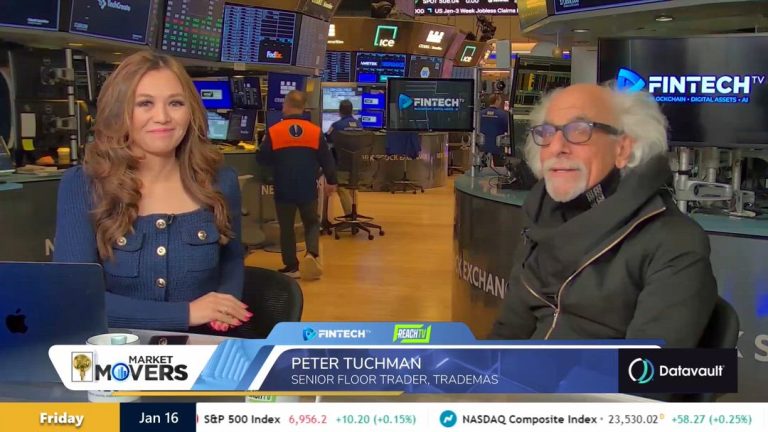
Remy Blaire discusses the current dynamics of the U.S. stock market with Peter Tuchman, Senior Floor Trader at TradeMas. The segment opens with a focus on the positive movement in U.S. stock futures, which have risen following comments from New York Fed President John Williams, who advocates for a potential rate cut in December. The probability of this rate cut is noted to be above 70%, generating interest among investors.

Remy and Peter reflect on the previous day’s market activity, where major stock averages initially rallied due to strong earnings from NVIDIA and favorable jobs data. However, the momentum quickly dissipated, leading to a significant sell-off by the end of the trading day. The delayed September jobs report reveals that the U.S. added 119,000 jobs—more than double the expectations—though the unemployment rate increased to 4.4%. NVIDIA’s record quarterly sales of $57 billion and Walmart’s raised financial outlook contribute to the initial optimism in the market.

Peter shares his insights on the volatility observed in the market, particularly highlighting the unexpected drop in Palantir’s stock, which fell 8% despite reporting stellar earnings. He explains the classic Wall Street adage of “buy the rumor, sell the news,” emphasizing how market behavior can often defy expectations. The conversation shifts to the ongoing debate about the AI sector, with Peter dismissing claims that it is a bubble, citing substantial investments from major tech companies like Microsoft, Google, and Oracle.

As the discussion progresses, Remy and Peter analyze the recent volatility in the cryptocurrency market, particularly Bitcoin, which has fallen below $81,000. Peter explains that this decline is linked to high leverage in crypto brokerage firms and significant margin calls that forced traders to liquidate positions in stocks like NVIDIA and Palantir to cover their losses.

Looking ahead to the upcoming holiday-shortened week, Remy and Peter highlight the MSCI global index rebalance scheduled for Monday, which is expected to bring increased trading volume and market rotation. Peter expresses optimism about the potential for the Dow to reach 50,000 and the S&P to hit 7,000 if the Fed proceeds with a rate cut.

Job Growth and Rate Cuts: What’s Next for the U.S. Economy?

“We think there are going to be some tailwinds to growth the latter half of 2026.” – 02:35

Remy Blaire engages in a detailed discussion with Jeffrey Roach, the Chief Economist at LPL Financial, live from the New York Stock Exchange. The segment opens with an overview of the current state of Wall Street, which is experiencing gains following comments from New York Fed President John Williams advocating for a potential rate cut. The probability of a rate cut at the upcoming December meeting has climbed to 73%.

Remy and Jeffrey delve into the latest U.S. job growth figures, which have surpassed expectations with a nonfarm payroll increase of 119,000 in September—the strongest gain since April. However, they also address the revisions that show a downward adjustment of job growth in July and August by a combined 33,000, alongside a slight increase in the unemployment rate to 4.4%. Jeffrey emphasizes the complexity of the economic landscape, noting that even without the recent government shutdown, the situation would still be intricate.

As the conversation progresses, Jeffrey highlights the importance of the September jobs report, suggesting that while it appears strong, the revisions indicate a cooling labor market. He predicts that the Federal Reserve is likely to continue its rate-cutting campaign into 2026, with economic growth expected to slow in the first quarter of the following year.

Remy and Jeffrey also discuss the significance of upcoming data points leading up to the December Fed meeting, particularly focusing on business capital expenditures and holiday sales expectations. Jeffrey points out that while the labor market is cooling, trends in business capital expenditures will be crucial for understanding the economic outlook for 2026.

The episode further explores the volatility in equity markets following the jobs report and NVIDIA’s earnings. Jeffrey notes that the international economic landscape, particularly stimulus measures from Japan and China, adds to the uncertainty in domestic markets. He believes that the AI sector is still in its early stages, with significant growth potential ahead.

In the final moments, Remy and Jeffrey examine the performance of various sectors within the S&P 500, including healthcare and energy, and how they are influenced by the Fed’s potential rate cuts. Jeffrey explains the bifurcated nature of the economy, illustrating a K-shaped recovery where some sectors thrive while others continue to struggle.

NCUA Chairman Discusses Rate-Cut Optimism, AI’s Future, and the Push for Stablecoin Regulation

0

Kyle Hauptman, the Chairman of the National Credit Union Administration (NCUA), recently appeared on the “Taking Stock” broadcast to share valuable insights into the current financial landscape influenced by Federal Reserve policies, technology advancements, and his pivotal role in developing regulations surrounding stablecoins. Appointed by President Trump, Hauptman holds significant authority over the insurance and regulation of around 4,000 credit unions in the United States, akin to the role of the FDIC for banks. This article explores his perspectives on various financial trends and legislative initiatives that could reshape economic activities, particularly concerning sustainable financial practices and digital currencies.

In the current market environment, Hauptman emphasized that credit unions are primarily affected by interest rates, highlighting that approximately 85% of their services involve mainstream loans for mortgages and car financing. With recent discussions from the Federal Reserve indicating a potential for rate cuts, he noted a prevailing sense of optimism in the markets after a tumultuous week characterized by significant volatility, including swings in the S&P 500 index. He compared the current financial scene to the dot-com boom, expressing curiosity over when artificial intelligence (AI) would catalyze tangible earnings across the economy.

Hauptman’s reflections on government data sources during times of instability brought forth the challenges posed by the longest federal government shutdown in history. As firm data remains elusive, he suggested that market participants should surveil private sector indicators like ADP payroll and refinancing trends, which offer a clearer view of economic health. Despite fluctuations in consumer sentiment and economic uncertainty, he remains cautiously optimistic about the potential for interest rates cuts that might enhance borrowing conditions for consumers and businesses alike.

A particularly engaging point in the discussion was Hauptman’s involvement in the Genius Act and the ongoing discourse surrounding stablecoins. He underscored the need for a regulatory framework that would both modernize payment systems and streamline transactions across platforms. According to Hauptman, stablecoins could be the solution to the inefficiencies currently plaguing American payment systems, like delays during weekends and holidays. By providing clear guidelines for stablecoin usage, the U.S. government aims to improve consumer experiences, making payments instant and accessible every day of the week.

Furthermore, Hauptman asserted that the introduction of stablecoins could uphold the global status of the U.S. dollar by increasing demand for Treasuries, ultimately working toward lower interest rates for consumers. The proposition of maintaining the dollar’s dominance on the world stage through innovative financial technologies aligns with ongoing global sustainable development goals (SDGs). This shift illustrates a growing recognition within the financial sector that effective entrepreneurship in blockchain and fintech can contribute not just to individual gains, but also to broader societal advancements.

In conclusion, Kyle Hauptman’s insights resonate within the broader context of finance and technology. The NCUA’s commitments under his leadership reflect a proactive approach in navigating contemporary financial challenges and advancing regulations that foster innovation in the payment space. The transition towards stablecoins and economic data reliance represents a pivotal moment for credit unions and the financial ecosystem as a whole. For investors, business owners, and consumers alike, understanding these dynamics is essential for capitalizing on the opportunities they present in an increasingly digital and interconnected financial world.

This conversation underlines the importance of remaining adaptable in the face of change while prioritizing sustainable practices that align with both profitability and social responsibility. As the landscape shifts, stakeholders must be vigilant about emerging trends in cryptocurrency, blockchain technology, and sustainable investing to harness the potential of a rapidly evolving market.

Omar Azhar Reveals How Blockchain, Privacy, and Tokenization Will Reshape Global Banking

0

Omar Azhar, Vice President of Business Development at Matter Labs, shared insights during a recent interview on the New York Stock Exchange trading floor. With a focus on advancing blockchain technology, he highlighted the importance of real on-chain privacy for enterprises. Matter Labs is at the forefront of helping institutions, banks, central banks, and governments transition to blockchain, specifically through Ethereum’s ecosystem. The integration of private layer twos is crucial in achieving a smooth, compliant on-chain experience.

Azhar introduced ZK Sync, Matter Labs’ layer two blockchain technology, which enables financial institutions to build their own infrastructure while maintaining essential privacy and compliance. He emphasized that this technology doesn’t just provide an isolated building environment but connects institutions to the broader public markets. The integration of privacy with the ability to participate in decentralized finance (DeFi) markets represents a significant evolution in how banks and other institutions can manage their operations on-chain.

Furthermore, Azhar articulated the powerful benefits of Atlas, a pivotal initiative that aims to revolutionize blockchain for public markets. By drastically reducing costs, Atlas positions blockchain at an internet scale, making powerful financial tools accessible to a wide range of institutions, from banks to startups. The interconnectivity with Ethereum facilitates unprecedented access to liquidity and other public market resources, making it easier for institutions to create compliant, interoperable applications.

Looking ahead, Azhar predicts that by 2026, tokenized deposits will gain significant traction, rivaling stablecoins. Banks are rapidly exploring this avenue, with discussions on tokenized deposits increasing weekly. Major financial institutions, including HSBC, JPMorgan, Citi, and Deutsche Bank, are paving the way toward fully embracing on-chain solutions, suggesting that the market is on the precipice of widespread adoption of tokenization.

The implications of such developments in blockchain don’t just stop with financial institutions; they extend to the broader framework of impact and sustainability in finance. As organizations adopt cryptocurrencies and blockchain technologies, they can align themselves with Sustainable Development Goals (SDGs), driving impact investments that support social and environmental objectives. This intersection of finance and sustainability is increasingly relevant in today’s economic landscape, creating opportunities for forward-thinking entrepreneurs to leverage innovations responsibly.

Additionally, blockchain technology empowers institutions to adopt AI-driven solutions for improved analytics and operational efficiency. The increased focus on sustainability investing presents entrepreneurs with a unique opportunity to harness blockchain for transparency and accountability in impactful projects. As the cryptocurrency landscape evolves, the integration of AI innovations will likely serve as a catalyst for financial growth, breaking down barriers and fostering a more inclusive economic environment.

In conclusion, Omar Azhar’s insights reveal a promising future for blockchain technology in finance. As Matter Labs continues to lead the charge towards the adoption of ZK Sync and Atlas, the capacity for banks and enterprises to innovate while ensuring compliance and privacy will pave the way for a new wave of on-chain solutions. With an increasing focus on tokenized deposits and the potential for meaningful impact investing, the convergence of blockchain, cryptocurrency, and sustainability could redefine our financial landscape.

John D’Agostino: Why Crypto Investors Should Stay Calm Amid Bitcoin Swings

0


Who better to discuss the current crypto landscape than John D’Agostino, the head of strategy at Coinbase Institutional? In a recent conversation, D’Agostino shared critical insights into the fluctuating crypto markets, particularly focusing on Bitcoin’s price action and the broader implications for investors.

In the midst of a shaky market, with Bitcoin experiencing significant price movements, D’Agostino provided a historical perspective. He acknowledged the fears that many investors face but emphasized that this isn’t the first time the market has gone through tumultuous phases. Drawing from his extensive experience, he noted that these are common cycles in Bitcoin’s history, typically characterized by corrections but eventually leading to substantial recoveries.

On October 10, the market experienced what D’Agostino described as a “gap down deleveraging event,” where prices plummeted rapidly. This scenario often leads to panic selling as leveraged traders fail to meet margin calls, creating a cascading effect that can further depress prices. Such events can create a sense of irrational pessimism among investors, overshadowing the upside potential that often follows historical trends.

In addressing a key concern—market seasonality—D’Agostino illuminated that traditionally, the closing months of the year can be favorable for crypto assets. As he pointed out, despite the prevailing negative sentiment, indicators such as the stabilization of open interest in futures markets are promising. These signals may suggest that the worst may be over, and a potential uphill in prices could be approaching.

Amidst the challenges, D’Agostino maintained an optimistic tone, hinting that while a “merry Christmas” is uncertain, a disastrous one seems unlikely. “My advice remains the same during both up and down markets: stay calm and consider dollar cost averaging,” he advised. He equated this investment strategy to buying apples; if you enjoy them, a sale should not dissuade you from purchasing more.

D’Agostino also addressed the mathematical concern around the “death cross,” where a cryptocurrency’s shorter moving average falls below its longer one. Despite sounding ominous, this occurrence has historically been a signal for rebounds after significant downturns. His comments reflect a measured approach towards the potential recovery of Bitcoin and the larger crypto market as it heads into 2026.

In conclusion, as cryptocurrency continues to evolve and face various challenges, insights from experts like John D’Agostino are invaluable. His advice serves not only as a reassurance during tumultuous times but also as a guide for prudent investing practices, like dollar cost averaging, which can help investors navigate the unpredictable crypto landscape. With the market seemingly at a crossroads, staying informed and resilient will be paramount for all stakeholders.

For those looking to invest in cryptocurrencies and align their portfolios with Sustainable Development Goals (SDGs), recognizing the impact of blockchain technology on finance and sustainability investing becomes ever more critical. As the intersection of cryptocurrency, entrepreneurship, and artificial intelligence continues to reshape the financial landscape, maintaining awareness and adaptability will be crucial for both new and seasoned investors.

Emerson’s Transformative Journey: Insights from Investor Day at NYSE

0

In an electrifying atmosphere at the New York Stock Exchange, Mike Baughman, CFO, and Ram Krishnan, COO of Emerson, recently rang the closing bell, marking a significant milestone for their company. Having previously graced the exchange three years prior to announce their transformational journey, the duo returned to share their latest developments and strategic vision for the future, encapsulated during a pivotal investor day.

Engagement at the NYSE: A Rejuvenating Experience

“A lot of energy,” is how Ram Krishnan described the atmosphere of the day. The energy was palpable as Emerson returned to the exchange to present their growth-oriented narrative. The team’s excitement was evident as they prepared for the significant event that drew investors’ attention to their redefined mission and objectives.

The Vision Behind Emerson: Automation Leadership

For those unfamiliar, Emerson stands out as a global automation leader, equipped with a comprehensive technology stack designed to automate critical industries. These sectors include power generation, refineries, oil and gas platforms, and life sciences, essential for efficient, sustainable operations. As they discussed their plans for Q4, it was clear that innovation and operational excellence are paramount in their strategy to achieve 4-7% growth through various economic cycles.

Financial Framework: Delving Deeper into Success

During the investor day presentation, Mike Baughman shared a detailed overview of Emerson’s financial forecasts. The numbers were compelling: an anticipated $21 billion in revenues by 2028, with 30% adjusted segment EBITDA and a notable $12 billion of cumulative cash flow. Additionally, Emerson projected a 20% free cash flow margin alongside significant returns to shareholders through dividends and share repurchases. The dedication to increasing dividends by 5% this year reflects their commitment to creating shareholder value, which sets them on a robust financial trajectory.

Exciting Innovations Ahead

Looking towards the horizon, Baughman emphasized the company’s commitment to fostering innovation that resonates deeply with their clients’ needs. This innovation is not only vital for enhancing Emerson’s market position but also for driving sustainable practices across industries. By championing customer-centric innovation, Emerson aims to redefine how industries approach automation and operational efficiency, steering towards autonomous operations in production and testing.

A Focus on Sustainability and Impact

Given the current global push toward sustainability, Emerson’s objectives align perfectly with broader trends in impact investing and sustainability. The company’s strategies resonate with principles of the Sustainable Development Goals (SDGs) by ensuring their technological advancements contribute positively to economic and environmental sustainability. This focus not only enhances their business model but positions them as frontrunners in ethical entrepreneurship within the automation sector.

Conclusion: A Bright Future for Emerson

The dynamic discussions led by Emerson’s leadership during the investor day at the NYSE reveal a forward-thinking company committed to innovation, sustainability, and shareholder value. As they gear up for an exciting growth phase, Emerson is not just a participant in the automation industry but a transformative leader shaping the future of technology in critical sectors. For investors and stakeholders, the commitment to operational excellence and financial health indicates a promising trajectory for Emerson as they continue to evolve in this fast-paced environment.

Kai Wu: Navigating Market Fluctuations and Future of AI with Sparkline Capital

0

In a recent discussion, Kai Wu, the founder and CIO of Sparkline Capital, provided insights into the tumultuous nature of today’s financial market, particularly in light of significant developments surrounding major companies like Nvidia. The session explored not only immediate impacts seen across market indexes but also delved into broader implications for the tech and crypto sectors, making it a must-read for those interested in finance, blockchain, and sustainable investments.

The Roller Coaster Market: Nvidia Takes Center Stage

The trading day began with optimism following Nvidia’s announcement. As described by Wu, it seemed like “the Super Bowl of Wall Street.” Nvidia reported an astonishing $57 billion in quarterly revenue, boasting a 62% annual increase, reigniting interest in AI-focused stocks. Initially, the market surged by 5%, with all major tech stocks riding high.

However, this enthusiasm was short-lived. By the end of the trading session, the landscape had shifted significantly; Nvidia’s stock dipped over 3%, and the S&P 500 fell by 1.5%. Wu highlighted the heavy concentration of market power among a few mega-cap companies, pointing out the vulnerability of the market when these stocks experience downturns. With AI trading being the crux of performance, the situation raised questions about sustainability moving forward.

Concentration Risk in Major Indices

Wu noted that approximately a third of the S&P 500 and a significant portion of the Nasdaq’s performance is tied to the “Mag 7” stocks, including Nvidia, Microsoft, and Tesla. This consolidation creates risks on the downside, particularly concerning the sustainability of the AI boom. While companies are eager to dominate in this revolutionary field, overspending and overbuilding could lead to inflated capacities, reminiscent of the dot-com bubble when companies like Cisco faced similar hardships.

The Crypto Landscape: Unexpected Correlations

As the conversation transitioned to the crypto markets, Wu expressed surprise at the correlation between macro assets like gold and Bitcoin, highlighting that Bitcoin has recently experienced a staggering 30% decline from its peak just months prior. This volatility can be partly attributed to a major liquidation event that occurred in early October, causing Bitcoin to fall by 15% within hours, alongside plummeting altcoins.

Wu explained how the intricacies of leverage in crypto can greatly amplify both gains and losses. While the rapid ascension can be thrilling during bull markets, downturns present stark reminders of the inherent risks involved. The recent panic in the crypto markets showcases the fragility and volatility of these digital assets, placing participants in a state of caution as they navigate through the uncertainty.

Looking Ahead: The Future of AI and Cryptocurrency Investments

As an expert investor, Wu’s perspective prompts essential questions about the future trajectories of both AI and cryptocurrency investments. Will the current AI boom sustain, or will this lead to an overbuilt capacity much like the dot-com era? Furthermore, as the market reflects on recent events, what strategies can investors adopt in order to navigate upcoming volatility?

This discussion not only underscores the importance of understanding financial markets but also emphasizes the need for strategic thinking in an environment characterized by rapid changes and disruptions. Whether you’re a seasoned investor or just diving into the worlds of blockchain and AI, the insights from Kai Wu at Sparkline Capital provide valuable takeaways for anyone interested in the future of sustainable investments.

Conclusion

The financial landscape is shifting at unprecedented rates, influenced heavily by innovations in AI and the volatile nature of cryptocurrencies. Keeping a keen eye on these developments, as demonstrated by Wu’s analysis, may very well be the key to understanding where the market is headed. With sustainability in investing taking the forefront, it is imperative for investors to remain agile in their strategies, ensuring they adapt swiftly to the evolving market dynamics.

Unlocking Real Estate Potential: How Pineapple Financial is Transforming Mortgages with Blockchain

In this episode of Treasuries Unchained, Katie Perry is joined by Shubha Dasgupta, the president and CEO of Pineapple Financial. They delve into the innovative strategies that Pineapple is employing in the realm of digital assets and treasury management.

Shubha shares how Pineapple Financial is leveraging the Injective Foundation and its INJ token to enhance their treasury strategy while simultaneously building on-chain mortgage solutions. This dual focus not only supports their financial strategy but also aligns with their mission to innovate within the mortgage industry.

They discuss the selection process for their treasury strategy, highlighting the importance of thorough research and the alignment of values with the Injective team. Shubha emphasizes three key pillars that their digital assets enhance: transparency, security, and speed. By utilizing blockchain technology, Pineapple aims to improve customer experiences in real estate transactions, reducing fraud and increasing efficiency through smart contracts.

Shubha also provides insights into Pineapple’s business model, explaining how they are transforming the archaic mortgage industry by digitizing processes and offering a seamless customer experience. With a focus on mortgage renewals, particularly in Canada, Pineapple is well-positioned to capture significant market momentum.

They touch on Pineapple’s go-to-market strategy, which primarily involves working through mortgage brokers, and how they are integrating artificial intelligence to drive efficiencies and reduce costs. Finally, they discuss the cyclical nature of the housing market and how Pineapple is prepared to adapt to changing conditions.

Navigating Systematic Investing: A New Approach to Asset Management

Remy Blair sits down with Chris Grogan, Portfolio Manager and Director of Asset Allocation Services at Eventide Asset Management, for an insightful conversation on the evolving world of systematic investing. Grogan breaks down this rules-based, data-driven approach blending the discipline of passive indexing with the conviction of active management to create a strategy rooted in efficiency, consistency, and purpose.

Grogan highlights how systematic investing stands apart from traditional methods, offering cost-effectiveness, reduced tracking error, and a structured framework guided by Eventide’s core principles of value creation and ethical stewardship. He shares how these values shape Eventide’s systematic ETFs and the way they seek to generate returns with integrity.

The discussion also explores how ESG (Environmental, Social, and Governance) considerations and Corporate Social Responsibility extend far beyond numerical scores. Chris emphasizes the need for human judgment when evaluating the real impact of companies and how emerging tools like artificial intelligence can enhance analysis while preserving a strong moral compass.