[stock-market-ticker symbols=" ^NYA;CRYPTO:BTC;CRYPTO:ETH;CRYPTO:USDT;CRYPTO:USDC;CRYPTO:BNB;CRYPTO:ADA;CRYPTO:XRP;CRYPTO:SOL;CRYPTO:DOGE " stockExchange="NYSENASDAQ" width="100%" transparentbackground=1 palette="financial-light"]

Home Blog Page 88

Navigating the Nvidia Earnings: Insights on Market Trends and Valuation Risks

“We think the markets, particularly in the U.S., are very overvalued.” – 00:02:56

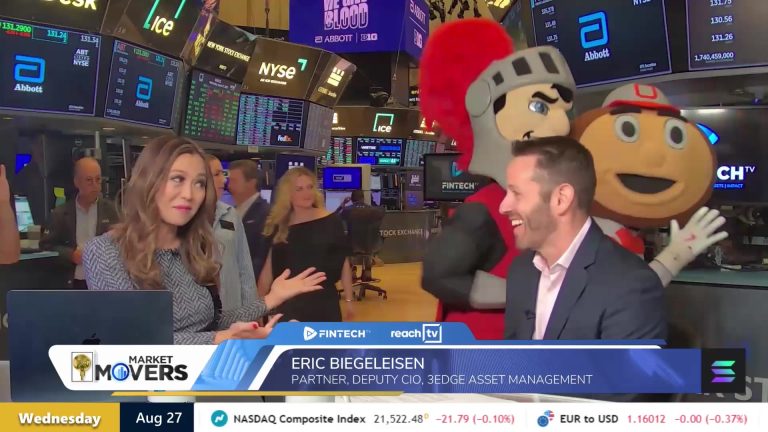
Eric Biegeleisen, Partner, Deputy CIO at 3EDGE Asset Management, joins Remy Blaire at the New York Stock Exchange to discuss the highly anticipated earnings report from Nvidia, a company boasting a remarkable $4 trillion market cap. As the market awaits Nvidia’s earnings announcement, analysts predict an adjusted EPS of $1.01 and revenue of $46.2 billion. Remy and Eric delve into the potential impact of Nvidia’s performance, particularly considering the $8 billion hit the company is expected to report due to recent chip export restrictions to China.

Eric shares his insights on the current market dynamics, expressing concerns about the signs of a bubble forming around artificial intelligence and related technologies. He draws historical parallels to previous market bubbles, such as those associated with railroad stocks and the internet, highlighting the presence of excessive margin lending, momentum trading, and a pervasive “fear of missing out” mentality among investors. Remy emphasizes the importance of distinguishing between noise and signal in today’s social media-driven investment landscape, and Eric explains how his firm utilizes a quantitative investment process to focus on specific data points rather than getting swept up in daily headlines.

The conversation shifts to valuation concerns, with Eric articulating his apprehension about the overvaluation of U.S. markets. He notes that while earnings have increased fourfold since the lows of the global financial crisis, stock prices have surged eightfold, creating a significant disparity that raises questions about the sustainability of current valuations. Eric suggests that this could lead to a necessary adjustment in stock prices.
The Impact of Rate Cuts on the American Consumer and Stock Market

“NVIDIA’s earnings call perhaps being more like an economic indicator release as opposed to an actual earnings release.” – 00:50

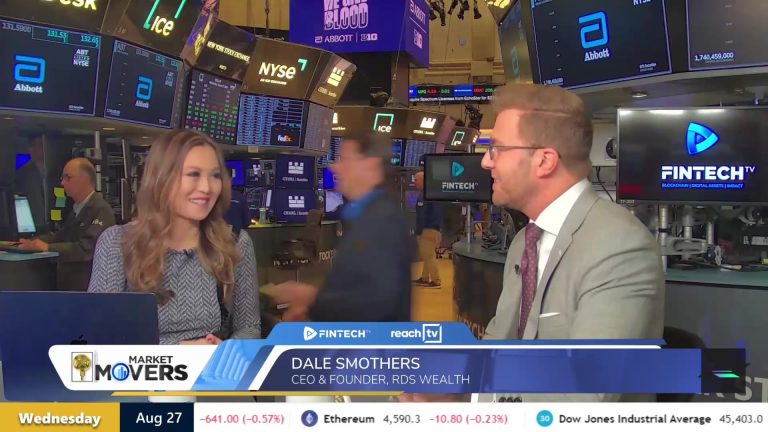
Dale smothers, CEO & Founder of RDS Wealth, joins Remy Blaire at the New York Stock Exchange to explore the upcoming Nvidia earnings report. Dale emphasizes that Nvidia’s performance is crucial, as the company constitutes a significant portion of the S&P 500. He suggests that while the S&P 500 has shown gains year-to-date, the market may be entering a “financial winter,” which could lead to a potential 10% pullback in the coming months.

As they look ahead to the Federal Reserve’s September rate decision, Remy and Dale discuss the paradox of a potential rate cut amid a weakening labor market and rising inflation. Dale stresses the importance of monitoring the Consumer Price Index (CPI) data, noting that the Fed’s decisions are heavily data-dependent. He warns that if the Fed opts against a rate cut, it could result in negative market reactions.

The conversation shifts to the upcoming jobs report and the productivity of American workers. Dale points out that while job numbers may decline, productivity is on the rise, which is a positive sign for the long-term health of the U.S. economy. He reassures listeners that investing in the equity market remains a sound strategy, especially as rate cuts could make equities more attractive compared to fixed income options.

Finally, Remy and Dale discuss the potential effects of rate cuts on the American consumer, particularly regarding mortgage rates and borrowing costs. While lower mortgage rates could benefit homebuyers, Dale cautions that increased borrowing could lead to inflation if not managed carefully. He highlights the growing divide between those invested in the stock market and everyday workers, urging listeners to remain vigilant as they navigate these complex economic waters.

Strategy BTC, Bear market?, Bitcoin whale, Biotech tokens

0

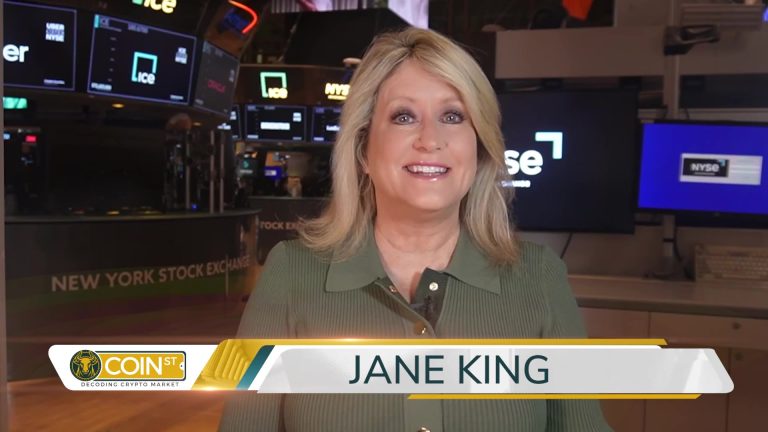
In this episode of the Coinstreet headlines, we dive into the latest headlines shaping the cryptocurrency landscape.

Michael Saylor’s Strategy has made waves by purchasing $357 million worth of bitcoin as prices dipped to $112,000. David Bailey, a bitcoin adviser to President Donald Trump, shares insights on the future of Bitcoin, suggesting that a bear market may be far off, despite some analysts pointing to potential headwinds. A multi-billionaire bitcoin whale is making significant moves by closing ether long positions and investing hundreds of millions into spot ether, indicating a bullish outlook for ethereum. We also explore how small biotech companies are pivoting towards cryptocurrencies, with at least 10 firms announcing their entry into the digital asset space this year.

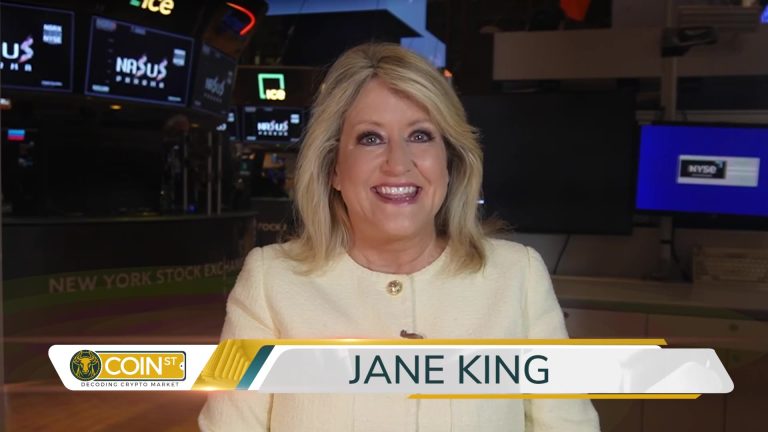
Jane KiNg with the latest from the NYSE.

The Genius Act: A New Era for Stablecoins and Financial Innovation

“The Genius Act is in many ways a cornerstone of dollar competitiveness in the 21st century.” – 05:11

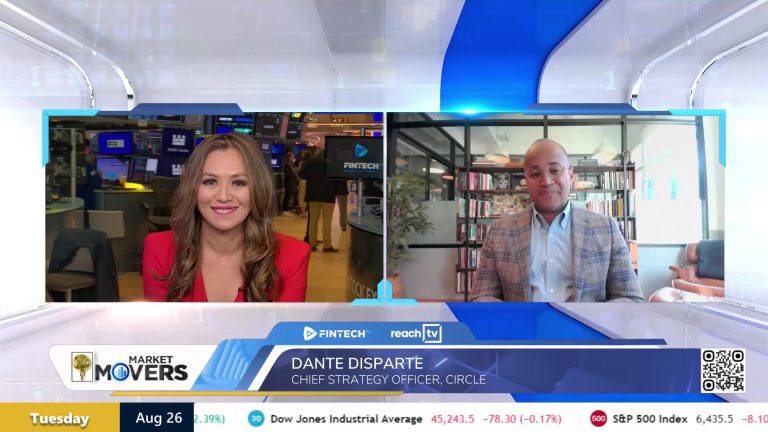
Dante Disparte, Chief Strategy Officer at Circle, joins Remy Blaire to discuss to discuss the recent passage of the Genius Act and its implications for the future of finance.

The conversation begins with Remy highlighting the importance of the Genius Act, which has been in effect for over a month. Dante emphasizes that the Act not only provides regulatory certainty and consumer protections for stablecoins but also initiates an 18-month period during which federal authorities will establish the rules for its implementation. He describes the Genius Act as a strategic regulatory milestone, potentially one of the most impactful pieces of financial regulation in the U.S., as it creates a federal framework for stablecoins while allowing for state-based oversight.

Dante notes that this regulatory clarity is generating significant institutional interest in stablecoins, with organizations weighing their options to build, buy, or partner in this evolving landscape. He likens the current moment for stablecoins to the early days of cloud computing, where initial hesitance gives way to widespread adoption. He explains that stablecoins offer a more efficient medium of exchange, particularly in a world where financial needs do not adhere to traditional banking hours.

As the discussion progresses, Remy asks Dante about the role of blockchain-based infrastructure in reshaping financial services. Dante addresses the “walled garden” problem in payments, explaining that while established payment networks may offer fast and low-cost payments, challenges arise when transactions cross borders or rival financial institutions. He asserts that the Genius Act enhances the ability to use U.S. dollars as a reference currency on the internet, enabling anyone with internet access to engage in compliant, always-on payment systems. This shift is poised to enhance U.S. competitiveness and the role of the dollar in the 21st century.

Market Reactions: Analyzing Powell’s Dovish Shift and Fed Independence

“Markets seem to be kind of, you know, pretty well prepared for that September cut.” – 01:54

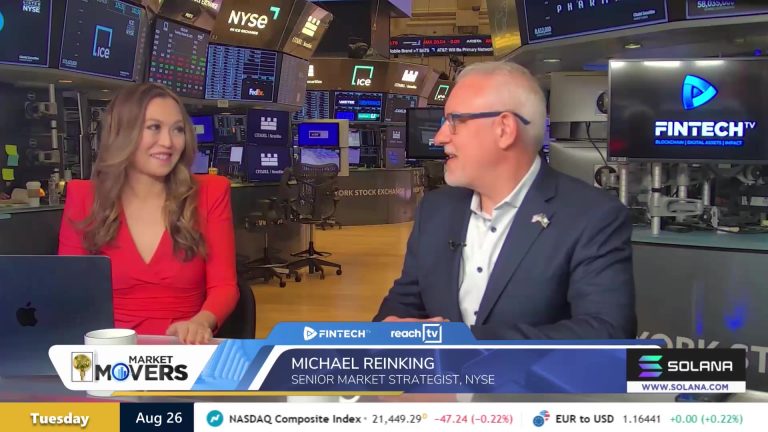
Michael Reinking, Senior Market Strategist at the NYSE, joins Remy Blaire to discuss the latest developments in the financial markets, focusing on the implications of Federal Reserve Chair Jerome Powell’s recent speech and the ongoing discussions regarding the independence of the Federal Reserve.

Michael elaborates on the market’s response to Powell’s speech and the broader implications of President Trump’s recent criticisms of the Fed. They discuss the uncertainty surrounding Trump’s calls for the removal of Fed Governor Lisa Cook and how the markets are currently processing this political noise.

As the conversation shifts to the tech sector, Remy and Michael focus on the upcoming earnings report from NVIDIA, which is generating significant interest. Michael highlights the recent fluctuations in tech stocks and the expectations surrounding NVIDIA’s performance, noting that the company has consistently exceeded earnings expectations in the past, setting a high bar for its upcoming report.

Finally, Remy asks Michael to outline key technical levels for the S&P 500 and the 10-year yield. Michael identifies critical support levels to watch as they navigate this potentially volatile period in the markets, emphasizing the importance of monitoring the yield curve and the ongoing discussions about Fed independence, which could influence market dynamics in the coming weeks.

The Future of Payments: How Stablecoins are Transforming the Global Landscape

“Tokenized deposits is another blockchain-based type of funds and banks like that, because they can lend against it.” – 01:31

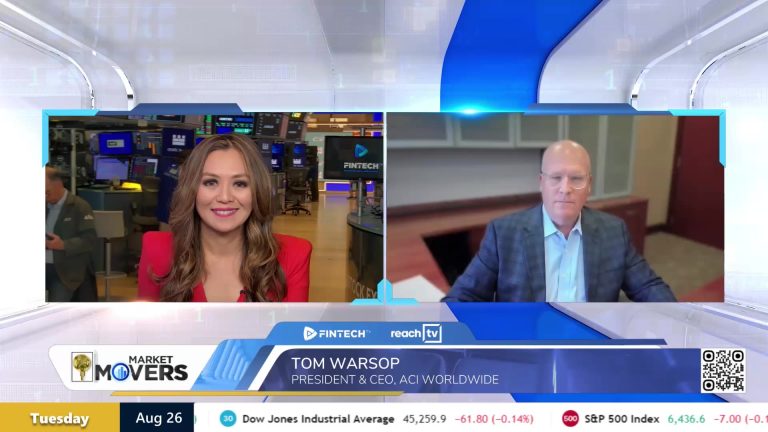
Tom Warsop, President & CEO at ACI Worldwide, joins Remy Blaire the rapidly evolving global payments industry, focusing on the significant role of stablecoins in shaping the future of digital payments.

Remy begins by asking Tom to elaborate on the adoption of stablecoins and their various use cases. Tom explains that stablecoins have several impactful applications, particularly in cross-border transactions. He highlights how stablecoins simplify the movement of money, especially when dealing with thinly traded or risky currencies. By reducing risks related to liquidity and exchange rates, stablecoins make international money transfers more efficient.

The conversation shifts to tokenized deposits, another blockchain-based financial instrument. Tom notes that banks are increasingly interested in tokenized deposits because they can be used for lending, unlike stablecoins. He emphasizes the growing trend of real-time payments around the world, which is transforming how consumers and businesses conduct transactions, making them faster, more efficient, and less costly.

Market Reactions: Fed Chair Powell’s Rate Cut Signals and Economic Outlook

“Despite a slowdown in the economy, I think recession risks are still on the lower end of the scale.” – 03:56

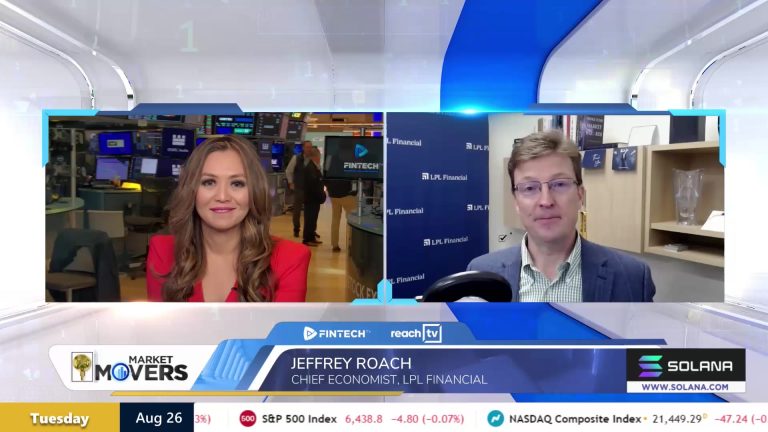
Jeffrey Roach, Chief Economist at LPL Financial joins Remy Blaire to discuss the latest developments on Wall Street, particularly following a significant rally that has propelled the Dow to its first record of 2025. After a remarkable surge of over 800 points at the end of the previous week, investors are now processing the implications of Fed Chair Jerome Powell’s recent comments, which suggest that potential rate cuts could occur as soon as next month.

The pair discuss the current state of the U.S. stock market and the importance of Fed independence in shaping monetary policy. Jeffrey emphasizes Powell’s focus on the Federal Reserve’s mandates—full employment and price stability—while also addressing the upcoming framework review that occurs every five years.

As they look ahead to the September 17th rate decision, Remy and Jeffrey examine key economic data on the horizon, including the PCE report and the jobs report due next Friday. Jeffrey highlights the challenges the Fed faces, particularly with rising inflation metrics that could complicate the case for near-term rate cuts. He introduces the concept of stagflation risks, where slow growth coincides with persistent inflation, and discusses how this could impact the Fed’s decisions in the coming months.

For listeners strategizing their investments, Jeffrey reassures them that despite the economic slowdown, recession risks remain low. He notes that a potential easing of rates without a recession could be beneficial for risk assets. They also touch on the importance of productivity growth, especially in light of a shrinking labor market, and the upcoming earnings report from NVIDIA as a key indicator of future trends.

Navigating the Crypto Landscape: The Impact of the Genius Act and ETF Developments

“Ethereum is becoming the trusted platform for the decentralized economy.” – 03:36

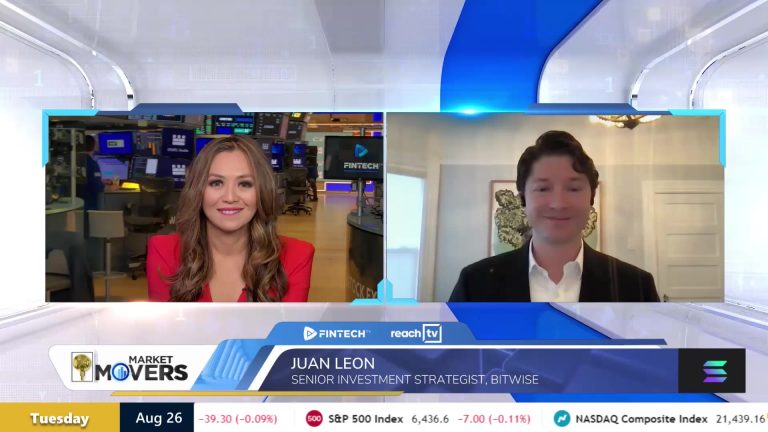
Juan Leon, Senior Investment Strategist at Bitwise, joins Remy Blaire to discuss the current state of the cryptocurrency market.

Remy highlights the recent pullback in crypto investments following a rebound from the Federal Reserve’s dovish remarks at Jackson Hole. Bitcoin has dipped below $109,000, marking its lowest level since July 9th, while Ether experiences a notable 13% retracement from its all-time high. Despite a market rally, Remy points out that crypto investment products have faced their largest weekly outflow since March, with Bitcoin funds losing over $8 billion and ETH products shedding approximately $440 million. This situation raises questions about the sensitivity of crypto flows to macroeconomic signals and the potential for larger shifts as expectations for rate cuts build.

Juan provides his insights, suggesting that the market is undergoing a typical end-of-summer correction. He expresses optimism for the second half of the year, noting that both Bitcoin and Ethereum have shown strong year-to-date performance, driven by increasing regulatory momentum and institutional interest.

Remy then shifts the conversation to the regulatory landscape, particularly focusing on the implications of the recently signed Genius Act. Juan explains how this legislation is expected to pave the way for stablecoins in the U.S., which is particularly relevant for Ethereum, where most stablecoin activity occurs. He also discusses the Clarity Act, which is currently progressing through Congress and could further shape the market structure for cryptocurrencies.

For retail investors, Juan emphasizes that despite recent price fluctuations, Ethereum remains a strong investment opportunity. He notes that Ethereum recently hit a new all-time high and has experienced a 35% increase year-to-date. Juan discusses the potential of Ethereum in the tokenization of assets, highlighting the massive growth opportunity this presents.

Ethereum ATH, Durov criticism, Metaplanet stock, xAI suit

0

In this episode of Coinstreet headlines, we dive into the latest headlines making waves in the cryptocurrency world. Ethereum hit a new all-time high, reaching above $4,900 over the weekend, just days after its highest level since November 2021. Telegram founder Pavel Durov speaks out against the French government, claiming his case is stagnant a year after his arrest. Bitcoin treasury firm Metaplanet makes headlines by graduating to FTSE Japan and other world indices. The Ethereum gaming network XAI has filed a lawsuit against Elon Musk’s xAI for trademark infringement, alleging unfair competition. Jane King with the latest from the NYSE.

Market Surge: Fed Signals Rate Cuts and Tech Stocks Soar

“This is an example of they’re not cutting because economically things are good. They’re cutting because of the weaker jobs number.” – 03:02

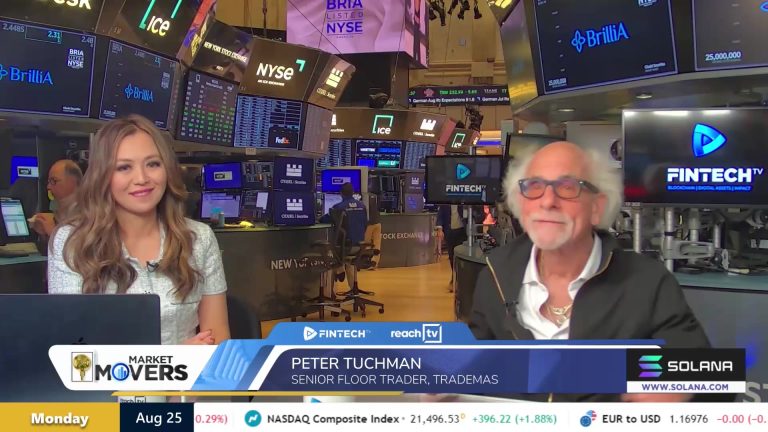
Peter Tuchman, Senior Floor Trader at TradeMas, joins Remy Blaire at the New York Stock Exchange to discuss the recent surge in U.S. stocks following the Federal Reserve’s indication of potential rate cuts.

Peter describes the rally as extraordinary, noting that the Dow has cleared all-time highs and gained triple digits. He explains that the Fed has faced mounting pressure to cut rates, and recent economic data has begun to support this move. Peter emphasizes that the Fed’s decision-making is based on economic indicators rather than political pressure, which surprises many market participants.

Peter humorously remarks on the cultural shift where people now host “watch parties” for corporate earnings, reflecting the increased engagement of retail traders in the market. He points out that the enthusiasm for the Fed’s potential rate cuts has encouraged many investors to re-enter the market, contributing to the rally.