This morning’s ADP employment report showed that the private sector added 41,000 jobs in December, coming in slightly below expectations. Additional labor market data is scheduled for release later this week, with jobless claims due Thursday and the closely watched December jobs report set for Friday. The broader context remains notable: the unemployment rate climbed to 4.6% in November, the highest level in four years, after beginning 2025 at 4%. Total hiring over the course of the year marked the slowest pace since the pandemic, underscoring a labor market that continues to cool.
Attention is also turning toward the Federal Reserve’s upcoming meeting next month as investors assess incoming economic data. Current market forecasts indicate a relatively low probability of a rate cut in January, estimated at approximately 17%.
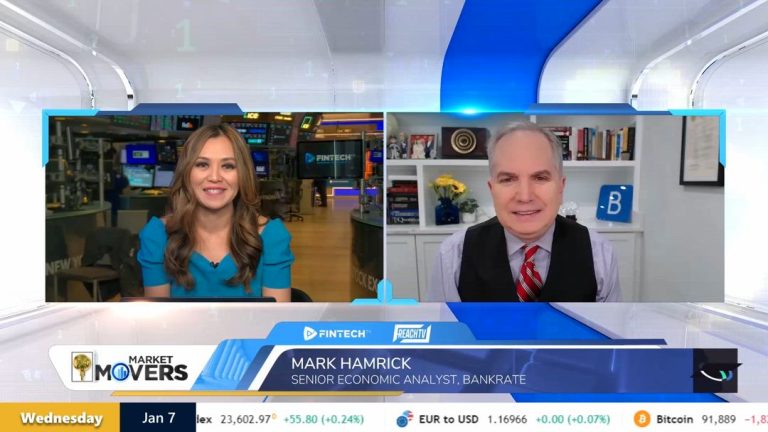
To unpack the latest employment data and broader economic implications, FintechTV anchor Remy Blaire spoke with Mark Hamrick, senior economic analyst at Bankrate.
Hamrick outlined his primary focus areas ahead of the December jobs report, noting that fourth-quarter data was complicated by the federal government shutdown that began October 1, which disrupted the collection of key statistical information. He cautioned that December employment figures may still reflect distortions tied to seasonal hiring patterns. Even so, Hamrick emphasized that the broader trend of subdued hiring is unlikely to change meaningfully regardless of the upcoming report.
He added that once December payroll data is finalized, it will confirm that hiring activity in the United States has fallen to its weakest level since 2020, signaling a material shift in labor market momentum.
Looking ahead to the new year, Hamrick addressed the potential impact of tax cuts included in the recent budget legislation. He noted that higher disposable income resulting from federal income tax refunds could provide some economic support, while also acknowledging that such measures contribute to elevated national debt levels.
On monetary policy, Hamrick highlighted the Federal Reserve’s current position, explaining that while lower short-term interest rates may offer some economic tailwinds, they are unlikely to spur excessive consumer spending. The Fed, he noted, remains focused on limiting the fallout from a softening labor market, though interest rate reductions alone may not deliver immediate relief.
The conversation also touched on upcoming leadership changes at the Federal Reserve, with Chair Jerome Powellexpected to step down in May. Hamrick suggested that a leadership transition could open the door to a more dovish policy stance but stressed that maintaining the Fed’s political independence is essential to preserving its credibility.
As the discussion concluded, Hamrick shared insights into consumer sentiment amid persistent economic uncertainty. According to a recent survey, respondents exhibited what he described as a K-shaped outlook for 2026: roughly one-third expect their financial situation to worsen, one-third anticipate improvement, and one-third foresee little change. Notably, this level of pessimism represents the weakest sentiment recorded since the survey began in 2018.
Hamrick noted that debt reduction remains the top financial priority for many Americans, particularly as a significant share of households continue to live paycheck to paycheck. He advocated for a balanced strategy that includes paying down debt while also maintaining emergency savings and continuing retirement contributions.
As 2026 begins, the intersection of employment trends, fiscal policy, and monetary decisions is poised to shape the financial reality for households across the country. Hamrick’s insights highlight the importance of strategic financial planning and disciplined decision-making as Americans navigate an evolving and uncertain economic landscape.
In summary, Hamrick emphasized that the labor market faces meaningful challenges heading into the new year, with federal policy actions and upcoming Federal Reserve decisions likely to play a central role in determining the trajectory of economic recovery. Staying informed and proactive, he noted, will be critical as individuals and institutions alike adapt to the complexities of 2026.