[stock-market-ticker symbols=" ^NYA;CRYPTO:BTC;CRYPTO:ETH;CRYPTO:USDT;CRYPTO:USDC;CRYPTO:BNB;CRYPTO:ADA;CRYPTO:XRP;CRYPTO:SOL;CRYPTO:DOGE " stockExchange="NYSENASDAQ" width="100%" transparentbackground=1 palette="financial-light"]

Home Blog Page 63

Bitcoin’s Resilience: Insights from David Bailey on Market Volatility and Future Trends

“The whole play with Bitcoin treasury companies… is to have permanent capital.” – 04:10

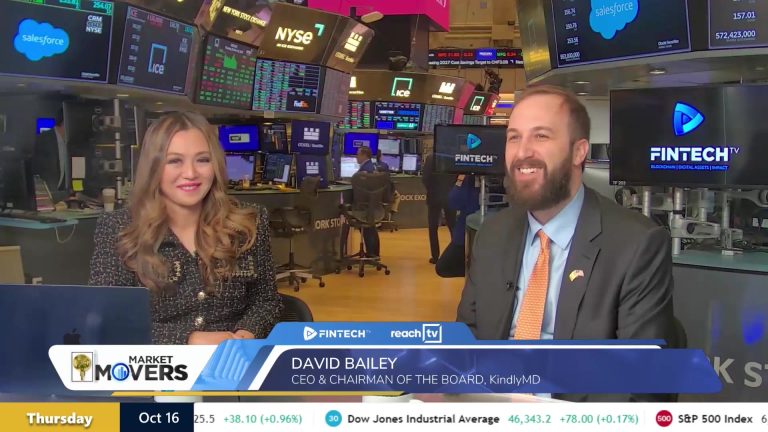
David Bailey, the CEO and Chairman of the Board at KindlyMD, joins Remy Blaire to discuss the backdrop of significant volatility in the cryptocurrency market, particularly focusing on Bitcoin, which has recently experienced a sharp decline from over $120,000 to below $105,000. This downturn is marked as one of the worst liquidation events in crypto history, yet Bitcoin enthusiasts remain largely unfazed, with the cryptocurrency stabilizing above $111,200.

Remy and David explore the current state of decentralized applications (dApps) and the evolving landscape of Bitcoin treasuries. David notes that the market is undergoing a period of consolidation, with over 180 companies having added Bitcoin to their balance sheets. He emphasizes the need for the market to differentiate between genuine players and those that may not be sustainable, suggesting that this scrutiny will lead to the emergence of a new wave of dApps.

The discussion shifts to the intersection of traditional finance (TradFi) and Bitcoin capital markets. David highlights the significance of the Bitcoin ETF and asserts that this merger is just beginning. He expresses optimism about Bitcoin’s future, predicting that its price will rise significantly in the coming years, potentially reaching several hundred thousand dollars.

As the conversation progresses, Remy raises concerns about the ongoing U.S. government shutdown and its implications for the approval of new legislation affecting both equity markets and cryptocurrency exchange-traded products (ETPs). David provides insights into the Clarity Act and its complex nature, suggesting that it may be passed before the midterms.
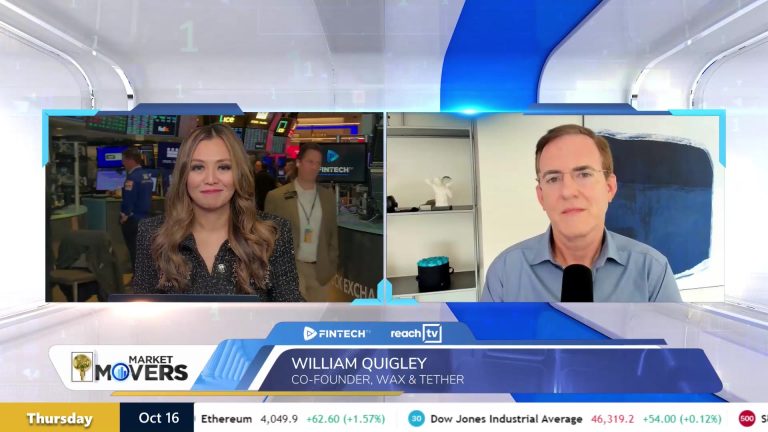
Crypto Exchanges: The Most Profitable Players in the Digital Economy

William Quigley, the Co-Founder of WAX & Tether, joins Remy Blaire to discuss the dynamic landscape of the crypto industry, focusing on recent developments in exchanges, stablecoins, and digital asset treasuries.

The conversation begins with the recent rebranding of Hong Kong’s Prestige Wealth to Aurelian Treasury, which has launched as a Tether gold-backed treasury, successfully raising $150 million in financing. Quigley shares his perspective on this development, describing it as a natural progression in the tokenization of assets. He explains that the evolution from tokenizing fiat currencies to commodities like gold is a logical step, given the efficiency of blockchain technology in facilitating cross-border transactions and the persistent demand for globally traded assets.

Remy then shifts the discussion to the profitability of crypto exchanges. Quigley asserts that crypto exchanges are among the most profitable businesses in the crypto space, second only to stablecoins and decentralized finance (DeFi). He elaborates on the simplicity and scalability of exchanges, which allow them to generate billions in free cash flow. Quigley also highlights the role of exchanges in contributing to market volatility, noting that many engage in proprietary trading, making them a powerful force in the crypto ecosystem.

The segment takes a turn as they discuss the struggles faced by digital asset treasuries, particularly Metaplanet, which has fallen below its market net asset value. Quigley expresses skepticism towards digital asset treasury companies (DApps), arguing that investing in these intermediaries adds unnecessary risk to an already volatile asset class. He advocates for direct investment in cryptocurrencies rather than through companies that hold crypto on behalf of investors, suggesting that this approach mitigates additional uncertainties.

Navigating Trade Tensions: Insights on U.S.-China Relations and Global Supply Chains

“Goldman Sachs had stated that up to 50% of the tariffs are going to be absorbed by consumers.” – 03:18

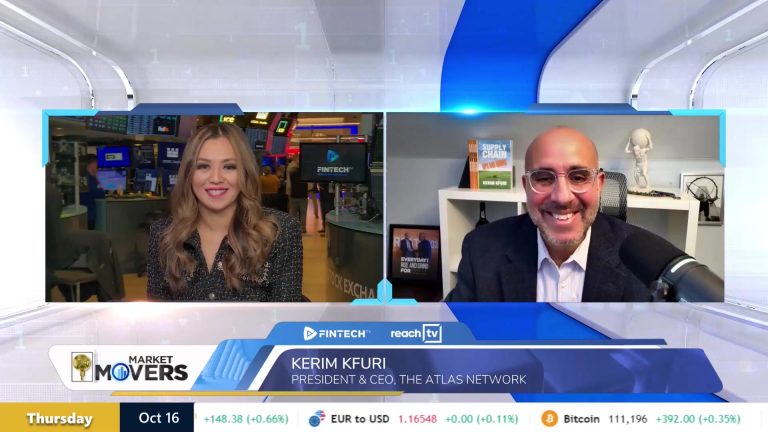
Kerim Kfuri, the President and CEO of The Atlas Network, joins Remy Blaire to discuss the current state of global trade amid escalating tensions between the U.S. and China, which have led to significant fluctuations in the stock market.

Remy begins by highlighting the resilience of global supply chains, which continue to hold steady despite the challenges posed by tariffs, geopolitical friction, and the concept of de-globalization. She references the DHL and NYU Stern’s global connectedness tracker, which indicates that companies and countries are managing risks effectively and not retreating from international business. Kerim emphasizes the importance of trade diversification as a critical strategy for mitigating risks in a turbulent economic environment.

As the discussion unfolds, Remy and Kerim delve into the implications of recent market pullbacks, particularly in light of the ongoing government shutdown and the potential for new tariffs. Kerim explains how businesses are responding to this uncertainty, noting that many are stockpiling inventory to prepare for the impact of tariffs. He advises consumers to be strategic in their shopping, as some businesses may have overstocked and could offer discounts.

The conversation shifts to the broader implications for American companies, including small businesses that make up a significant portion of the economy. Kerim, a self-proclaimed supply chain optimist, encourages businesses to seek opportunities within disruptions. He advocates for cost engineering and agility, urging companies to adapt their supply chains to offset increased tariffs and enhance profitability.

As the segment nears its conclusion, Remy asks Kerim about the concerns of stakeholders regarding global trade. Kerim highlights the need for negotiation and resolution, cautioning against overly punitive measures that could ultimately burden consumers. He stresses the importance of communication and collaboration in navigating the complexities of international trade.

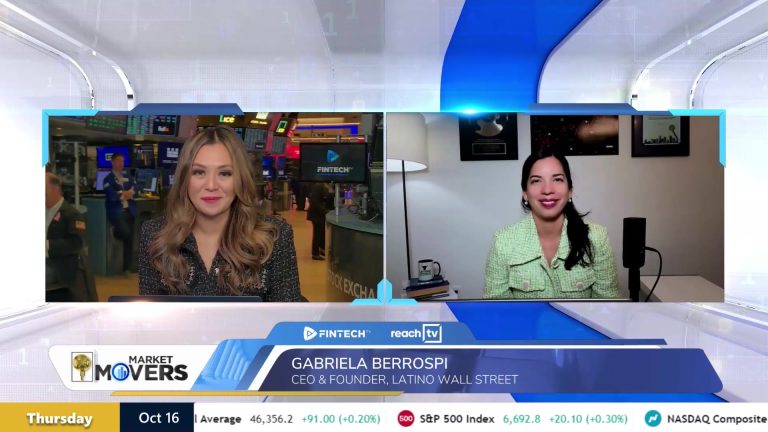
Banking on Gold: Gabriela Berrospi Analyzes Earnings Season and Investment Trends

“BlackRock, of course, the king of investment banks.” – 03:10

Gabriela Berrospi, CEO & Founder of Latino Wall St, joins Remy Blaire to discuss the current state of the U.S. stock market, which is experiencing positive movement despite recent volatility driven by trade tensions.

Remy introduces the topic by referencing former President Trump’s comments about the trade war with China, setting the stage for a deeper exploration of market dynamics. Gabriela explains that the volatility in the markets is largely due to mixed messages from U.S. leaders regarding China. She notes the confusion surrounding the government’s fluctuating stance, which has led to uncertainty among investors. This uncertainty is reflected in the markets, resulting in increased volatility and a heightened interest in commodities as safe-haven assets.

As the conversation shifts to the ongoing earnings season, Gabriela shares her insights on the performance of major banks. She highlights BlackRock and JPMorgan Chase as key players in the banking industry, emphasizing their dominance in both consumer and investment sectors. Gabriela expresses her belief that these two institutions will continue to lead the market, particularly as interest rates are expected to decline further. This decline is likely to encourage more borrowing and investment, which could benefit these banks significantly.

Gabriela also discusses the rising interest in gold, referencing comments made by Jamie Dimon, CEO of JPMorgan Chase, who suggests that gold could reach $10,000. This perspective indicates a growing recognition among Wall Street leaders of the importance of including gold in investment portfolios, especially in light of current market conditions.

U.S.-China Trade Tensions: Impact on Crypto Markets and Investor Sentiment

“Bitcoin’s correlation to equities is higher than normal and its correlation to gold is lower than normal.” – 03:03

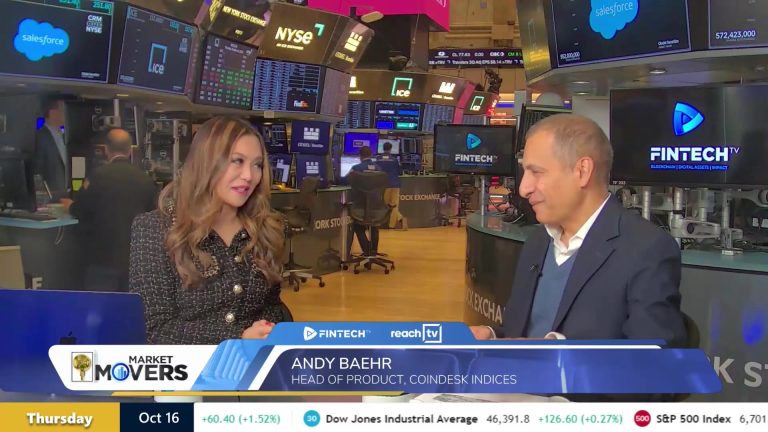
Andy Baehr, Head of Product at Coindesk Indices, joins Remy Blaire at the New York Stock Exchange to discuss the recent upheaval in the cryptocurrency market, triggered by rising U.S.-China trade tensions. The discussion begins with a significant sell-off in Bitcoin and altcoins that occurred last Friday, resulting in over $19 billion in leveraged crypto bets being liquidated within a 24-hour period. This event affects approximately 1.6 million traders, although the actual number may be even higher. Remy highlights the unique operational challenges of the crypto market, such as limited liquidity and a rush of traders attempting to exit, which intensified the selling pressure and led to rapid declines in coin prices across various trading platforms.

Andy shares his recent experiences from a trip across six cities in four countries in Europe, where he engaged with a diverse array of investors, including long-term investors, family offices, and asset managers. He notes that the investment case for Bitcoin is becoming increasingly solidified, with many investors already allocating a portion of Bitcoin into their portfolios. The conversation also touches on the growing interest in stablecoins and tokenization, as investors seek to understand how Layer 1 blockchains like Ethereum and Solana can enhance their investment strategies.

Remy and Andy discuss the differences in the crypto landscape between Western Europe and the UK. While most of Europe has had exchange-traded products (ETPs) for years, UK retail investors have only recently gained the opportunity to invest in Bitcoin and Ether ETPs following the lifting of a ban. This timing, coinciding with the recent market sell-off, could present a unique entry point for UK investors looking to add these assets to their portfolios.

As they analyze the market action from last Friday, they note that Bitcoin’s correlation to equities has increased, while its correlation to gold has decreased. This shift raises concerns for Bitcoin, as it has been following equities down as a risk asset. The unexpected decline in the equity market contributes to the fragility of the crypto market, leading to the significant liquidation event. Despite the chaos, Andy points out that the market managed to recover somewhat, although the $20 billion in liquidations has left it feeling precarious.

Remy and Andy discuss the lessons learned from this liquidation event, emphasizing that such occurrences are not uncommon in both equities and crypto markets. After a period of positive news and adoption, the market can experience pullbacks, which may present buying opportunities for those willing to take the risk. Currently, Bitcoin is hovering around $110,000, down from its recent all-time high of $126,000, while Ether and other Layer 1s have seen a 20% decline. Andy advises listeners to prepare for potential volatility in the coming weeks and highlights the need for a new catalyst to restore positive momentum in the market.

Crypto futures, Ethereum prediction, BOE stablecoins, Trade war

0

In this episode of Coin Street headlines, we dive into the latest developments in the cryptocurrency market and beyond. Headlines Covered: Bitcoin’s potential volatility this month and the need for a new catalyst to push prices above $117,000. Predictions from Bitmine chair Tom Lee and BitMEX co-founder Arthur Hayes about ether reaching $10,000 this year, despite recent market fluctuations. The Bank of England’s plans to limit stablecoins and the industry’s response to these proposed measures. U.S. President Donald Trump’s comments on the ongoing trade war with China and the implications of potential tariffs on rare earth minerals. Jane King with the latest from the NYSE.

Empowering Retail Investors: The Role of the Crowdfunding Professional Association

“They want to see retail investors have more access to more different kinds of deals.” – 02:44

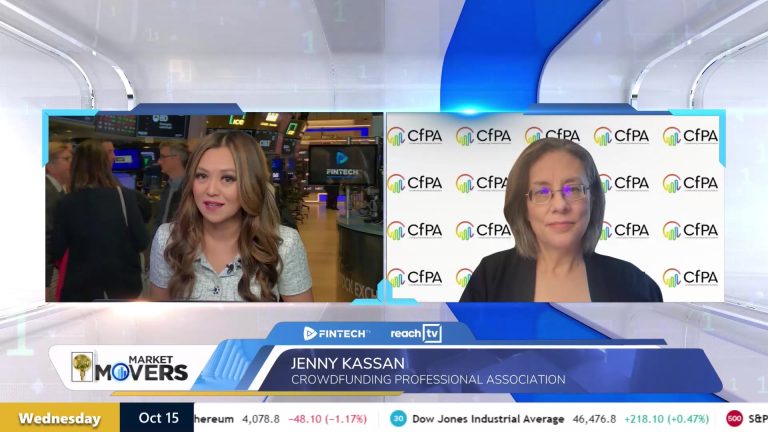
Jenny Kassan, President of the Crowdfunding Professional Association, joins Remy Blaire to provide valuable insights into the organization’s role and its upcoming summit on regulated investment crowdfunding.

Jenny begins by exploring the CFPA’s policy advocacy agenda, particularly in light of the 2016 regulation crowdfunding law. Jenny explains that prior to this legislation, it was nearly impossible for everyday investors to participate in funding private companies. The law has since enabled individuals to raise money from a broader audience, including retail investors, and to advertise their offerings nationwide. Jenny emphasizes the importance of this shift and the potential for further improvements, especially with Regulation A+, which allows companies to raise up to $75 million.

As the conversation progresses, Remy inquires about the CFPA’s relationship with the SEC and legislators in Washington, D.C. Jenny shares that the CFPA has cultivated strong relationships with SEC commissioners and various lawmakers who are eager to enhance the crowdfunding space. They are advocating for increased access for retail investors, who currently have most of their investments tied to public markets, which consist of only about 4,000 companies. Jenny stresses the need for investors to have the right to diversify their portfolios.

The discussion also touches on the CFPA’s efforts to create a balanced and protective crowdfunding ecosystem. Jenny highlights the existing investor protections embedded in the law, affirming the CFPA’s commitment to safeguarding investors from fraud. However, she also advocates for the freedom of individuals to make informed investment decisions, provided they have access to accurate disclosures. Jenny notes that there is growing support for this balanced approach from various sectors of the federal government.

Navigating Earnings Season: Insights on U.S. Banks and AI’s Impact on Markets

“Small caps have been overlooked for a number of years now, and you’re going to begin to see a trickle down.” – 04:00

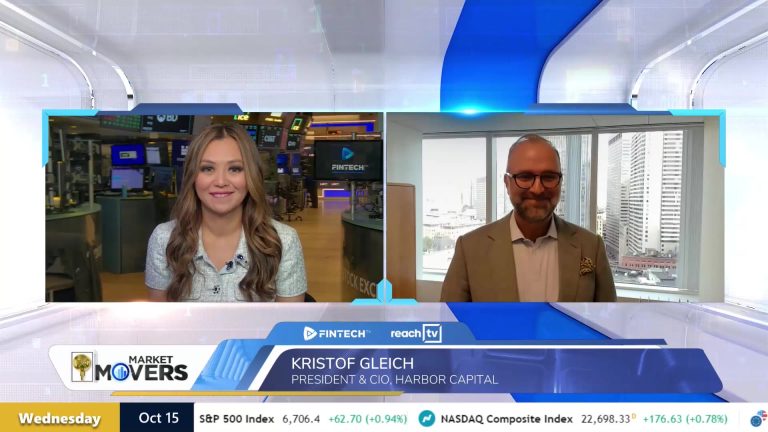
Kristof Gleich, President and CIO of Harbor Capital, joins Remy Blaire to discuss the current financial landscape, particularly in light of ongoing trade tensions between the U.S. and China, and the implications for investors navigating these complexities.

As the earnings season kicks off, Remy and Kristof explore the performance of America’s largest banks, which have reported robust earnings driven by a strong deal-making environment and fixed income trading. Kristof highlights the bifurcation in the market, distinguishing between AI-driven technology sectors and more traditional industries. He expresses optimism about the economy’s resilience, suggesting that growth could accelerate into 2026, while also emphasizing the importance of monitoring top-line growth in AI companies as earnings reports unfold.

The discussion shifts to the various factors influencing U.S. equities, with Kristof noting the volatility experienced earlier in the year due to tariffs and trade policies. He believes that these concerns have largely settled into the background, paving the way for more positive economic policies, such as the One Big Beautiful Bill Act. This transition, he argues, is likely to foster a reacceleration of growth, creating a somewhat paradoxical market environment where strong fundamentals coexist with ongoing trade issues.

A significant portion of the episode is dedicated to small-cap stocks. Kristof reveals that while 50% of expected earnings growth this season is concentrated in just six major tech companies, he anticipates a catch-up trade for small caps, which have been overlooked for years. He discusses the burgeoning demand for data centers and the subsequent need for industrial equipment, suggesting that specialized small-cap companies could benefit from this CapEx boom. Kristof stresses the importance of a selective, active investment approach in this space, as many small caps remain unprofitable.

Case dismissed?, Crypto crash, BlackRock ETFs, NYC blockchain

0

On this episode of CoinStreet Headlines, A California federal court is moving closer to dismissing the criminal indictment against Bitcoin advocate Roger Ver, also known as Bitcoin Jesus. The U.S. government has proposed a dismissal after reaching an agreement with Ver to settle his tax liabilities with the IRS, totaling around $50 million.

We also discuss the recent $19 billion crypto market liquidation event that has left traders divided. Some are accusing market makers of a coordinated sell-off, while analysts suggest it may be part of a natural deleveraging cycle. The flash crash saw a significant drop in open interest for perpetual futures on decentralized exchanges, highlighting the volatility in the market.

Additionally, we cover BlackRock’s impressive quarter, driven by strong inflows into its iShares exchange-traded funds, which are increasingly popular among institutional investors. Lastly, New York City Mayor Eric Adams has established a new Office of Digital Assets and Blockchain, aimed at positioning the city as a leading cryptocurrency hub. Jane King has the latest from the NYSE.

U.S.-China Trade Tensions: Market Impacts and Future Predictions

“The U.S. is like, you escalated, so we are going to escalate. China’s like, no, you did it first, so we are going to escalate.” – 02:24

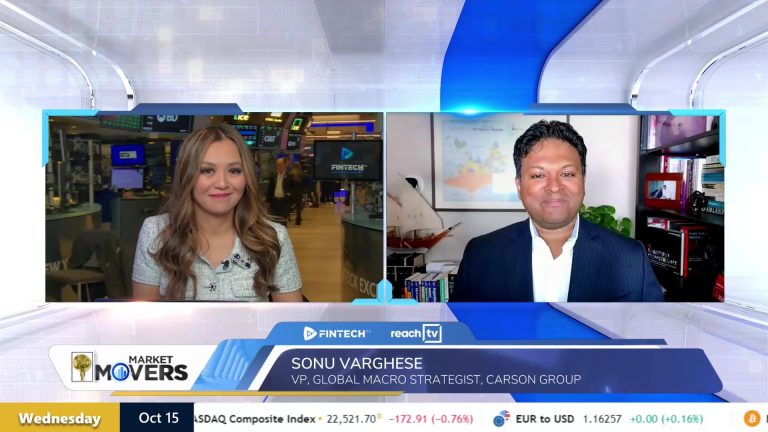
Sonu Varghese, VP, Global Macro Strategist at Carson Group, joins Remy Blaire to discuss the current state of the equity market, which has been exhibiting notable volatility. The market’s erratic behavior is likened to Christmas tree lights, fluctuating between red and green as it responds to various economic signals. Remy highlights Federal Reserve Chair Jerome Powell’s recent remarks, indicating that the central bank is likely to cut interest rates again later this month, despite persistent inflation and a weakening job market.

Sonu elaborates on the macroeconomic factors contributing to the market’s volatility, particularly the ongoing trade tensions between the U.S. and China. He notes that the S&P 500 has experienced a remarkable 35% increase over the past six months, suggesting that the current bull market, which began on October 12, 2022, is showing strong momentum. Sonu expresses optimism that this bull market may continue into its fourth year, historically associated with positive returns.

The conversation shifts to the Federal Reserve’s dual mandate of maintaining stable inflation and maximum employment. Sonu articulates his belief that the Fed will proceed with rate cuts in October and potentially again in December, prioritizing the protection of the labor market amid rising inflation concerns.

Remy and Sonu then explore the burgeoning field of AI-related investments, which are beginning to mirror the growth patterns seen during the dot-com boom. Sonu points out that AI spending now constitutes over 4% of GDP, significantly contributing to economic growth. He discusses the intricate relationships forming between companies like OpenAI and major tech firms, illustrating how these partnerships are driving investment and innovation in the AI sector.