[stock-market-ticker symbols=" ^NYA;CRYPTO:BTC;CRYPTO:ETH;CRYPTO:USDT;CRYPTO:USDC;CRYPTO:BNB;CRYPTO:ADA;CRYPTO:XRP;CRYPTO:SOL;CRYPTO:DOGE " stockExchange="NYSENASDAQ" width="100%" transparentbackground=1 palette="financial-light"]

Home Blog Page 64

Crypto’s Next Chapter: Tokenized Treasuries, Flash Crash Lessons & Adoption

“Stablecoins were able to create this whole catalyst effect and now finally TradFi is understanding that this is not only one particular asset class, it’s basically financial infrastructure.” – 02:01

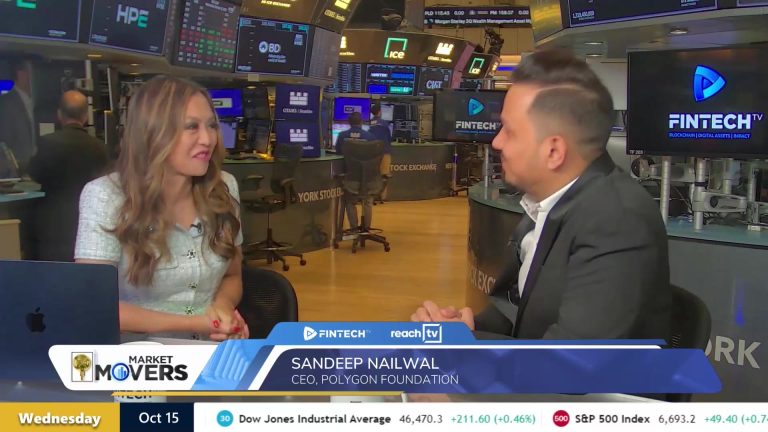
Sandeep Nailwal, CEO of the Polygon Foundation, joins Remy Blaire at the New York Stock Exchange to discuss the rapid growth in the market for tokenized real-world assets (RWAs), which has surged to nearly $34 billion, reflecting a remarkable 224% increase in 2024 alone. With projections estimating a valuation of $30 trillion by 2034, the implications for traditional finance (TradFi) are significant.

Sandeep shares insights into the increasing institutional adoption of tokenized treasuries and private credit, emphasizing the evolution of crypto from a speculative asset class to a vital financial infrastructure. He highlights the role of stablecoins as tokenized versions of fiat currencies and discusses the trend of tokenizing various financial instruments, including bank deposits and mutual funds, which enhances liquidity and creates new investment opportunities.

The conversation shifts to recent developments in the crypto space, including notable deals such as Circle’s public listing and the New York Stock Exchange’s investment in Polymarket. Sandeep reflects on the recent crypto flash crash, describing it as a chaotic event triggered by a stablecoin’s de-pegging, which led to a cascading effect across the market. He underscores the interconnectedness of the crypto ecosystem and the necessity for robust infrastructure to prevent similar incidents in the future.

Remy and Sandeep also delve into Polygon’s latest upgrade, Rio, which significantly enhances the blockchain’s transaction capacity from 200 to 5,000 transactions per second (TPS). This upgrade positions Polygon as one of the highest throughput chains in the industry, enabling applications like PolyMarket to scale effectively and serve a larger user base. Sandeep discusses the strategic focus on stablecoins and tokenization, which are crucial for driving volume and facilitating payments.

Additionally, they touch on Stripe’s recent launch of subscription services on Polygon, showcasing the platform’s growing utility in the fintech space. Sandeep highlights how major players are increasingly choosing Polygon for their blockchain needs, reinforcing the ecosystem’s commitment to utility over speculation.
Gold vs. Bitcoin: Diverging Paths in Today’s Financial Landscape

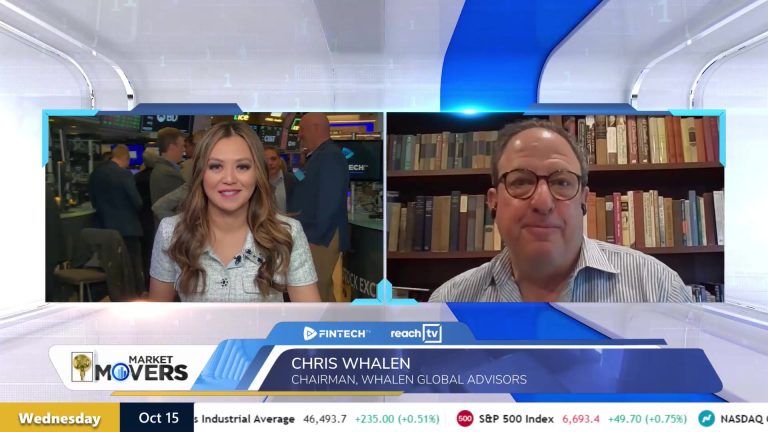
“We’re going to see more surprises in the fourth quarter, especially when it comes to writing off special idiosyncratic exposures.” – 02:35

Chris Whalen, Chairman of Whalen Global Advisors, the current state of Wall Street, highlighting the strong profits being driven by deal-making, trading, and lending at major banks. She notes that Goldman Sachs, J.P. Morgan, Citi, and Wells Fargo have all exceeded expectations, with Goldman on track for a record year and J.P. Morgan aiming to surpass $50 billion in profit once again.

Chris explains that while the deal-making side of the banking sector is thriving, the credit side remains quiet, especially for consumers. He points out that commercial and private equity sectors are facing significant challenges, and many banks are struggling with cost efficiency, achieving only about a 1% return on assets.

The conversation shifts to the dynamics of the markets, where Chris notes that liquidity is flowing back into public markets as private equity cools down. He highlights that while banks are attempting to focus on positive aspects, there are hidden risks, particularly with institutions like Goldman Sachs dealing with losses from private equity positions.

Remy then transitions to a discussion about the contrasting performances of gold and Bitcoin. She notes that gold has been climbing, recently breaking the $4,200 mark, while Bitcoin has experienced a decline following a sell-off. Chris clarifies that gold and Bitcoin are not correlated, with Bitcoin being more closely tied to stock market movements. He advises investors to consider tangible assets like gold and real estate, especially for those who have made profits in the crypto market.

Dubai’s Digital Finance Revolution: Tokenization and Crypto Growth

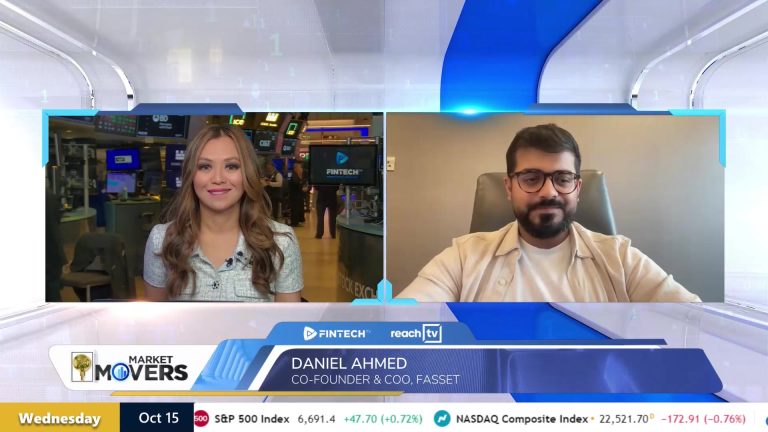
“We believe that Islamic finance should be treated not as a particular niche, but actually as a blueprint for how finance should work in the digital age.” – 00:01:57

Daniel Ahmed, Co-Founder and COO of Fasset, joins Remy Blaire to discuss the dynamic landscape of the global Islamic finance industry, which has recently surpassed $5 trillion in assets and is projected to double by 2030. Despite this significant growth, Remy highlights the ongoing challenges many individuals face in accessing authentic Sharia-compliant financial products, particularly in various regions around the world.

Daniel shares his insights on how inflation and currency devaluation are pushing emerging markets toward stablecoins, which serve as a vital tool for individuals looking to safeguard their savings and facilitate rapid cross-border transactions.

The discussion shifts to the principles of Islamic finance, with Daniel arguing that it should not be viewed merely as a niche but rather as a blueprint for modern finance. He emphasizes the importance of asset-backed financial products, contrasting this with the current state of the cryptocurrency market, which often lacks tangible value. Daniel articulates how Fasset aims to bridge the gap between traditional finance, Islamic finance, and the burgeoning world of digital assets, ultimately fostering sustainable wealth creation for people worldwide.

As the conversation progresses, Remy and Daniel delve into the Middle East, particularly Dubai, which has emerged as a significant player in the digital finance arena. Daniel notes that the region has received approximately $338.7 billion in crypto investments, making it the seventh largest crypto economy globally. He discusses how Dubai is striving to become a leading hub for digital assets through a careful balance of innovation and regulation. Daniel shares insights from his recent engagements with the UAE’s Virtual Asset Regulation Authority, emphasizing the importance of regulatory support in fostering an environment conducive to experimentation and growth.

Bitmine ethereum, Crypto ETFs, Strategy bitcoin, Bitcoin rally? 

0

In this episode of Coin Street headlines, we dive into the latest developments in the cryptocurrency market. Bitmine has made headlines as the world’s largest corporate ether holder, aggressively buying the dip and pushing its total ethereum holdings past 3 million, which accounts for about 2.5% of the total supply. We discuss the implications of the ongoing U.S. federal government shutdown, which has now entered its third week, leaving 16 exchange-traded funds (ETFs) in limbo as the SEC’s decisions are delayed. Strategy has also made a bold move by increasing its bitcoin holdings to over $73 billion, purchasing 220 Bitcoin at an average price of $123,500 each, marking the highest price paid per bitcoin by the firm. Lastly, we analyze how recent market events, including Friday’s flash crash, may impact short-term risk appetite and the potential for a Bitcoin rally, alongside the effects of U.S.-China trade talks and regulatory concerns. Jane King with the latest from the NYSE.

Market Volatility: Analyzing U.S. Stock Futures and Big Bank Earnings

“When you have a sustained period of time where you have that low volatility, you bring those systematic flows back into the market.” – 01:57

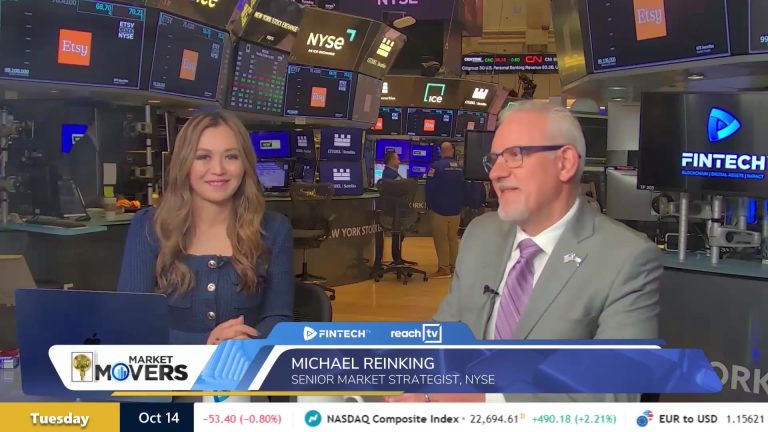
Michael Reinking, Senior Market Strategist at the NYSE, joins Remy Blaire, to discuss the current state of the U.S. stock market, focusing on the recent volatility and the implications for major banks as earnings season kicks off.

Michael explains the recent resurgence in market volatility, attributing it to escalating tensions with China regarding rare earth export controls. He notes that after a prolonged period of low volatility, the market is experiencing aftershocks from this volatility shock. Remy and Michael analyze the S&P 500’s performance, particularly its near proximity to key moving averages, which indicates the market’s susceptibility to further fluctuations.

As the conversation shifts to earnings season, Remy emphasizes the strong year-to-date performance of major banks, which have outperformed the S&P 500. Michael shares insights on the mixed responses to the banks’ earnings reports, highlighting the robust capital markets and investment banking activity. He also discusses the importance of provisioning practices in light of recent bankruptcies in the private sector, noting that JP Morgan has taken reserves related to these events.

With the ongoing government shutdown affecting the release of key economic data, Remy and Michael discuss the significance of the upcoming Consumer Price Index (CPI) figure expected before the end of the month. They also look ahead to Fed Chair Powell’s remarks, which could provide clarity on rate cut expectations in the current economic environment.

Navigating the Crypto Landscape: Insights Amidst the U.S. Government Shutdown

“This was a stress test that the network passed with flying colors.” – 02:16

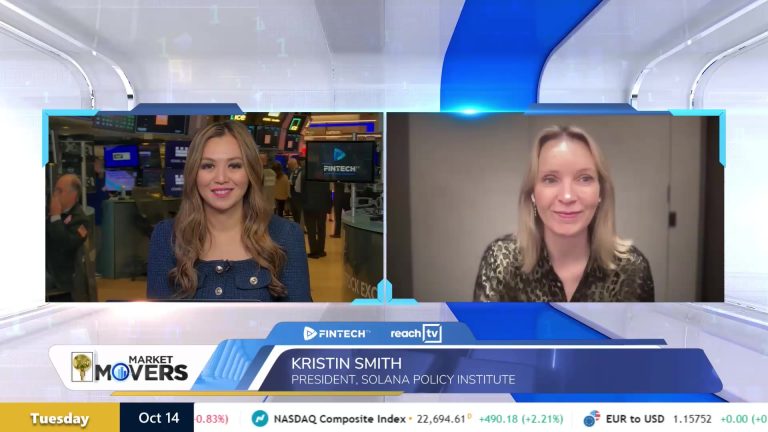
Kristin Smith, President of Solana Policy Institute, joins Remy Blaire to discuss the ongoing U.S. government shutdown, which has now entered its third week. She notes that the shutdown has surpassed the typical three-day average and could potentially break the record of 35 days set during former President Trump’s first term. Remy highlights the impact of the shutdown on the cryptocurrency market, particularly the delay in spot ETF requests and the lack of progress on the Clarity Act.

Kristin provides insights into the current state of the crypto market, especially following a significant liquidation event that resulted in over $19 billion in liquidations. Despite this turmoil, she emphasizes the resilience of decentralized finance (DeFi) technologies, particularly the Solana network, which has shown impressive performance with peak transaction processing exceeding 100,000 transactions per second and maintaining low fees during high traffic periods.

Kristin discusses the positive developments in the crypto sector throughout the year, including increased regulatory clarity driven by initiatives like the Genius Act and the SEC’s project crypto. She explains that these advancements are encouraging banks and asset allocators to explore crypto technologies more seriously, presenting a significant opportunity to enhance financial infrastructure.

The conversation shifts to the impact of the government shutdown on crypto policy discussions in Washington, D.C. Kristin explains that while the shutdown has temporarily stalled progress, legislative conversations around market structure and tax hearings are still ongoing in Congress. She expresses optimism that once the shutdown concludes, regulatory agencies will resume their important work.

Finally, Remy and Kristin touch on the status of Solana Exchange-Traded Products (ETPs), which are currently in a holding pattern due to the shutdown. Kristen shares her belief that the SEC’s recent approval of generic listing standards will facilitate the introduction of Solana ETPs, providing a valuable investment vehicle for those unable to hold crypto directly.

From Tragedy to Triumph: John O’Leary’s Story of Resilience

“In the brokenness we can be redeemed, that there can be goodness that comes out of brokenness and that heroes still exist.” – 02:01

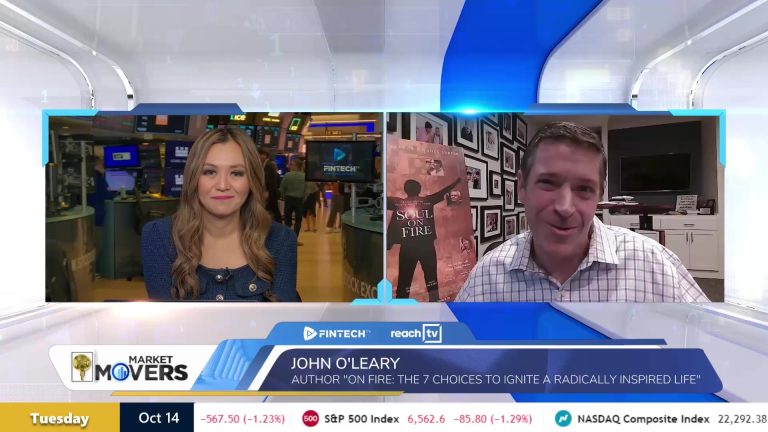
Remy Blaire welcomes John O’Leary, the real-life inspiration behind the newly released film “Soul on Fire” and Author of “On Fire: The 7 Choices to Ignite a Radically Inspired Life.” The film, produced by Sony Pictures and Affirm Films, chronicles John’s harrowing childhood accident in 1987, which left him with burns covering 100% of his body.

John reflects on his initial reluctance to have his story turned into a film. He shares that after his traumatic experience, his goal was to lead an ordinary life, away from the public eye. However, over time, he found himself drawn into public speaking and writing, ultimately leading to the creation of “Soul on Fire.”

John explains that the film not only depicts his personal struggles but also highlights themes of resilience, faith, family, and the extraordinary will to live. He discusses his involvement in the production, revealing that he initially gave a passive agreement for the film to be made. As the project progressed, he became more engaged, ensuring that the film was shot in authentic locations significant to his life, such as his childhood home and the church where he married his wife. This attention to detail was important to him, as he wanted the film to resonate with truth and authenticity.

Throughout the episode, Remy and John discuss the film’s impact on audiences. John expresses his hope that viewers will walk away with a sense of hope, especially in a world filled with uncertainties and challenges. He shares a poignant moment with his father, who passed away earlier that summer, where they discussed the film in a theater. His father’s words, “What a gift,” encapsulate the essence of what John hopes audiences will feel after watching the film.

The conversation also touches on the current state of the film industry and the importance of uplifting narratives. John points out that Hollywood responds to audience preferences, and the success of “Soul on Fire” demonstrates a collective desire for more inspirational stories. He highlights the film’s ability to resonate with a diverse audience, from young children to older adults, and the positive emotional responses it has elicited.

AI Adoption: Are We in the Early Innings of a Tech Revolution?

“If there is no similar response that’s viewed as a point of weakness, and I don’t think either side wants to have that going into this potential meeting.” – 01:19

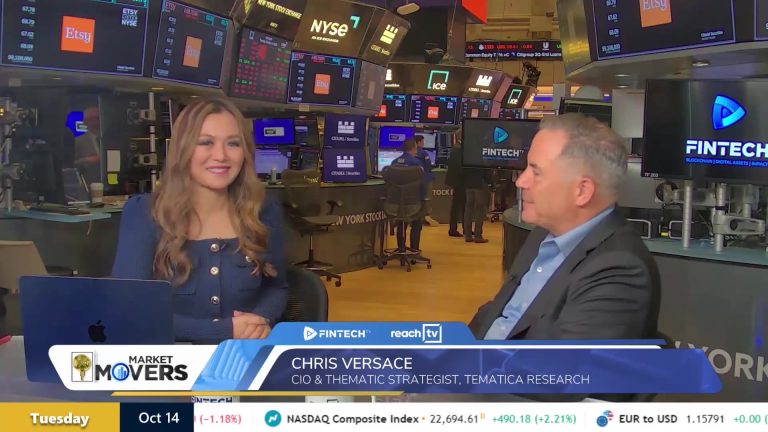
Chris Versace, the Chief Investment Officer and Thematic Strategist at Tematica Research, joins Remy Blaire at the New York Stock Exchange to discuss the ongoing trade tensions between the U.S. and China. Chris explains that these renewed concerns are weighing on market sentiment and anticipates continued volatility leading up to the expected meeting between President Trump and President Xi in South Korea later in the month. He emphasizes the importance of game theory in this context, suggesting that neither side wants to appear weak ahead of the meeting.

The conversation shifts to the upcoming earnings season and the Federal Reserve meeting at the end of the month. Remy asks Chris what he is monitoring in the markets, and he responds by discussing the need to evaluate market multiples and earnings growth. He points out that while recent bank earnings have been strong, it is crucial to see similar performance across other sectors to maintain market momentum.

Remy and Chris then address the topic of artificial intelligence, particularly the concerns surrounding a potential bubble in the sector. Chris draws parallels to the internet bubble, discussing the possibility of overcapacity in AI and data centers. However, he reassures listeners that AI adoption is still in its early stages, suggesting that there is ample time for growth as long as usage continues to rise.

The segment also touches on the smartphone market, with Remy asking Chris about Apple’s anticipated foldable iPhone set to launch next year. Chris shares that he has recently raised his price target for Apple, citing strong revenue from key partners and an expected increase in organic light-emitting diode shipments. He highlights the significance of the foldable iPhone for Apple’s revenue and its positive implications for Universal Display, a key component supplier.

Revolutionizing Accounting: Artie Minson on Trullion’s AI Innovations

“We’re basically trying to create the knowledge layer…an AI toolkit for accountants globally of the next generation.” – 02:23

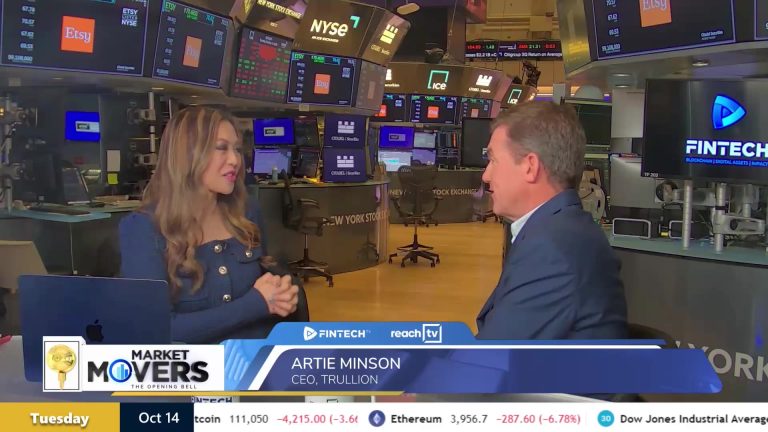
Artie Minson, CEO of Trullion, joins Remy Blaire to discuss Trullion, an AI accounting platform that has recently achieved record revenue growth and expanded its global client base to over 3,000 companies.

The segment begins with an overview of Trullion’s significant advancements in the accounting industry, particularly its role in automating processes such as data entry, bookkeeping, invoicing, and payment processing.

Artie shares his background, revealing that he has been involved with Trullion for over five years as both an advisor and an investor. He explains his motivation for stepping into the CEO role, highlighting his journey as a CPA and his connection with Trullion’s founder, Isaac Keller. Artie discusses Keller’s vision for the future of accounting, emphasizing the importance of the general ledger as the “ultimate source of truth” in business. He elaborates on how Trullion aims to create a knowledge layer that organizes and analyzes unstructured data, ultimately supporting accountants worldwide.

The conversation shifts to the concept of agentic AI and its transformative potential in the accounting field. Artie points out that many accounting processes are manual and time-consuming, and by leveraging AI, professionals can free up time to focus on more valuable analytical work. He draws a parallel between the rise of AI tools in accounting and the mainstream adoption of Excel, suggesting that these deep vertical solutions will be game changers for the industry.

As the episode progresses, Remy inquires about Trullion’s strategy for scaling the business while maintaining innovation. Artie outlines their plans to expand product offerings and customer segments, particularly their collaboration with top audit firms and their support for businesses ranging from small enterprises to Fortune 100 companies.

Diversification in 2025: Strategies for a balanced investment portfolio

In this episode of Market Movers, we dive into the current state of the stock market, particularly focusing on the concentration risks posed by the top companies in the S&P 500 and Russell 1000. With the top 10 companies accounting for a significant portion of these indexes, we discuss the implications for investors relying on index-based strategies.

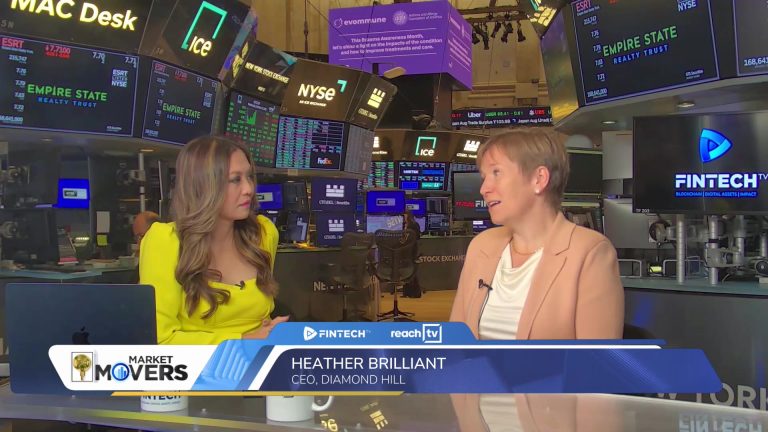
Remy Blaire is joined by Heather Brilliant, CEO of Diamond Hill, who shares her insights on the importance of a valuation-disciplined approach in active portfolio management. They explore the opportunities and risks associated with small and micro-cap companies, which are often overlooked by analysts, presenting potential for significant returns.

As we navigate the final quarter of 2025, they also touch on the impact of the U.S. government shutdown on economic data and the pricing of risks in consumer-oriented asset-backed securities. Heather emphasizes the need for investors to understand the risks associated with their holdings, especially in light of the current exuberance in the market driven by AI and tech stocks.

They conclude with a discussion on diversification, highlighting that a well-diversified portfolio can be achieved with a limited number of holdings, contrary to the concentration seen in major indexes.