[stock-market-ticker symbols=" ^NYA;CRYPTO:BTC;CRYPTO:ETH;CRYPTO:USDT;CRYPTO:USDC;CRYPTO:BNB;CRYPTO:ADA;CRYPTO:XRP;CRYPTO:SOL;CRYPTO:DOGE " stockExchange="NYSENASDAQ" width="100%" transparentbackground=1 palette="financial-light"]

Home Blog Page 59

Bipartisan Challenges in Crypto Regulation: A Deep Dive

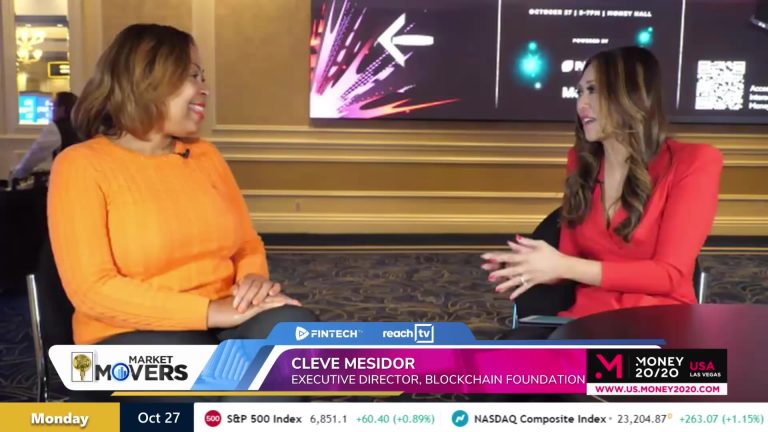
Remy Blaire engages in a compelling discussion with Cleve Mesidor, Executive Director of the Blockchain Foundation, live from Money20/20 in Las Vegas. The segment centers around the current legislative landscape for the crypto industry, particularly the challenges and developments in Washington, D.C.

Remy begins by outlining the recent efforts of the crypto industry to push for new legislation, noting that bipartisan talks have encountered significant obstacles. Following a meeting between top crypto executives and senators, it becomes clear that while discussions are taking place, Democrats and Republicans are engaging separately, complicating the path forward. Cleve explains that the Senate Banking Committee is facing difficulties in moving the crypto market structure bill, contrasting it with the more straightforward passage of the Clarity Act in the House.

As the conversation unfolds, Cleve highlights the implications of the ongoing U.S. government shutdown, which has affected various government operations, including the cancellation of important briefings related to the crypto task force. Despite these setbacks, he emphasizes the necessity for bipartisanship, urging both parties to collaborate in order to create a meaningful legislative framework for the crypto sector.

The discussion also touches on the recent nomination of Michael Selig to lead the Commodity Futures Trading Commission (CFTC). Cleve expresses optimism about Selig’s background in crypto regulation and the potential for his confirmation to facilitate crucial discussions regarding the roles of the SEC and CFTC in the evolving digital asset landscape.

Shifting gears, Remy and Cleve delve into the topic of the Great Wealth Transfer, a significant theme at Money20/20. Cleve discusses how this transfer of wealth is occurring at a time when multiple generations are active in the marketplace, and he emphasizes the role of credit unions and other financial institutions in this dynamic, particularly in relation to stablecoin issuance.
Revolutionizing Sickle Cell Treatment: The Journey of Harmonic Discovery

0

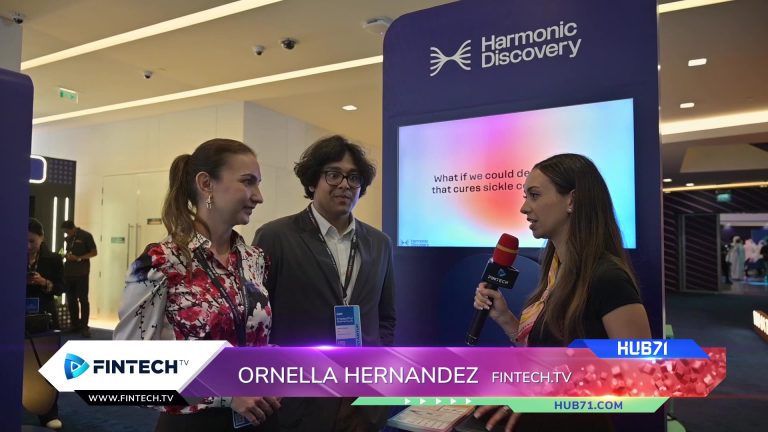
Ornella Hernandez is joined by Dr. Anna Cichonska and Dr. Rayees Rahman from Harmonic Discovery, a biotech company focused on developing a groundbreaking treatment for sickle cell anemia, one of the most common rare diseases globally, particularly prevalent in the MENA region. The duo are working on a novel approach that mimics the mechanism of gene therapy but delivers it in a more accessible and safer oral pill form, making it available to a broader range of patients who currently cannot afford or access traditional gene therapies.

They discuss their strategic choice to establish their operations in Abu Dhabi and the Abu Dhabi Global Market (ADGM), which they see as a burgeoning biotech ecosystem, potentially the “next Boston” of the Middle East. The energy and support at Hub 71, where they are based, are highlighted as key factors in their decision.

The conversation also touches on the significant impact they hope to achieve, not just through their innovative treatment but also in improving the lives of patients suffering from sickle cell anemia. They are gearing up for phase one clinical trials in the next 18 to 24 months and are planning to open a fundraising round early next year.

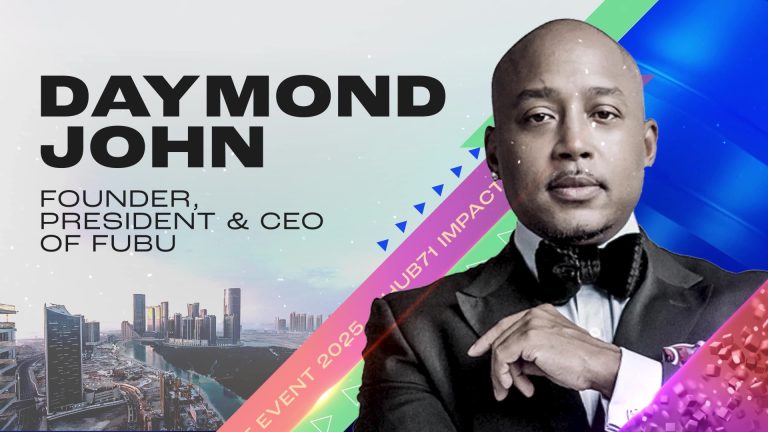
Navigating entrepreneurship: Daymond John’s keys to staying real and grounded

0

Ahmad Ali Alwan, the CEO of Hub71 is joined by Daymond John, a prominent voice in entrepreneurship and the founder of FUBU. They delve into the origins of FUBU, exploring the meaning behind its name, “For Us, By Us,” and how it served as a cultural identifier for hip-hop enthusiasts. Daymond shares the pivotal moment when LL Cool J wore FUBU in a Gap commercial, which became a significant marketing milestone and showcased the importance of understanding one’s target audience.

They discuss the mindset that entrepreneurs should adopt, emphasizing the need for founders to be obsessed with their customers and to continuously learn from their experiences. Daymond highlights the value of customer feedback, particularly complaints, as a crucial tool for improvement and growth.

As they transition into Daymond’s experiences on “Shark Tank”, the entrepreneur reveals insights about the pitching process and the importance of storytelling in successful pitches. He shares that while they close about 60% of deals, the journey to finalize these agreements can take up to nine months. He also notes that successful founders are those who can articulate compelling reasons for their existence.

Throughout the conversation, Daymond stresses the significance of understanding one’s “why” and the personal motivations behind entrepreneurship. He cautions against the pitfalls of chasing money and external validation, advocating instead for a focus on passion and purpose. In closing, Daymond reflects on the moments that remind him of why he started, emphasizing the joy he feels when customers connect with his products.

Senate crypto, Fidelity Solana, Blockchain.com, CZ released

0

In this episode of Coin Street headlines, we dive into the latest developments in the cryptocurrency world. We discuss how Coinbase CEO Brian Armstrong shares his optimism about U.S. Senators advancing key cryptocurrency market structure legislation by Thanksgiving. We explore Fidelity’s recent decision to offer Solana (SOL) to its clients amidst growing institutional interest in the Solana network as a hub for internet capital markets. Learn about Blockchain.com’s regulatory approval in Europe, having obtained a MiCA license from the Maltese Financial Services Authority, allowing them to provide custody and wallet services across 30 European Economic Area countries. We also cover the news of President Donald Trump pardoning Changpeng Zhao, who faced convictions related to federal anti-money laundering laws connected to Binance. Jane King with the latest from the NYSE.

Turkey Trouble: Understanding the Rising Prices Ahead of Thanksgiving

Remy Blaire engages in a timely discussion with Bernt Nelson, Economist at the American Farm Bureau Federation, about the rising prices of turkey as Thanksgiving approaches. With the holiday just around the corner, the conversation centers on how an outbreak affecting America’s turkeys is contributing to increased costs for consumers.

Remy opens the segment by highlighting the significant rise in retail turkey prices, which are currently averaging around $1.31 per pound—an increase of approximately 40% compared to the previous year. Bernt explains that this surge is primarily due to disease pressures, particularly avian influenza, which has created volatility in the turkey market. He provides historical context, noting that U.S. turkey production has declined over the past 30 years, while demand has remained relatively stable, resulting in tighter supplies and higher prices.

“This disease pressure has caused an upswing and a downswing and an ebb and flow of the supply of turkey.” – 01:19

The discussion shifts to the challenges faced by poultry farmers, who have seen a drastic reduction in turkey production from a peak of 303 million birds in 1996 to around 195 million today. Bernt elaborates on the impact of avian influenza, which has affected millions of poultry, and discusses the limited indemnity payments available to farmers, which do not fully compensate for the financial losses incurred during outbreaks.

As the conversation progresses, Remy inquires about the potential for price increases to extend beyond turkey to other Thanksgiving staples. Bernt informs listeners that the American Farm Bureau Federation conducts an annual survey to assess the cost of a Thanksgiving dinner for ten, which will be released in November. This survey will provide insights into the prices of traditional favorites such as pumpkin pie and mashed potatoes, helping consumers prepare for their holiday shopping.

Throughout the episode, Bernt emphasizes the importance of staying informed about food prices, especially in a time when many families are concerned about their budgets. He reassures listeners that while turkey prices are expected to be higher, most of the turkeys for Thanksgiving are already in the pipeline, suggesting that the immediate impact on prices may be limited.

The Impact of the Government Shutdown on Economic Data and Markets

“We’re actually, I think, in a little bit of a stickier situation the longer this shutdown goes in terms of figuring out what is the trajectory for inflation here.” – 01:50

Remy Blaire welcomes Brian Jacobsen, the Chief Economist at Annex Wealth Management, to discuss the current state of the U.S. economy and financial markets. The episode opens with a positive note as Wall Street is reported to be opening higher, with major stock averages up by at least half a percentage point. Remy highlights the recent Consumer Price Index (CPI) data, which has risen less than forecasted, and mentions that the U.S. government is now in its 24th day of shutdown. She notes the Senate’s failure to advance a GOP-backed measure aimed at paying federal employees, military members, and contractors who have continued to work without pay.

Brian shares his insights on the inflation report, indicating that core inflation has increased less than anticipated, which reinforces expectations that the Federal Reserve will cut the Fed funds rate by 25 basis points in their upcoming meeting on October 28th to 29th. However, he raises concerns about the implications of the ongoing government shutdown on future inflation data, as the Bureau of Labor Statistics is unable to collect data for October.

The conversation shifts to corporate America, where Remy points out that recent earnings reports have provided a mixed picture of industry performance. Brian discusses the reassuring loan quality reported by major banks, despite some isolated concerns regarding specific cases. He contrasts the performance of companies like Tesla and General Motors, noting that while Tesla has seen an increase in sales, its costs have risen significantly, particularly following the elimination of electric vehicle credits. In contrast, Procter & Gamble’s earnings report reveals that the company has successfully pushed prices higher, which may lead to additional pressure on consumers as the holiday season approaches.

Remy then brings up the upcoming meeting between President Trump and China’s leader Xi Jinping, which Brian describes as critical for U.S.-China trade relations. He expresses cautious optimism about the potential outcomes, suggesting that the tariffs scheduled to increase on November 1st may not reach the worst-case scenario and could instead be set at a more manageable level.

As the segment progresses, Brian emphasizes the importance of monitoring equities, yields, and precious metals as the end of October approaches. He expresses concerns about potential froth in certain market areas and advises investors to focus on growth at a reasonable price rather than growth at any price. Brian predicts some volatility in the markets, suggesting that the S&P 500 may end the year close to its current levels, with a potential entry point around 6,500 in 2026.

Unlocking Crypto: Krista Lynch on Staking and ETP Innovations

“With the government shutdown, that’s unfortunately delayed some of the progress that we had been making on these products.” – 03:10

Remy Blaire welcomes Krista Lynch, the Senior Vice President of ETF Capital Markets at Grayscale Investments, to discuss the latest developments in the cryptocurrency market. The episode kicks off with the exciting news that Grayscale has just rung the opening bell at the New York Stock Exchange, marking a significant milestone for the firm as it leads the charge in offering diversified crypto trading products.

Krista shares insights about Grayscale’s newly uplisted GDLC, the first multi-token Exchange Traded Product (ETP) in the U.S. This innovative product consists of a five-token basket that tracks the five largest cryptocurrencies, excluding meme coins and stablecoins. Krista explains that the GDLC allows investors to capture approximately 90% of the returns from the crypto universe through a single investment, making it an efficient way to diversify within the crypto space. She breaks down the composition of the GDLC, noting that it is comprised of about 75% Bitcoin and Ethereum, while also providing exposure to altcoins, which have gained attention following a recent liquidation event in the crypto market.

The conversation then shifts to the topic of staking in the cryptocurrency world. Krista simplifies the concept of staking, explaining how it works in proof-of-stake cryptocurrencies and how Grayscale is introducing staking through ETPs. This development enables investors to turn their crypto investments into yielding products, earning rewards for their staking activities. Krista also discusses Grayscale’s ETH Trust and ETH Mini Trust, both of which have incorporated staking, along with their Solana product, which is on track to become an ETP once the U.S. government reopens.

As the discussion progresses, Remy and Krista address the ongoing U.S. government shutdown and its impact on the regulatory landscape for crypto products. Krista notes that while there has been progress with generic listing standards over the summer, the shutdown has delayed some approvals. Despite this setback, she expresses optimism about Grayscale’s readiness to launch new products once the government resumes operations.

Looking ahead to 2025, Krista highlights the improved regulatory environment for crypto, which has led to a surge in filings and innovation in the space. The episode also explores the growing interest from institutional investors in cryptocurrency, with ETPs opening new avenues for both retail and institutional investment.

In the closing moments, Krista emphasizes the importance of understanding investor demand and the regulatory landscape as they approach year-end and look toward 2026. She discusses the need to identify niches within the crypto market and how Grayscale’s GDLC product can serve as a broad exposure option for investors.

Crypto Reckoning: Analyzing CZ’s Pardon and Its Implications for Regulation

“CZ was treated unfairly because if you look at the US financial markets… Multiple banks have been accused of roughly the same behavior CZ engaged in and were simply fined and their executives were not sent to jail.” – 01:05

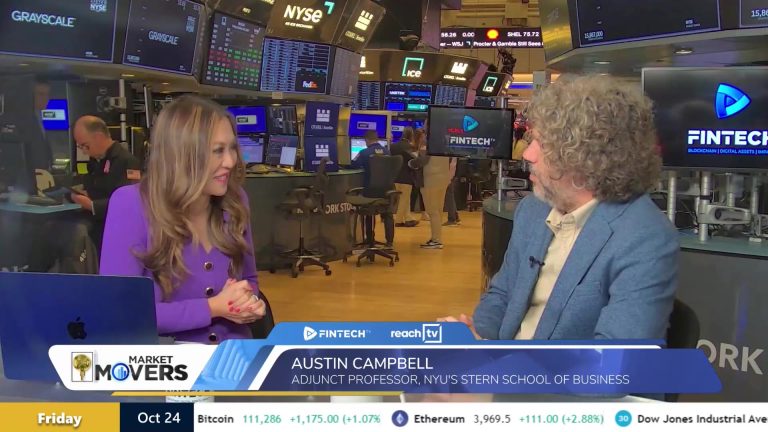
Remy Blaire engages in a thought-provoking discussion with Austin Campbell, an Adjunct Professor at NYU’s Stern School of Business. The segment centers around the recent pardon of Changpeng Zhao, the founder of the cryptocurrency exchange Binance, by President Donald Trump. This significant development could potentially allow Binance to re-enter the U.S. market after being barred from operating there since 2023 due to violations of anti-money laundering laws.

Remy and Austin delve into the implications of the pardon, particularly in light of CZ’s guilty plea and the four-month prison sentence he served as part of a $4.3 billion settlement with the Justice Department. Austin articulates the broader narrative of fairness in the financial system, arguing that CZ’s treatment appears disproportionate compared to traditional financial institutions that have faced similar accusations but have not seen their executives jailed. This discussion raises questions about the integrity of the financial system and the political ramifications of the pardon.

The conversation shifts to the volatility in the cryptocurrency market, particularly focusing on a liquidation event that occurred from October 10th to 11th. Austin highlights how the 24-7 nature of crypto trading presents unique challenges, leading to significant price fluctuations. He emphasizes that while the core concepts behind cryptocurrencies are robust, the lack of infrastructure and protective measures, such as circuit breakers and leverage limits, exacerbates risks for traders.

Remy and Austin also explore the current state of stablecoins, noting that approximately $300 billion exists globally. While this figure seems substantial, it pales in comparison to traditional financial instruments like government money market funds. Austin stresses the need for improved user interfaces and experiences to facilitate broader adoption of stablecoins among everyday users.

Market Insights: Navigating Inflation and Earnings in Tech

“At the end of the day, yesterday, the rally was based on the fact that we have a meeting with China.” – 01:32

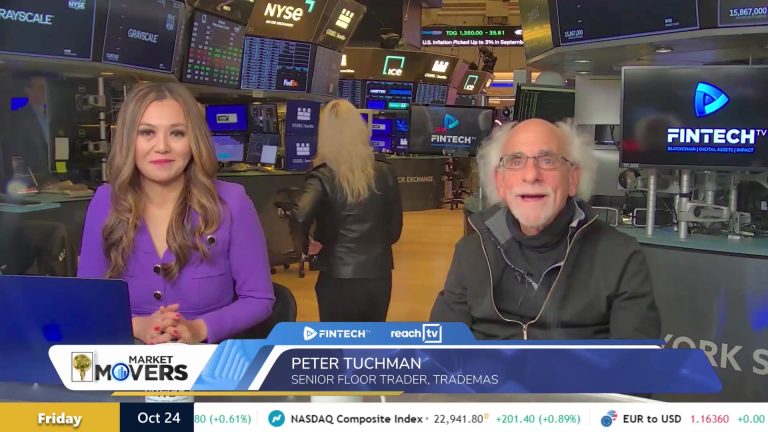
Remy Blaire engages in a dynamic discussion with Peter Tuchman, Senior Floor Trader at TradeMas, about the current state of the U.S. stock market. The episode opens with a breakdown of the latest inflation data and its impact on market performance, particularly highlighting the S&P 500’s recent rise, which is largely driven by strong earnings reports from tech stocks.

Remy and Peter reflect on the market’s recovery from a slight dip earlier in the week, which was influenced by concerns over export restrictions. They emphasize the importance of monitoring trade developments, especially in light of ongoing negotiations with China. Peter notes that the market remains sensitive to political narratives, particularly those coming from President Trump, which can lead to significant fluctuations.

As they delve deeper into the economic landscape, Peter discusses the paradox of “bad news being good news,” explaining how weaker economic indicators, such as rising unemployment and high inflation, may actually lead to increased optimism among investors. This optimism is rooted in the anticipation of potential interest rate cuts from the Federal Reserve.

Looking ahead to the final week of October, Remy and Peter discuss the upcoming Fed rate decision and the APEC meeting, as well as the anticipated earnings reports from major tech companies. Peter expresses confidence in the resilience of tech stocks, particularly in the quantitative computing sector, despite recent volatility. He highlights the significant interest in semiconductor companies like NVIDIA, which are seen as crucial players in the ongoing AI revolution.

Throughout the conversation, Peter underscores the vast potential within the tech market, pointing out the various levels of demand for GPUs and the monopolization of the supply chain by major players. He concludes by expressing optimism that the upcoming earnings reports from tech companies will meet or exceed expectations, given the strong fundamentals and ongoing demand in the sector.

Building Community: Ahmad Ali Alwan on Hub71’s Impact in Abu Dhabi’s Tech Ecosystem

0

Fintech TV’s founder and CEO Vince Molinari is joined by Ahmad Ali Alwan, the CEO of Hub71, to discuss exciting developments at Hub71, particularly the energy surrounding the HUB71 Impact Event 2025.

Ahmad shares insights into Hub71’s mission, which began in 2019, to foster a thriving tech ecosystem in Abu Dhabi. With a community of around 400 startups and over 150 partners, Hub71 aims to support early-stage companies in contributing to the non-oil-led GDP of the region. The diversity within the community is remarkable, with founders from more than 60 nationalities, all united by a shared vision and mission.

A key theme of the discussion centers on the concept of “community as the new capital.” Ahmad emphasizes how the founders themselves have created a supportive environment, where listening to their needs has become a fundamental asset for Hub71’s growth.

They also touch on Hub71’s recent expansion into life sciences through the Hub71 Plus initiative. This new focus aims to develop a clear value proposition for startups in health tech, biotech, and life sciences, leveraging partnerships with key organizations in the sector.