[stock-market-ticker symbols=" ^NYA;CRYPTO:BTC;CRYPTO:ETH;CRYPTO:USDT;CRYPTO:USDC;CRYPTO:BNB;CRYPTO:ADA;CRYPTO:XRP;CRYPTO:SOL;CRYPTO:DOGE " stockExchange="NYSENASDAQ" width="100%" transparentbackground=1 palette="financial-light"]

Home Blog Page 54

Unlocking Capital: Elizabeth Gore on Funding Challenges for Small Businesses

0

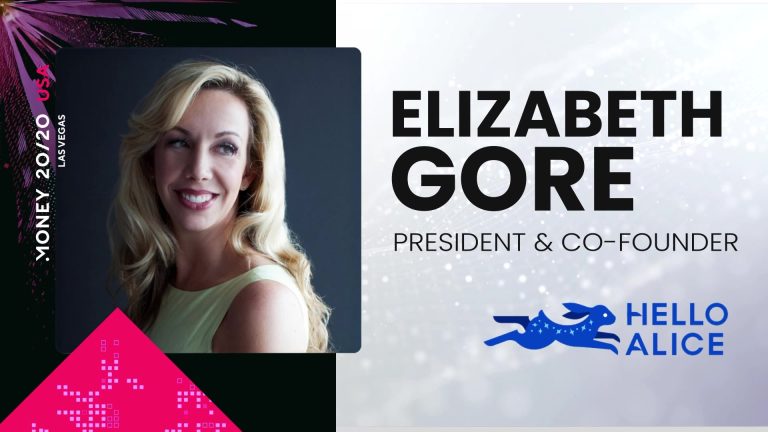
Remy Blaire joins Elizabeth Gore, co-founder and President of Hello Alice, at the Money20/20 conference in Las Vegas to discuss the current landscape of small business funding, noting a significant increase in new small business launches, yet a concerning lack of accessible capital for growth. Elizabeth expresses optimism about open banking, which could provide better loan opportunities for small business owners, especially those with less-than-ideal credit scores.

Discover how Hello Alice supports small businesses by offering a free business health score that helps owners track their financial fitness and improve their cash flow. Elizabeth highlights the importance of artificial intelligence (AI) in finance, noting that small businesses are slower to adopt these technologies compared to larger enterprises. They discuss the need for affordable and accessible AI tools, as well as the importance of education to help small business owners effectively integrate these tools into their operations.

Finally, they touch on the challenges female founders face in securing venture capital, with funding for women dropping below 2%. Elizabeth emphasizes the need for systemic change in the investment landscape and encourages partnerships as an alternative means of support for women entrepreneurs.

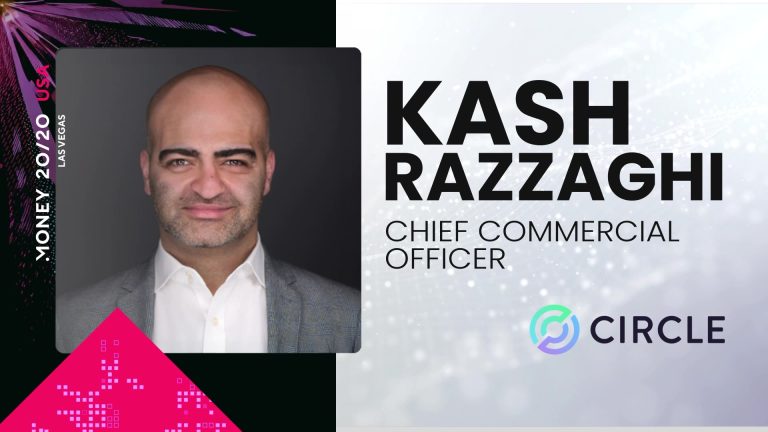
The Future of Payments: Exploring Innovation with Kash Razzaghi at Money20/20

0

Remy Blaire is joined by Kash Razzaghi, the Chief Commercial Officer at Circle, during the Money20/20 event in Las Vegas. They delve into the intersection of music, financial access, and blockchain technology, particularly through the lens of Wyclef Jean’s involvement with stablecoins like USDC. Kash shares insights into Wyclef’s personal experiences growing up in Haiti and his passion for improving financial access for the underbanked.

They discuss the evolving landscape of digital assets in the U.S., especially in light of recent regulatory changes and Circle’s public listing on the New York Stock Exchange. Kash emphasizes the importance of reintroducing the narrative around digital assets, moving away from speculation towards real-world use cases that enhance financial access and facilitate secure money transfers.

Additionally, they explore the significance of ARC, Circle’s new Layer 1 blockchain, which aims to provide the necessary infrastructure for stablecoin transactions and value transfer on a global scale. Kash highlights ARC’s potential to drive innovation in digital assets and payments, positioning it as a foundational element for future financial systems.

As they wrap up, Kash notes that the topic of stablecoins is increasingly relevant for various stakeholders in the financial ecosystem, including banks and fintech companies.

Navigating the Intersection of Traditional Finance and Digital Assets: Insights from Money20/20

0

Remy Blaire is joined by Liat Shetret, the Vice President of Global Policy and Regulation from Elliptic at Money20/20 USA in Las Vegas. They delve into the key findings of this year’s typologies report, which highlights how criminals are innovating their methods, particularly focusing on the rise of “pig butchering” scams. Liat emphasizes the importance of understanding the intersection of traditional finance and digital assets, noting that while current on-chain analytics provide robust risk management, financial institutions must adapt their tech stacks to effectively integrate these new digital assets.

They also discuss the challenges posed by the borderless nature of digital assets and the varying pace of regulatory responses across different jurisdictions. Liat points out that while some regulators are proactive, others lag behind, creating a landscape ripe for regulatory arbitrage.

Finally, the duo touches on the current U.S. government shutdown and its impact on regulatory progress. Liat suggests that this period could serve as an opportunity for banks and financial institutions to enhance their understanding of compliance obligations and prepare for upcoming innovations in the digital asset space.

Custody Challenges and Opportunities: Preparing Banks for the Digital Asset Revolution

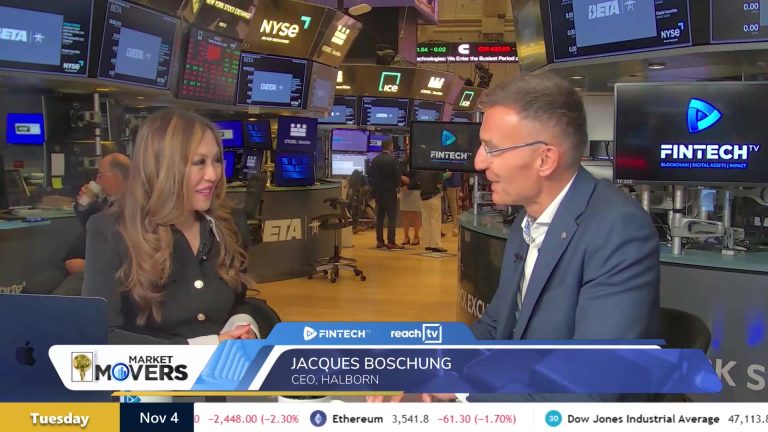
“In the US, you are creating a framework that is second to none with regards to freedom and accessibility and also mobility in assets.” – 00:01:44

Jacques Boschung, the CEO of Halborn, joins Remy Blaire to discuss the burgeoning landscape of digital asset adoption. The conversation takes place at the New York Stock Exchange, where they explore the significant developments in the crypto space and the factors driving this growth.

Remy begins by highlighting the increasing acceptance of digital assets among the general public, noting that credit card companies are now offering crypto rewards and that trading crypto has become more accessible than ever. Jacques emphasizes that regulatory changes, particularly the Genius Act and the anticipated Clarity Act, are playing a crucial role in unlocking the potential of digital assets. He expresses optimism about the future, suggesting that these regulations will foster incredible growth and create a robust framework for investment in the U.S.

The discussion shifts to the global regulatory landscape, where Remy asks Jacques for his insights on how the U.S. can learn from countries like Switzerland and Singapore. Jacques believes that the U.S. is on the right path with its current regulatory framework, which he argues is designed to provide freedom, accessibility, and mobility in asset management.

As they delve deeper into the topic of innovation, Jacques references a recent study by State Street that reveals institutional investors currently hold about 6% of their assets in digital assets, with plans to triple that amount in the next three years. He predicts that private equity will be the first asset class to undergo tokenization, followed by bonds and equities, marking a significant shift in asset management.

Remy and Jacques also discuss the growing transaction volume in stablecoins, which reached nearly $9 trillion over the past year. Jacques highlights the implications of this growth for retail investors, who will gain access to new types of securities and benefit from increased market liquidity.

As the conversation progresses, they reflect on recent liquidity events, particularly one that occurred in early October. Jacques shares key lessons learned from this event, particularly regarding the readiness of banks to handle the complexities of digital asset custody. He points out that traditional custody methods are inadequate for digital assets, which require a different technical approach.

The Impact of Political Ads on Consumer Behavior: Strategies for Brands

“If you’re a brand that is trying to reach more typically liberal leaning constituencies… you have to pay attention to the fact that your consumers are going to be getting $10 billion worth of political spending directed at them.” – 02:48

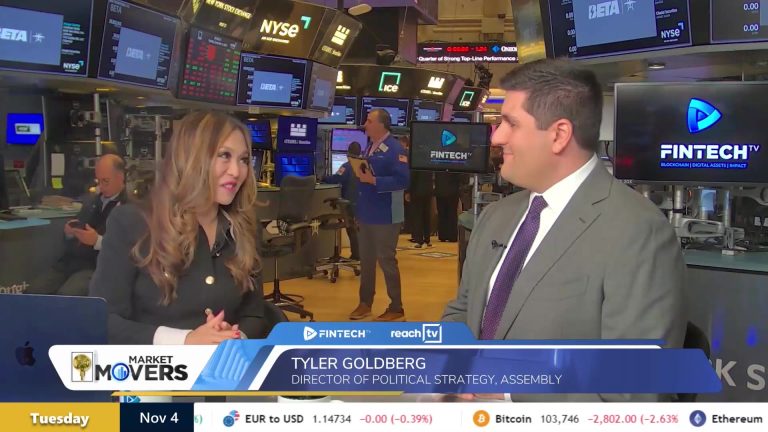
Tyler Goldberg, the Director of Political Strategy at Assembly, joins Remy Blaire to discuss the unprecedented financial landscape of this election season, projected to exceed $10 billion in spending across various races, including Senate, Governor, House, and state legislator contests.

Tyler explains that unlike presidential election years, where spending patterns are more predictable, midterm elections present a multifaceted challenge. With 33 Senate races, 36 Governor races, and 435 House races, forecasting political spending becomes intricate. He highlights that the first major primary will take place in Texas in March, indicating that the 2026 election cycle is already underway.

The conversation shifts to the cultural impact of political advertising, with Tyler noting that previous trends showed Republican consumers were more likely to reduce discretionary spending due to economic concerns. However, he anticipates a reversal in 2026, suggesting that liberal-leaning constituencies may be more influenced by political messaging about the economy.

Remy and Tyler also discuss the regional intensity of political spending, revealing that the $10 billion will not be evenly distributed across media markets. Tyler introduces the Assembly Market Intensity Index, a tool designed to help brands prepare for the peaks of political spending in various regions, emphasizing the importance of strategic planning.

As they delve into advertising channels, Tyler shares that approximately 55% to 60% of spending is expected to go toward linear television, while 20-25% will be allocated to digital and streaming platforms. He stresses the necessity for brands to understand their exposure to the political cycle and to collaborate with partners who are knowledgeable about the political landscape.

The Future of DeFi: How User Fees Signal Real Value in Blockchain

“Fees that are consistently paid over time by users… are really clear indicators of the value and the real use cases that are actually happening on blockchain.” – 01:42

Remy Blaire engages in a compelling discussion with Lasse Clausen, the Founding Partner at 1kx. The segment focuses on the burgeoning landscape of on-chain revenue and its implications for the future of blockchain technology.

Remy opens the conversation by highlighting a striking projection: on-chain revenue could surge to $32 billion in the coming year, driven by regulatory tailwinds and cost-efficient infrastructure that facilitate mass adoption. Lasse shares insights from a recent study conducted by 1KX, which tracked user-paid fees across more than 1,000 protocols, revealing that on-chain fees reached $9.7 billion in the first half of the current year.

As the discussion unfolds, Lasse explains that historically, a significant portion of on-chain fees has been generated by the blockchains themselves. However, advancements in infrastructure have dramatically reduced costs, enabling applications to monetize effectively. He emphasizes that decentralized finance (DeFi) applications are the standout winners in this space, accounting for over 60% of all fees generated.

Remy probes deeper into the importance of user-paid fees as a metric, noting that digital assets are often misunderstood as speculative investments. Lasse argues that these fees represent fundamental value and real-world use cases of blockchain technology, shifting the conversation from mere speculation to tangible utility.

The conversation then shifts to real-world applications, where Lasse highlights that financial services such as lending, borrowing, and trading are leading the charge in fee generation. He also discusses the rapidly growing sector of decentralized physical infrastructure, where real-world assets like computation power and storage are integrated into blockchain protocols, creating efficient marketplaces.

Remy and Lasse explore the competitive landscape of the blockchain space, noting that while the top 20 protocols account for 70% of the revenue, the environment remains ripe for disruption. Lasse points out the rapid pace at which new protocols can ascend the ranks, showcasing the open and competitive nature of the industry.

For investors and institutions, Lasse emphasizes the importance of recognizing that over 30% of the market cap of crypto assets is fee-generating, indicating sustainable business models beyond mere speculation. He also discusses the significance of analyzing net fees, as some protocols incentivize usage, which can skew top-line revenue figures.

Navigating Market Uncertainty: Insights from Goldman Sachs and Morgan Stanley CEOs

“Every day, we’re hearing multi-billion dollar partnerships and deals that are happening within the AI complex.” – 03:35

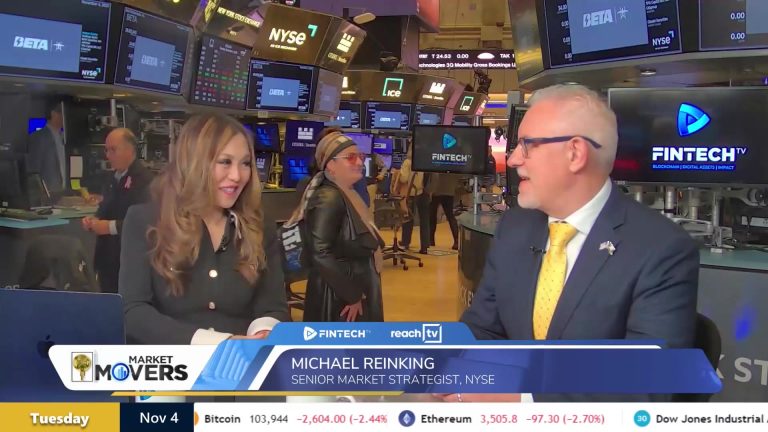
Michael Reinking, Senior Market Strategist at NYSE, joins Remy Blaire to discuss the current state of the U.S. stock market as November begins. The segment opens with a focus on the recent decline in U.S. stock futures, alongside warnings from CEOs of Goldman Sachs and Morgan Stanley about potential market drawdowns in the next 12 to 24 months.

Remy and Michael analyze the market’s pullback, attributing it to a broader trend of weakness observed over the past week. Michael highlights the deterioration in market breadth and the impact of comments from Federal Reserve Chair Jerome Powell, which have raised questions about the future direction of monetary policy. They also touch on the concerning price action in the cryptocurrency market, noting that speculative investments are beginning to unwind.

As they look ahead to the December Federal Reserve meeting, the conversation shifts to the mixed signals coming from Fed members. Some are advocating for rate cuts, while others express concerns about inflation, creating uncertainty in the economic landscape. Michael emphasizes the importance of upcoming economic data releases as they prepare for the Fed’s decisions.

The discussion then transitions to the ongoing earnings season, particularly focusing on the performance of major tech companies. Despite strong earnings reports, the market reaction has been mixed, with stocks like Palantir and Uber experiencing declines. Michael shares his bullish outlook on the industrial sector, driven by trends in reshoring and on-shoring, as well as the potential impact of tax cuts on consumer spending.

Navigating Market Trends: Insights on the S&P 500 and Sector Performance

“Technology tends to exhibit upside leadership in strong tapes and during bull market cycles that have that good steep slope to them.” – 02:40

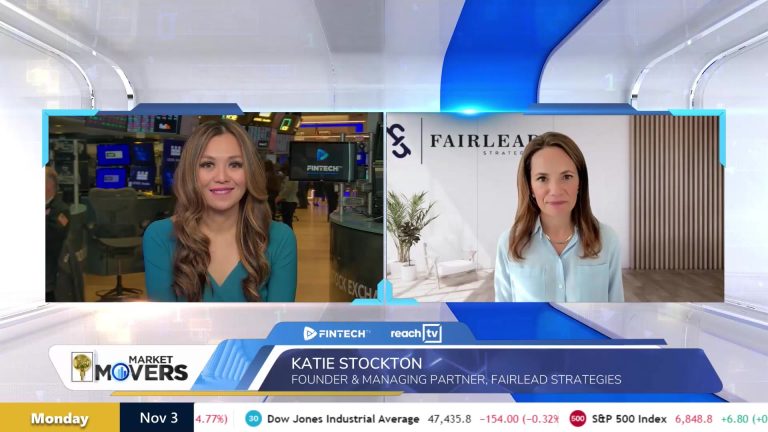
Remy Blaire welcomes Katie Stockton, the Founder and Managing Partner at Fairlead Strategies, to discuss the latest developments in the financial markets. The episode opens with a significant announcement: the Federal Reserve has cut interest rates by a quarter percentage point during its October meeting, marking the second reduction of the year and bringing the benchmark rate to a range of 3.75% to 4%. This decision comes as the 10-year Treasury yield rises back above 4%, despite a notable decline over the past month.

Remy and Katie begin their conversation by analyzing the S&P 500 index, which is currently hovering around the 6876 level. Katie explains that this level is crucial, as it represents an objective from the June breakout of the index. While this point may serve as a natural pause for the market, she emphasizes that the long-term momentum for the S&P remains strong, even though short-term momentum has slightly waned. Katie notes that recent gaps higher in the index may indicate a potential for a pullback, but she does not foresee a major decline at this time.

The discussion then shifts to a sector breakdown within the S&P 500, particularly in light of recent earnings reports and geopolitical developments. Katie highlights the technology sector’s continued dominance, noting its strong relative performance and leadership during bull market cycles. However, she also points out an interesting rotation occurring, with sectors such as healthcare and energy gaining relative momentum, suggesting a shift in market dynamics.

As the conversation progresses, Remy and Katie delve into the recent earnings reports from mega-cap tech companies, including Amazon and Apple. Katie provides a technical analysis of these “MAG 7” names, noting the dispersion in performance among them. While Amazon has experienced a breakout following its earnings, other companies like Microsoft and Meta are facing pullbacks. Katie stresses the importance of scrutinizing the fundamentals of these companies as investors navigate the evolving landscape.

Navigating Market Uncertainty: Insights on Tariffs and Tech Concentration

“It’s really scary how overweighted the S&P is right now in the top 10 companies.” – 02:48

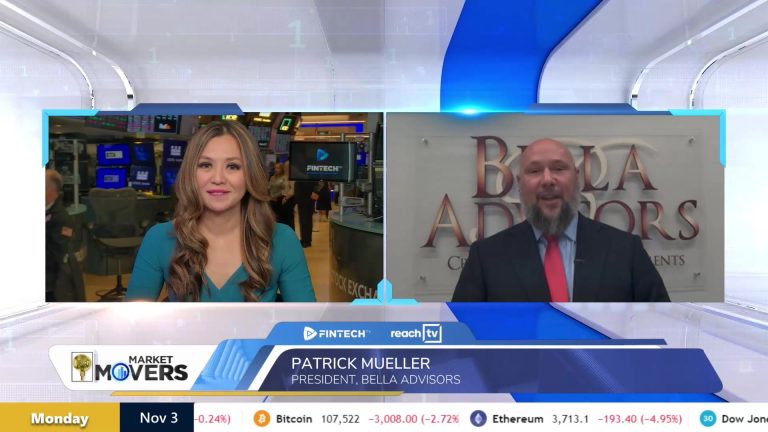
Patrick Mueller, President of Bella Advisors, joins Remy Blaire to discuss the mixed performance of major U.S. stock averages, with the S&P 500 and Nasdaq continuing their gains from October. We highlight the recent easing of U.S.-China trade tensions and the Federal Reserve’s ongoing rate cuts, with Chair Powell indicating that a December rate cut is not guaranteed.

Patrick shares his insights on tariffs and their long-term benefits for U.S. manufacturing, despite short-term pain for consumers. We also examined the concentration of the S&P 500, noting that the top 10% of stocks account for a significant portion of the index’s market cap, raising concerns about market vulnerability.

The pair discussed the current state of the 10-year yield and its implications for bonds and interest rates, particularly for those looking to refinance or secure mortgages. Patrick emphasized the importance of being cautious with investments, especially in the tech sector, given the potential for market corrections.

Lastly, Remy and Patrick touched on Warren Buffett’s recent decision to offload over $6 billion in stock, highlighting the significance of his cash reserves and the potential for future investment opportunities. Patrick advised listeners to consider taking profits and repositioning their investments to mitigate risks in a volatile market.

Rising Waters: Understanding the Impact of Climate Change on Rainfall and Flooding

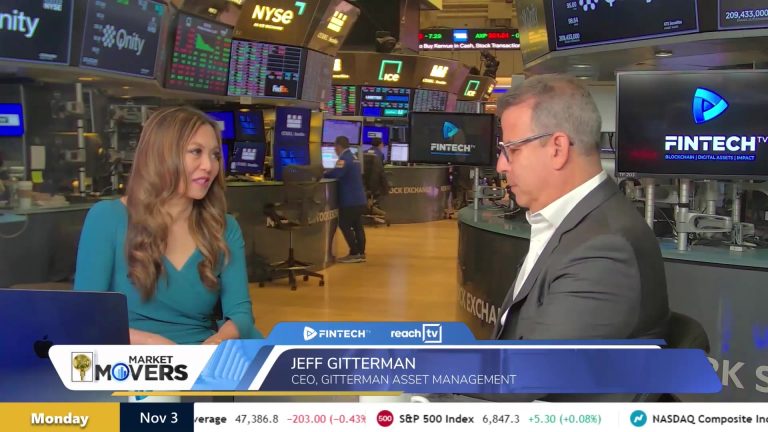
Jeff Gitterman, CEO of Gitterman Asset Management, joins Remy Blaire at the New York Stock Exchange to discuss the alarming findings of a 2023 report from the First Street Foundation, which highlights the impact of climate change on rainfall patterns. As temperatures rise, the atmosphere can hold approximately seven percent more water vapor for every degree Celsius increase, leading to more intense and frequent rainfall events. 

Jeff emphasizes that many homeowners and renters are unprotected from flooding, as standard insurance policies often do not cover such events. He points out that areas previously thought to be safe from flooding are now experiencing significant water damage due to outdated sewage infrastructure that cannot handle the increased rainfall. We also touch on the role of FEMA and the urgent need for investment in infrastructure to adapt to these changing conditions.

“We need to dramatically focus our investment around adaptation and resilience.” – 03:05

Furthermore, the pair discuss the outdated nature of flood zone designations, which often do not account for rainfall flooding, leaving millions of homes at risk without proper insurance coverage. Jeff advises listeners to consult with expert brokers and utilize resources like First Street and Zillow to assess their flood risk accurately.