[stock-market-ticker symbols=" ^NYA;CRYPTO:BTC;CRYPTO:ETH;CRYPTO:USDT;CRYPTO:USDC;CRYPTO:BNB;CRYPTO:ADA;CRYPTO:XRP;CRYPTO:SOL;CRYPTO:DOGE " stockExchange="NYSENASDAQ" width="100%" transparentbackground=1 palette="financial-light"]

Home Blog Page 25

From Record Highs to Red Screens: What’s Driving Market Changes?

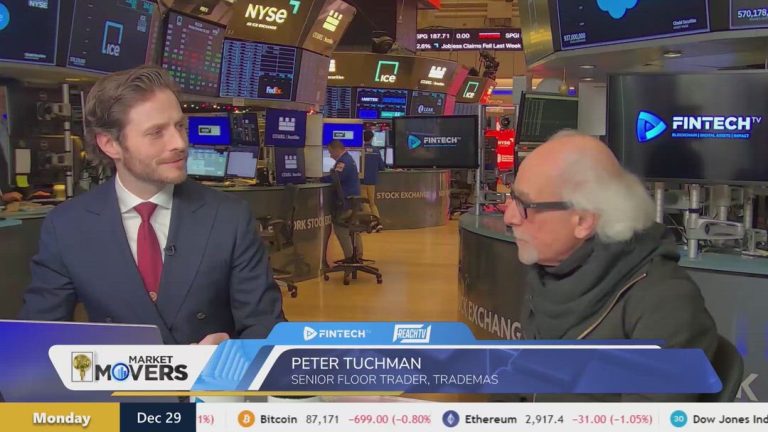
Remy Blaire discusses the current state of the U.S. stock market, which is experiencing notable volatility. As the episode opens, Remy highlights that major indexes, including the Dow, Nasdaq, and S&P 500, are all deep in the red, extending losses from the previous session. She attributes this downturn to weak economic data and concerns that AI stocks may have surged too quickly, impacting investor confidence.

To provide expert insights, Remy welcomes Peter Tuchman, a Senior Floor Trader at TradeMas. Peter begins by explaining that the market has seen an impressive number of record closes this year, with as many as 41. He reassures listeners that fluctuations in the market are normal, emphasizing that the recent pullback should not be viewed as catastrophic. Instead, he describes it as a typical market behavior following a period of significant growth.

Peter elaborates on the reasons behind the current market dynamics, noting that many hedge funds and institutions close their books at the end of October. This practice often leads to profit-taking, which can temporarily depress stock prices. He encourages investors to remain calm, suggesting that the current volatility may present opportunities rather than risks. Peter also points out that historically, November is one of the strongest months for the market, despite the skittish start this year.

As the conversation progresses, Remy inquires about the nature of the volatility, and Peter explains that it can indicate market rotation, where investors shift their focus from over-performing stocks to those that have underperformed. He stresses the importance of understanding the underlying reasons for market movements rather than reacting impulsively to short-term fluctuations.

Towards the end of the episode, Remy asks Peter about Tesla’s recent shareholder meeting and Elon Musk’s comments. Although Peter has not seen the meeting, he reflects on Musk’s tumultuous year and the broader implications for Tesla. They discuss the company’s ambitious plans for AI and robotics, particularly the Optimus 3 robots, and Peter expresses optimism about the potential benefits of AI in everyday life.

Dodgers’ Historic Win: A Look at the World Series and Shohei Ohtani’s Rising Card Market

Remy Blaire is joined by Rick Horrow, CEO of Horrow Sports Ventures, to discuss the recent triumph of the Los Angeles Dodgers, who have just celebrated their championship parade after winning back-to-back World Series titles. The episode opens with excitement surrounding the Dodgers’ Game 7 comeback, which attracted an impressive 51 million viewers, marking it as the most-watched MLB game in 34 years. Remy and Rick delve into the implications of this victory, including the potential for the Dodgers to become a dynasty, as they are already being touted as favorites to achieve a three-peat in 2026.

Rick shares his thoughts on the thrilling nature of the World Series, particularly the dramatic endings that took place in Toronto. He highlights the financial power behind the Dodgers, noting their staggering $416 million annual payroll, and reflects on the historical context of sports ownership, comparing the current valuation of teams to George Steinbrenner’s purchase of the Yankees 50 years ago for just $10 million.

The conversation then shifts to the star power of Shohei Ohtani, whose trading cards are currently in high demand, selling for hundreds of thousands of dollars. Rick discusses the market dynamics for Ohtani’s rookie cards, which have seen a significant price increase following his standout performance in the World Series. He emphasizes the uniqueness of Ohtani’s talent, suggesting that investors are wise to hold onto their cards, as their value may continue to rise.

Remy and Rick also explore the recent developments in the sports betting industry, particularly the impact of ESPN’s decision to end its partnership with Penn Entertainment in favor of DraftKings. Rick provides insights into the ramifications of this shift, speculating on ESPN’s strategy to find partners that align with their goals while maximizing revenue.

“ESPN doesn’t take it lightly. Everybody’s speculating, is ESPN getting out of the gaming business? No, of course not.” – 03:15

SmartCon 2025 Highlights: Chainlink’s Vision for the Future of Finance

Remy Blaire is joined by Sergey Nazarov, the Co-Founder of Chainlink, to discuss the recent developments from Smartcon 2025, which has just concluded in New York City. The conversation begins with Remy highlighting the significant announcements made during the event, including Chainlink’s unveiling of the Chainlink Runtime Environment. This new environment allows institutions to deploy smart contracts with built-in compliance, privacy, and data tools across various blockchains.

“Chainlink has become so many different things now. It provides data, connectivity across chains, identity, access to AI, a whole bunch of different capabilities.” – 03:05

Sergey shares his perspective on the success of Smartcon, noting the diverse audience that included members from the crypto community, decentralized finance (DeFi), and traditional finance (TradFi). He emphasizes the importance of bringing these three groups together to foster interoperability and mutual success within the evolving financial landscape. Sergey expresses his belief that the merging of these communities is crucial for the future of the financial system.

As the discussion progresses, Remy prompts Sergey to elaborate on the impact of the announcements made at the conference. Sergey categorizes the announcements into two main areas: product advancements and user collaborations. He highlights the Chainlink Runtime Environment and its associated privacy features as significant developments that will enhance how institutions operate on-chain. Additionally, he mentions the collaboration with Denari and S&P Dow Jones Indices to launch the S&P Digital Markets 50 Index on-chain later in the year.

Sergey also discusses the involvement of major financial institutions, such as UBS, which recently completed its first live tokenized fund transaction on Ethereum using Chainlink’s technology. He notes that the variety of use cases for Chainlink is expanding, with applications ranging from tokenization to global trade flows, as evidenced by recent collaborations with central banks.

Shifting the focus to the political landscape, Remy asks Sergey about the Clarity and Market Structure Bill in Washington, D.C. Despite the ongoing government shutdown, Sergey remains optimistic about the bipartisan motivation to advance the bill. He explains that there is a growing understanding among policymakers that the blockchain industry is not solely about speculative assets but represents the next iteration of the financial system. Sergey stresses the importance of ensuring that blockchain technology is implemented within the United States to maintain its dominant role in the global financial landscape.

Tariffs, Shutdowns, and Crypto: Analyzing Economic Trends with Gabriela Berrospi

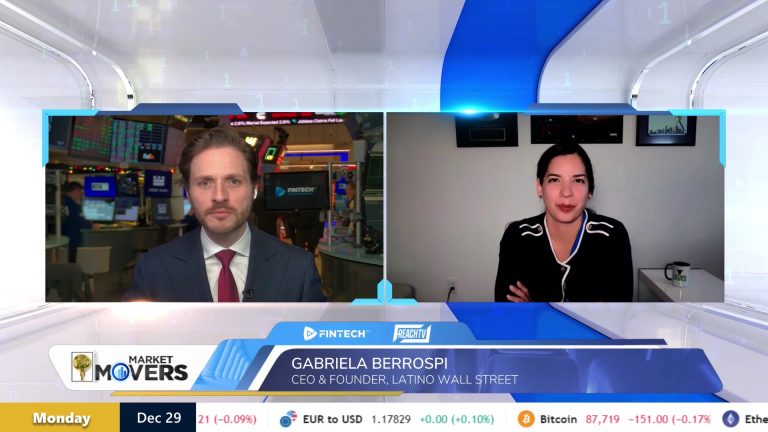
Remy Blaire engages in a timely discussion with Gabriela Berrospi, the CEO and Founder of Latino Wall Street. The segment opens with an overview of the current economic climate as November trade begins, highlighting that tariffs are no longer causing the market disruptions they did earlier in the year. Remy notes that Polymarket indicates a 75% chance that the Supreme Court will strike down Trump’s tariffs, a potential event that would have significantly impacted the market back in April but seems to have lost its urgency as investors have adapted to the existing economic conditions.

The conversation shifts to the ongoing U.S. government shutdown, which has now reached a historic 37 days. Gabriela expresses her surprise at the duration of the shutdown and discusses its implications for federal workers and the economy. She emphasizes that the shutdown is affecting millions, with over 3 million people experiencing travel cancellations and delays since October 1st. Gabriela shares personal anecdotes about friends who have quit their government jobs due to the uncertainty, illustrating the human impact of the shutdown. She warns that if the shutdown extends into the holiday season, it could lead to significant disruptions, particularly in airports and TSA operations.

Remy and Gabriela also explore the potential effects of the shutdown on the markets. Gabriela points out that while government shutdowns are typically temporary and not necessarily bearish for the markets, the current uncertainty could lead to increased volatility.

The discussion then transitions to the cryptocurrency market, where Remy asks Gabriela for her insights on Bitcoin’s recent sell-offs, particularly after it fell below the $100,000 mark. Gabriela reflects on the initial excitement surrounding the government’s strategic reserve for Bitcoin, which has not resulted in active purchases as many had hoped. Instead, the government appears to be holding its position, leading to a lack of new buyers in the market. Gabriela argues that Bitcoin, often perceived as a high-risk investment, does not serve as a reliable hedge against volatility, especially given the current economic uncertainties.

Understanding Stablecoin Stability Assessments: Insights from Chuck Mounts of S&P Global

Remy Blaire welcomes Chuck Mounts, the Chief DeFi Officer at S&P Global Ratings, to discuss the recent partnership between S&P Global and Chainlink. This collaboration aims to bring stablecoin risk ratings on-chain, significantly transforming how decentralized finance (DeFi) protocols and investors assess the stability of stablecoins.

Remy begins the conversation by introducing the Stablecoin Stability Assessment (SSA), a product launched by S&P Global approximately a year and a half ago. Chuck explains that the SSA was developed to fill a critical gap in the market, providing stakeholders with insights into the risks associated with different stablecoins and their ability to maintain a one-to-one peg. He emphasizes that the SSA is distinct from traditional credit ratings, as it focuses specifically on de-pegging risk.

The discussion then shifts to the technical aspects of the SSA’s launch on a 3M Layer 2 base. Chuck elaborates on S&P Global’s blockchain-agnostic approach, highlighting the importance of enhancing market liquidity and price discovery. He notes that the Ethereum network was a logical starting point for integrating their benchmarks and analytics on-chain, while also expressing the company’s intention to expand to other networks in the future.

Remy and Chuck also explore S&P Global’s broader strategy regarding digital assets, including the introduction of a new on-chain index of crypto and crypto-related stocks. Chuck shares his enthusiasm for leveraging S&P’s historical expertise in data analytics and benchmarks to drive advancements in the digital asset market.

As they reflect on the recent SmartCon 2025 event in New York City, Chuck provides insights into the growing institutional adoption of blockchain technology. He observes a notable shift in S&P Global’s business mix, with an increasing number of traditional clients seeking products and services that blend on-chain and off-chain capabilities.

Revolutionizing Connectivity: The Rise of Decentralized Physical Infrastructure Networks

Remy Blaire engages in a compelling discussion with Amir Haleem, the Founder and CEO of Helium, about the rapid growth and transformative potential of decentralized physical infrastructure networks (dPINs) in 2025.

Remy opens the conversation by highlighting the significant increase in the aggregate market cap for dPIN projects, which has surged into the billions, and notes that there are now over 1,500 active projects worldwide. She emphasizes the role of leading blockchain platforms like Ethereum and Solana in powering these initiatives. Amir provides insights into the unique nature of dPINs, explaining how they enable everyday individuals to participate in building extensive networks, such as wireless infrastructure, which traditionally has been dominated by large corporations.

Amir elaborates on Helium’s pioneering role as a decentralized wireless network, where users can install miniature cell towers, referred to as hotspots, in high-traffic areas. This innovative approach not only reduces the costs associated with building network coverage but also enhances service quality, particularly in indoor environments where traditional cellular networks often struggle.

The discussion shifts to Helium’s impressive subscriber growth, which has seen a nearly 300% increase year-over-year. Amir attributes this growth to two main factors: the cost-effectiveness of the community-built network and the improved coverage it offers. He shares that Helium Mobile has attracted over half a million users, thanks in part to its unique offerings, including a free plan that sets it apart from competitors.

As the conversation progresses, Remy asks Amir about the future of dPINs and the broader implications of this technology. Amir expresses excitement about Helium’s plans to expand into new markets, including a launch in Mexico with Telefonica. He also discusses the emergence of innovative applications within the dPIN space, such as mapping networks and GPU networks for AI inference, signaling a shift in the crypto landscape toward more diverse applications beyond financial derivatives.

Bitcoin’s Resilience: Navigating the $100,000 Threshold

“A billion and a half of outflows over the last couple of weeks is pretty significant.” – 02:22

Remy welcomes Andy Baehr, Head of Product and Research at Coindesk Indices, to provide expert insights into the factors influencing the market’s current softness. Andy explains that the market is experiencing a “tender” phase, which has led to a sense of vulnerability among investors. He discusses various reasons for this softness, including lower liquidity, profit-taking by long-term Bitcoin holders, and the effects of external economic factors such as Federal Reserve policies and government shutdowns.

The conversation shifts to the importance of liquidity in the market, with Andy emphasizing that a significant amount of money is currently flowing out of ETFs. He notes that while some of these outflows may be related to arbitrage positions, the overall trend indicates a cautious sentiment among investors. Remy and Andy also explore the distinction between “fast money” and “slow money,” with Andy reassuring listeners that long-term investment interest in the crypto space remains robust.

As the episode progresses, Remy and Andy discuss the broader implications of recent market volatility, not only in cryptocurrencies but also in equity markets and other asset classes. Andy shares insights from the Ripple Swell event, where he observed notable advancements in mergers and acquisitions, as well as significant fundraising efforts that could shape the future of the industry. He emphasizes the importance of viewing the crypto landscape as a long-term technological evolution rather than getting caught up in short-term market fluctuations.

The discussion also touches on the political landscape, particularly the implications of local elections in New York and the ongoing U.S. government shutdown. Andy expresses hope that the regulatory environment for digital assets will not become more complicated with additional municipal regulations. He advocates for a balanced approach to consumer protection and regulation that can help maintain New York’s status as a leading hub for cryptocurrency.

Market Volatility and AI: What Investors Need to Know

Remy Blaire engages in a compelling discussion with Matt Bromberg, the Chief Operating Officer at Wedbush Fund Advisors. The conversation centers around the current state of the U.S. stock market and the transformative potential of artificial intelligence (AI).

“This is a long-term investment strategy and theme that we have very high conviction on.” – 01:35

Remy opens the segment by highlighting the recent performance of major U.S. stock averages, which are currently in positive territory despite a recent downturn. She notes the warnings from the CEOs of Goldman Sachs and Morgan Stanley about a possible market pullback of 10 to 20 percent over the next 12 to 24 months. Despite these concerns, the discussion shifts to the factors fueling the market rally, including the AI trade and hopes for interest rate cuts.

Matt provides insights into the AI revolution, describing the market as being on the “runway, taxiing” toward significant advancements in AI. He acknowledges the hype surrounding AI but emphasizes that the fundamentals remain strong, with reasonable valuations and substantial investments from tech leaders. He expresses high conviction in the long-term potential of AI as a transformative investment theme.

As the conversation progresses, Remy and Matt analyze the recent stock movements of major tech companies, including Meta, Microsoft, Amazon, and Apple. Matt underscores the importance of valuation and the need to separate signal from noise in the AI sector. He points out that 2025 is expected to be a pivotal year for AI-related deals, particularly in the context of national security.

Matt explains that the current deal cycle differs from the speculative tech boom of the late 1990s, as companies are now making thoughtful acquisitions to facilitate innovation. He believes this disciplined approach indicates sustainable market conditions and a clear path to growth.

For retail investors looking to capitalize on the AI trade, Matt identifies opportunities across various sectors, including semiconductors, utilities, and hardware. He references the “Dan Ives AI 30” research report, which focuses on 30 companies driving the AI revolution and investing in future profitability.

Stablecoins and AI: The Future of Autonomous Financial Systems

Bill Platt, the COO of Alchemy, joins Remy Blaire to discuss the transformative intersection of artificial intelligence (AI) and blockchain technology within the fintech sector.

Remy opens the conversation by highlighting the rapid growth of AI and blockchain, noting their integration and the potential benefits this brings to financial processes, such as improved transaction handling and enhanced security measures. Bill shares his perspective on the current state of these technologies, describing it as an inflection point similar to the early days of cloud computing. He emphasizes the power of combining agentic AI with blockchain, suggesting that this synergy could fundamentally change financial operations worldwide.

The discussion shifts to the concept of stablecoins, which Bill refers to as the “killer app” for blockchain. He explains how stablecoins serve as a vital bridge between traditional finance and the advantages offered by blockchain technology. Bill elaborates on Alchemy’s role in this evolution, describing the company’s infrastructure as the “plumbing” that enables seamless transactions across various applications. He clarifies that this plumbing consists of decentralized systems and APIs that work behind the scenes, allowing users to engage with financial services effortlessly.

As the conversation progresses, Remy and Bill address the critical issue of security in the realm of decentralized finance (DeFi). Bill points out that while DeFi offers benefits like speed and programmability, it must also incorporate the strong infrastructure and regulatory frameworks characteristic of traditional finance. He introduces Alchemy’s recent product innovation, Cortex, which leverages AI capabilities to enhance the speed, reliability, and throughput of decentralized finance applications, making them significantly more efficient.

Bridging Finance and Blockchain: The Launch of Sui’s New Stablecoins

Stephen Mackintosh, Co-Founder and General Partner at Karatage, joins Remy Blaire at the New York Stock Exchange. The segment begins with an overview of a significant partnership between Swigroup Holdings and Sui Network, which enables users to deposit Sui-native USDC and Sui tokens directly. This collaboration aims to simplify the funding process for users and bridge the gap between regulated finance and blockchain technology.

Stephen elaborates on the recent launch of two new stablecoins backed by BlackRock’s tokenized money market fund: SUI-USDE, a yield-bearing stablecoin, and USDI, which is compliant with regulatory standards. He highlights the strategic importance of these stablecoins in enhancing the DeFi ecosystem on the Sui platform, noting that they are designed to keep fees and yields within the network, ultimately benefiting the community. Stephen explains how Karatage has white-labeled the Athena engine to facilitate this initiative, which has already seen substantial growth in total value locked across various DeFi platforms.

The discussion then shifts to the intersection of artificial intelligence and blockchain, particularly in light of Sui Network’s partnership with Google. Stephen shares his background in AI, having previously run an AI business that was sold to a New York Stock Exchange-listed company. He describes Sui’s object-oriented blockchain model, contrasting it with traditional account-based models and emphasizing its scalability and potential for agentic payments. Stephen outlines how the infrastructure built by the Sui team, including decentralized programmable storage and verifiable off-chain compute, is essential for enabling autonomous and verifiable transactions.