[stock-market-ticker symbols=" ^NYA;CRYPTO:BTC;CRYPTO:ETH;CRYPTO:USDT;CRYPTO:USDC;CRYPTO:BNB;CRYPTO:ADA;CRYPTO:XRP;CRYPTO:SOL;CRYPTO:DOGE " stockExchange="NYSENASDAQ" width="100%" transparentbackground=1 palette="financial-light"]

Home Blog Page 26

H.E. Al-Hogail Outlines Saudi Arabia’s Real Estate Transformation Under Vision 2030

0

In an enlightening conversation, His Excellency Majed Al-Hogail, the Minister of Municipality and Housing in Saudi Arabia, shares pivotal insights about the country’s evolving real estate landscape during his appearance on Fintech TV. With the backdrop of Saudi Arabia’s ambitious Vision 2030 initiative, the discussion elaborates on how real estate solutions and advancements in technology are transforming the market to benefit citizens, investors, and international stakeholders alike.

Saudi Arabia stands at the forefront of an unprecedented transformation, integrating innovative urban planning concepts and smart development strategies. The Minister highlights the emergence of “15-minute cities,” where residents can accomplish daily activities within a short walking distance, thereby improving the overall quality of life. “Local developers are undertaking remarkable projects to bring this vision to reality,” H.E. Al-Hogail emphasizes, echoing the collaborative spirit witnessed at this week’s events, which captured various stakeholders, from residents to international investors, all keen to partake in the burgeoning opportunities within the Saudi economy.

Addressing the role of FinTech Solutions in real estate, H.E. Al-Hogail sheds light on how the government’s e-governance initiatives are facilitating data-driven decision-making. The infusion of Artificial Intelligence (AI) and other fintech advancements is allowing key players — including investors, home buyers, and property managers — to enhance their operational efficiency. The Minister articulates a future where technology not only aids in project implementation but also enhances user engagement through smarter interactions between stakeholders.

One of the focal points of the discussion was the concept of tokenization within the real estate sector. The Minister pointed out that no nation has yet standardized real estate tokenization, paving the way for Saudi Arabia to take the lead. The establishment of criteria by the Real Estate General Authority aims to harmonize traditional ownership deeds with digital platforms, allowing for fractional ownership and improved governance. “This standardization is crucial for protecting all stakeholders involved,” H.E. Al-Hogail explains, reinforcing the importance of a government-led approach in this digital transition.

His Excellency emphasized that the integration of real estate and proptech is a core element of Saudi Arabia’s housing strategy. By regulating the entire ecosystem — from land acquisition to property management — the kingdom is creating an environment ripe for innovation. H.E. Al-Hogail affirms that a regulatory sandbox will allow new ideas to be implemented in a controlled environment, ensuring quality before market introduction. This proactive strategy is set to boost transparency and streamline processes across the real estate value chain.

As the world shifts towards digital finance and sustainable investment, the Minister’s insights shed light on a profound transition within the Saudi real estate sector. Through the adoption of cutting-edge technology and collaborative governance practices, Saudi Arabia is well on its way to establishing itself as a leader in the global real estate market. This transformation supports not only the financial sector but also aligns with broader Sustainable Development Goals (SDGs) aimed at fostering growth, sustainability, and inclusivity.

With clear goals and an emphasis on smart urban development, the Kingdom is positioning itself to attract international partnerships and investments. As the conversation highlights, this journey is more than a mere economic transition; it resonates with the broader vision of a future driven by innovation, sustainability, and enhanced connectivity among all participants in the real estate ecosystem. Saudi Arabia’s ambitious reforms echo the global financial landscape’s shift towards blockchain, AI, and sustainable investing, proving that strategic foresight can lead to impactful transformations in the real estate sector.

In conclusion, the insights from His Excellency Majed Al-Hogail illuminate a significant chapter in Saudi Arabia’s journey toward a diversified and tech-savvy economy. The fusion of real estate, fintech, and sustainable principles creates a compelling narrative of growth and opportunity not just for Saudi Arabia, but for investors and entrepreneurs globally.
Santa Claus Rally Watch Intensifies as Markets Rise and Commodities Set Records

Stocks have been rallying this week, marking a three-day winning streak as anticipation builds for the annual Santa Claus rally that begins tomorrow, Christmas Eve. In particular, the AI dentist data center infrastructure trade has shown signs of recovery, with major players like Irene and Oracle regaining some momentum. Notably, Nvidia finally bounced back from three-month lows, but the key highlights remain commodities; both gold and silver are hitting record highs, while platinum has surged above the $2000 level for the first time since 2008, and copper has exceeded $12,000 per metric ton on the London Metal Exchange.

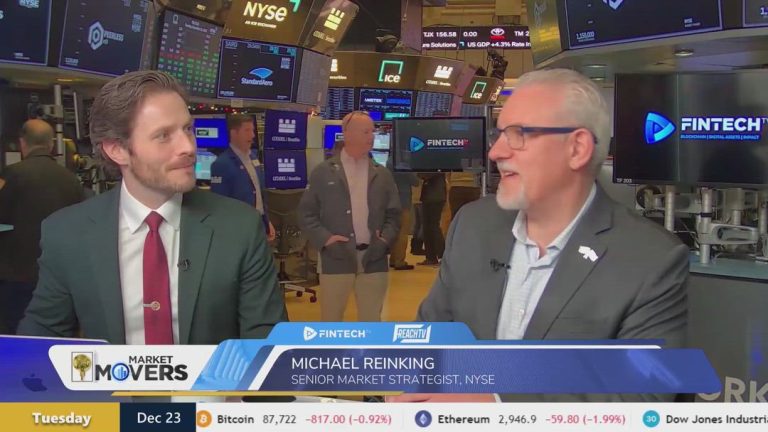
To gain insights into these developments, we welcome Michael Reinking, the senior market strategist at the New York Stock Exchange, who shares his analysis on the current market climate. Reinking expresses a positive tone in light of the holiday season, but notes that trading activity is relatively quiet this morning.

Reinking provides a breakdown of the recent higher-than-expected GDP print, which came in at 4.3%, up from 3.8% in Q2. This robust figure surpassed estimates, with consumption numbers coming in strongly at 3.5%, significantly ahead of the 2.7% forecasts. He points to the potential for a pull-forward phenomenon in holiday spending, yet the real question that remains is whether this strength will continue beyond the festive season. Market reactions include slight increases in Treasury yields of 2 to 3 basis points across the curve, indicative of underlying price concerns.

The conversation shifts to government spending and fiscal measures like the “One Big Beautiful Bill,” which Reinking suggests could stimulate consumer and capital spending, further bolstering GDP into the new year. Anticipation is also brewing around potential $2000 tariff-related stimulus payments, though there are concerns about inflation repercussions if consumer spending is propped up excessively as the year closes.

Regarding sector performance in the S&P 500, Reinking highlights that tech remains the strongest sector, which is not surprising in the context of the prevailing AI trade. He notes that communication services, industrials, and healthcare are also benefiting from the economic rebound, while defensive sectors such as real estate, staples, energy, and materials have underperformed in 2025. This underperformance is symptomatic of broader market trends driven by economic optimism.

Reinking underscores the significance of the upcoming Santa Claus rally, referencing historical data from the Stock Trader’s Almanac, which suggests that the returns in the final five trading days of the year and the first two days of the subsequent year are indicators of market performance for the following year. However, he cautions against placing too much stock in any single indicator, especially given recent anomalies in rally patterns over the past two years.

As we approach the new year, Reinking identifies key catalysts to watch, including an impending Supreme Court decision on tariffs, which could provide relief for the underperforming retail sector. A shift in tariff policy could promote further market rotations and bolster economic health.

In conclusion, Michael Reinking’s insights paint a picture of cautious optimism in the market as we prepare to enter 2026. With significant sector performance trends, GDP growth, and potential policy changes on the horizon, investors should stay informed and agile as they navigate these festive yet dynamic market conditions. As always, awareness of these economic indicators will be essential for strategic decision-making in the fast-evolving financial landscape.

U.S. Crypto Rules Advance as Regulators and Congress Close In on Clarity


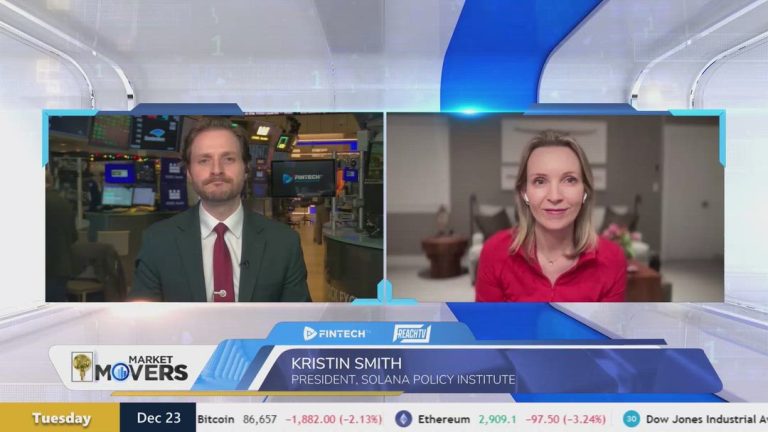
According to recent developments in Washington, the crypto landscape is poised for significant changes. With Mike Selig confirmed as the new chairman of the Commodity Futures Trading Commission (CFTC), the United States is taking critical steps toward a more comprehensive regulatory framework for digital assets. Selig, who formerly worked as chief counsel to the SEC’s crypto Task Force, will be at the forefront of shaping U.S. cryptocurrency policy during a pivotal moment for the industry.

Kristen Smith, the president of the Solana Policy Institute, shared her insights after attending the Solana Breakpoint event in Abu Dhabi. She described the experience as energizing and highlighted how regulatory advancements in the U.S. are influencing innovations on a global scale. With an increasingly clear set of rules for builders and developers, there is a ripe environment for innovation in the crypto space. This sentiment resonates with many stakeholders in the industry, particularly as crypto gains more traction in mainstream finance.

The Solana Policy Institute’s recent efforts, such as signing a letter urging Congress to defend the GENIUS Act, underscore the organization’s commitment to maintaining a robust framework for stablecoins. This Act represents a major milestone, as it established guidelines that prohibit the payment of interest on stablecoins while allowing rewards from third-party platforms. Such frameworks aim to balance the interests of traditional banks, who see cryptocurrency as competition, while also fostering a sustainable and innovative marketplace for digital assets.

However, the regulatory landscape remains tenuous. Efforts by banks to alter the GENIUS Act pose threats to the frameworks that the crypto industry has fought hard to establish. The Solana Policy Institute, along with the Blockchain Association and over 125 other companies, are advocating strongly against these changes, emphasizing the importance of preserving the Act as originally intended. The current dynamics highlight the ongoing tug-of-war between traditional financial institutions and innovative crypto projects.

Kristen’s perspective on the departure of Cynthia Lummis from Congress reflects a broader concern in the crypto community. Lummis has long been a upfront advocate for cryptocurrency reform, illuminating the need for transformative leadership as the industry evolves. Her departure raises questions about the continuity of supportive voices in legislation and how future developments will move forward without her influence.

Looking ahead, the regulatory environment for cryptocurrency in the U.S. remains a work in progress. Kristen pointed out areas where additional guidance is needed, particularly concerning tax policy for staking rewards. The SEC’s project on token classification is another area of focus, as it aims to bring more clarity to the process of bringing assets on-chain in a compliant manner. The interconnection of cryptocurrency regulations with traditional financial systems indicates a trend that the industry must navigate with care.

From a broader perspective, the dialog around market structure legislation in Congress presents an opportunity for stakeholders to engage in meaningful conversations. As the Senate prepares for discussions on the topic, it’s likely we will see further developments in early 2026 that could reshape the way digital assets are treated in U.S. law.


In conclusion, the evolving narrative of cryptocurrency regulation in the U.S. emphasizes the vital role of balanced frameworks that foster innovation while ensuring consumer protection. With influential voices like Kristen Smith and organizations like the Solana Policy Institute leading the charge, the future of cryptocurrency stands at a crossroads of potential growth and heightened scrutiny. As we navigate this transformative era, continued collaboration between policymakers and industry leaders will be key to sustaining momentum and ensuring that innovations in blockchain, cryptocurrency, and sustainable investing can flourish.

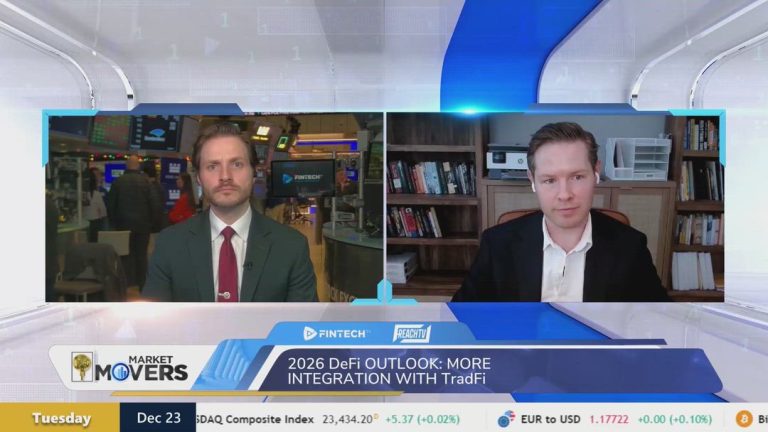
DeFi Evolves as Stablecoins and Wall Street Capital Move On Chain


The evolution of decentralized finance (DeFi) continues to spark debate among crypto enthusiasts and investors. The recent provocative statement “DeFi is dead” voiced by Sid Powell, the CEO and co-founder of Maple Finance, suggests a profound shift in the financial landscape. This interview delves into Powell’s insights shared during a recent discussion, exploring the integration of traditional capital markets with blockchain technology, the rise of stablecoins, and the future of DeFi as a fundamental aspect of the financial ecosystem.

Sid Powell, a thought leader in the crypto space, argues that the transition from traditional finance (TradFi) to blockchain-based finance is not merely a trend, but rather an inevitable convergence. He emphasizes that the differentiation between DeFi and conventional capital markets is diminishing as more traditional asset managers embrace on-chain financial instruments. This transition opens a door to a financial ecosystem where transactions are conducted seamlessly on blockchain networks, utilizing stablecoins for settlement and enabling the issuance and trade of equities and debt instruments on decentralized platforms.

Powell’s insights are timely, coinciding with significant advancements in the stablecoin sector following the passage of the GENIUS Act. This legal framework has catalyzed a wave of adoption among traditional financial players eager to capitalize on the burgeoning stablecoin market. Companies like PayPal and Ripple have already taken the plunge, signaling robust opportunities for growth. As Powell highlights, the current circulating supply of stablecoins stands at an impressive $260-$270 billion, and he predicts this number will soar past $1 trillion within the next couple of years. This surge aligns with consumer demand for faster, more secure, and efficient transaction methods.

Looking ahead, Powell suggests that the landscape is ripe for traditional finance participants, including JPMorgan, to venture into the tokenized asset space. Their recent foray into launching tokenized money market funds showcases the institutional acceptance of blockchain-based financial solutions. Such developments are not just whispered among industry insiders; they represent tangible shifts that could redefine the structures of capital markets.

The awareness and participation of institutional players are pivotal in legitimizing the DeFi space, underpinning Powell’s viewpoint that the introduction of regulations—like the anticipated Clarity Act—will enhance investor protection and encourage broader institutional engagement. As regulatory frameworks solidify, the pathways for institutional investment will become clearer, propelling DeFi into mainstream consciousness.

Despite the optimistic viewpoints surrounding DeFi and stablecoins, the macroeconomic landscape of 2025 presents challenges. Powell observes that while 2025 appeared to fulfill many aspirations for the crypto community, external macroeconomic conditions—such as tariffs and geopolitical tensions—have created hurdles for the market. Investor sentiment often oscillates; thus, the crypto landscape might experience volatility as year-end financial maneuvers, including tax-loss harvesting, come into play. However, Powell maintains a positive outlook, envisioning potential tailwinds for Bitcoin and broader assets as favorable economic conditions potentially unfold in 2026.

For those considering entering the crypto space, understanding the vital role of DeFi is paramount. As Powell notes, DeFi is generating real revenue and executing significant value returns for token holders. Projects such as Uniswap and Maple Finance are leading this charge, demonstrating that DeFi is more than a speculative frontier; it is a viable economic sector with the potential for sustained growth.

In conclusion, Sid Powell’s insights provide a valuable lens through which to view the rapidly evolving financial landscape. As traditional finance and blockchain converge, driven by technological advancements and regulatory developments, the opportunities for innovation and investment in DeFi and stablecoins are significant. Investors, entrepreneurs, and institutions alike must embrace this evolution to stay ahead in a landscape marked by innovation and disruption. By focusing on sustainability and impact, the integration of blockchain into everyday financial transactions will not only revolutionize the market but also enhance its contribution to global financial stability and inclusion.

Thematic ETFs Take Center Stage as AI and Defense Lead Market Flows

0

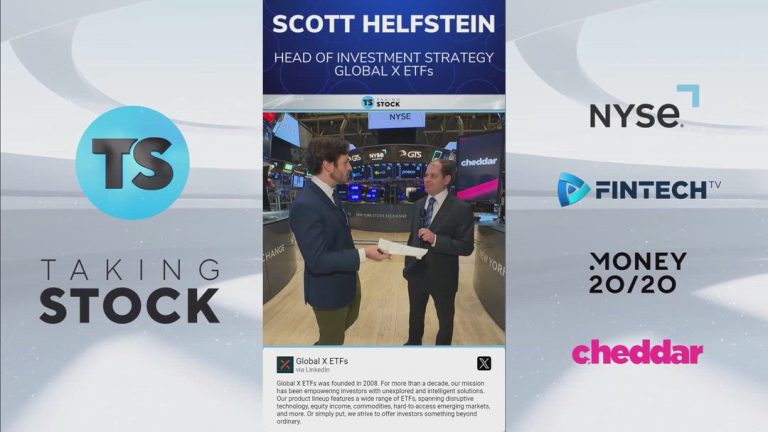
Scott Helfstein, the head of investment strategy at Global X ETFs, recently rang the closing bell at the New York Stock Exchange, marking a significant milestone for the firm after an explosive year in the Exchange-Traded Fund (ETF) market. With a strong record of over $75 billion in assets under management, Global X is rapidly becoming a leader in thematic ETFs, particularly with their recent success in the defense tech sector through their “Shield” fund, which reported a staggering 70% increase this year.

The discussion highlighted how Global X responds to investor interest and feedback, ensuring they remain at the forefront of market demand. Helfstein mentioned that their approach starts with a top-down analysis of “evergreen ideas,” focusing on sectors expected to experience extended growth over multiple years. However, the company’s innovation lies in closely working with clients to identify gaps in their portfolios, ultimately crafting ETF products that align with market needs. This adaptability to investor demand is a core reason behind their success and continuous client engagement.

Elaborating on the current investments trends, Helfstein pointed out a surging interest in the Artificial Intelligence ecosystem. Unlike focusing on just a handful of companies, their AI fund diversifies across 80 stocks, ensuring investors capture the broad market potential. They also consider integral components supporting AI, such as data centers, robotics, and cybersecurity, and the energy requirements powering these technologies. With the backdrop of today’s geopolitical climate, defense technology and commodities like copper and silver have also seen notable investor interest.

One remarkable point brought forth during the conversation is the unprecedented growth of the ETF sector, where for the first time, the number of ETFs has surpassed the number of publicly traded companies. As Helfstein indicated, the appetite for ETF products is insatiable, with the current count approaching 5,000. This surge reflects an innovative market environment where investors gravitate towards unique, cost-effective options. It also showcases a broader acceptance of ETFs as vital investment vehicles.

In terms of precious metals, Helfstein observed a shift in investor strategy, particularly in response to global economic trends. There’s been a marked increase in central banks decreasing their dollar exposure in favor of diversifying into gold, retracting interest in traditionally reliable assets amid inflationary pressures. This alteration in asset allocation illustrates a significant transition in how modern investors view traditional commodities, adapting beyond stocks and bonds.

Looking ahead to 2026, Helfstein expressed optimism about the market, citing expected strong earnings growth alongside a more dovish Federal Reserve, which may contribute to a substantial market lift. He indicated a continuous interest in AI-related investments and U.S. infrastructure, particularly as companies seek to mitigate tariff-related risks. By focusing on U.S.-domiciled companies serving the domestic market, investors may find valuable opportunities for growth.

Global X’s evolving strategy, under Scott Helfstein’s leadership, not only highlights a thriving environment for ETFs but emphasizes the need for flexibility and responsiveness to market trends. Their strong performance amidst a rapidly changing financial landscape positions them for continued success while addressing the growing demand for impactful investment strategies centered around innovation, sustainability, and technological advancement.

With the convergence of themes in finance such as crypto, blockchain, and AI, Global X’s journey reflects a broader trend in sustainability investing. As the market continues to evolve, investors increasingly seek opportunities that align with their values and aspirations while pursuing financial growth.

The Crypto Market Is Deleveraging—and That May Be a Good Thing

0

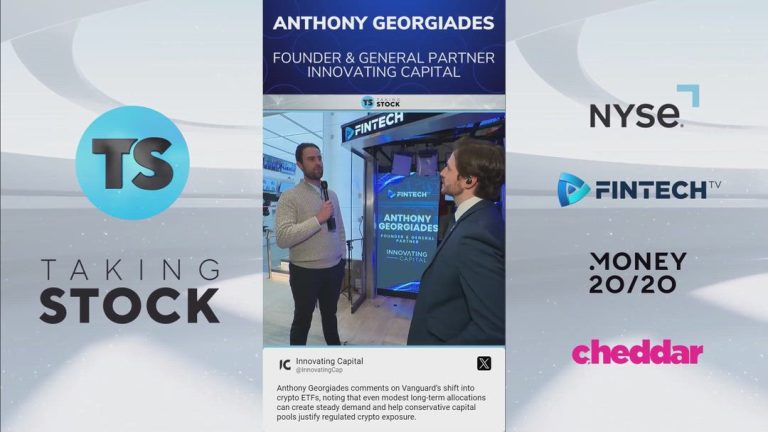
In the fast-paced world of finance and investment, few figures bring as much clarity to digital assets as Anthony Georgiades, founder and general partner at Innovating Capital. Speaking from the trading floor of the New York Stock Exchange, Georgiades outlined his crypto outlook as markets close out 2025 and investors look ahead to 2026.

At the center of the Anthony Georgiades crypto outlook is a broad deleveraging cycle that defined much of the crypto market in 2025. While prices pulled back sharply, Georgiades described the move as a necessary reset rather than a prolonged downturn. In his view, the market has been clearing excess leverage while building stronger institutional foundations beneath the surface.

That reset comes as Bitcoin and Ethereum ETFs move through early growing pains. Although recent flows have turned negative, Georgiades noted that ETF approval marked a structural milestone. The infrastructure now exists for larger pools of capital to enter digital assets when macro conditions stabilize.

Understanding how crypto behaves alongside traditional markets remains critical. Georgiades explained that Bitcoin continues to trade as a risk-on asset, meaning it is sensitive to Federal Reserve policy and interest-rate expectations. When liquidity tightens, crypto typically follows broader equity markets lower. When conditions ease, the rebound can be swift.

Looking toward 2026, the Anthony Georgiades crypto outlook shifts away from speculation and toward fundamentals. Georgiades pointed to a growing focus on revenue, cash flow, and real-world use cases as traditional finance takes a deeper look at Web3 companies. Tokenization tied to tangible assets is emerging as a key theme, particularly where blockchain technology intersects with sustainability and long-term value creation.

This transition marks an important change in how investors evaluate digital assets. Instead of chasing momentum, capital is increasingly flowing toward projects with measurable economic output. Georgiades emphasized that this fundamental shift will likely separate short-lived tokens from durable platforms capable of compounding value over time.

Another accelerating trend is the convergence of blockchain, artificial intelligence, and sustainability investing. Data-driven strategies powered by AI are improving asset selection and risk management, while tokenization is opening new pathways for aligning capital with real-world economic activity and Sustainable Development Goals.

As 2026 approaches, Georgiades believes investors who understand market cycles—and resist chasing hype—will be best positioned. The current environment, shaped by deleveraging and institutional maturation, may ultimately serve as a launchpad for the next phase of digital asset growth.

The Anthony Georgiades crypto outlook underscores a central takeaway: crypto markets are evolving, not retreating. For investors willing to focus on fundamentals, macro awareness, and long-term innovation, the coming cycle may offer opportunities that extend well beyond price speculation.

Peter Tuchman Says Markets Stay Resilient Despite Flat Holiday Trading

0

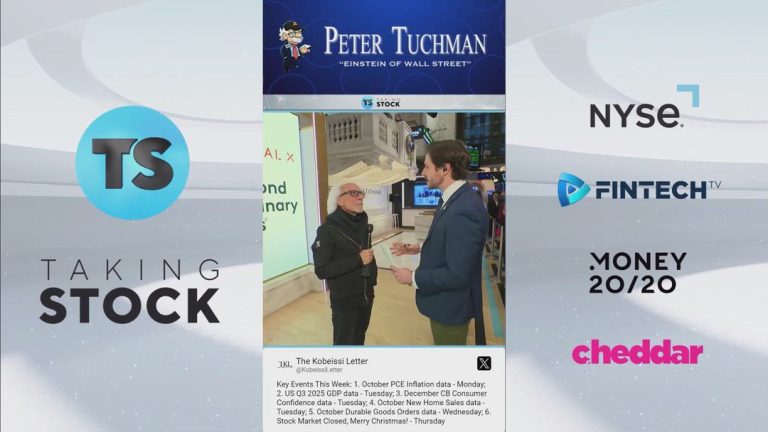
Inside the New York Stock Exchange, Peter Tuchman, the longtime market veteran and face of TradeMas, shared his latest read on market conditions as the year winds down. Speaking during a holiday-shortened trading week, Tuchman described a market that remains steady, even as volume and earnings activity slow.

Tuchman characterized the market as “kind of flat,” noting that while momentum has been muted, the tone remains constructive. He pointed to fresh capital entering the market despite the absence of major catalysts. That inflow, he said, reflects underlying confidence rather than complacency. At the same time, record highs in gold and silver prices suggest investors are positioning defensively, a pattern often seen during periods of uncertainty.

“Higher rates for longer do not do anybody any good,” Tuchman said, highlighting growing expectations that the Federal Reserve could eventually pivot toward a more dovish stance. He noted that a change in tone from the Fed would have broad implications for interest rates, equity markets, and overall stability as 2025 draws to a close.

Retail performance also played a role in his outlook. Strong Thanksgiving shopping data and solid sector performance have helped support sentiment. Tuchman said those trends reinforce his belief that the market can remain constructive into year end, even if near-term trading feels subdued.

As December progresses, Tuchman emphasized the impact of tax loss harvesting. Investors are actively selling losing positions to offset gains, a strategy that typically increases trading activity late in the year. He noted that nearly 3.8 billion shares traded in a single session, signaling both profit-taking and repositioning ahead of year-end reporting.

The conversation also turned to the possibility of a Santa Claus Rally, the seasonal pattern where stocks rise in the final week of December. Tuchman expressed cautious optimism, referencing his long history on the floor and the psychological importance of round-number milestones. He said that seeing a “big 70 in front of the S&P” would be a strong signal for investor confidence across the board.

Still, Tuchman warned that modern markets remain vulnerable to sudden shifts. He pointed to social media and political developments as wild cards that can change sentiment quickly. “A post on social media could rapidly change the narrative,” he said, underscoring the speed at which information now moves markets.

Tuchman’s perspective highlights the balance investors face as the year closes. While the market shows resilience, it remains sensitive to rates, policy signals, and external headlines. He encouraged investors to stay disciplined, remain aware of seasonal dynamics, and avoid complacency.

Looking ahead, Tuchman sees opportunity for those who remain flexible. With growing interest in areas such as artificial intelligence, sustainability, blockchain, and digital assets, he believes innovation will continue to shape market leadership. His message was clear: optimism is warranted, but adaptability will matter most as markets transition into the new year.

Bermuda Digital Asset Regulations Help Redefine the Future of Digital Finance

0

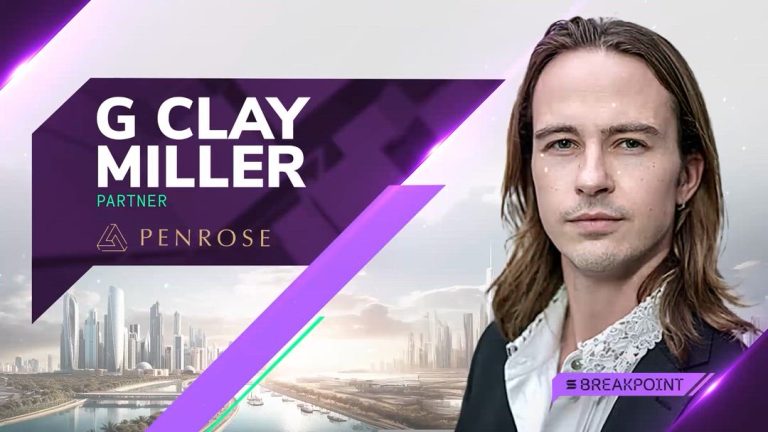
At the Solana Breakpoint conference in Abu Dhabi, G Clay Miller, partner at Penrose Partners, outlined how Bermuda’s forward-thinking regulatory framework has positioned the island as a global leader in digital finance. Miller discussed how Bermuda’s approach to regulation has attracted insurers, stablecoin issuers, and blockchain innovators while offering a model other jurisdictions are now studying closely.

Founded in Canada, Penrose Partners specializes in digital asset strategy, business development, and education. The firm advises governments, financial institutions, and blockchain companies worldwide. Notably, Penrose serves as the digital finance advisor to Bermuda’s Ministry of Finance, playing a central role in shaping the island’s digital asset ecosystem.

Bermuda first gained international attention in 2018 with the launch of the Digital Asset Business Act, becoming the first country to establish a comprehensive regulatory framework for digital assets. The legislation was originally designed to protect Bermuda’s $3 trillion reinsurance industry while allowing responsible innovation. Since then, the regulatory framework has evolved to include stablecoins and artificial intelligence, with nearly 50 licensed digital asset companies now operating under Bermuda’s oversight.

Miller emphasized that Bermuda’s strength lies in its ability to integrate traditional financial sectors with emerging technologies. One example is Penrose portfolio company Onre, which operates under both insurance and digital asset licenses. Onre focuses on yield-bearing stablecoins linked to reinsurance premiums, illustrating how blockchain infrastructure can enhance capital efficiency within established financial markets.

As digital finance continues to evolve, Bermuda is advancing initiatives aimed at reducing reliance on cash and improving payment efficiency through stablecoins. Miller noted that small businesses on the island often face high transaction costs due to international intermediaries. Stablecoin adoption offers a way to lower fees and improve margins for local merchants.

Penrose has supported this transition through educational workshops for businesses and financial institutions. A notable milestone was the Digital Finance Forum, which featured the world’s first fully licensed and regulated USDC airdrop. In partnership with Circle and Coinbase, nearly 50,000 USDC was distributed to attendees, enabling real-world testing of stablecoin payments across local businesses.

Miller has also championed stablecoin usage at the grassroots level, using USDC for everyday expenses such as rent and groceries. These real-world use cases help demonstrate how digital currencies can integrate seamlessly into traditional commerce, building trust and familiarity among consumers and merchants.

Beyond payments, Penrose collaborates with local organizations, including the Bermuda Economic Development Corporation, to foster entrepreneurship and innovation. These efforts focus on education, regulatory clarity, and ecosystem development to ensure long-term sustainability.

Looking ahead, Miller pointed to upcoming regulatory developments that will further distinguish Bermuda. Topics expected at the next annual conference include AI governance standards and frameworks that could classify AI agents as legal entities. Such initiatives could open new avenues for financial services innovation while enhancing consumer protection.

By combining regulatory clarity, institutional engagement, and local adoption, Bermuda continues to redefine what a modern digital finance jurisdiction can look like. Miller and the Penrose team view this holistic approach as essential for building a resilient and globally relevant digital asset ecosystem.

As countries worldwide seek to balance innovation with oversight, Bermuda’s experience offers a compelling blueprint. With leadership focused on responsible growth, stablecoin integration, and emerging technologies, Bermuda remains at the forefront of the evolving digital asset landscape.

DeFi Development Corp Deploys Nasdaq Balance Sheet On-Chain

0

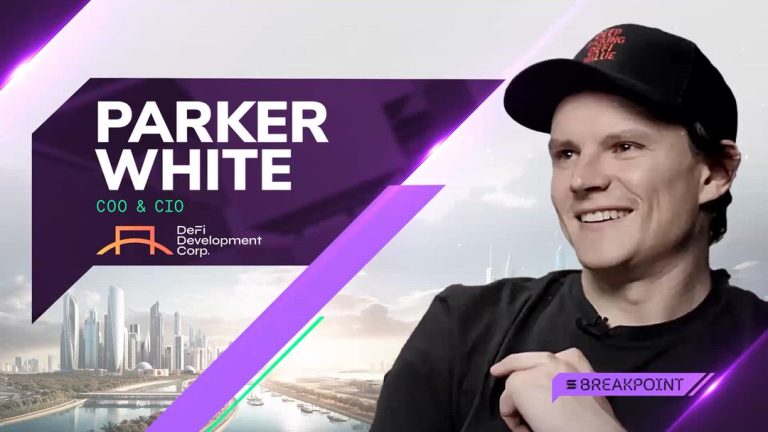
At the Solana Breakpoint conference in Abu Dhabi, FintechTV contributor Rachel Pether spoke with Parker White, chief investment officer of DeFi Development Corp, about how the company is redefining digital asset treasury management on-chain. As the first and most liquid Solana treasury company listed on NASDAQ under ticker DFDB, the firm is positioning itself at the intersection of public markets and decentralized finance.

DeFi Development Corp is applying a strategy inspired by MicroStrategy, adapted specifically for the Solana ecosystem. Instead of holding digital assets passively, the company deploys its balance sheet directly on-chain, using decentralized finance protocols to generate yield while maintaining disciplined risk controls. White explained that this approach allows the firm to pursue higher returns while actively managing downside risk for shareholders.

The leadership team brings deep experience from early crypto infrastructure, including backgrounds tied to Kraken and the first Canadian Bitcoin exchange. This history informs the company’s focus on evaluating smart contracts, lending platforms, and DeFi protocols with institutional-level scrutiny. According to White, this level of diligence is essential as more treasury vehicles enter the market without sufficient technical expertise.

Since launching in April, the digital asset treasury sector has become increasingly crowded. White noted that many new entrants lack the operational discipline required to succeed long term. As a result, he expects consolidation across the sector, with only the most efficient and innovative treasury companies surviving. This shakeout could ultimately benefit investors by narrowing the field to firms capable of delivering consistent value.

For shareholders, the central metric is Solana per share growth. White disclosed that DeFi Development Corp has achieved roughly 100 percent Solana per share growth over the past six months. The company is targeting significantly higher long-term growth rates, acknowledging that the strategy involves elevated risk in exchange for outsized potential returns.

To support this objective, DeFi Development Corp employs multiple capital strategies. These include generating yield from on-chain deployments and using capital markets tools similar to those utilized by MicroStrategy, such as at-the-market programs, preferred equity, and convertible debt. White suggested additional initiatives are in development that could further differentiate the company, though details have not yet been announced.

The discussion underscored how treasury management is evolving alongside decentralized finance. Rather than treating crypto as a static asset, DeFi Development Corp is integrating active DeFi strategies into a publicly listed structure. This approach reflects a broader shift toward combining traditional capital markets discipline with blockchain-native financial tools.

As decentralized finance continues to mature, DeFi Development Corp is positioning itself as a leader among Solana-based treasury companies. With a focus on risk management, transparency, and shareholder value, the firm represents a new model for how public companies can engage with on-chain finance.

Why Institutions Are Unlocking Yield on Bitcoin Holdings

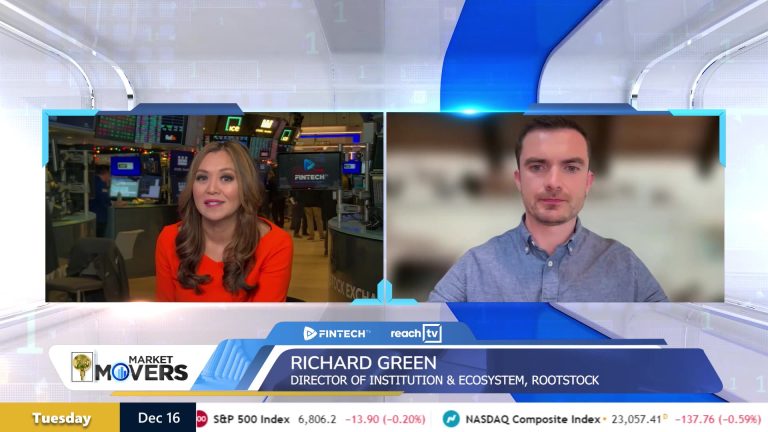
Recent developments in the Bitcoin market have underscored its ongoing volatility, with Bitcoin holding near the $87,000 level after briefly dipping below $86,000. Against this backdrop, the decentralized finance ecosystem built on Bitcoin continues to expand. Richard Green, director of institutional and ecosystem at Rootstock, outlined how Bitcoin DeFi is creating new opportunities for institutions seeking to move beyond simple buy-and-hold strategies.

Rootstock operates as a Bitcoin sidechain that is Ethereum Virtual Machine (EVM) compatible, enabling smart contract functionality on a network where it does not natively exist. Green explained that Rootstock was created to unlock practical use cases for Bitcoin, particularly in regions such as Latin America, where access to financial infrastructure remains limited. By enabling smart contracts on Bitcoin, Rootstock allows users to borrow, lend, and save using their Bitcoin holdings, significantly expanding the asset’s utility.

Institutional participation has become a major driver of momentum within Bitcoin DeFi. Institutions that initially accumulated Bitcoin primarily for capital appreciation are increasingly seeking ways to generate yield from those holdings. Green pointed to the issue of custody drag, where holding assets can lead to hidden costs, as a catalyst for institutions to explore yield-generating Bitcoin products. This shift reflects a broader evolution in financial strategy, where institutions apply traditional finance principles to optimize digital asset portfolios.

Demand for liquidity is also rising among businesses that hold significant Bitcoin reserves. Companies that are dollar or cash constrained are exploring ways to use Bitcoin as collateral to meet operational expenses such as payroll. Regulatory developments and the introduction of Exchange-Traded Funds (ETFs) have further legitimized Bitcoin in the eyes of corporate treasuries. Green noted that Bitcoin is increasingly viewed not only as a long-term store of value but also as a tool for capital efficiency, with a growing range of real-world use cases.

Security remains a central concern as Bitcoin enters more complex financial applications. Green emphasized the continued relevance of the principle “not your keys, not your coins” within the crypto ecosystem. Over time, custodians with institutional-grade security frameworks have emerged, helping enterprises gain confidence in managing Bitcoin at scale. As institutions move Bitcoin into wrapped formats for use within DeFi protocols, understanding the varying security models across platforms becomes essential. Rootstock’s emphasis on secure bridging solutions, including Palpec, highlights the importance of transparency and risk mitigation in Bitcoin DeFi infrastructure.

Looking ahead, Green expects 2025 to remain a defining year for Bitcoin and digital assets. Market volatility and evolving regulation have reinforced Bitcoin’s role not only as a speculative asset but also as a functional financial tool. Rootstock continues to focus on developing products that strengthen Bitcoin’s position as a reliable asset for lending and borrowing. The long-term vision centers on transforming Bitcoin from a passive investment into an active component of global financial systems.

In conclusion, the narrative surrounding Bitcoin is undergoing a significant transformation. Institutional engagement in Bitcoin DeFi, the expansion of EVM compatibility through platforms like Rootstock, and an increased emphasis on security are reshaping how Bitcoin is used. As traditional finance concepts continue to merge with decentralized infrastructure, Bitcoin’s evolution into a versatile financial instrument is becoming increasingly clear. These developments carry broader implications for sustainability investing, AI-driven finance, and impact-focused capital deployment, encouraging deeper participation from both institutional and retail investors.