[stock-market-ticker symbols=" ^NYA;CRYPTO:BTC;CRYPTO:ETH;CRYPTO:USDT;CRYPTO:USDC;CRYPTO:BNB;CRYPTO:ADA;CRYPTO:XRP;CRYPTO:SOL;CRYPTO:DOGE " stockExchange="NYSENASDAQ" width="100%" transparentbackground=1 palette="financial-light"]

Home Blog Page 24

Crypto Treasuries, Kiyosaki buying, Tariffs crypto, Ledger listing

0

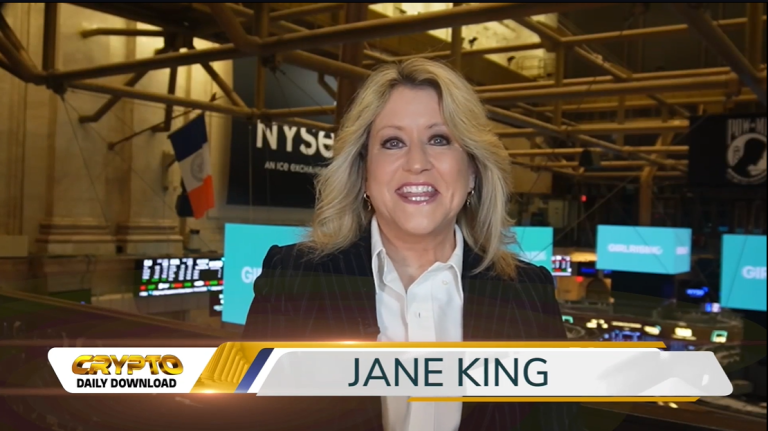
In this episode of Coin Street headlines, we dive into the latest developments in the cryptocurrency market. We discuss the significant decline in the value of crypto-treasury companies, particularly Strategy, which has seen its valuation plummet from $128 billion to $70 billion. Investor and author Robert Kiyosaki shares his bullish outlook, targeting a $250,000 price for Bitcoin and $27,000 for gold, as he emphasizes the importance of hard assets in light of a potential economic crash. We also cover U.S. President Donald Trump’s announcement of a $2,000 dividend for most Americans, which is seen as a form of economic stimulus that could positively influence cryptocurrency and asset prices. Lastly, we highlight Ledger’s plans for a New York listing, driven by a surge in demand for cold storage wallets amid rising crypto hacks. CEO Pascal Gauthier reports that the company is experiencing its best year yet, securing approximately $100 billion worth of Bitcoin. Jane King with the latest from the NYSE.

Market Rebound: Navigating the Government Shutdown and Tech Valuations

Remy Blaire engages in a lively discussion with Peter Tuchman, a Senior Floor Trader at TradeMas, about the current state of the U.S. stock market and the implications of a potential government shutdown.

“We always say we’re all one tweet away from crazy town.” – 01:03

Remy opens the segment by highlighting that Wall Street is looking at a higher open on Monday morning, fueled by hopes for an end to the government shutdown. She notes that the S&P 500 finished lower last week, ending a three-week winning streak, as investors grew cautious over high stock valuations, particularly among AI-driven tech companies.

Peter shares his insights on the market’s unpredictable nature, emphasizing that it often surprises observers. He remarks on the media’s tendency to sensationalize situations, particularly the notion of a “bubble” in tech stocks, which he believes is unfounded. Peter argues that the participation of major players in the tech sector indicates a more stable environment than what some narratives suggest.

As they discuss the potential government shutdown, Peter explains that while it could cause disruptions, particularly in travel and everyday life, it often prompts quicker resolutions when the general public begins to feel the effects. Remy and Peter also delve into the upcoming Federal Reserve meeting and the economic data that will be released following the shutdown. With rising expectations for a 25 basis point rate cut, Peter expresses his belief that the Fed’s decisions will heavily rely on forthcoming economic indicators, including unemployment rates and inflation data.

The conversation shifts to the short-term outlook for the market, with Remy noting a significant uptick in Nasdaq futures. Peter points out that the tech sector, which has recently faced pressure, particularly with stocks like Palantir and Nvidia, is poised for recovery. He anticipates a rebound as the market adjusts to new economic data and potential policy changes.

From Mitigation to Resilience: A New Approach to Climate Action

Remy Blaire is joined by Jeff Gitterman, CEO of Gitterman Asset Management, to discuss the pressing need for resilience in the face of the climate crisis. The conversation begins with Remy highlighting the shift in climate leadership, emphasizing that while mitigation and adaptation are crucial, building resilience against climate impacts is becoming increasingly vital.

“For every $1 invested in resilience, it brings back $10 over the next 10 years in investment results.” – 05:03

Jeff explains that resilience has often been misunderstood as a sign of giving up on mitigation efforts. He notes that recent severe storms, including a typhoon in Thailand and Hurricane Melissa in Jamaica, illustrate the urgent need for improved infrastructure and early warning systems to cope with the escalating climate challenges. He stresses that resilience is not a one-size-fits-all approach; it must incorporate local contexts and community-driven insights.

The discussion then shifts to the rising global energy demand, which Jeff attributes to two main factors: increasing temperatures leading to higher air conditioning usage and the growing energy needs driven by artificial intelligence. He points out that this surge in energy demand is occurring without corresponding economic growth, highlighting the strain on energy resources.

Remy and Jeff also explore the importance of early warning systems in saving lives during weather disasters. Jeff shares a compelling example from Thailand, where a million people were evacuated ahead of a storm, significantly reducing casualties. He emphasizes the need for updated building codes that reflect the realities of today’s climate, particularly in both developed and developing nations.

As the conversation progresses, they look ahead to COP30, where Jeff expresses hope for a significant agreement on resilience funding. He advocates for a commitment of $1.5 trillion over the next decade to support developing countries that are most affected by climate change. Jeff underscores the injustice of the current situation, where the countries contributing the most to CO2 emissions are often the least impacted, while those that contribute little suffer the most.

Finally, Remy and Jeff discuss the implications of the government shutdown on FEMA and its impact on flood insurance and home purchases. Jeff highlights the potential risks to municipal bonds and the broader implications for communities reliant on federal support for disaster recovery.

Wall Street Rally: Analyzing Strong Earnings and the AI Boom

Remy Blaire welcomes Steven Orr, CEO and Founder of Quasar Markets, to discuss the current state of the stock market and the implications of the latest earnings reports from American companies. The episode opens with a focus on the rally occurring on Wall Street, where American companies are experiencing one of their strongest earnings seasons in years. Remy highlights that over 80% of the 446 S&P 500 companies that have reported earnings have beaten analyst estimates, contributing to a significant rise in the Nasdaq, which is enjoying its longest winning streak since 2018.

As the conversation unfolds, Steven shares his perspective on the AI trade, noting that he previously believed the market had run too fast on AI investments. He explains that he has recently taken a more aggressive stance by going on margin, anticipating that the government will resolve ongoing shutdown issues and lead the market to new highs by the end of the year.

Remy and Steven delve into the various sectors within artificial intelligence, with Steven drawing a parallel to the gold rush. He emphasizes that the companies providing essential tools—like MongoDB and Amazon—will emerge as the true winners in the AI landscape. He expresses confidence in MongoDB’s Atlas platform, particularly in its appeal to the fintech sector, and addresses concerns about competition from cheaper alternatives.

The discussion shifts to Amazon, where Steven reflects on the company’s recent earnings and its integration with AI through AWS. He points out that Amazon and MongoDB complement each other rather than compete, creating a strong ecosystem for AI companies.

The segment also covers the infrastructure sector, with Steven identifying key players such as Corby and Palantir. He praises Palantir’s strong government contracts and its potential to expand into new markets like healthcare, expressing bullish sentiments about the company’s future valuation.

The Sustainable Investor: Insights from Peter Krull on Climate and Finance

0

In this episode of The Impact, Jeff Gitterman welcomes Peter Krull, a Partner and Director of Sustainable Investing at Earth Equity Advisors, who shares his journey into sustainable investing, which began during his time at Merrill Lynch and was influenced by his conversations with his wife, a dual PhD microbiologist, and his meeting with green architect William McDonough. He emphasizes the importance of sustainable investing as a response to the existential challenges posed by climate change.

They discuss the current state of the sustainable investing landscape, particularly the pressures faced by fund companies and the political climate surrounding ESG. Peter highlights that while there may be shifts in product offerings, the demand from clients for sustainable solutions remains strong. He points out that the role of advisors is to tell stories and translate, helping clients understand the importance of sustainable investing.

Peter also emphasizes the need to evolve from socially responsible investing to a more resilient and innovative approach, particularly in light of recent climate-related events. He shares insights from his own experiences during Hurricane Helene in Asheville, North Carolina, and the necessity for infrastructure improvements to adapt to a changing climate.

They touch on the investment opportunities in resilience and adaptation, noting that the case for investing in these areas is becoming increasingly clear. Peter’s upcoming book, The Sustainable Investor, aims to educate both financial advisors and the public about sustainable investing and the importance of embodying these values in their practices.

As they wrap up, they discuss the future of sustainable investing, particularly the growing interest among younger generations. Peter emphasizes that financial advisors must adapt to meet the demands of these clients or risk losing them to less personalized investment solutions.

The Intersection of Credit and Technology: A Conversation with CredCore’s Saumil Annegiri

0

Remy Blaire is joined by Saumil Annegiri, Co-CEO and co-founder of CredCore, during Money20/20 USA in Las Vegas. They delve into the innovative intersection of credit and technology that CredCore operates within, addressing the complexities of the $5 trillion credit market. Saumil shares insights on how their proprietary AI models are designed with rigorous oversight to ensure precision, which is crucial in the finance sector.

They also discuss CredCore’s recent Series A funding, highlighting their unique blend of financial and strategic investors, including notable names like Inspired Capital and Fitch Group. This backing not only provides capital but also mentorship, which is vital for navigating the evolving credit landscape.

Looking ahead, Saumil outlines CredCore’s focused growth strategy, emphasizing their commitment to serving corporate borrowers and expanding their offerings to lenders and investment banks. He mentions exciting developments in their product roadmap aimed at enhancing risk assessment and deal execution, as well as plans for international expansion into markets like the Middle East and Europe by 2026-2027.

Warren Buffett’s Cash Pile: What It Means for Investors

“There are stocks in the AI world that are trading 100 times earnings, 100 times revenues in certain cases.” – 00:01:50

Remy Blaire is joined by Rob Haugen, the Chief Investment Officer of River1 Asset Management to discuss Warren Buffett’s recent stock-selling activities and his impressive cash reserve, which now exceeds $381 billion. Remy prompts Rob to share his interpretation of Buffett’s strategy, particularly as he approaches the later stages of his career. Rob speculates that Buffett may be waiting for a significant market sell-off to make a major investment, potentially allowing him to capitalize on undervalued stocks.

The conversation then shifts to the topic of leveraged ETFs, which aim to multiply daily returns but come with heightened risks. Rob explains how these funds can create valuation disconnects in the market, especially in sectors like artificial intelligence, where stocks are often trading at exorbitant multiples. He emphasizes the necessity for investors to understand the valuations of the stocks in their portfolios, warning that those who invest based solely on momentum without thorough research may face substantial losses when the market corrects.

Remy and Rob delve deeper into the concept of “investment junk food,” a term Rob uses to describe the allure of certain leveraged ETFs that lack solid business models or proven profitability. While major tech companies like NVIDIA are generating significant revenue, Rob points out that many smaller, leveraged stocks in the AI space have not yet demonstrated their business viability, making them particularly susceptible to market volatility.

As the episode progresses, the discussion turns to the current state of the IPO market, which has been sluggish since the COVID pandemic. Rob explains how an influx of new IPOs could negatively impact existing equity markets, as investors may need to sell off current holdings to accommodate new investments.

Layer 2 Solutions and the Evolution of Payment Systems: A Conversation with PayPal’s May Zabaneh

0

Remy Blaire is joined by May Zabaneh, Head of Crypto at PayPal, to discuss the vibrant atmosphere of the Money20/20 conference in Las Vegas and how conversations around crypto have become more mainstream compared to previous years.

May highlights the significant impact of the Genius Act, which has helped lower barriers to adoption for crypto payments and fostered innovation in the U.S. financial landscape. They explore the role of Layer 2 solutions in enhancing transaction speed and efficiency, making it easier for merchants to onboard and improve user experiences.

May emphasizes the importance for merchants to analyze their costs and consider integrating crypto and stablecoins into their operations. She shares insights on how PayPal’s recent launch of a stablecoin is aimed at providing value to both consumers and merchants.

Democratizing Finance: How Blockchain is Leveling the Playing Field for Retail Investors

Remy Blaire engages in a compelling discussion with Georgios Vlachos, the co-founder of Axelar, live from the New York Stock Exchange. The conversation centers around the critical role of blockchain infrastructure in the burgeoning world of stablecoins, trading venues, and yield strategies.

“As more of this infrastructure is coming on chain, I expect traditional applications that take payments to also launch their own stable coins.” – 02:26

Remy opens the episode by highlighting the increasing popularity of stablecoins and the necessity for high-speed blockchain infrastructure to support their growth. Georgios explains that Axelar is building a framework to connect various blockchains, likening each blockchain to a personal computer while Axelar serves as the internet that facilitates the transfer of value and information across these independent systems. He emphasizes the importance of this infrastructure in addressing the fragmentation prevalent in the blockchain ecosystem, particularly as more stablecoins are launched across different platforms.

As the discussion progresses, Georgios shares his insights on the trend of companies launching their own stablecoins. He believes this trend will accelerate, as businesses seek to avoid the high costs associated with traditional banking. By creating their own stablecoins, companies can act as their own banks, thus eliminating the need to pay fees to existing stablecoin providers. Georgios anticipates that hundreds of stablecoins will emerge, each tailored to specific applications, as the infrastructure for on-chain solutions continues to develop.

Remy and Georgios also explore the differences between traditional financial institutions and smaller retailers in the context of launching stablecoins. Georgios notes that the process has become remarkably straightforward, with platforms enabling users to create their own stablecoins in just a day, while maintaining control over customization and revenue flows.

Looking ahead, the conversation shifts to the potential for innovation and growth in the retail market for stablecoins. Georgios expresses his belief that the key to driving adoption in the crypto industry lies in the opportunities for users to earn money on-chain. He points out that trading and yield generation have been the primary motivators for crypto engagement over the past decade. Georgios highlights Axelar’s recent launch of a product for XRP, which allows users to earn up to 10% simply by holding and depositing their assets into the protocol. He envisions a future where tokenized equities, such as Nvidia and Tesla stocks, can also generate yield, further incentivizing user participation in blockchain technology.

The Battle Over Stablecoin Interest: Banks vs. Crypto Exchanges

Remy Blaire is joined by Gareth Jenkinson, the Head of Multimedia at Cointelegraph to discuss the ongoing tensions between traditional finance and decentralized finance (DeFi), particularly focusing on the contentious issue of stablecoin interest payments.

“The real conflict of interest here is between the cryptocurrency industry in general at large and of course traditional financial institutions i.e. banks.” – 01:44

Remy opens the conversation by highlighting the lobbying efforts of U.S. banks, led by organizations such as the Bank Policy Institute and the American Bankers Association, who are advocating for a blanket ban on interest payments for stablecoins. Gareth provides insight into the conflicting feedback the U.S. Department of Treasury is receiving from various stakeholders in the cryptocurrency sector. He notes that Coinbase has recently urged the Treasury to limit any ban on stablecoin interest payments exclusively to stablecoin issuers, while allowing non-issuers, like crypto exchanges, to continue offering interest on staked stablecoins.

As the discussion unfolds, Gareth emphasizes the underlying conflict of interest between the cryptocurrency industry and traditional financial institutions. He explains that banks are concerned about the potential disruption that DeFi poses to their business models, particularly as consumers gain the ability to earn interest on their assets without relying on traditional banking services. Remy and Gareth explore the implications of this conflict, considering how the traditional financial system is grappling with the reality of DeFi’s growing infrastructure and its impact on consumer behavior.

The conversation then shifts to the current state of the cryptocurrency market, with a particular focus on Bitcoin’s recent price action. Gareth shares his observations on Bitcoin’s disappointing performance, noting that it has fallen below the $100,000 mark multiple times during the week. He attributes this downturn to various macroeconomic factors, including the looming U.S. government shutdown and recent market downturns. Despite the short-term bearish sentiment, Gareth expresses optimism about Bitcoin’s long-term prospects, referencing predictions from industry experts that suggest a potential surge to a million dollars by 2028 or 2030, driven by monetary policy and institutional interest.