[stock-market-ticker symbols=" ^NYA;CRYPTO:BTC;CRYPTO:ETH;CRYPTO:USDT;CRYPTO:USDC;CRYPTO:BNB;CRYPTO:ADA;CRYPTO:XRP;CRYPTO:SOL;CRYPTO:DOGE " stockExchange="NYSENASDAQ" width="100%" transparentbackground=1 palette="financial-light"]

Home Blog Page 142

Crypto Market Update: SEC Approves New Spot ETFs and Bitcoin Surges

“Bitcoin is at the top of its kind of recent range, and that’s a healthy place for it to be.” – 01:27

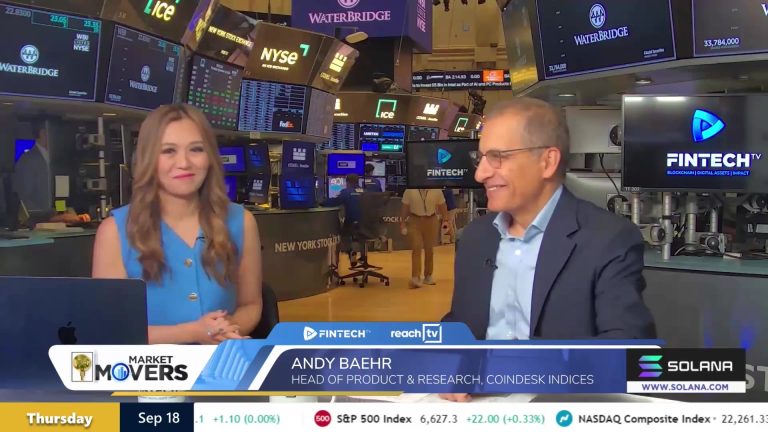
Andy Baehr, Head of Product & Research at Coindesk Indices, joins Remy Blaire at the New York Stock Exchange to discuss the latest developments in the cryptocurrency market following the September Fed meeting. Bitcoin is trading above $117,000, and the SEC has cleared the way for new spot crypto ETFs, allowing exchanges like the NYSE, NASDAQ, and CBOE to use generic listing standards. This significant change will shorten the timeline for launching new ETFs, making it easier for investors to access a broader range of crypto assets, including popular tokens like Solana and Dogecoin.

Andy notes that the market is responding positively, with Bitcoin maintaining a healthy position and low volatility. Ether has also shown strength, particularly in light of the SEC’s recent announcements.

The pair discuss the implications of the SEC’s approval for spot crypto ETFs, which will simplify the listing process and potentially lead to a surge in new products. Andy highlighted the upcoming grayscale fund that tracks the CoinDesk Five Index, which will be the largest multi-token ETF in the U.S. market, offering a more passive investment approach for advisors and their clients.

Andy also touched on the regulatory landscape in Washington, D.C. Andy emphasized the collaborative spirit between regulators and lawmakers, suggesting that the U.S. is open for business in the crypto space. This positive sentiment, combined with favorable macro conditions, could lead to exciting developments and growth in the industry.
Ethereum Foundation, Crypto politics, Robinhood fund, Base token

0

In this episode of CoinStreet Headlines, we dive into the latest developments in the crypto world! Discover how the Ethereum Foundation is merging AI with blockchain through a new research team focused on creating an AI economy. We also discuss a super PAC that has raised $100 million to support pro-crypto candidates and promote regulatory clarity in the U.S. Plus, learn about Robinhood’s plans for a closed-in fund aimed at retail investors and the exciting news from Coinbase’s Layer 2 network, BASE, as it teases a native token launch. Jane King has the lates from the NYSE.

Powering an Inclusive Future: Cisco’s Commitment to Sustainability with Mary De Wysocki

0

In this episode of The Impact, Jeff Gitterman had the pleasure of speaking with Mary D. Wysocki, the Chief Sustainability Officer of Cisco, right from the bustling floor of the New York Stock Exchange. The conversation delved into the intersection of technology, sustainability, and corporate responsibility, highlighting Cisco’s long-standing commitment to these principle

Mary shared her journey to becoming Cisco’s first Chief Sustainability Officer, emphasizing the blend of luck and intention that shaped her career. With over 25 years at Cisco, she reflected on her early experiences in New Orleans post-Hurricane Katrina, where she witnessed firsthand how technology could aid in community recovery. This pivotal moment ignited her passion for social impact and sustainability, leading her to recognize the potential of technology as a force for good.

The pair explored Cisco’s sustainability strategy, which is deeply embedded in the company’s purpose: to power an inclusive future for all. Mary explained how Cisco has been a pioneer in integrating sustainability into its core business strategy, focusing on cleaner energy transitions, circular design principles, and community support. Unlike many companies that have wavered in their sustainability commitments, Cisco has remained steadfast, continuously evolving its approach to meet the challenges of today.

A significant part of our discussion centered on the implications of artificial intelligence (AI) on energy consumption and sustainability. Mary articulated the dual challenge of harnessing AI’s potential while managing its energy demands, particularly in data centers. She emphasized the importance of innovative energy solutions and intelligent management systems to balance these competing needs.

Mary also shared valuable insights for other companies navigating the complexities of sustainability and energy demand. She stressed the importance of collaboration with partners and suppliers, treating sustainability as a core business strategy, and investing in a robust data foundation to ensure transparency and accountability in sustainability claims.

As focus shifted to resilience, Mary highlighted Cisco’s Innovation Lab and its efforts in crisis response, particularly in the face of climate-related challenges. She discussed the company’s commitment to investing in climate action through the Cisco Foundation, including a $100 million commitment to support climate initiatives and impact investing. This approach aims to foster innovative solutions and technologies that can enhance resilience and sustainability.

Navigating FinTech Innovation: Insights from Walid Hassouna of Valu

“When we started in 2016 and 2017, most of FinTech was actually in payments.”

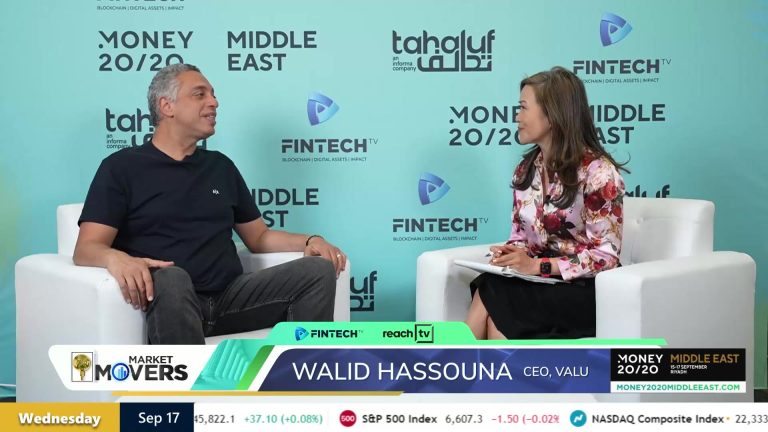
Walid Hassouna, CEO of Valu, joins Patricia Wu from Money20/20 Middle East, held in Riyadh, to discuss the buy now, pay later (BNPL) services sector in the region.

Patricia opens the discussion by highlighting the vibrant atmosphere of the fintech landscape at the conference. Walid shares his insights on the rapid growth of fintech in the Middle East, noting that the sector has evolved significantly since Valu’s inception in 2016. Initially focused on payments, the fintech industry has expanded to include various verticals such as lending, regulatory technology (RegTech), insurance technology (InsureTech), and cybersecurity. Walid emphasizes that the introduction of consumer lending in Egypt marked a pivotal shift, sparking interest and innovation across the region.

As the conversation progresses, Walid discusses the fierce competition in the fintech space and how Valu has managed to maintain its position as a market leader despite facing 49 competitors. He attributes this success to a strong focus on innovation and the development of products that resonate with customers. Walid explains that Valu prioritizes speed over accuracy in product development, allowing the company to quickly adapt to market demands and customer feedback.

Walid also highlights the youthful demographic of his leadership team, which he believes enables them to connect effectively with their target audience. He points out that the team’s background in both banking and technology provides a balanced approach to fintech, setting Valu apart from other companies that may lean too heavily in one direction.

Unlocking AI Potential: Devin Johnson on Transforming Sales with SalesAI

“You have to have a structured backend system with your CRM, your data, and your processes. Then AI is extremely efficient.” – 04:43

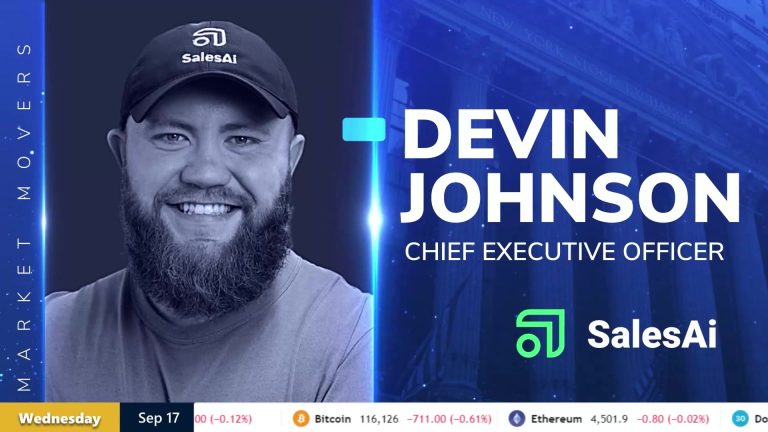
Devin Johnson, CEO of SalesAI, joins Vince Molinari at the New York Stock Exchange to discuss the transformative potential of AI in enterprise sales and customer support.

Devin, a recognized entrepreneur with a history of successful ventures, outlines the mission of SalesAI.com: to make AI easy, simple, and effective for businesses. He explains that their primary focus is on deploying AI agents that qualify leads and provide tier-one customer support. These AI agents can engage with leads as soon as they enter a business’s funnel, significantly reducing response times from an average of over an hour to just 10 to 15 seconds. This rapid engagement not only enhances efficiency but also improves the overall customer experience.

The conversation shifts to the current landscape of AI adoption, with Devin addressing the hype versus reality surrounding the technology. He emphasizes that for AI to be effective, businesses must have strong foundational systems, including a robust CRM and well-structured processes. Devin shares insights from a national survey conducted by HubSpot, revealing that less than 10% of businesses are currently ready to adopt AI. This statistic highlights the significant market opportunity for SalesAI.com, as many companies are still in the early stages of AI readiness.

Bitcoin’s Bullish Outlook: Insights from Strive’s CEO Matt Cole

“There’s a sentiment in Bitcoin that is not overly euphoric at the moment. It’s almost like negative or concerned.” – 02:02

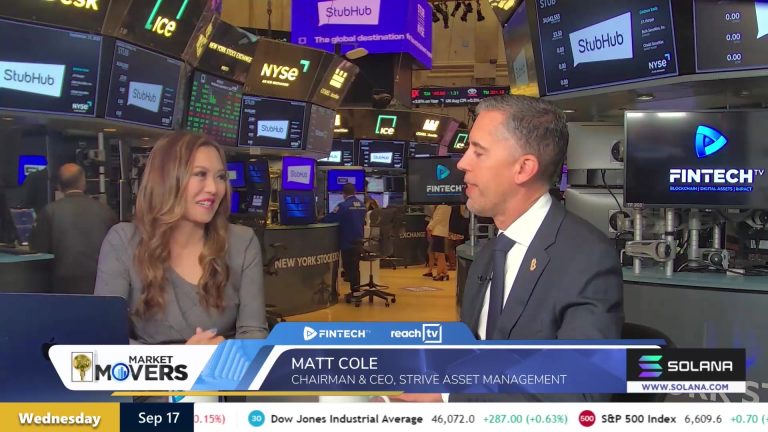
Matt Cole, Chairman & CEO at Strive Asset Management, joins Remy Blaire to discuss the current state of Bitcoin and its implications in the financial markets. The segment opens with a focus on Bitcoin’s recent surge, breaking above $117,000, amid expectations of a 25 basis point rate cut by the Federal Reserve later that day.

Remy and Matt delve into Strive’s ambitious plan to accumulate Bitcoin following its merger with asset entities, which successfully raised $750 million. Matt explains that the company has also authorized a $500 million stock buyback and plans to issue a perpetual preferred equity security to finance additional Bitcoin purchases.

As the conversation shifts to the long-term price action of Bitcoin, Matt emphasizes the significance of global liquidity conditions, interest rates, and the strength of the dollar. He notes that while Bitcoin has not yet reached its all-time highs, it is closely tracking gold, which has recently hit record highs. Matt believes that once Bitcoin surpasses gold’s performance, it could trigger a substantial bull market for Bitcoin.

Remy inquires about price targets, and Matt shares his perspective on the evolving nature of Bitcoin cycles. He suggests that the relevance of halvenings may diminish over time, predicting a medium-term target of $500,000 for Bitcoin, driven by the ongoing debasement of the dollar.

The discussion also addresses the risks associated with managing a large Bitcoin accumulation strategy. Matt reassures listeners that Strive’s balance sheet, backed by Bitcoin, presents a unique opportunity compared to traditional companies that rely on uncertain future cash flows. He highlights the strength of Strive’s board, which includes experienced individuals from the industry, such as Sharish, who has a background in building Bitcoin balance sheets.

Fed Day Insights: What to Expect from Chair Powell and the Market

“I think there’s a lot of that manufacturing tilt coming back to the U.S.” – 03:05

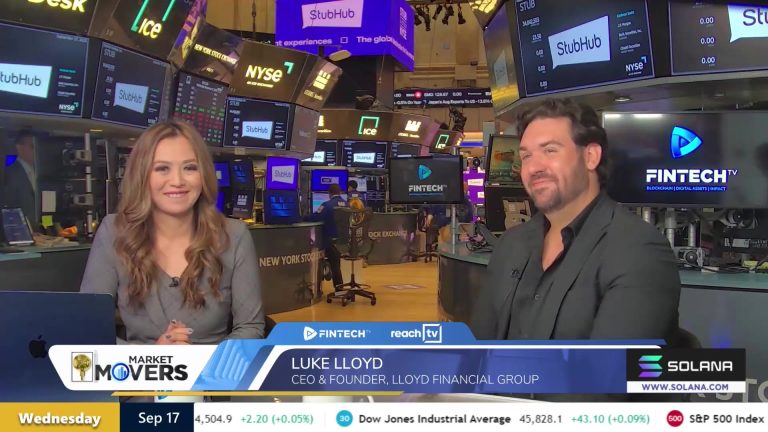
Luke Lloyd, CEO & Founder of Lloyd Financial Group, joins Remy Blaire at the New York Stock Exchange to discuss the highly anticipated Fed Day. Investors are eagerly awaiting a potential interest rate cut by the Federal Reserve, with expectations leaning towards a reduction of a quarter basis point. The conversation centers around the implications of this decision and the tone of Chair Powell’s upcoming press conference.

Remy and Luke begin by emphasizing the importance of three key economic factors: inflation, interest rates, and growth. Luke confidently asserts that a 25 basis point cut is imminent, noting that while inflation has decreased to 2.9%, it still hovers above the Fed’s target. He highlights the current economic backdrop, mentioning that liquidity is at all-time highs and government deficits are substantial, which complicates the investment landscape.

As the discussion progresses, Luke shares insights into his firm’s recent portfolio adjustments. After a period of focusing on value stocks, they have begun to incorporate more growth-oriented assets, particularly in the technology sector. He mentions specific stocks, including some recent IPOs, that they are considering for their growth potential, indicating a shift in strategy to adapt to the current market environment.

The conversation then shifts to international markets, where Luke discusses currency risks and policy moves overseas. He notes that while international stocks have performed well this year, his firm has recently sold off those positions in favor of opportunities in North and South America. Luke highlights specific companies, such as DOW and various Mexican stocks, that are well-positioned to benefit from a manufacturing shift back to the U.S.

The Economic Comeback: Analyzing Market Dynamics Ahead of Fed Day

“I think Powell is going to show his cards in regards to how many rate cuts.” – 01:49

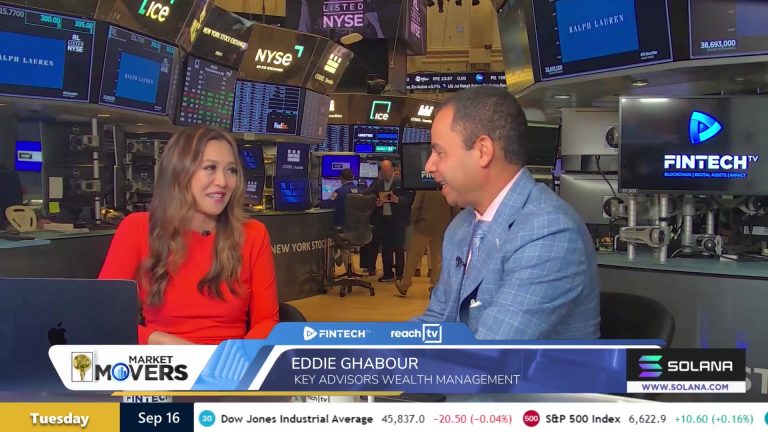
Eddie Ghabour, Key Advisors Wealth Management, joins Remy Blaire at the New York Stock Exchange to explore the current state of the stock market and the implications of the Federal Reserve’s upcoming rate announcement.

Remy opens the conversation by highlighting the prevailing optimism on Wall Street, where investors are betting on an economic recovery fueled by tax cuts and anticipated rate cuts from the Federal Reserve. Despite concerns over weak job numbers and tariffs, the markets are experiencing a surge, particularly in the tech sector, with some meme stocks also making a comeback. Eddie emphasizes that while some analysts argue that valuations are overextended, he believes that in a bull market, valuations can rise significantly higher.

As the segment progresses, Remy and Eddie discuss the significance of Fed Day, with the rate announcement expected the following day. Eddie shares his insights on the key terms and signals he is monitoring, noting that the market is fully pricing in three rate cuts for the year. He warns that any indication of a more hawkish stance from Fed Chair Jerome Powell could lead to a market pullback. However, Eddie remains bullish, suggesting that any dips should be viewed as buying opportunities, given the overall trend of loosening monetary policy in a non-recessionary environment.

The conversation shifts to the broader market landscape, where Eddie points out a shift from a tech-heavy portfolio to a more diversified approach. He notes that small-cap stocks and discretionary names have started to perform well, indicating a positive structural change in the market. However, he cautions that the biggest risk lies in unexpected movements in interest rates, which could adversely affect small-cap stocks.

Adel Alharbi on Saudi Arabia’s Digital Economy and Vision 2030

“Saudi Arabia right now is a digital-first economy. That’s the move, that’s the plan, and we’re diversifying from an oil-based economy to a bigger economy.” – 03:44

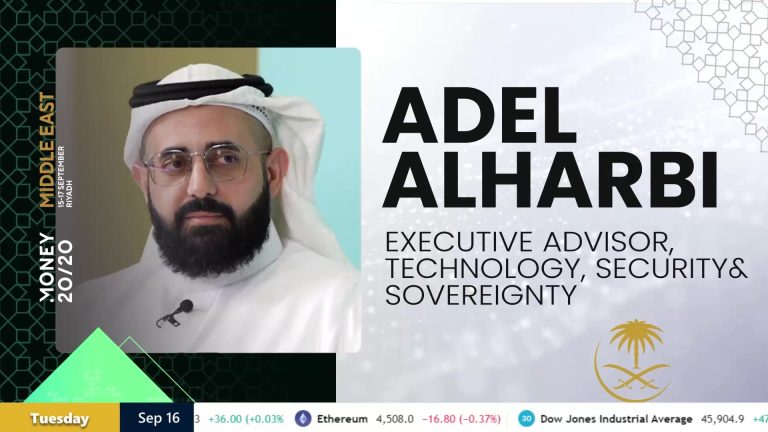
Adel Alharbi, an Executive Advisor involved in Saudi Arabia’s Vision 2030 initiative, joins Patricia Wu from Money20/20 Middle East is Riyadh to discuss the strategic framework that aims to reduce the kingdom’s dependence on oil by diversifying its economy.

Adel begins by explaining the concept of sovereignty in the technology sector, which defines the extent of a country’s control over technology and data. He discusses the importance of international companies, such as AWS and Microsoft Azure, in establishing operations in Saudi Arabia and the negotiations surrounding incentives and sovereignty that accompany their entry into the market.

As the conversation unfolds, Adel highlights the significance of the Money20/20 event as a representation of Saudi Arabia’s ambitious Vision 2030. He notes that the financial sector, particularly fintech, is set to experience substantial growth due to the presence of global tech giants and the competitive advantages they bring, such as lower computational costs.

Unlocking the Future: R3 Labs and the Next Trillion Dollars in Real-World Assets

“The Solana ecosystem has a ton of momentum for all the right reasons.” – 02:33

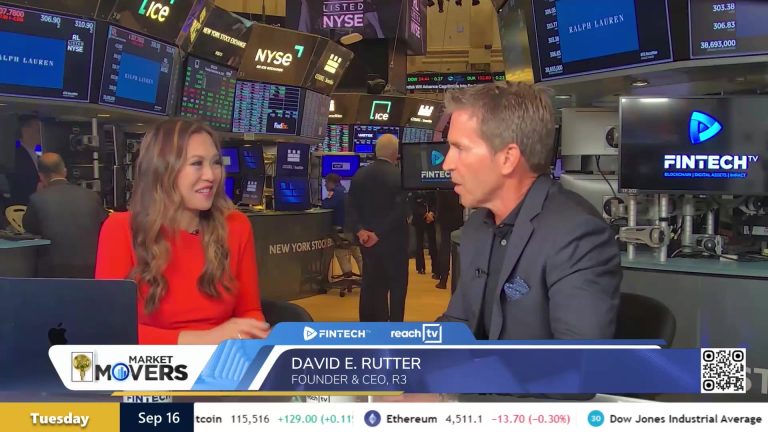
David E. Rutter, Founder & CEO of R3, joins Remy Blaire to discuss the launch of R3 Labs and its ambitious goal of bringing the next trillion dollars of real-world assets onto the Solana blockchain.

The conversation begins with Remy asking David about the vision behind R3 Labs. David articulates a clear mission focused on tokenization, emphasizing that the initial challenge of tokenizing the first trillion dollars of real-world assets will be the most difficult. He highlights the vast potential within traditional finance, where trillions of dollars in yield-bearing instruments await exposure to the decentralized finance (DeFi) community.

Remy and David then delve into the timing of this initiative, with David reflecting on R3’s decade-long journey and the support from over 40 global banks. He notes that the financial landscape has evolved, and now, banks and financial institutions are eager to broaden their customer bases by engaging with the DeFi ecosystem. David cites examples of major players like Franklin Templeton and Fidelity, who are already tokenizing their assets.

As the discussion progresses, Remy brings up the recent passage of the Genius Act and its implications for the U.S. market. David explains that momentum has shifted towards the United States, aided by increasing regulatory clarity. He recalls the energy at the Solana Accelerate Conference and expresses confidence in Solana’s capabilities, particularly its reliability, reasonable transaction fees, and significant throughput, making it an ideal ecosystem for R3’s customers.