[stock-market-ticker symbols=" ^NYA;CRYPTO:BTC;CRYPTO:ETH;CRYPTO:USDT;CRYPTO:USDC;CRYPTO:BNB;CRYPTO:ADA;CRYPTO:XRP;CRYPTO:SOL;CRYPTO:DOGE " stockExchange="NYSENASDAQ" width="100%" transparentbackground=1 palette="financial-light"]

Home Blog Page 138

The Future of AI: Investment Strategies and Technological Innovations

“In the future, it’ll just be part of our lives. It’ll just be implemented into us, right?” – 05:21

Steven Orr, also known as Big Beat, the CEO and founder of Quasar Markets, Inc., joins Remy Blaire at the New York Stock Exchange to share his insights on the current state of AI and its integration into everyday life. Steven reflects on how discussions surrounding AI have transformed over the past three years, noting that it has become a central theme in technology and finance. He emphasizes the role of AI in the fintech space, explaining how it has revolutionized trading by making it more accessible and efficient for users.

The conversation shifts to the major players in the tech industry, including OpenAI, NVIDIA, and Intel. Steven articulates that these investments are not only about technological advancement but also encompass national security and data ownership. He points out that companies with vast amounts of data, such as Amazon and Facebook, are poised to lead the way in shaping the future of AI.

As they delve into the valuation of publicly traded companies in the AI sector, Steven predicts that many emerging companies will consolidate around the major players making substantial investments in AI. He also discusses the energy sector, highlighting how AI can optimize energy usage and improve safety in energy transmission, which is crucial for the future.

Looking ahead, Steven shares his vision for the future of AI, suggesting that it will become so seamlessly integrated into daily life that people may not even recognize when they are using it. He draws parallels to the early days of the internet, indicating that AI will soon be an inherent part of everyday routines. Additionally, he touches on the potential of quantum computing, with IBM emerging as a leader in this field.
Navigating the AI Landscape: Data Quality and Governance Challenges

“I hear CFOs out there saying, I am drowning in data but starving for insights.” – 00:02:40

Steve Soter, Vice President of Industry Principle at Workiva, joins Remy Blaire to discuss the current state of artificial intelligence (AI) in organizations. The conversation is sparked by a recent survey revealing that nearly two-thirds of practitioners feel unprepared to effectively utilize AI due to a lack of high-quality data, security, governance policies, and role-specific training.

Remy highlights the survey’s findings, noting that while 74% of respondents use AI daily and 88% report increased value from AI compared to the previous year, the significant gaps in foundational elements signal potential challenges ahead. Steve elaborates on the pressures faced by CFOs in 2025, where the abundance of data comes with heightened expectations for rapid and reliable decision-making.

The discussion shifts to the implications for investors, as Remy asks Steve how they should interpret the current risks and opportunities in the market. Steve emphasizes the importance of narrative and confidence in corporate disclosures, suggesting that CFOs who effectively communicate their data-driven insights will gain the trust of investors. He also addresses the overwhelming volume of data available, stressing the need for CFOs to quickly extract actionable insights, particularly in response to changing tariffs and taxes.

As the conversation progresses, they explore the impact of AI on company valuations, especially in key sectors. Steve argues that role-specific AI can drive significant value, framing AI as a tool to enhance talent rather than replace it. He underscores the necessity of governance and security to build trust in the data used for decision-making.

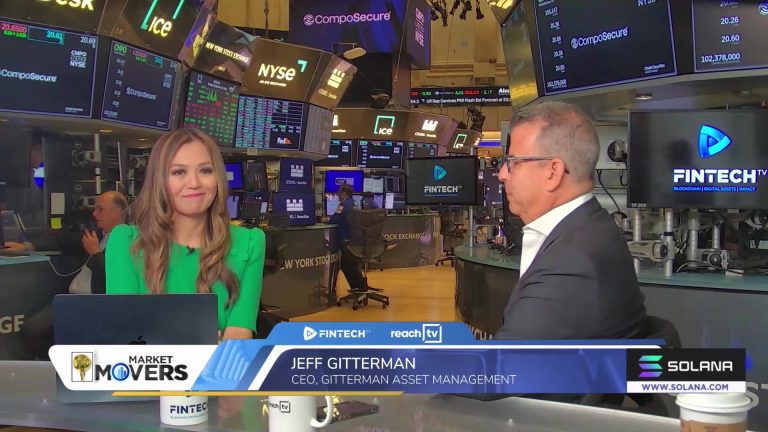
Harnessing AI for Climate Resilience: The Future of Utility Infrastructure

“One of the things that AI can do, it can actually do storm damage assessments, which is something that we haven’t been very good at before.” – 06:11

Jeff Gitterman, CEO of Gitterman Asset Management, joins Remy Blaire to explore how utilities are adapting to the challenges posed by climate change and increasing energy demands.

The conversation begins with an overview of the significant rise in energy demand, which has escalated from a stable growth of 1-2% over the past few decades to predictions of 6-8% due to advancements in AI. Jeff explains that this surge necessitates a reevaluation of how utilities manage their infrastructure and prepare for extreme weather events. He highlights the innovative use of AI-driven tools that analyze real-time data from sensors, weather forecasts, and historical trends to identify vulnerabilities in the grid, particularly in the face of storms, heat waves, and wildfires.

Remy and Jeff delve into the regulatory challenges that utilities face while implementing resilience strategies. Jeff discusses the deployment of drones to assess vegetation risks that could lead to fires, allowing utilities to respond more quickly and effectively. He also notes the shift from traditional two-week weather forecasting to advanced seven-month predictive capabilities, which enable utilities to proactively manage energy supply and avoid outages during peak demand periods.

As they consider the scaling of resilience plans, Jeff emphasizes the need for interconnectedness among state-operated grids. He points out that many grids operate in silos, complicating cross-state support during crises. By anticipating potential grid failures months in advance, utilities can coordinate energy resources more effectively, including the deployment of battery storage to meet future demands.

The discussion also touches on the financial aspects of these investments, with Jeff noting that blue states like Massachusetts, New Jersey, and New York are leading the way in funding resilience initiatives. In contrast, red states are lagging behind, despite Texas’s significant advancements in renewable energy. Jeff underscores the importance of making strategic decisions about energy allocation, especially as demand increases from both residential needs and commercial entities like data centers.

Unlocking Value: Sharps Technology’s $400 Million Solana Treasury Strategy

“Bitcoin is digital gold, Ethereum is digital oil, and Solana is digital silicon.” – 03:21

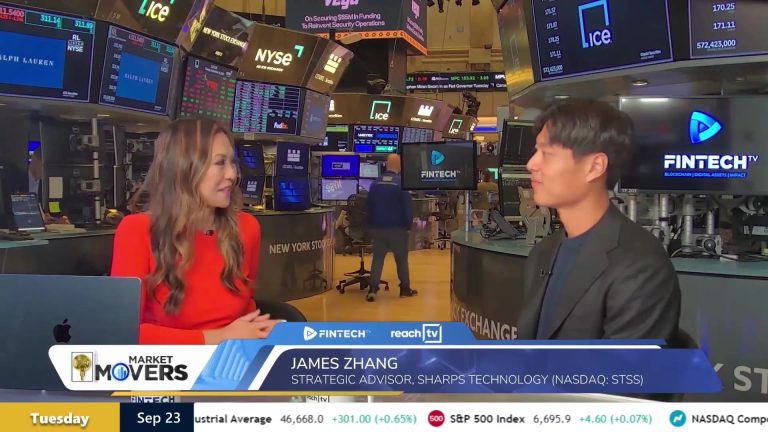
James Zhang, Strategic Advisor at Sharps Technology (Nasdaq: $STSS), joins Remy Blaire at the New York Stock Exchange to discuss the company’s innovative approach to building a digital asset treasury strategy centered around Solana. Sharps Technology recently closed a significant $400 million private placement, with plans to accumulate Solana tokens and generate reliable on-chain yields by tapping directly into the Solana ecosystem.

James provided valuable insights into the benefits of digital asset treasuries (DATS) compared to traditional investment vehicles like ETFs. He explained how Sharps Technology has fully deployed its capital into Solana, currently holding over two million SOL tokens. James emphasized that digital asset treasuries offer unique financial tools that can enhance shareholder value, such as the ability to generate Solana per share and manage stock volatility through strategic buying and selling.

The pair also delved into the recent influx of DATS for single assets, highlighting how they signify strong open market buying pressure. James noted that Sharps Technology’s entry into the market coincided with a significant increase in Solana’s price, driven by over a billion dollars in buying pressure from DATS. He drew parallels between Solana and other major cryptocurrencies, likening Bitcoin to digital gold, Ethereum to digital oil, and Solana to digital silicon—an essential building block for the future of the internet.

The conversation then shifted to ecosystem partnerships, particularly with Bonk, a major player in the Solana ecosystem. James explained how this partnership enhances yield for shareholders and increases liquidity for Bonk. They also discussed the collaboration with Pudgy Penguins, a community that has successfully transcended the crypto space into mainstream media, allowing Sharps Technology to reach a broader audience.

James shared his bullish outlook on Solana, citing impressive metrics such as Solana’s revenue outpacing Ethereum’s and its rapid growth in market capitalization. He provided a historical context for price movements in the crypto space, drawing comparisons between Solana’s trajectory and that of Ethereum in previous cycles.

Lastly, they touched on Sharps Technology’s global strategy, with plans for a roadshow across Asia to educate family offices and institutions about digital asset treasuries. James highlighted the importance of bridging the information gap in the region to attract more capital into the digital asset space.

The Evolution of Litecoin: Faster Transactions and Enhanced Privacy Features

“It’s battle-tested, really demonstrated use case of payments.” – 04:10

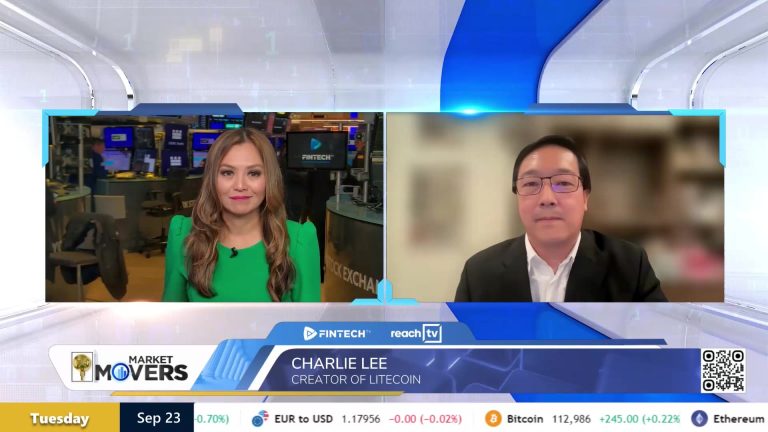
Charlie Lee, Creator of Litecoin, joins Remy Blaire to discuss Litecoin, a digital currency designed to be a faster and cheaper alternative to Bitcoin, while also incorporating optional privacy features.

Remy invites Charlie to share the foundational principles of Litecoin, where he likens money to a battery. Charlie explains that Litecoin was created primarily for payments, emphasizing its low transaction costs—less than a penny per transaction—and its goal to serve as sound money for the people, similar to gold and silver.

As the discussion progresses, Remy notes that Litecoin is approaching its 14th anniversary and asks Charlie about the plans for Litecoin funds. Charlie reveals the rebranding of MEI Pharma to LiteStrategy, which aims to hold over $100 million worth of Litecoin. He outlines the strategy to accumulate more Litecoin and explore mining opportunities as part of this initiative.

Remy then addresses the criticisms surrounding Litecoin, particularly regarding its innovation and competition in the crypto space. Charlie responds by discussing the recent addition of a privacy layer called MWeb, which enhances the fungibility and privacy of transactions. He emphasizes the importance of allowing users to maintain control over their wealth without exposing their financial information on the public blockchain.

The conversation shifts to Litecoin’s identity as the “people’s currency” and its adoption by public companies implementing crypto treasury strategies. Charlie underscores Litecoin’s fair launch, its battle-tested nature, and its proven use case in payments, noting that it has consistently been a top choice for transactions on platforms like BitPay.

Stablecoins and Tokenization: Edward Woodford on the Next Wave of Digital Assets

“We’re really looking forward to the continued momentum from a regulatory perspective across the world.” – 02:03

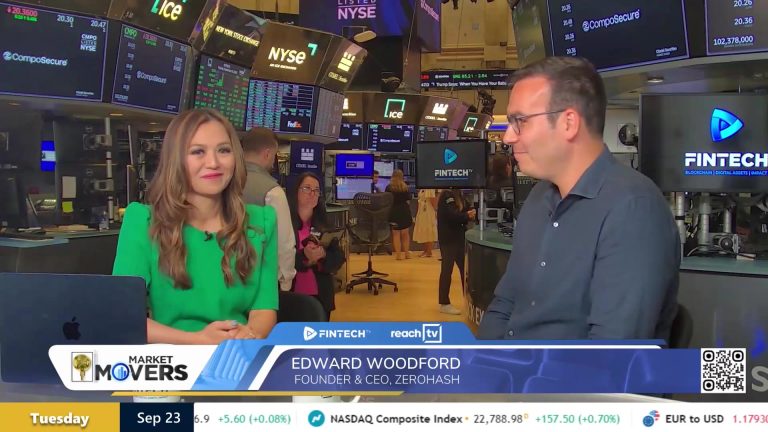
Edward Woodford, the founder and CEO of Zerohash, joins Remy Blaire to discuss the revelation that, within the next 18 to 24 months, most major banks are expected to offer crypto trading services, a significant shift in the financial landscape that was once deemed inconceivable.

Remy and Edward delve into the implications of the House Pass Clarity Act, which aims to provide essential regulatory clarity for the banking industry as it navigates the complexities of cryptocurrency. Edward shares insights into Zerohash’s three core offerings: a crypto-as-a-service product that allows firms like Interactive Brokers and Morgan Stanley to seamlessly integrate cryptocurrency into their services; a stablecoin product designed for various payment applications; and a tokenization service that enables the digital representation of assets, including stocks and currencies.

The discussion highlights the recent fundraising round for Zerohash, which has attracted significant strategic investors, including major banks and financial institutions. Edward expresses enthusiasm about the trust these partnerships instill in Zerohash and the potential for accelerated growth, especially in light of favorable regulatory developments.

As the conversation progresses, Edward emphasizes the role of stablecoins as a powerful alternative payment method, particularly for U.S.-based customers who are increasingly utilizing stablecoins for transactions. He provides examples of live implementations where users can fund their brokerage accounts with stablecoins, underscoring the growing acceptance and demand for these digital assets.

The State of Credit Markets: Are We Heading for a Recession?

“The story here has actually been mid-caps as opposed to the large caps.” – 02:08

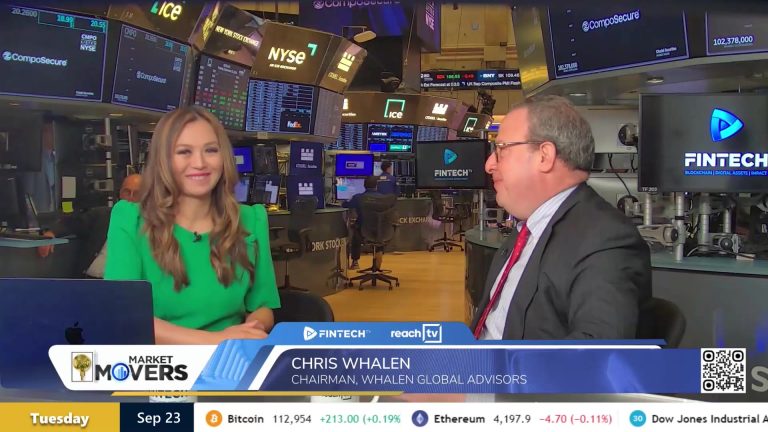
Chris Whalen, Chairman of Whalen Global Advisors, joins Remy Blaire at the New York Stock Exchange to discuss the current economic landscape and the banking sector.

As analysts express growing concerns about a slowing economy, the credit markets present a different narrative, showing no signs of an impending recession. Whalen notes that net credit losses in the U.S. banking industry have been declining since 2024, remaining stable despite multiple recession warnings over the past three years.

Whalen shares his insights on the banking sector, indicating that banks are currently underutilized and eager to increase lending. He highlights that deposits are growing at twice the rate of loans, leading to excess funds being funneled into securities. He raises concerns about the rapid growth of non-bank financial institutions, while reassuring listeners that the credit side of banks remains stable, with recent earnings reports reflecting a benign outlook.

The conversation shifts to the performance of the S&P 500, particularly within the financial services sector, where major banks have experienced significant year-to-date gains. Whalen emphasizes that American consumers now have a multitude of choices in consumer finance, thanks to the emergence of various platforms funded by private equity. He points out that mid-cap banks have outperformed larger institutions in the last quarter, with companies like SoFi and Lending Club making notable comebacks.

As the episode progresses, Remy and Whalen discuss the upcoming insights from Federal Reserve officials, including Jerome Powell. Whalen predicts a cautious approach to further rate cuts, emphasizing that the central bank is more focused on inflation than on the overall economy. He reassures listeners that the banking sector is not signaling a recession, as banks are not significantly increasing reserves for future losses.

Collaboration and Regulation: Shaping the FinTech Landscape in the Middle East

We sit down with Maha Alsadi, the Head of Regulatory Affairs of the QFC Authority, to discuss the exciting developments in the fintech landscape of Qatar and the broader Middle East region. Discover how Qatar is positioning itself as a hub for fintech innovation, with initiatives like the Qatar Investment Authority’s Fund of Funds program, which has allocated over a billion dollars to support startups and venture capital in the fintech space.

Maha also shares insights into the various fintech categories currently thriving in Qatar, including Buy Now, Pay Later, crowdfunding, insurtech, and the use of blockchain technology. We delve into the challenges regulators face in keeping pace with rapidly evolving technologies and how Qatar is adopting a collaborative approach with local and regional regulators to ensure a balanced regulatory framework. Learn about the importance of international standards and the principle-based, risk-based approach that Qatar is taking to foster innovation while ensuring consumer protection.

As we look to the future, we explore the potential impact of emerging technologies like AI and quantum computing on the financial services sector. Maha emphasizes the need for ongoing dialogue between regulators and the industry to navigate these changes effectively.

AVAX1: The New Frontier for Institutional Crypto Investment

“We’re building the Berkshire Hathaway for online, on-chain finance economy.” – 05:10

Matt Zhang, Founding and Managing Partner of Hivemind Capital Partners, joins Remy Blaire at the New York Stock Exchange to discuss HiveMind’s recent investment in a new company, set to be rebranded as AVAX1, which aims to raise $550 million to acquire AVAX tokens from the Avalanche blockchain. Previously known as AgriForce, the company is poised to make significant strides in the digital asset space.

Remy and Matt discuss the collaborative effort behind this venture, which includes notable figures like Anthony Scaramucci and over 50 institutional and crypto-native investors. Matt highlights the unique capabilities of the Avalanche network and its potential to meet the needs of institutional investors, especially in light of recent regulatory changes from the SEC that signal a new era of crypto adoption.

The conversation delves into the extensive screening process that Hivemind undertook to identify this opportunity, reflecting their commitment to finding institutional-grade investments. Matt shares his background in traditional finance, particularly his 16 years at Citigroup, and explains how this experience informs Hivemind’s strategy as they navigate the convergence of crypto and traditional finance.

Navigating the future of AI and Cybersecurity: A conversation with Mastercard’s Saud Swar

Saud Swar, the Country Manager for Mastercard in Saudi Arabia, Bahrain, Jordan, and other Levant sits down with Patricia Wu at the Money 20/20 Middle East event to discuss the pivotal role played by Mastercard at the inaugural Money 20/20 conference, where they are showcasing innovations in AI, cybersecurity, and tools for SMEs.

Saud shares insights on Mastercard’s commitment to cybersecurity, including the establishment of a Centre of Excellence in Riyadh aimed at addressing the growing challenges in this field. He discusses the importance of collaboration with local partners and the proactive measures being taken to enhance the resilience of the banking ecosystem.

They also delve into the pressing issue of women employment in the tech and fintech sectors. Saud highlights Mastercard’s initiatives, such as the “Her Voice” podcast and the “Girls for Tech” program, aimed at empowering women and equipping young girls with essential skills in technology and programming.

Finally, Saud offers his perspective on the exciting trends and innovations emerging from the Middle East, particularly in Saudi Arabia, as the region continues to lead in AI and financial services.