[stock-market-ticker symbols=" ^NYA;CRYPTO:BTC;CRYPTO:ETH;CRYPTO:USDT;CRYPTO:USDC;CRYPTO:BNB;CRYPTO:ADA;CRYPTO:XRP;CRYPTO:SOL;CRYPTO:DOGE " stockExchange="NYSENASDAQ" width="100%" transparentbackground=1 palette="financial-light"]

Home Blog Page 137

Bitcoin vs. Gold: Is Bitcoin the 21st Century’s Digital Gold?

“Bitcoin is essentially gold, but more easily transportable, harder to seize, more easily divisible.” – 01:01

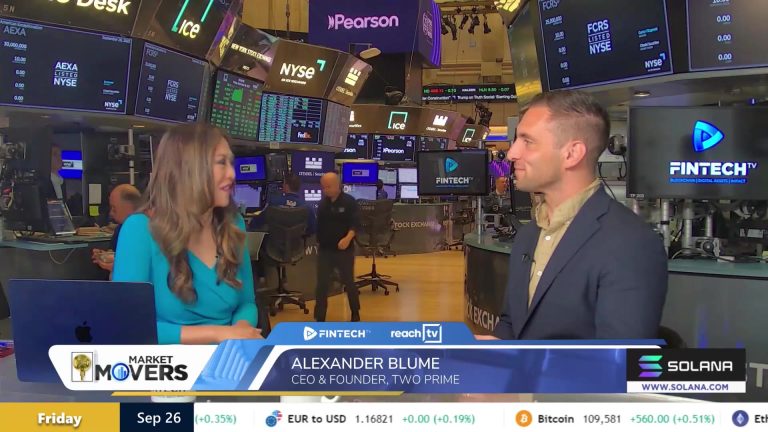
Alexander Blume, CEO & Founder of Two Prime, joins Remy Blaire at the New York Stock Exchange to discuss the current landscape of Bitcoin and gold. 

The segment opens with a focus on Bitcoin’s recent price struggles, marking its lowest point since the beginning of October, attributed to a combination of stop losses and concerns over a stronger dollar. In stark contrast, physical gold is experiencing a remarkable surge, recently hitting a record high above $3,800, driven by hopes for future rate cuts.

As they delve deeper into the performance metrics, Remy highlights that year-to-date, Bitcoin is up approximately 17%, while gold has soared over 40%. Alexander makes a compelling argument for Bitcoin as the “21st century gold,” emphasizing its advantages such as transportability, divisibility, and security, which he believes make it a superior asset in the digital age.

The conversation shifts to the macroeconomic factors influencing digital assets as they approach the final quarter of 2025. Alexander notes that Bitcoin currently lacks a strong narrative or major catalysts, but he expresses optimism for a robust Q4, citing loosening monetary policy and the potential for Bitcoin to be added to the S&P 500 as significant factors that could drive investment.

Remy and Alexander also discuss portfolio allocation strategies, with Alexander advocating for Bitcoin as a stable investment option. He reflects on Bitcoin’s historical performance, asserting that it has never been lower four years later and highlighting the improving regulatory environment that supports its growth.
Market Movements: Analyzing Economic Data and Fed Rate Cuts

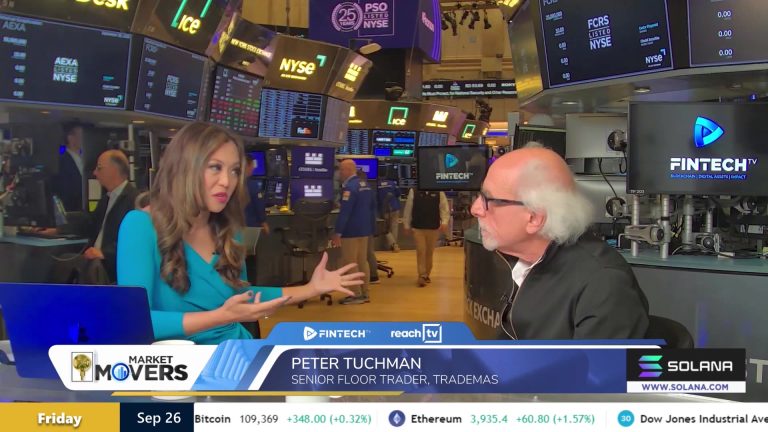
“We’re coming to the end of the third quarter. We do know that we’re in the beginning of a rate-cutting cycle.” – 00:02:10

Peter Tuchman, Senior Floor Trader at Trademas, joins Remy Blaire at the New York Stock Exchange to share his insights on the complexities of the economic landscape and its implications for market behavior.

Remy begins by highlighting the recent record-breaking rally in the markets, noting that while there has been a pullback, major stock averages are showing signs of strength ahead of the market open. She points out that optimism regarding potential Federal Reserve rate cuts is beginning to wane, as divisions among policymakers cast doubt on the timing and likelihood of these cuts occurring this year and next.

Peter elaborates on the mixed economic data that has emerged, including better-than-expected GDP growth for the second and third quarters, as well as the PCE index coming in as anticipated. He emphasizes the multitude of factors influencing the market, such as new tariffs and developments related to TikTok, which complicate the overall market response. Despite some recent soft economic indicators, Peter notes that there are positive signs, including the core PCE aligning with expectations and GDP showing an upward trend.

As they analyze market behavior, Peter discusses the significance of shallow pullbacks and intraday reversals, particularly within the tech sector. He observes that many investors are actively repositioning their portfolios, especially those who missed out on earlier gains. The small-cap Russell index recently hit a record high, driven largely by AI-related stocks, before experiencing a slight pullback.

Revolutionizing Finance: Payhawk’s New AI Agents Transform CFO Operations

“The financial controller agent is intended to speed up the month-end closing process by automatically chasing receipts.” – 01:40

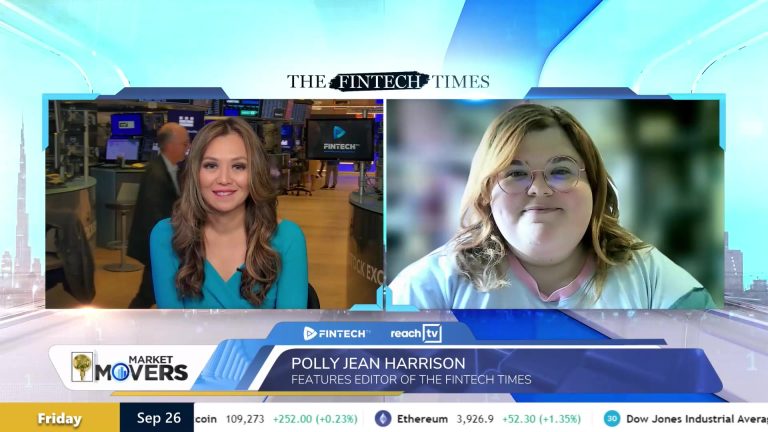
Polly Jean Harrison, Features Editor of the Fintech Times, joins Remy Blaire to discuss the latest headlines from Europe and the Middle East. The episode begins with an exciting announcement from Payhawk, which is rolling out its Fall 25 product edition. This new edition enhances its AI office of the CFO suite by introducing four integrated AI agents designed to streamline everyday finance tasks.

Polly explains how these AI agents assist employees in making requests using natural language, guiding them through processes while adhering to established company policies. This innovation aims to reduce manual effort and free up time for staff, ultimately making businesses operate more efficiently. Each AI agent has specific functionalities: the financial controller agent accelerates the month-end closing process by automating tasks such as chasing receipts and flagging anomalies; the procurement agent simplifies purchasing by gathering context and applying budget rules; the travel agent ensures bookings comply with company policies; and the payments agent serves as an automated help desk for transaction-related inquiries. Polly emphasizes the potential of these AI agents to transform workflows and enhance productivity within organizations.

The conversation then shifts to BitGo’s recent achievement in obtaining an extension of its license from Germany, allowing the company to expand its services to include regulated crypto trading for European institutional investors. Polly details how this extension enables access to BitGo’s over-the-counter trading desk and electronic trading platform, providing aggregated access to various liquidity sources. This development marks a significant step forward for BitGo, as it now offers a comprehensive suite of regulated crypto services, including custody, staking, transfer, and trading, all while ensuring that assets remain secure in cold storage.

Bridging the Gap: Understanding DeFi in a Distrustful Financial Landscape

“Nearly 75% of Americans are worried about cyber threats and are worried about things like AI.” – 04:07

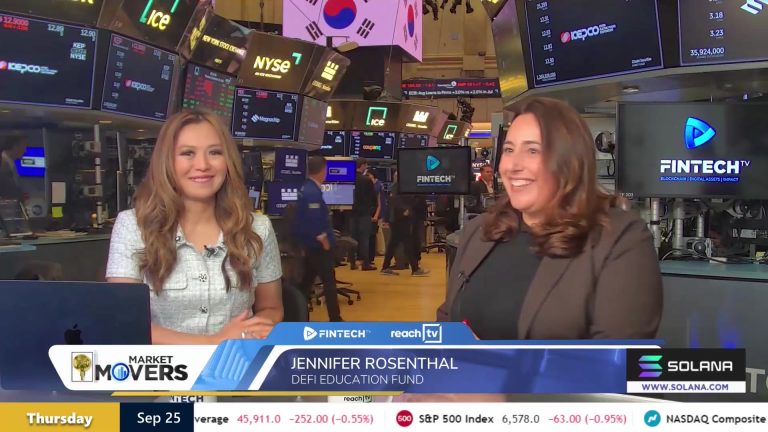
Jenn Rosenthal, the Chief Communications Officer at the DeFi Education Fund, joins Remy Blaire at the New York Stock Exchange to discuss the growing discontent among Americans regarding the traditional financial system. Less than half of the respondents feel that the U.S. financial system meets their economic needs, and only 25% believe that traditional finance (TradFi) is designed to benefit ordinary people. This dissatisfaction opens the door for decentralized finance (DeFi) to potentially gain traction among the public.

Jenn provides valuable insights into the study’s key takeaways, emphasizing that Americans are increasingly frustrated with traditional finance and are eager to take control of their own assets and data. The study reveals that while 18% of Americans have owned or used cryptocurrency, only 3% understand DeFi, indicating a significant gap in knowledge that the DeFi Education Fund aims to bridge through education and informed dialogue.

The pair explore demographic trends, noting that millennials are particularly engaged with crypto, with one in four having owned or used it. In contrast, older generations exhibit more reluctance towards this sector. Despite this, a notable 22% of Americans express interest in learning about decentralized finance, reflecting a desire for alternative financial solutions amidst declining trust in traditional institutions.

Jenn highlights the importance of blockchain technology and DeFi innovations, which empower individuals with self-ownership of their assets, allowing them to transact without intermediaries. This aspect is particularly appealing to those concerned about cyber threats and the security of their financial data.

Modernizing Capital Markets: The CFTC’s New Initiative on Tokenized Collateral

“Today’s generation of regulated stablecoins already bring millions of end-users, they’re open, they’re composable, they’re programmable.” – 04:21

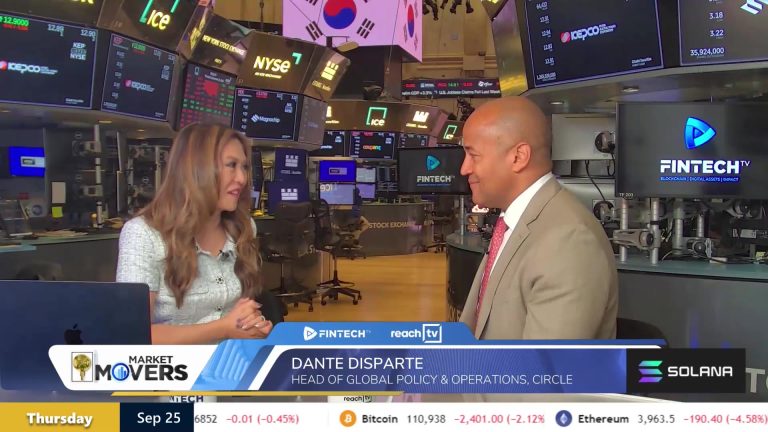
Dante Desparte, the Chief Strategy Officer and Head of Global Policy and Operations at Circle, joins Remy Blaire at the New York Stock Exchange to discuss the recent initiative launched by the Commodity Futures Trading Commission (CFTC) to allow tokenized collateral, including stablecoins, in derivatives markets. Acting Chair Carolyn Pham’s announcement marks a significant step in modernizing capital markets and providing clear guidance for crypto firms, aligning with the implementation of the Genius Act, the first crypto-specific legislation passed by Congress to regulate stablecoins.

Remy and Dante explore the implications of the CFTC’s initiative for derivatives markets, emphasizing the transformative potential of stablecoins beyond their traditional roles in payments and banking. Dante describes this initiative as a “transatlantic echo,” highlighting the recent collaboration between the U.S. and the U.K. to modernize markets and create harmonization across the Atlantic.

As the conversation shifts to the regulatory landscape in the U.S., Dante discusses the ongoing rulemaking process following the passage of the Genius Act. He notes that the Treasury Department is actively conducting consultations on financial crime compliance and the translation of the law into regulatory frameworks. This process is crucial for ensuring that stablecoin issuers operate on a level playing field with traditional financial institutions.

Remy raises the topic of institutional interest in stablecoins and the competitive landscape for the future of payments. Dante expresses skepticism about the viability of branded stablecoins, citing regulatory challenges and the advantages of existing regulated stablecoins that already serve millions of users. He likens the infrastructure supporting stablecoins to financial services shareware, allowing broader market participation without requiring companies to become stablecoin issuers themselves.

The discussion also touches on Circle’s recent expansion and the enthusiasm for regulatory harmonization in global markets. Dante emphasizes the importance of the U.S. taking a leadership role in regulating this novel market and the potential for international collaboration, particularly with countries like South Korea.

As the segment concludes, Remy and Dante reflect on the broader economic landscape and the optimism surrounding the future. Dante shares his excitement for the upcoming year, noting a shift in tone among global leaders and the potential for peace and progress in 2026.

The Rise of Bots: Understanding the Dead Internet Theory and Human Verification

“For the first time in the history of money, we’re able to basically have a financial transaction with anyone who has a laptop or a mobile phone.” – 03:00

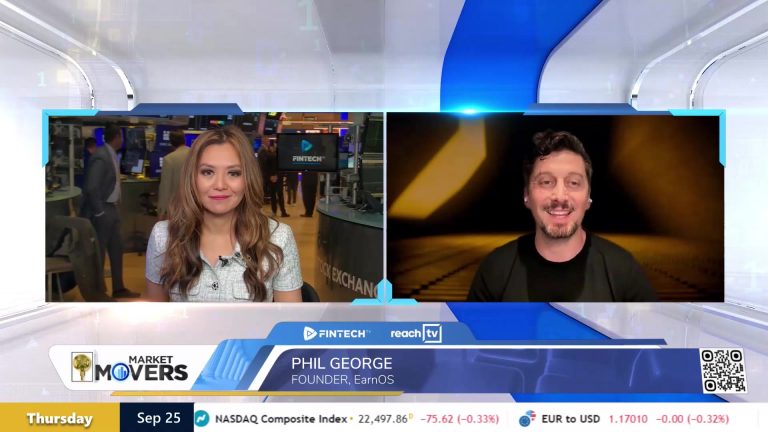
Phil George, the Founder of EarnOS, joins Remy Blaire to discuss the heavy presence of bots online and the ongoing efforts to combat this issue through human verification processes. Phil highlights the alarming statistics regarding the prevalence of bots, noting that for every human interaction, there are hundreds of bot interactions, particularly with the rise of large language models (LLMs) and chatbots. He emphasizes the importance of distinguishing between real human users and bots, especially in the context of financial transactions and advertising.

The conversation shifts to the role of stablecoins in human verification. Phil explains how stablecoins can be used to confirm a person’s identity during transactions. By linking Know Your Customer (KYC) processes to digital wallets, it becomes possible to ascertain that a wallet belongs to a verified human, even if their specific identity remains unknown. This capability is increasingly vital as the internet becomes inundated with bot activity.

Remy and Phil then discuss the future of stablecoins and their potential to become the “internet dollar.” Phil emphasizes the unprecedented freedom of movement that stablecoins offer, allowing anyone with internet access to create a wallet and conduct transactions without the traditional barriers imposed by banks. He argues that this minimal friction in financial transactions positions stablecoins to outpace central banks in terms of adoption and usage.

Navigating Monetary Policy: Insights from Fed Chair Powell and Economic Trends

“I’m expecting a few more rate cuts, but there’s a lot of division amongst the committee.” – 01:09

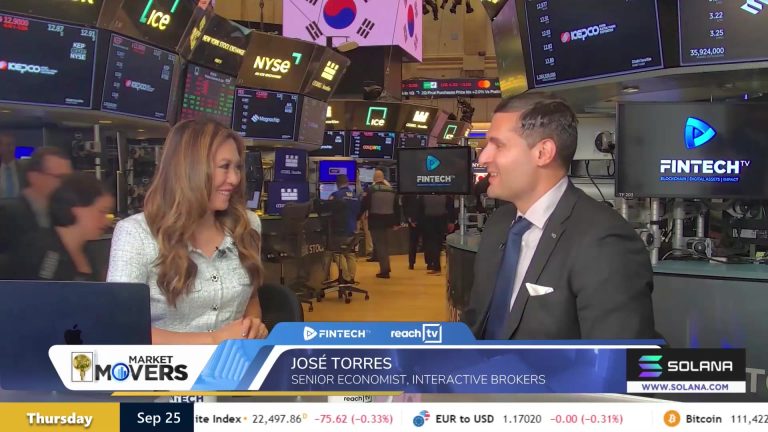
José Torres, Senior Economist at Interactive Brokers, joins Remy Blaire at the New York Stock Exchange to discuss the current state of the U.S. economy and the Federal Reserve’s monetary policy.

The segment opens with Remy highlighting the growing dissent among Federal Reserve officials regarding the future direction of monetary policy, particularly as signs of instability emerge in the labor market. Fed Chair Jerome Powell has reiterated a cautious approach to further rate cuts while leaving the door open for potential easing. He also describes stock valuations as fairly high, prompting a deeper examination of the implications for investors.

José shares his insights following the September Fed meeting, where a 25 basis point rate cut was implemented as expected. He anticipates additional rate cuts, despite the divisions within the committee, particularly concerning inflation driven by strong consumer demand in the services sector. The conversation shifts to the recent GDP revision, which shows a significant upgrade to 3.8%, and José emphasizes the role of robust consumer spending and business investment in indicating a re-accelerating economy.

As they look ahead, Remy and José discuss the implications for the American consumer. Jose expresses optimism, noting the stability of the labor market. While hiring is slowing, he points out that layoffs have not increased significantly, suggesting that the consumer remains in a strong position. He highlights the positive effects of strong capital markets on various income cohorts and predicts growth in the latter half of the year.

The discussion then turns to the looming government shutdown deadline, with predictions indicating a 60% chance of some form of shutdown on October 1st. José reflects on the historical impact of past shutdowns on the markets and the current political landscape, where bipartisan agreement appears difficult, particularly around contentious issues like Medicaid cuts and healthcare subsidies.

Navigating the Crypto Landscape: SEC Updates and Market Shifts

“October is typically a time of volatility in many asset classes.” – 03:08

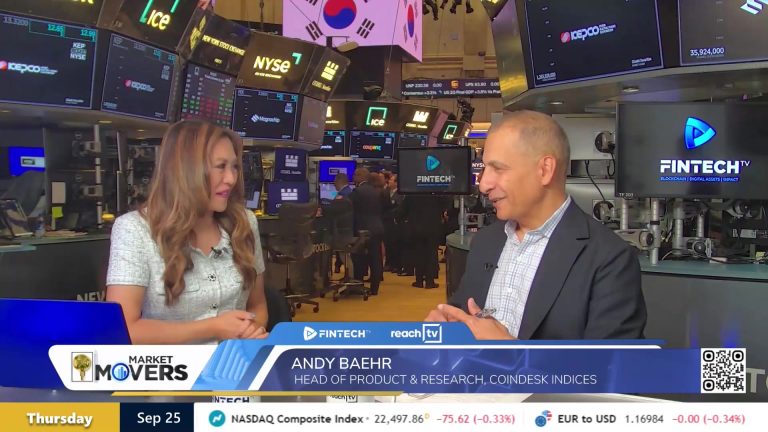
Andy Baehr, Head of Product & Research at Coindesk Indices, joins Remy Blaire to discuss the current dynamics of the cryptocurrency market, highlighting recent price movements and regulatory developments.

Andy explains how this change could simplify processes for crypto trading firms, eliminating the need to convert assets into dollars for collateral, which has been a significant hurdle. He emphasizes that this initiative, along with other regulatory advancements, could catalyze a more robust crypto market.

As they reflect on the past six months, Andy highlights the strong performance of the crypto market, characterized by a broad rally that included notable highs for both Bitcoin and Ethereum. However, he cautions that the market is currently in a phase of adjustment, suggesting that while there may be a temporary exhale, the potential for renewed positive sentiment remains.

With the fourth quarter approaching, Remy and Andy discuss the typical volatility associated with October and stress the importance of asset class allocation over attempting to time the market. Andy shares insights on the recent launch of the Grayscale Crypto CoinDesk Crypto 5 ETF, which offers investors a new way to engage with the crypto asset class through index funds.

Looking ahead, they touch on the upcoming conference season, with events such as Korea Blockchain Week and Token 2049 in Singapore on the horizon. Andy notes that the landscape for crypto is evolving, with the U.S. emerging as a more central player in the global narrative due to improved regulatory clarity and support.

Navigating the Future: How Global Regulations are Shaping the Gaming Industry

“Every region has their own rules. There are privacy laws in Europe. China… still has a mandate on the time played on games.” – 00:02:28

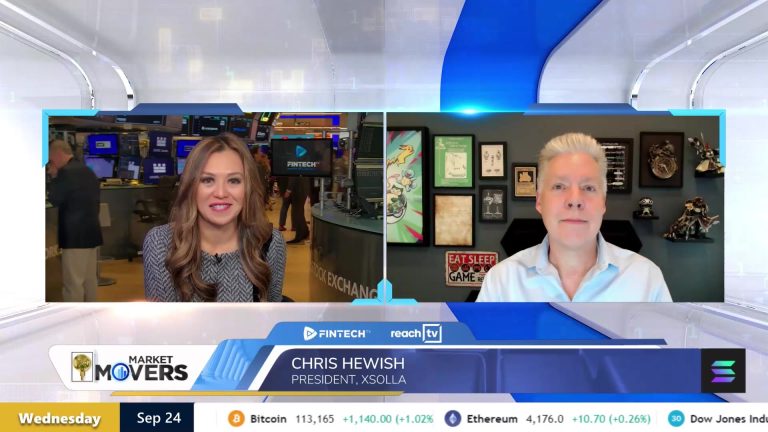
Chris Hewish, the president of Xsolla, joins Remy Blaire to provide valuable insights into the economic landscape of gaming and the impact of global tech regulations.

Remy and Chris begin by examining how regulations, such as the UK’s Online Safety Act and the European Union’s Digital Markets Act, are disrupting traditional game distribution and monetization strategies. Chris explains that these regulations, while challenging, also create significant opportunities for game developers. He highlights the shift towards alternative payment options, which allows developers to take greater control over their monetization strategies, resulting in increased profit margins and the ability to build direct relationships with players.

The conversation then shifts to the complexities of navigating diverse regulatory frameworks across different regions, particularly in countries like China, which imposes strict measures on game content and playtime for minors. Chris emphasizes that while compliance can increase costs and slow down game launches, it can also serve as a competitive advantage for studios that incorporate compliance into their design processes.

Remy and Chris delve into the implications of online safety laws on innovation and the necessity for real-time moderation in gaming. Chris discusses the role of AI moderation tools in creating safer online environments, which not only protect players but also enhance business outcomes for developers. He argues that companies should view safety as an opportunity rather than a mere regulatory hurdle, as it can lead to better player experiences and increased revenue.

As the segment progresses, Chris shares his thoughts on how the current regulatory landscape is fostering a more open and fair market for both consumers and developers. He highlights the potential for developers to establish direct relationships with players, gaining deeper insights into player behavior and preferences.

Navigating Market Trends: Insights on Tech Stocks and Economic Outlook

“Overall, the sentiment is that this market is strong, this economy is strong.” – 01:24

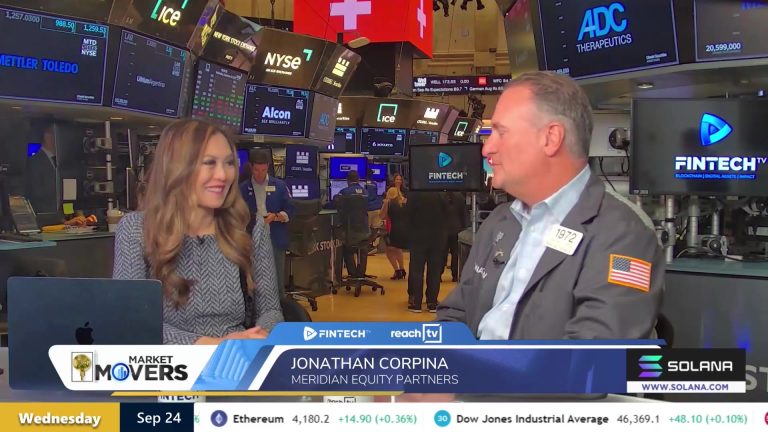
Jonathan Corpina of Meridian Equity Partners, joins Remy Blaire to discuss the current state of the stock market and economic conditions.

The segment opens with a recap of the recent pullback in tech stocks, which has affected the S&P 500 after three consecutive days of gains. Despite this dip, Jonathan highlights that many analysts remain optimistic about U.S. equities, even in the face of concerns regarding an AI bubble, high valuations, and investor exuberance. He notes that economic risks are mounting, particularly with the ongoing impacts of tariffs and the Federal Reserve’s shift towards easing, which introduces new uncertainties for investors.

As they examine stock futures, Jonathan points out that they are ticking higher, reflecting a resilient market sentiment. He explains that the market’s movements are currently driven by headlines as investors await significant data releases. With the end of the third quarter approaching, he anticipates a typical market run-up, driven by portfolio managers looking to enhance their quarterly statements. Historically, the fourth quarter has been profitable, and Jonathan expects this trend to continue, despite some potential volatility as interest rate discussions unfold.

Remy and Jonathan also discuss recent comments from Federal Reserve officials, including Jerome Powell and Myron, and how their insights will shape market expectations moving forward. Jonathan emphasizes the importance of sector performance, particularly in technology, where he notes that the anticipated rotation out of tech has not occurred. Instead, investment in tech continues to thrive, driven by companies eager to allocate their substantial cash reserves into infrastructure and personnel.

The conversation shifts to commodities, with a focus on the recent rise in gold prices. Jonathan identifies a disconnect in the market, where both equities and gold are trading higher simultaneously. He suggests that gold is evolving from a traditional safe haven to a core investment in portfolios.

As they delve into comparisons between the current AI enthusiasm and the tech bubble of the early 2000s, Jonathan acknowledges the similarities in investor euphoria and uncertainty about how these technologies will reshape industries. He cautions that while there is significant capital ready to be invested, it is essential to remain vigilant about potential market pressures.

In the closing mometns, Jonathan identifies key opportunities in the marketplace, highlighting real estate and financials as sectors to watch. He predicts that as interest rates decline, there will be increased transactional activity and M&A in the financial sector.