[stock-market-ticker symbols=" ^NYA;CRYPTO:BTC;CRYPTO:ETH;CRYPTO:USDT;CRYPTO:USDC;CRYPTO:BNB;CRYPTO:ADA;CRYPTO:XRP;CRYPTO:SOL;CRYPTO:DOGE " stockExchange="NYSENASDAQ" width="100%" transparentbackground=1 palette="financial-light"]

Home Blog Page 136

UNGA Recap: Trump, Traffic, and Global Inaction

“If Powell had any common sense, he would resign and walk out with his pride intact.” – 03:57

Patrick L. Young, Chairman and Founder of Exchange Invest, joins Remy Blaire to discuss the recent United Nations General Assembly (UNGA), which has just concluded, leading to a slight easing of traffic in midtown New York. Remy highlights that this UNGA marks the first since former President Trump’s cuts to aid, and it attracted global leaders for high-level talks.

Patrick shares his critical perspective on the UNGA, describing it as a gathering of self-important figures who ultimately achieve little. He notes that Trump’s appearance at the assembly drew attention, particularly due to his lengthy speech and the technical difficulties he faced, which he found particularly frustrating given the UN’s substantial budget. Patrick emphasizes that Trump’s critique of the UN’s execution reflects a broader skepticism about the organization’s ability to foster global peace.

The conversation then shifts to the ongoing war in Ukraine, where Trump has expressed confidence that Ukraine can reclaim lost territory. Patrick discusses Russia’s claims of having no ambitions to expand the conflict into Europe or NATO territories, suggesting that such statements are more about posturing than reality. He articulates the challenges the U.S. faces regarding military support for Ukraine, particularly in light of depleted stockpiles due to previous aid efforts.

Remy and Patrick also delve into monetary policy, focusing on Jerome Powell, the chair of the Federal Reserve, whose term is nearing its end. Patrick argues that Powell should consider resigning to maintain his dignity, given the ongoing criticism from Trump. He critiques the central banking system, pointing out the arrogance of central bankers and their failure to effectively manage inflation and support industry.

The segment concludes with a look ahead to a significant gathering in Washington, D.C., where the SEC and CFTC are convening a roundtable on regulatory harmonization. Remy and Patrick discuss the implications of this meeting, particularly the potential for merging the SEC and CFTC and the future of cryptocurrency regulation. Patrick highlights the importance of aligning regulatory efforts to move markets forward.
Wood Hyperliquid, Crypto adoption, Ohio crypto, Crypto tax

0

In this episode of the Coin Street headlines, we dive into the latest developments in the cryptocurrency world. Join us as we discuss Ark Invest’s Cathie Wood’s insights on Hyperliquid and its potential, reminiscent of Solana’s early days, while emphasizing bitcoin’s central role in her investment thesis. We also explore the increasing global momentum for bitcoin adoption, with a focus on Latin America, as noted by Jan3 founder Samson Mow. In other news, Ohio takes a significant step by allowing cryptocurrency payments for government services, becoming the fourth state to do so, following Colorado, Utah, and Louisiana. Lastly, we highlight an upcoming meeting between a Coinbase executive and the Senate Finance Committee to discuss digital asset tax matters, aligning with the White House’s recommendations for recognizing crypto as a new asset class. Jane King with the latest from the NYSE.

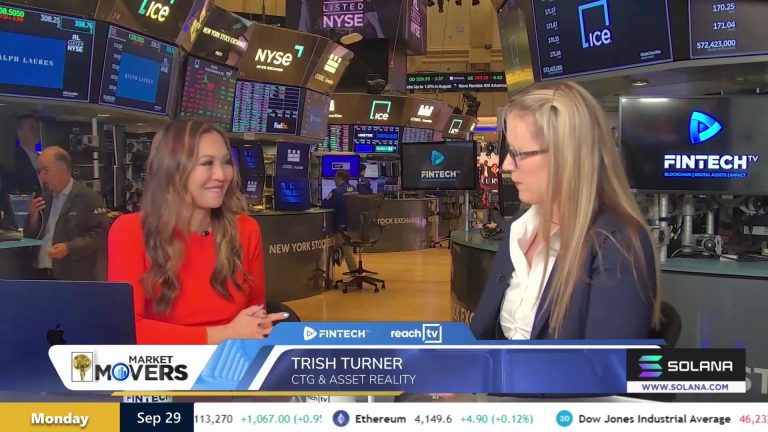
Navigating Crypto Taxes: Insights from Trish Turner on Upcoming Changes

“Individuals not recognizing just those transfers between their wallets are not taxable.” – 03:52

Trish Turner, Director of Tax and VP of Public Sector for CTG and Asset Reality, joins Remy Blaire at the New York Stock Exchange. With nearly two decades of experience in public service, including a significant tenure at the IRS, Trish brings a wealth of knowledge to the table, especially in the rapidly evolving world of cryptocurrency taxation.

Remy and Trish begin by discussing Trish’s decision to transition from public service to the private sector. Trish explains that the current climate surrounding cryptocurrency regulation is rapidly changing, with domestic regulators increasingly collaborating. She highlights the significance of the GENIUS Act and the finalized 6045 regulations, which set the stage for the introduction of the 1099-DA form. This form, expected to debut in the 2026 filing season, will report all transactions from centralized exchanges for the 2025 tax year, including both proceeds and basis.

Trish emphasizes the importance of this upcoming form, particularly for taxpayers who may not have fully recognized their gains in previous years. She advises listeners to take proactive steps in organizing their tax records before the forms are released, especially for those who may need to amend past returns. Remy notes the challenges that individual investors face in managing their crypto investments and the necessity of maintaining accurate records.

As the conversation progresses, Trish underscores the common misconception that transfers between wallets are taxable events. She stresses the importance of keeping detailed records to ensure credibility during potential audits. Remy and Trish also touch on the forthcoming CARF (Common Reporting Framework) for international reporting, which is set to launch in 2027, further complicating the landscape of crypto taxation.

Earnings Season Ahead: Will Elevated Expectations Hold Up?

“We really need to see the E in PE start to move higher to drive the market… higher on a sustainable basis.” – 03:07

Chris Versace, CIO of Tematica Research, joins Remy Blaire to discuss the current state of the markets, which are recovering from a sluggish week while investors remain attentive to the looming possibility of a government shutdown.

Remy and Chris delve into the potential impacts of a government shutdown on the economy and market sentiment. Chris emphasizes that the duration of any shutdown is crucial; a brief shutdown may have limited effects, but a prolonged one could significantly disrupt economic activity. He notes that the White House may implement larger layoffs if a shutdown occurs, which could exacerbate the economic impact.

The conversation shifts to the flow of economic data, which could be restricted during a shutdown. Chris highlights the importance of upcoming indicators, such as non-farm payrolls and unemployment data, in assessing the health of the job market and determining whether further interest rate cuts by the Federal Reserve are necessary. With the Atlanta Fed’s GDP now model projecting a robust third-quarter growth rate of 3.9 percent, the need for more data becomes increasingly apparent.

As the quarter comes to a close, Remy and Chris discuss the trickling in of earnings reports from major companies, including Nike and ConAgra. Chris points out that consumer spending patterns will be critical to watch, particularly whether consumers are prioritizing discretionary goods or essential items like frozen foods. This analysis could provide valuable insights into broader economic trends and expectations for the upcoming earnings season.

The segment also addresses market sentiment, with Remy noting that positioning data indicates investors are anticipating a year-end rally. Despite record highs in major indices during September, Chris warns of the potential risks of complacency, especially given the low volatility levels. He reminds listeners that while the final months of the year typically yield strong market returns, caution is warranted.

Navigating Market Highs: Insights Ahead of Q4 and Potential Government Shutdown

“I don’t see anything crazy happening. We always know that we’re one tweet away from crazy town.” – 04:09

Peter Tuchman, Senior Floor Trader at TradeMas, joins Remy Blaire at the New York Stock Exchange to provide an in-depth analysis of the current state of the U.S. stock market as the trading week begins. The segment opens with a discussion about the major stock averages, which are showing positive movement after finishing the previous week relatively unchanged. Remy highlights that the end of the third quarter is approaching, a period that has seen the Dow, S&P, and Nasdaq reach record highs. However, a looming government shutdown threatens to create uncertainty, as Congress must act by midnight Tuesday to prevent it.

Peter expresses a sense of confidence among investors, noting that past government shutdowns have often resulted in anxiety but rarely lead to actual shutdowns. He explains that with the market trading at record highs, there is no need for “window dressing,” a tactic typically employed when markets are down. Instead, he observes a mix of profit-taking and a significant amount of capital still on the sidelines, as larger funds and institutions seek to catch up with the market’s performance.

As they transition into October, a month known for its volatility, Remy and Peter explore the relevance of seasonality in the current market environment. Peter emphasizes that the lifeblood of the market is earnings and guidance, particularly in the AI sector, which has been a significant driver of growth. He points out that major companies like Microsoft and Oracle are heavily investing in AI, indicating a promising future for the sector.

The conversation also touches on the risks that could impact the market as the year comes to a close. Peter notes that while some investors express concerns about the market being overvalued, the VIX, or fear index, does not currently reflect widespread fear. He reminds listeners that the market often defies expectations, continuing to reach new heights despite various challenges faced over the past year.

Exploring investment opportunities: Insights from the CEO of the Mexican Stock Exchange

0

Jorge Alegria, the CEO of the Mexican Stock Exchange (Bolsa Mexicana de Valores, or BMV), joins Remy Blaire at the New York Stock Exchange to discuss the current state of the Mexican economy, which has shown resilience with steady growth, a stable exchange rate, and decreasing interest rates. Jorge highlights that the Mexican stock market has seen significant gains, with the main index increasing over 20% in peso terms and 30% in dollar terms, attracting international investors looking for diversification.

They explore the structure of Mexico’s financial markets, including the BMV’s operations in cash and derivatives trading, as well as their partnerships with major global exchanges like NASDAQ and CME Group. Jorge emphasizes the importance of innovation and technology in the exchange’s evolution, noting their early adoption of electronic trading and the introduction of co-location services for international players.

Additionally, they touched on the impact of U.S. policies on Mexico’s markets, with Jorge expressing confidence in Mexico’s strong position for global trading. He also shares insights on the exchange’s efforts to enhance global visibility and attract foreign investment, particularly in light of upcoming offerings.

easyGroup enters the crypto space with the easyBitcoin app: A conversation with Uphold’s Nancy Beaton

0

Remy Blaire is joined by Nancy Beaton, the President of Uphold U.S. to talk about the exciting launch of the easyBitcoin app by easyGroup. This partnership with Uphold, a platform that has facilitated over $63 billion in transactions since its inception in 2014, marks a significant step for easyGroup as they venture into the digital currency space.

Nancy explains that easyGroup is committed to making crypto trading simple and accessible, aligning with their brand’s values of innovation and inclusivity. The easyBitcoin app is designed for beginners, allowing users to easily download, verify their identity, and start buying bitcoin with as little as $10. The app also incentivizes users with bitcoin bonuses for setting up recurring purchases.

They also discuss the current demand for bitcoin, noting that while many people trust it as a long-term investment, a significant portion still finds it complex. Nancy emphasizes that the app aims to demystify the process and encourage more people to participate in the crypto market.

While the initial focus is on Bitcoin, Nancy highlights its proven track record as a savings technology, suggesting that it should be a part of everyone’s financial portfolio.

Economic Resilience: Analyzing Strong GDP Growth and Consumer Spending

“By and large, the domestic economy is continuing to hold up honestly, far better than people were thinking a few months ago.” – 01:19

Chris Versace, CIO of Tematica Research, joins Remy Blaire to discuss the latest economic data and its impact on the U.S. stock market. The segment opens with a positive overview of the major U.S. stock averages, highlighting that the Dow Jones Industrial Average is up by 0.5%, while the Nasdaq and S&P 500 have also seen slight gains. Remy notes the recent slide in U.S. equities earlier in the week but emphasizes the stronger-than-expected second quarter GDP growth of 3.8%. She also mentions a decline in weekly jobless claims, indicating fewer Americans are filing for unemployment, and a rebound in monthly durable goods orders, primarily driven by a significant increase in aircraft orders.

Chris shares his perspective on the current state of the economy, suggesting that it is performing better than many had anticipated just a few months ago. He acknowledges some uncertainty in the employment picture but asserts that consumer spending and business investments are on solid ground, indicating a potentially stable economic environment.

The conversation shifts to the Federal Reserve’s recent communications, particularly the possibility of two more rate cuts before the end of the year. Chris explains how this development could positively influence market sentiment, especially in light of the latest core PCE price index data, which shows inflation is stabilizing. He suggests that the worst of tariff-related inflation may be behind us, further supporting a favorable outlook for the economy.

As they delve into the stock market, Remy and Chris discuss the recent performance of major U.S. stock averages, particularly the volatility experienced by big tech stocks. Chris addresses concerns about investment dynamics among tech companies but reassures listeners that the long-term outlook for AI and data center demand remains strong. He points out that earnings expectations for the latter half of 2025 and into 2026 are beginning to rise, which could bode well for market performance in the coming months.

Market Reactions: Analyzing PCE Inflation and GDP Figures

“Never bet against the U.S. consumer, because they continue to spend.” – 01:37

Walter Todd, President and CIO of Greenwood Capital, joins Remy Blaire to discuss U.S. stock futures, which are poised for a higher open as they aim to break a three-day losing streak. This optimism follows the release of the latest PCE inflation figures, which align with economists’ expectations.

Remy prompts Walter to share his insights on the implications of the recent PCE report and GDP growth of 3.8% in the second quarter. Walter explains that while the stronger economic data has been interpreted negatively by the market—decreasing the likelihood of the Federal Reserve cutting interest rates—the American consumer continues to show resilience in spending. He highlights the dual risks that Fed Chair Jerome Powell has mentioned: persistent inflation and a slowing labor market.

The conversation shifts to the topic of stock valuations, with Walter drawing a parallel to Alan Greenspan’s famous “irrational exuberance” remark from 1996. He notes that despite significant gains in the market since April, there are several risks on the horizon, including a potential government shutdown and geopolitical tensions. Walter expresses concern that the market appears to be priced for perfection, suggesting that a pullback could be imminent.

Crypto Tax Clarity: What the Senate Hearing Means for Bitcoin and Ethereum Users

“At the moment most people are pretty hesitant to spend crypto like they would their dollars knowing that it’s going to be pretty complicated when tax season comes around.” – 02:12

Gareth Jenkinson, Head of Multimedia at Cointelegraph, joins Remy Blaire to discuss the latest developments in the cryptocurrency market.

The segment opens with Remy providing an overview of the current market conditions, noting that Bitcoin is trading below $110,000 and Ethereum (ETH) is just under the $4,000 mark. She highlights an important upcoming event: the Senate Finance Committee’s hearing on crypto taxation scheduled for next Wednesday. Remy asks Gareth what the industry is specifically looking for from this hearing. Gareth explains that the primary concern is gaining clarity on how cryptocurrencies will be taxed in the United States. He elaborates on the similarities between cryptocurrency taxation and that of stocks and shares, emphasizing the need for legislation regarding de minimis tax payments. This legislation would allow users to make small purchases with cryptocurrencies—such as buying a cup of coffee—without incurring capital gains tax, which could encourage broader adoption of digital currencies.

The conversation then shifts to Tether, a significant player in the stablecoin market. Remy inquires about Tether’s recent fundraising efforts, and Gareth shares insights from Tether’s CEO, who has stated that the company is not pursuing an IPO but is instead looking to raise between $15 and $20 billion from private investors. This fundraising round could value Tether at an astonishing $500 billion, placing it in the same league as major companies like ChatGPT and SpaceX, despite having fewer than 100 employees. Gareth explains that Tether’s business model, which involves holding reserves in U.S. Treasury bills, has proven to be highly profitable, generating approximately $5 billion in interest quarterly. He expresses surprise that Tether is not seeking to raise even more capital, given the immense interest from investors.