[stock-market-ticker symbols=" ^NYA;CRYPTO:BTC;CRYPTO:ETH;CRYPTO:USDT;CRYPTO:USDC;CRYPTO:BNB;CRYPTO:ADA;CRYPTO:XRP;CRYPTO:SOL;CRYPTO:DOGE " stockExchange="NYSENASDAQ" width="100%" transparentbackground=1 palette="financial-light"]

Home Blog Page 119

The Future of Finance: How the Genius Act is Transforming Stablecoins

“It’s important that instruments be surfaced that allow folks to ride the upside of stablecoins in a responsible as well as thoughtful way.” – 03:37

Haonan Li, CEO & Founder of Codex, joins Remy Blaire at the New York Stock Exchange to discuss the Genius Act, which marks a significant advancement in the financial landscape by ensuring that stablecoins are fully backed by banks, allowing for one-to-one redemption for US dollars. This legislative change is projected to introduce up to $1.75 trillion in new digital dollars into circulation over the next few years, potentially reshaping the global economy and international trade.

Haonan emphasizes that the regulatory developments in the U.S. serve as a credentializing moment for stablecoins, acting as a catalyst for growth not only in the U.S. but also in regions like Southeast Asia. He notes that other countries, including China, are looking to the Genius Act as a model for their own regulations, highlighting a shift in global financial leadership towards the United States.

The discussion shifts to the recent public listing of Circle at the New York Stock Exchange, where there has been a surge of interest from financial institutions and retailers in launching their own stablecoins. Haonan suggests that while the market is currently bustling with activity, the long-term outlook indicates a consolidation into a few stablecoin chains rather than a proliferation of many. This consolidation could provide significant economic advantages for companies that adopt stablecoins.

Remy and Haonan also explore the investment landscape surrounding stablecoins, with Haonan noting a strong demand for stablecoin exposure, particularly in private markets dominated by venture capitalists and sophisticated investors. He stresses the importance of developing instruments that allow a wider audience to engage with stablecoins in a responsible manner.

Navigating the Labor Market: Insights Ahead of the Fed’s September Meeting

“I think there is a lot of caution in the Fed that they don’t want to get it wrong again.” – 02:51

James Knightley, Chief International Economist at ING, joins Remy Blaire at the New York Stock Exchange to discuss the current economic landscape. They begin by emphasizing the importance of the Fed meeting scheduled for September 16th to 17th. James highlights that there are already two voters in favor of a 25 basis point rate cut, suggesting that the Fed may be preparing to act preemptively to avoid a significant rise in unemployment.

As the conversation unfolds, Remy and James explore the various economic indicators that will be released throughout the week, including ADP employment figures and jobless claims. James addresses the uncertainty surrounding tariffs and their potential impact on inflation, drawing parallels to the inflationary pressures experienced during the COVID-19 pandemic. He argues that while tariffs may lead to short-term price increases, several key factors—such as declining oil prices, a cooling housing market, and subdued wage growth—indicate that a repeat of past inflationary trends is unlikely.

The discussion then shifts to the recent revisions in GDP growth, which have been adjusted to 3.3%. While this figure appears robust at first glance, James cautions that it is largely influenced by trade volatility. He provides a more nuanced perspective, suggesting that the average growth rate over the past two quarters is closer to 1.6%, reflecting a cooler growth narrative moving forward.

American Exceptionalism vs. Global Opportunities: A Value Investor’s Perspective

“There are several signs of what I would call excessive optimism or speculation or overconfidence in the U.S. market.” – 01:39

Jay Hill, Managing Director of Tweedy Brown, joins Remy Blaire to discuss the current state of the stock market and the concept of American exceptionalism. The conversation begins with Remy highlighting the common rationale for investing in household staples, big tech names, and momentum plays, while also noting the potential for small-cap stocks to surprise investors.

Jay shares insights into his investment strategy, which focuses on identifying companies trading at two-thirds or less of their estimated private market value. He expresses concern over the increasing difficulty of finding attractive U.S. stocks, suggesting that American markets are currently priced for perfection. In contrast, he points out that international markets, particularly in Europe and the U.K., present lower expectations and more favorable valuations.

Throughout the episode, Jay discusses several indicators of excessive optimism in the U.S. market, including record highs in stock prices, low corporate credit spreads, and unprecedented levels of margin debt. He warns that these factors could lead to disappointing returns for U.S. investors over the next decade, particularly given historical performance trends of the S&P 500 at similar valuation levels.

Remy and Jay also delve into the significance of insider buying as a key valuation metric. Jay explains that Tweedy Brown has always been interested in insider buying, viewing it as a positive signal when company executives invest in their own shares. He cites historical studies that show market outperformance associated with insider buying and shares findings from Tweedy Brown’s proprietary study, which indicates that combining insider buying with quantitative cheapness leads to superior performance.

Klarna IPO, Stripe protests, Gemini IPO, Ethereum ownership

0

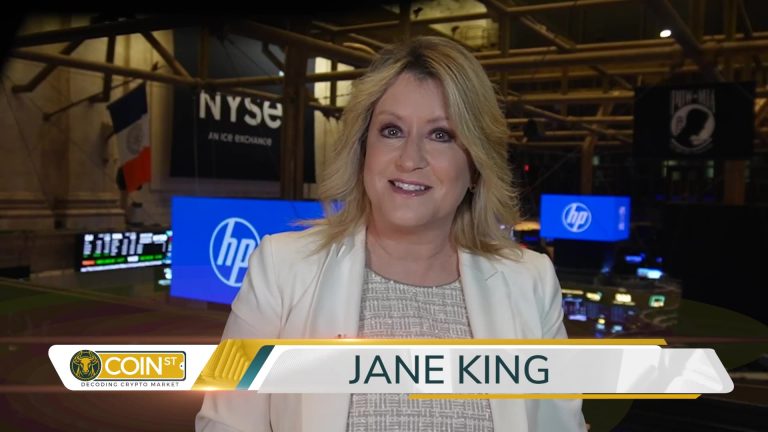
In this episode of CoinStreet Headlines, we dive into the latest developments in the fintech and crypto sectors. Klarna, backed by Sequoia Capital, is eyeing a U.S. IPO with a valuation of up to $14 billion, while reassigning employees to customer support after acknowledging over-reliance on AI. Stripe takes a stand against banks charging for customer financial data access, urging the U.S. Consumer Financial Protection Bureau to act. Meanwhile, Gemini, the crypto exchange founded by the Winklevoss brothers, has filed for an IPO to raise $317 million. We also explore the concentration of Ethereum holdings, revealing that 61% of all ETH is held by just 10 addresses, primarily through staking contracts and institutional investors. Jane King has the latest from the NYSE.

Trump coin, Crypto inflows, Gaza tokenization, Crypto policy

0

In this episode of CoinStreet Headlines, we discuss the Trump family’s significant gain of up to $5 billion in paper wealth following the launch of their new cryptocurrency, WLFI. With President Trump and his sons as co-founders, WLFI is now available for trading. We also cover the recent $2.5 billion inflow into crypto funds despite a dip in Bitcoin and Ethereum prices. Additionally, we explore a controversial post-war plan for Gaza involving tokenized land and digital tokens, and the upcoming return of the U.S. Senate and House to address key cryptocurrency legislation. Jane King has the latest from the Nasdaq.

Unlocking the potential of Digital Asset Treasuries with David Namdar

0

Vince Molinari and David Namdar, the CEO of BNB Network Company dive deep into the world of digital asset treasuries and the remarkable rise of BNB, the fourth largest cryptocurrency globally.

David shares insights on the evolution of crypto treasuries within public companies, highlighting the significant impact of pioneers like Strategy’s Michael Saylor and the growing intersection of traditional finance (TradFi) and decentralized finance (DeFi). Discover how BNB has become a powerhouse in the crypto ecosystem, boasting nearly 300 million users and a robust network.

David also discusses the exciting potential for institutional adoption of crypto assets and the global phenomenon of digital asset treasuries, projecting a substantial influx of capital into the crypto market. With a strong shareholder group backing BNB Network, David emphasizes the importance of community and integrity in building a successful company.

Empathy and Endurance: Navigating leadership in a changing world

0

Remy Blaire is joined by Rhonda Vetere, an endurance athlete, STEM advocate, and a board member of The Post, to share her insights on the importance of empathy, mental endurance, and adaptability in both sports and business.

Discover key lessons from Rhonda’s extensive experience in endurance racing and executive leadership, including her “secret sauce” for success: the importance of sleep, nutrition, and surrounding yourself with the right people. She discusses the impact of artificial intelligence on the workforce and emphasizes the need for continuous learning and diversification in preparation for future market changes.

Whether you’re a seasoned leader or just starting your journey, Rhonda’s advice on building resilience and setting achievable goals will inspire you to take action.

Navigating September: DeFi Regulatory Catalysts and Market Structure Insights

“It’s really exciting to see institutional adoption of DeFi and blockchain technology, but none of this works if we don’t have basic protections in place for those software developers who help write the code that create these services.” – 01:49

Kristin Smith, President of the Solana Policy Institute, joins Remy Blaire to discuss the significant regulatory catalysts emerging as Congress returns to Capitol Hill after the August recess. Kristin shares insights into a recent collaborative effort involving over 100 organizations, including the Solana Policy Institute, which sent a letter to Congress advocating for developer protections in upcoming market structure legislation. She emphasizes the importance of ensuring that software developers are not held liable for the misuse of their open-source code, drawing a parallel to how car manufacturers are not prosecuted for crimes committed using their vehicles.

The conversation also touches on a recent court decision affecting two software developers, for which the Solana Policy Institute is supporting an appeal. Kristin expresses optimism about the progress made in regulatory frameworks over the past several months, allowing the industry to focus on innovation and the development of useful applications.

As the segment progresses, Remy and Kristin discuss the Solana Policy Institute’s priorities moving forward, including the need for clarity regarding the treatment of staking rewards and the importance of filling vacancies at the CFTC to ensure effective regulatory oversight. Kristin elaborates on the concept of internet capital markets, envisioning a future where all assets trade online and emphasizing the need for legal updates to facilitate a seamless user experience in tokenized equities and derivatives.

Mapping the Future: How HiveMapper is Revolutionizing Real-Time Spatial Intelligence

“We see a given location, you know, 50, 100 times per year, whereas Google Street View is maybe only seeing that same location once a year or every two or three years.” – 01:41

Ariel Seidman, Co-Founder & CEO of Hivemapper, joins Remy Blaire to discuss his decentralized mapping platform that is rapidly gaining traction across various industries. The segment begins with Remy highlighting HiveMapper’s recent partnerships with major companies such as Volkswagen, Lyft, 4M Analytics, and NBCUniversal, setting the stage for a discussion on the integration of real-time spatial intelligence.

Ariel explains the core advantage of HiveMapper: its focus on “freshness” in mapping data. He contrasts HiveMapper’s crowdsourced approach with traditional mapping methods, such as Google Street View, which often updates locations infrequently—sometimes only once every few years. By allowing everyday users, including Uber drivers and truckers, to deploy mapping devices in their vehicles, HiveMapper can capture real-time data, significantly enhancing the accuracy and relevance of its maps.

Remy probes deeper into the challenges of balancing long-term innovation investments with the need to deliver results for shareholders. Ariel responds by emphasizing HiveMapper’s efficient capital allocation strategy, which prioritizes AI development and product creation over the substantial investments required for traditional mapping vehicles.

The conversation shifts to the HiveMapper token, Honey, which operates on the Solana blockchain. Ariel candidly addresses the challenges of keeping contributors engaged amid fluctuating token rewards, stressing the importance of providing real value and utility to users, regardless of market volatility.

Understanding Market Efficiency: A Deep Dive into Quantitative Trading Strategies

“We’re not in the business of predicting what the market’s going to do, right? We just need to understand what the market does and how to exploit that.” – 02:08

David Chau, Founder & CIO of SPX MGMT, joins Remy Blaire at the New York Stock Exchange to discuss his unique approach as a quant trader, focusing on a delta-neutral strategy that allows him to navigate the market without relying on whether it will trend upward or downward. He explains that the market is efficient, and traders should concentrate on exploiting this efficiency rather than attempting to predict market movements.

The conversation shifts to the options market, where David emphasizes the importance of SPX derivatives as indicators of market sentiment. He breaks down the concept of expected moves in the options market and addresses common misconceptions surrounding options trading. David clarifies that a higher accuracy rate does not necessarily guarantee profitability, explaining that even with a 99% accuracy rate, traders can still incur losses due to negative expectancy rates.

As they explore market behavior and sentiment, David stresses the importance of not getting caught up in the constantly changing landscape of market news. Instead, he advocates for focusing on the data and expected moves provided by the market. He reassures listeners that his strategy does not require forecasting future market conditions, as the market itself will indicate the direction of movement.