[stock-market-ticker symbols=" ^NYA;CRYPTO:BTC;CRYPTO:ETH;CRYPTO:USDT;CRYPTO:USDC;CRYPTO:BNB;CRYPTO:ADA;CRYPTO:XRP;CRYPTO:SOL;CRYPTO:DOGE " stockExchange="NYSENASDAQ" width="100%" transparentbackground=1 palette="financial-light"]

Home Blog Page 118

Revving Up: Infiniti’s Bold New Direction in Luxury SUVs

0

Remy Blaire had the pleasure of speaking with Tiago Castro, the Vice President of Infiniti Americas, during the prestigious Pebble Beach Automotive Week in Monterey, California. As Infiniti faces significant challenges, including stiff competition and declining sales, Tiago shared insights into the brand’s strategic direction and upcoming product launches.

They kicked off the conversation by discussing Infiniti’s unveiling of three bold concept vehicles, including the highly anticipated QX65 monograph and two versions of the QX80. Tiago emphasized that the QX65 monograph represents a new product direction for Infiniti, set to launch next summer, and will be produced in the U.S. This marks an exciting moment for the brand as it aims to regain momentum in the luxury market.

Tiago elaborated on Infiniti’s approach to luxury, highlighting the importance of understanding customer preferences. The QX65 monograph is designed to appeal to the two-row SUV segment, which is a significant area of growth in the luxury market. Additionally, the two QX80 concepts explore unique aspects of luxury, with one focusing on performance enhancements and the other on overlanding capabilities, showcasing Infiniti’s commitment to innovation and customer engagement.

Bitcoin’s Resilience: Navigating the Crypto Landscape Amid Market Currents

“The biggest story of the year has been the rotation from Bitcoin into Ether as that narrative has picked up.” – 01:01

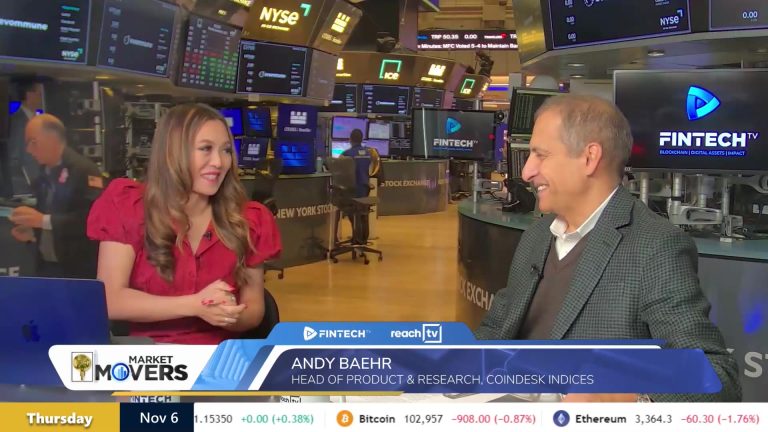
Andy Baehr, Head of Product & Research at Coindesk Indices, joins Remy Blaire at the New York Stock Exchange to discuss the current landscape of the cryptocurrency market, focusing on major players like Bitcoin and Ether, as well as the broader economic factors influencing these digital assets.

The segment opens with Remy discussing Bitcoin’s recent performance, noting that it is holding just below $111,000 after briefly recapturing a key technical level above $1.12. This resurgence has reignited positive sentiment in the market, especially as gold reaches new all-time highs. Remy highlights Bitcoin’s role as a macro hedge and its competition with Ether, which set a new record the previous month.

Andy provides insights into the current market dynamics, particularly the ongoing rotation from Bitcoin to Ether, driven by digital asset treasury companies and increased blockchain activity. They also discuss the upcoming non-farm payrolls report and its potential implications for the Federal Reserve’s decisions, especially with the September meeting on the horizon.

Andy emphasizes the significance of macroeconomic factors such as interest rates and tariffs, which can impact Bitcoin’s status as a store of value. He notes that while Bitcoin is currently in a moderate downtrend, Ether is showing signs of a moderate uptrend. The conversation also touches on the performance of other cryptocurrencies like Solana, XRP, and Cardano, highlighting the wide dispersion in returns within the CoinDesk 5 index.

As the discussion progresses, Remy and Andy shift their focus to the regulatory landscape, particularly the collaboration between the CFTC and SEC aimed at facilitating trading in digital assets. Andy shares exciting developments regarding tokenized equities and their intersection with the cryptocurrency market, suggesting that increased trading activity will benefit Layer 1 blockchains like Ethereum and Solana.

NFL Season Kickoff: Eagles vs. Cowboys and the $25 Billion Revenue Game

“Who wouldn’t be at the dead not to be excited by the way this is the time where the NFL really survives and thrives at twenty five billion dollar annual revenue.” – 00:39

Rick Horrow, CEO of Horrow Ventures, joins Remy Blaire to discuss the return of football and the current state of college sports. The segment kicks off with excitement as the NFL season begins, featuring a highly anticipated matchup between the Super Bowl champion Philadelphia Eagles and their division rival, the Dallas Cowboys. Remy prompts Rick about his enthusiasm for the NFL’s return, to which Rick responds with fervor, highlighting the league’s impressive $25 billion annual revenue and the financial stakes involved in franchise ownership.

The conversation then shifts to college football, where Remy notes the significant investments teams are making in their rosters due to Name, Image, and Likeness (NIL) deals. Rick elaborates on the evolving landscape of athlete compensation, mentioning that Ohio State, the number one ranked team, is reportedly investing $35 million in its roster. He explains how the financial dynamics have changed, with teams now expected to invest between $40 to $50 million as NIL deals mature, contrasting this with the past when payments were made discreetly.

As the discussion progresses, Remy brings up the U.S. Open, where Rick shares his recent experiences and observations. He humorously discusses the popular “honey deuces” cocktails that have become a staple at the event, noting their high price and the staggering number sold, which contributes significantly to the event’s economic impact. Rick mentions that the U.S. Open attracts around 800,000 attendees and generates over a billion dollars in economic activity, emphasizing its status as the largest spectator sport event in New York.

Exploring the Future of Payments: Stablecoins, Tokenization, and AI in Finance

“Stablecoins are global, and so when you can pay anyone anywhere at any time, the costs go down significantly and the efficiencies increase.” – 01:57

Marc Boiron, CEO of Polygon Labs, joins Remy Blaire to discuss the future of payments innovation, focusing on stablecoins, tokenization, and the role of artificial intelligence in finance.

Mark explains the concept of stablecoins as “internet native money,” which allows for global transactions that are faster and more cost-effective than traditional payment systems like FedNow in the U.S. and CEPA in Europe. He points out that stablecoins eliminate many of the restrictions associated with localized payment systems, enabling users to transact anywhere in the world.

As the discussion progresses, Remy and Mark delve into the regulatory landscape surrounding stablecoins. Mark notes that the recent passage of the Genius Act has provided much-needed clarity for stablecoin issuers, transforming the perception of stablecoins from a regulatory burden to a lucrative opportunity for fintech companies. This shift is expected to lead to significant growth in U.S.-based stablecoins, contrasting with other regulatory regimes like MICA, which have been more restrictive.

Mark shares impressive statistics about the performance of stablecoins on the Polygon platform, revealing that there is currently around $3 billion in stablecoins and a monthly transaction volume exceeding $400 million. He emphasizes the diversity of stablecoins available on Polygon, including a newly launched yen-based stablecoin, which allows users to hold and transact in various currencies beyond the U.S. dollar.

The conversation also touches on the economics of currency-backed stablecoins, with Mark explaining that they are typically backed by debt instruments, allowing issuers to generate revenue while providing users with a globally accessible form of currency. Remy and Mark discuss the importance of yield generation in the fintech space, with Mark highlighting Polygon’s focus on payments and its collaboration with other networks, such as Katana, to offer yield-bearing assets. 

Gold, Silver, and Crypto: Navigating the Precious Metals Rally

“It’s going to be cheaper to borrow money. This is very good for the markets.” – 00:51

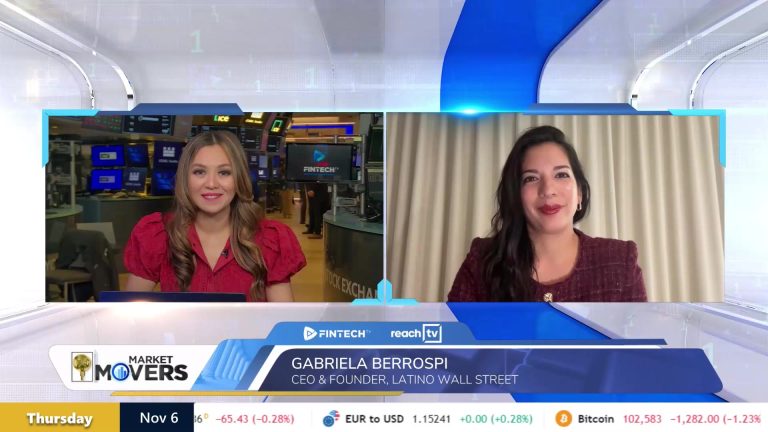
Gabriela Berrospi, CEO & Founder of Latino Wall St, joins Remy Blaire to discuss the factors driving the anticipated rate cut in September and its potential impact on the economy.

Gabby explains that the goal of lowering interest rates is to stimulate economic growth by making borrowing cheaper, which is expected to encourage investment across various sectors. She notes that this sentiment is generally positive for financial markets, including real estate, cryptocurrency, and stocks. However, Gabby also warns that the rate cuts come with inflationary risks that should not be ignored. She emphasizes that while a 25 basis point cut is anticipated, it may take several cuts to truly feel the effects, raising questions about how much of the positive sentiment has already been priced into the markets.

As the discussion progresses, Remy highlights the recent performance of major U.S. stock averages and the rally in precious metals. Gabby points out that gold and silver are currently experiencing upward trends, even as the stock market shows gains. She notes that this unusual correlation—where both precious metals and stocks rise simultaneously—raises a red flag for her. Gabby attributes this trend to a growing lack of confidence in the U.S. dollar, particularly in light of the expected interest rate cuts. She explains that as inflation rises, the purchasing power of the dollar diminishes, prompting investors and central banks to turn to gold as a traditional inflation hedge.

The Coming Dollar Crisis: Peter Schiff’s Bold Predictions – Riding Bulls & Taming Bears

In this episode of “Riding Bulls and Taming Bears,” David had the privilege of hosting Peter Schiff, a renowned economist and financial commentator whose insights have profoundly influenced David’s understanding of economics and investment strategies. Our conversation delved deep into the current state of the economy, the implications of U.S. monetary policy, and the potential crises looming on the horizon.

The pair began by discussing Peter’s perspective on market dynamics, where he clarified that while some label him a “perma-bear,” he maintains a bullish outlook on various sectors, particularly foreign assets, gold, and dividend-paying stocks. He emphasized that many of these investments are currently reaching new highs, indicating a shift in where investors are placing their money as they seek better value outside the U.S. market.

Peter traced the roots of our current economic situation back to 1971 when the U.S. abandoned the gold standard. He explained how this decision, driven by the fiscal excesses of the 1960s, set the stage for the massive national debt we face today—over $37 trillion. He warned that the U.S. is on the brink of a significant crisis, characterized by a potential dollar and sovereign debt crisis, as foreign investors begin to divest from U.S. assets.

As the two explored the economic landscape, Peter highlighted the disconnect between government-reported economic indicators and the reality faced by everyday Americans. He pointed out that while the government claims low inflation, the actual cost of living is rising, leading to increased debt and financial strain for families. This discrepancy, he argued, is a result of manipulated statistics that fail to capture the true economic hardships people are experiencing.

They also discussed the banking sector, where Peter expressed concern over the systemic risks posed by low interest rates and the potential for a banking crisis if the Fed cannot manage rising rates amid a recession. He underscored the importance of recognizing the fragility of the banking system, which has not undergone a proper shakeout since the 2008 financial crisis.

Peter shared his belief that the U.S. economy is weaker than perceived and that the Fed’s attempts to stimulate growth through low rates will ultimately backfire, leading to rising interest rates and inflation. He urged listeners to prepare for a significant devaluation of the dollar and to consider investing in real assets like gold and silver, as well as international markets, to safeguard their wealth.

The episode wrapped up with Peter’s reflections on the importance of economic freedom and the dangers of government intervention in the market. He emphasized that true wealth is generated through individual effort and private enterprise, and that the more the government interferes, the less prosperity we will see.

Navigating the future of finance: Diogo Monica on stablecoins and venture capital

0

Diogo Monica, the General Partner at Han Ventures and co-founder of Anchorage Digital, the first federally chartered crypto-native bank in the U.S. joins Vince Molinari at the New York Stock Exchange to share insights into his transition from entrepreneur to venture investor, discussing the unique challenges and opportunities in the crypto space.

He dives deep into the booming world of stablecoins, highlighting their growth, market dynamics, and the recent IPO of Circle.

Discover the evolving landscape of crypto investments, the importance of equity in the sector, and the future of tokenization. Diago also explores the potential of stablecoins to create the first truly global fintech solutions.

Democratizing E-Commerce: How Launch Cart is revolutionizing small business management

0

Greg Writer, the CEO and founder of Launch Cart, an all-in-one e-commerce platform designed to empower small businesses joins Remy Blaire at the New York Stock Exchange to share his journey of owning an investment bank in the 80s to pioneering e-commerce with the first e-commerce mall in 1997.

Greg discusses the importance of small businesses to the U.S. economy and how Launch Cart is democratizing distribution by providing entrepreneurs with a comprehensive CRM platform that integrates text messaging, email marketing, sales funnels, landing pages, and more—all under one roof.

Greg also addresses the role of artificial intelligence in business, emphasizing the need for entrepreneurs to embrace AI to enhance efficiency and scale their operations. He highlights the potential for generational wealth transfer as baby boomers retire and sell their businesses, and he dispels myths surrounding the future of various industries in the face of technological advancements.

Inside Surf Air Mobility ($SRFM) with Co-Founder Sudhin Shahani | Stocktwits Executive Interview

In this Stocktwits Executive Interview, Katie Perry speaks with Sudhin Shahani, Co-Founder of Surf Air Mobility (NYSE: SRFM), a company reinventing regional air travel. Surf Air operates one of the largest commuter airlines in the U.S., runs an on-demand charter network, builds software through SurfOS, and leads the charge in electrifying small aircraft.

Sudhin shares how Surf Air is connecting underserved regions, scaling both consumer and operator-focused businesses, and building the infrastructure to power the future of air mobility.

Katie and Sudhin also discuss:

• Surf Air Mobility’s partnership with Palantir,

• The roadmap for electrification including the Cessna Caravan project and Electra’s short take-off and landing aircraft.

• Plus, How these innovations could reshape commuting, regional connectivity, and sustainability in aviation.

Whether you’re an investor, a technology enthusiast, or just curious about the future of flying, this interview delivers valuable insights into the next wave of transportation.

Disclaimer: All opinions expressed on this show are solely the opinions of the hosts’ and guests’ and do not reflect the opinions of Stocktwits, Inc. or its affiliates. The hosts are not SEC or FINRA registered advisors or professionals. The content of this show is for educational and entertainment purposes only. Please consult with your financial advisor before making any investment decision. Read the full terms & conditions here: https://stocktwits.com/about/legal/te…

Gold and Silver Surge: Insights from Mark Newton on Market Trends

“It’s tremendously bullish to see gold break out of this pattern, which has been really keeping gold range bound for the last four and a half, five months.” – 01:13

Mark Newton, Managing Director of Fundstrat Global Advisors, joins Remy Blaire at the New York Stock Exchange to discuss to discuss the current state of the U.S. stock market and the broader economic landscape. As they dive into midweek trading, they observe mixed results among major U.S. stock averages, influenced by ongoing trade uncertainties and global bond movements.

Remy highlights the significant surge in gold prices, which have reached new all-time highs, while silver also shows impressive gains. Mark explains that this bullish trend is largely driven by expectations of interest rate cuts from the Federal Reserve, alongside concerns about the fiscal situation both domestically and globally. He notes that gold has broken out of a range-bound pattern that has persisted for several months, projecting that gold could hit $3,800 and silver could reach the mid-40s.

The discussion shifts to year-to-date performance, with gold up approximately 30% and silver nearing 40%. Mark emphasizes the importance of real interest rates and the lack of significant inflation as key factors influencing these precious metals. He also discusses the industrial demand for silver, particularly from China, which imports more silver ore than any other country.

As they analyze the technology sector, Remy and Mark observe a divergence in performance, with Apple showing impressive gains while other tech stocks, like Salesforce, have struggled. Mark points out that this trend is noteworthy and suggests that investors should remain vigilant. Despite some concerns about a potential market correction, he expresses optimism about the overall market trajectory, especially as they approach a historically challenging month for Wall Street in October.

The conversation also touches on the bond market, where recent price action has been influenced by comments from the European Central Bank and historical trends in September. Mark believes that U.S. Treasury yields are likely to continue falling, which could signal a weakening economy in the coming weeks. He discusses the implications of global central bank policies and the potential downward pressure on the U.S. dollar and Treasury yields.

In the closing moments of the segment, Remy and Mark reflect on the importance of understanding interest rate differentials and their impact on the dollar. Mark concludes with a cautious yet optimistic outlook, suggesting that while there may be challenges ahead, the current trends remain intact, and there are opportunities for investors.