[stock-market-ticker symbols=" ^NYA;CRYPTO:BTC;CRYPTO:ETH;CRYPTO:USDT;CRYPTO:USDC;CRYPTO:BNB;CRYPTO:ADA;CRYPTO:XRP;CRYPTO:SOL;CRYPTO:DOGE " stockExchange="NYSENASDAQ" width="100%" transparentbackground=1 palette="financial-light"]

Home Blog Page 77

Gold and Silver: The Rise of Hard Assets Amid Dollar Erosion

“The world right now is recognizing that the United States dollar is worth less than it was even at the beginning of the year.” – 02:38

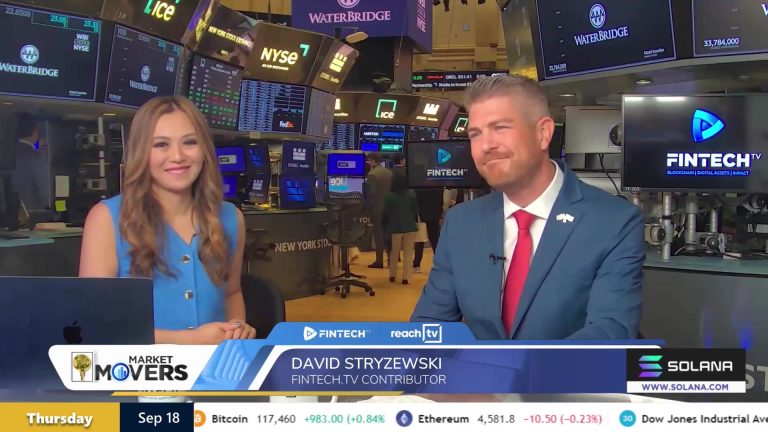
David Stryzewski, Fintech.TV Contributor and CEO of Sound Planning Group, joins Remy Blaire at the New York Stock Exchange to discuss the recent Federal Reserve rate decision and its implications for the financial markets.

The segment begins with Remy highlighting the Fed’s decision to ease rates by a quarter of a percentage point, a move that was widely anticipated. However, she notes that the central bank’s more hawkish outlook for 2026, predicting only one more rate cut next year, diverges from market expectations of two or more cuts. David shares his insights on the mixed market reaction following the Fed’s announcement, suggesting that while a quarter-point cut may not significantly impact mortgage rates or the national debt, it is a step in the right direction. He speculates that further cuts could be forthcoming, driven by upcoming economic challenges.

The conversation shifts to the pre-market surge in Intel shares, which rally by as much as 30% after NVIDIA announces a $5 billion investment in the company. David emphasizes the significance of this investment in strengthening American manufacturing and competing with global players like China and Huawei.

Remy then pivots the discussion to precious metals, particularly gold and silver. David explains that the current decline in the value of the U.S. dollar—down about 10-11% since the beginning of the year—has led to an increase in hard assets like gold. He notes that as it takes more dollars to purchase an ounce of gold, this reflects inflationary pressures. David expresses optimism about the potential for gold, silver, platinum, and palladium to experience a strong run, with metal miners likely leading the market.

The discussion continues with a focus on silver, where David describes the current “silver squeeze,” driven by significant demand from solar panel production and electronics. He highlights the favorable mining ratio of silver to gold, suggesting that silver presents a unique investment opportunity.

As the segment progresses, Remy examines stock futures, which indicate a higher opening for the Nasdaq and S&P 500. She asks David about finding opportunities in the current market landscape. He points out the concentration of value in the top 10 stocks of the S&P 500 and shares his strategy of reallocating investments away from big tech and into metals and metal miners, which he believes are essential for a modern portfolio.

Finally, the conversation turns to the bond market, where David emphasizes the importance of monitoring 30-year treasuries, currently around 5%. He explains that the bond market often predicts future economic conditions, and the current rates suggest a 5% inflation outlook. David cautions that if interest rates rise, bond portfolios could face challenges due to price changes.
Mobilizing Capital for Change: The Future of Impact Investing

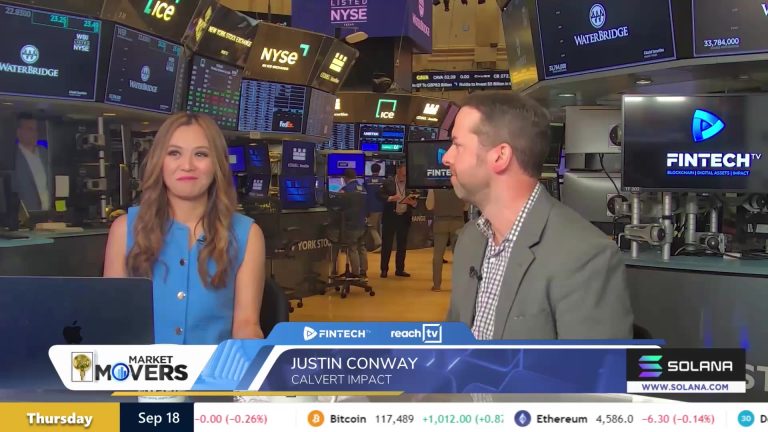
“We’ve channeled over $5 billion to all types of impact sectors, from affordable housing to renewable energy.” – 01:09

Justin Conway, Calvert Impact, joins Remy Blaire at the New York Stock Exchange to discuss the current state and future of impact investing. The conversation begins with an overview of the global impact investing community, which now represents over $1.5 trillion in assets. Remy sets the stage by highlighting the urgent and complex challenges facing society today, including shifting political tides and extreme weather.

Justin explains Calvert’s role in the impact investing landscape, emphasizing the firm’s mission to help investors allocate their capital toward social and environmental solutions. With a product platform that has been growing for 30 years, Calvert has successfully channeled over $5 billion into various impact sectors, such as affordable housing, community development, renewable energy, and sustainable agriculture. He underscores the importance of measurable impact, which is a cornerstone of Calvert’s approach.

As the discussion shifts to the current economic and political uncertainties, Justin shares insights into how portfolio companies are adapting to these challenges. He notes that many impact firms were established during times of crisis, which has equipped them with the resilience to navigate today’s turbulent environment. Despite the difficulties posed by changing political and economic headwinds, he expresses optimism about the adaptability and continued resilience of these companies.

Remy and Justin then explore trends within the impact investing community, highlighting the diverse range of investors involved—from mission-driven organizations to large corporations and pension funds. Justin points out that climate sectors, particularly environmental sustainability and renewable energy, are top priorities for many investors. He observes a growing willingness among investors to allocate more capital to impact investments, especially as they see positive returns and meaningful impact.

Navigating Economic Uncertainty: Insights from the September Fed Meeting

“This was a risk management cut, which I thought was telling.” – 01:14

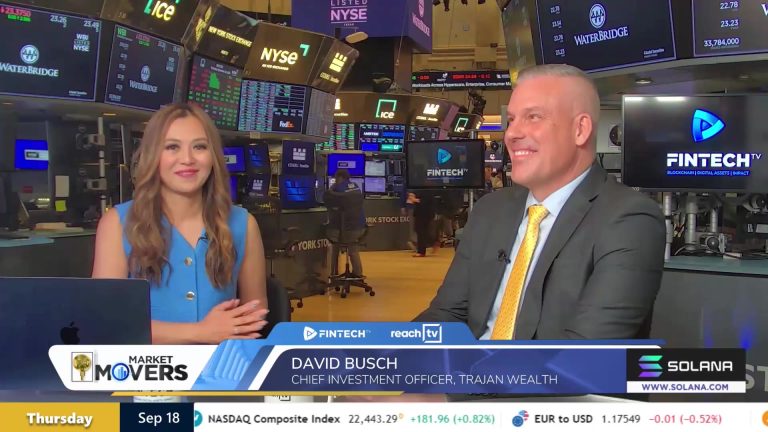
David Busch, Chief Investment Officer at Trajan Wealth, joins Remy Blaire at the New York Stock Exchange to discuss the current economic landscape and the implications of the Federal Reserve’s recent actions.

The segment opens with Remy highlighting the unusual economic situation where weak labor markets coincide with persistent inflation, a scenario that presents significant challenges for policymakers. David explains that the Federal Reserve’s decision to cut interest rates by 25 basis points during its September meeting is a response to the dual risks of inflation and labor market stability. He describes this rate cut as a “risk management cut,” aimed at balancing these two critical economic factors.

As the conversation progresses, Remy and David delve into the implications of the Fed’s decision for the market. David emphasizes the importance of monitoring upcoming economic indicators, such as GDP revisions and nonfarm payroll figures, which will provide further insight into the economic trajectory. He advises investors to position their portfolios strategically, recommending a focus on the three to five-year segment of the fixed income market, quality names, and Treasury Inflation Protected Securities (TIPS) to manage potential inflation volatility.

The discussion shifts to the equity markets, where David notes that while technology stocks have been strong performers, there is a growing opportunity in sectors like financials, consumer discretionary, and materials. He points out that lower interest rates create a favorable environment for small-cap stocks, which could benefit from this economic backdrop.

Remy and David also explore the current dynamics of the bond market, with David cautioning that while the front end of the yield curve may rotate down, there are risks associated with longer-dated bonds due to potential inflation volatility.

Retail Sales Surprises and the Future of Inflation: A Deep Dive

“Wall Street’s been positioned for this incorrectly. They’ve been way too negative.” – 02:38

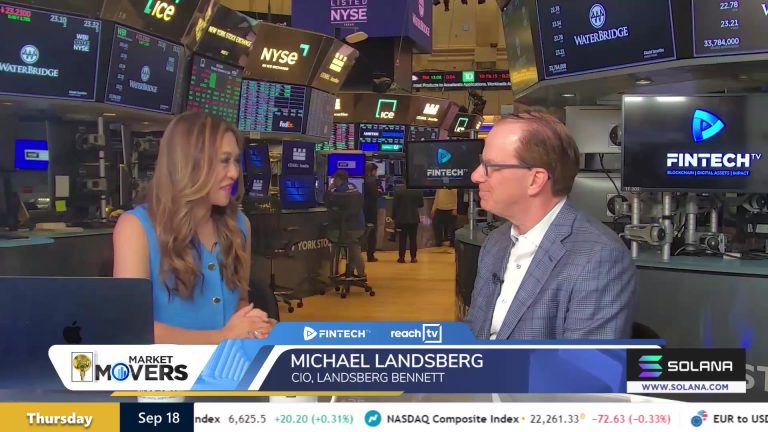
Michael Landsberg, CIO of Landsberg Bennett, joins Remy Blaire on the trading floor of the New York Stock Exchange to discuss the current state of the economy following the recent Federal Reserve meeting. Activity in the housing sector remains weak, and the pair discuss the implications of the Fed’s decision to cut interest rates by 25 basis points, as well as Fed Chair Jay Powell’s cautious outlook on future rate cuts.

Michael explores the market’s reaction to the Fed’s announcement, particularly the decline in high-flying tech stocks like NVIDIA, Oracle, Palantir, and Broadcom, while Intel’s shares surged after NVIDIA announced a $5 billion investment in the company.

Michael shares his insights on Powell’s statements regarding risk management and inflation, emphasizing that while there is pressure for further rate cuts, the Fed may adopt a wait-and-see approach based on upcoming economic data. Michael and Remy discuss the importance of the labor market, inflation metrics, and the upcoming GDP revision, durable goods data, and PCE figures, which will be critical in shaping the Fed’s decisions moving forward.

They also analyze the surprisingly strong retail sales figures and what they mean for consumer spending and GDP growth. Michael points out that the American consumer often defies expectations, spending even when it seems counterintuitive. He highlights that companies have managed to keep prices in check despite tariffs, which has positively impacted earnings.

Gold, Bitcoin, and the Future of Inflation: Expert Analysis from Latino Wall Street’s CEO

“I think the market is going to be mostly bullish. However, it’s not going to be a perfect straight line.” – 02:06

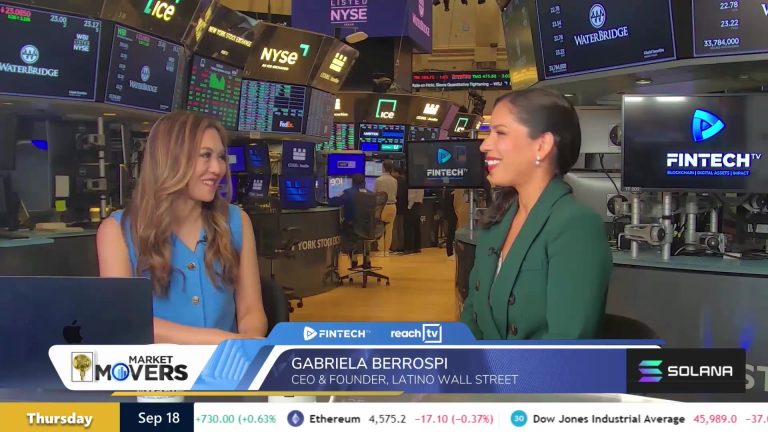
Gabriela Berrospi, CEO & Founder of Latino Wall Street, joins Remy Blaire at the New York Stock Exchange to discuss the current state of the labor market and its implications for the economy.

The pair begin by discussing the recent comments from Fed Chair Jay Powell, who expressed increased caution regarding the labor market. Powell noted that while the labor market was previously in solid condition, recent revisions to job creation numbers have shifted the outlook. He indicated that the risks are now more balanced between inflation and economic growth, suggesting a move towards a neutral monetary policy. This led to the Federal Reserve’s decision to cut interest rates for the first time in nine months, a move that was largely influenced by weak labor market data.

Gabby analyzes the market’s reaction to this news. Initially, the announcement of the rate cut was met with enthusiasm, pushing markets higher. However, as Powell elaborated on the economic challenges, including inflation and tariffs, the mood shifted. Gabby highlights the ongoing innovation in the tech sector, particularly with companies like NVIDIA and Intel, which are driving market optimism. She anticipates a bullish trend in the market, albeit with expected volatility as investors look to secure gains.

The pair also discuss the recent partnership between NVIDIA and Intel, which has garnered attention following Trump’s trip to the UK. Gabby points out the U.S. government’s stake in Intel and suggests that this collaboration may have been part of a larger strategic plan. The implications of this partnership are significant, especially as it relates to government contracts and tariff negotiations.

Crypto Market Update: SEC Approves New Spot ETFs and Bitcoin Surges

“Bitcoin is at the top of its kind of recent range, and that’s a healthy place for it to be.” – 01:27

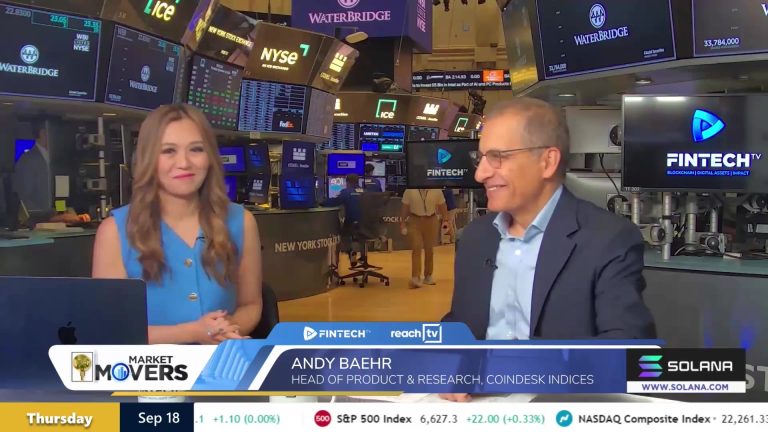
Andy Baehr, Head of Product & Research at Coindesk Indices, joins Remy Blaire at the New York Stock Exchange to discuss the latest developments in the cryptocurrency market following the September Fed meeting. Bitcoin is trading above $117,000, and the SEC has cleared the way for new spot crypto ETFs, allowing exchanges like the NYSE, NASDAQ, and CBOE to use generic listing standards. This significant change will shorten the timeline for launching new ETFs, making it easier for investors to access a broader range of crypto assets, including popular tokens like Solana and Dogecoin.

Andy notes that the market is responding positively, with Bitcoin maintaining a healthy position and low volatility. Ether has also shown strength, particularly in light of the SEC’s recent announcements.

The pair discuss the implications of the SEC’s approval for spot crypto ETFs, which will simplify the listing process and potentially lead to a surge in new products. Andy highlighted the upcoming grayscale fund that tracks the CoinDesk Five Index, which will be the largest multi-token ETF in the U.S. market, offering a more passive investment approach for advisors and their clients.

Andy also touched on the regulatory landscape in Washington, D.C. Andy emphasized the collaborative spirit between regulators and lawmakers, suggesting that the U.S. is open for business in the crypto space. This positive sentiment, combined with favorable macro conditions, could lead to exciting developments and growth in the industry.

Ethereum Foundation, Crypto politics, Robinhood fund, Base token

0

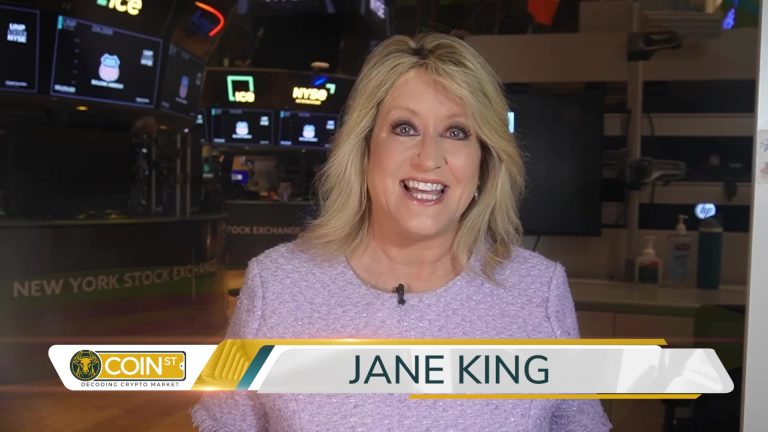
In this episode of CoinStreet Headlines, we dive into the latest developments in the crypto world! Discover how the Ethereum Foundation is merging AI with blockchain through a new research team focused on creating an AI economy. We also discuss a super PAC that has raised $100 million to support pro-crypto candidates and promote regulatory clarity in the U.S. Plus, learn about Robinhood’s plans for a closed-in fund aimed at retail investors and the exciting news from Coinbase’s Layer 2 network, BASE, as it teases a native token launch. Jane King has the lates from the NYSE.

Powering an Inclusive Future: Cisco’s Commitment to Sustainability with Mary De Wysocki

0

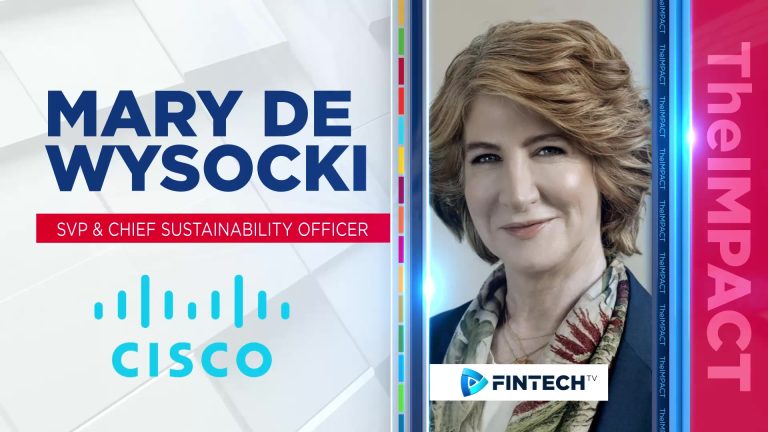
In this episode of The Impact, Jeff Gitterman had the pleasure of speaking with Mary D. Wysocki, the Chief Sustainability Officer of Cisco, right from the bustling floor of the New York Stock Exchange. The conversation delved into the intersection of technology, sustainability, and corporate responsibility, highlighting Cisco’s long-standing commitment to these principle

Mary shared her journey to becoming Cisco’s first Chief Sustainability Officer, emphasizing the blend of luck and intention that shaped her career. With over 25 years at Cisco, she reflected on her early experiences in New Orleans post-Hurricane Katrina, where she witnessed firsthand how technology could aid in community recovery. This pivotal moment ignited her passion for social impact and sustainability, leading her to recognize the potential of technology as a force for good.

The pair explored Cisco’s sustainability strategy, which is deeply embedded in the company’s purpose: to power an inclusive future for all. Mary explained how Cisco has been a pioneer in integrating sustainability into its core business strategy, focusing on cleaner energy transitions, circular design principles, and community support. Unlike many companies that have wavered in their sustainability commitments, Cisco has remained steadfast, continuously evolving its approach to meet the challenges of today.

A significant part of our discussion centered on the implications of artificial intelligence (AI) on energy consumption and sustainability. Mary articulated the dual challenge of harnessing AI’s potential while managing its energy demands, particularly in data centers. She emphasized the importance of innovative energy solutions and intelligent management systems to balance these competing needs.

Mary also shared valuable insights for other companies navigating the complexities of sustainability and energy demand. She stressed the importance of collaboration with partners and suppliers, treating sustainability as a core business strategy, and investing in a robust data foundation to ensure transparency and accountability in sustainability claims.

As focus shifted to resilience, Mary highlighted Cisco’s Innovation Lab and its efforts in crisis response, particularly in the face of climate-related challenges. She discussed the company’s commitment to investing in climate action through the Cisco Foundation, including a $100 million commitment to support climate initiatives and impact investing. This approach aims to foster innovative solutions and technologies that can enhance resilience and sustainability.

Navigating FinTech Innovation: Insights from Walid Hassouna of Valu

“When we started in 2016 and 2017, most of FinTech was actually in payments.”

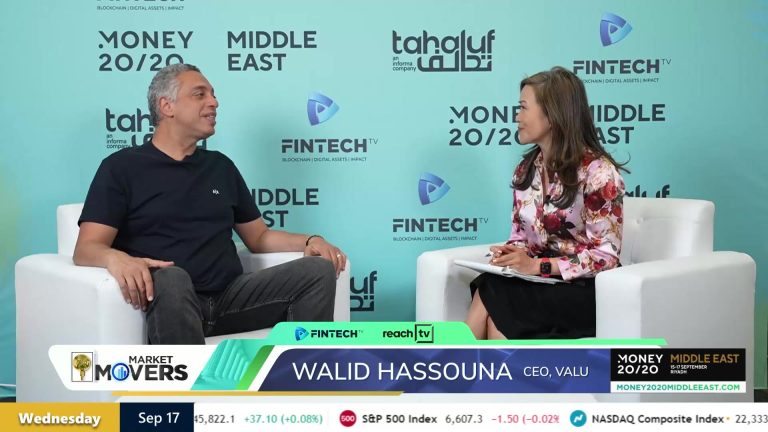
Walid Hassouna, CEO of Valu, joins Patricia Wu from Money20/20 Middle East, held in Riyadh, to discuss the buy now, pay later (BNPL) services sector in the region.

Patricia opens the discussion by highlighting the vibrant atmosphere of the fintech landscape at the conference. Walid shares his insights on the rapid growth of fintech in the Middle East, noting that the sector has evolved significantly since Valu’s inception in 2016. Initially focused on payments, the fintech industry has expanded to include various verticals such as lending, regulatory technology (RegTech), insurance technology (InsureTech), and cybersecurity. Walid emphasizes that the introduction of consumer lending in Egypt marked a pivotal shift, sparking interest and innovation across the region.

As the conversation progresses, Walid discusses the fierce competition in the fintech space and how Valu has managed to maintain its position as a market leader despite facing 49 competitors. He attributes this success to a strong focus on innovation and the development of products that resonate with customers. Walid explains that Valu prioritizes speed over accuracy in product development, allowing the company to quickly adapt to market demands and customer feedback.

Walid also highlights the youthful demographic of his leadership team, which he believes enables them to connect effectively with their target audience. He points out that the team’s background in both banking and technology provides a balanced approach to fintech, setting Valu apart from other companies that may lean too heavily in one direction.

Unlocking AI Potential: Devin Johnson on Transforming Sales with SalesAI

“You have to have a structured backend system with your CRM, your data, and your processes. Then AI is extremely efficient.” – 04:43

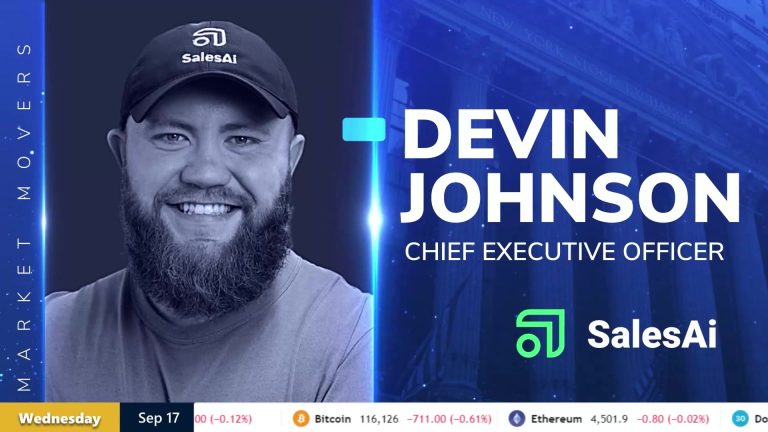
Devin Johnson, CEO of SalesAI, joins Vince Molinari at the New York Stock Exchange to discuss the transformative potential of AI in enterprise sales and customer support.

Devin, a recognized entrepreneur with a history of successful ventures, outlines the mission of SalesAI.com: to make AI easy, simple, and effective for businesses. He explains that their primary focus is on deploying AI agents that qualify leads and provide tier-one customer support. These AI agents can engage with leads as soon as they enter a business’s funnel, significantly reducing response times from an average of over an hour to just 10 to 15 seconds. This rapid engagement not only enhances efficiency but also improves the overall customer experience.

The conversation shifts to the current landscape of AI adoption, with Devin addressing the hype versus reality surrounding the technology. He emphasizes that for AI to be effective, businesses must have strong foundational systems, including a robust CRM and well-structured processes. Devin shares insights from a national survey conducted by HubSpot, revealing that less than 10% of businesses are currently ready to adopt AI. This statistic highlights the significant market opportunity for SalesAI.com, as many companies are still in the early stages of AI readiness.