
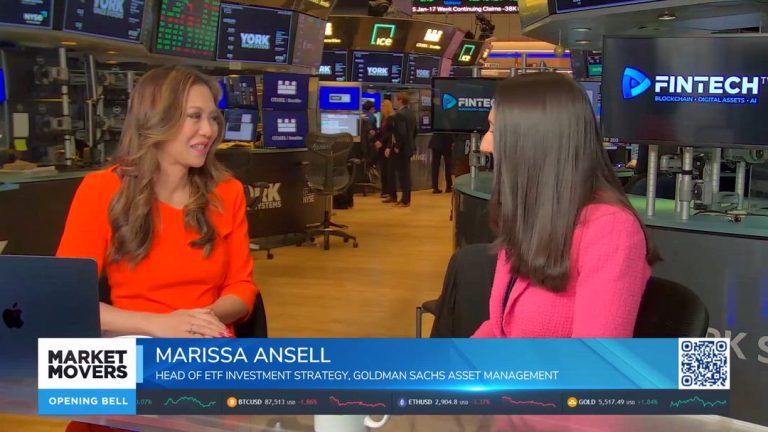
Marissa Ansell, head of ETF investment strategy at Goldman Sachs Asset Management, joins Remy Blaire to discuss how active ETFs, income strategies, and private asset access are shaping the ETF landscape in 2026.
Comprehensive Youth Development Expands Education, Workforce Support
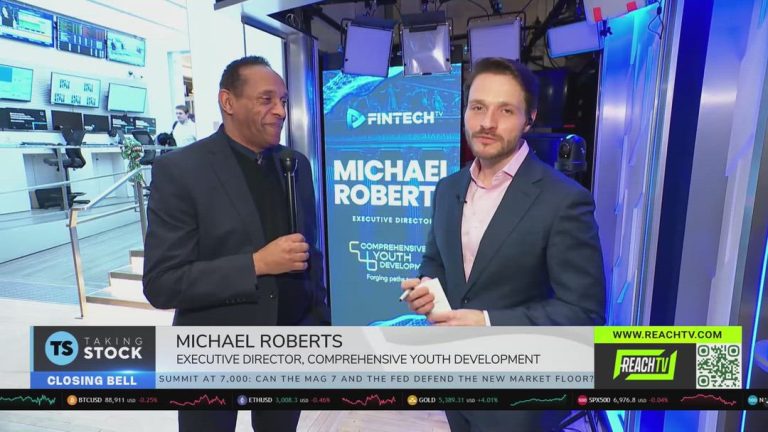
Michael Roberts, executive director of Comprehensive Youth Development, joins J.D. Durkin to discuss how the nonprofit supports New York City students through education, workforce training, and career planning.
AlphaTON Capital Bets on Telegram Ecosystem and AI Infrastructure Growth
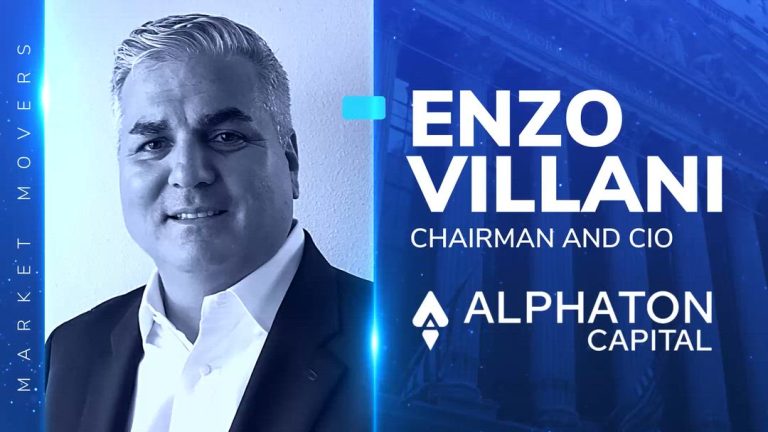
Enzo Villani, CIO and chairman of AlphaTON Capital, joins J.D. Durkin to discuss the firm’s strategy around the Telegram ecosystem, AI infrastructure, and blockchain-driven growth.
Stablecoin impact, Nifty Gateway, Mesh value, Indonesia data centers
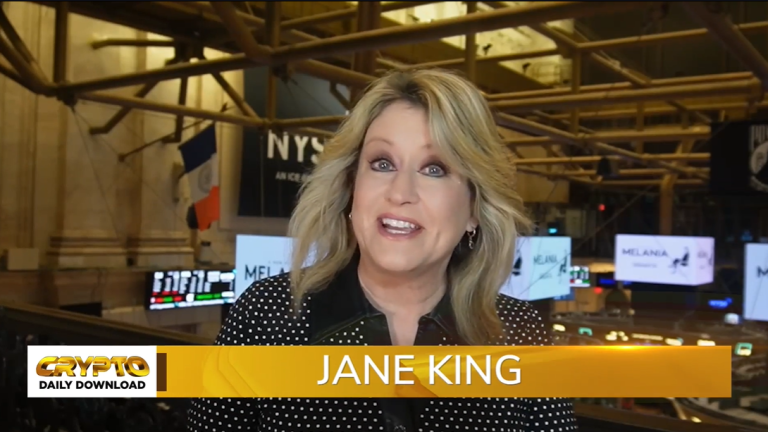
In this episode of the Crypto Daily Download, we dive into the latest developments in the cryptocurrency world. Discover how U.S. dollar-backed stablecoins could potentially withdraw around $500 billion from U.S. banks by 2028, with regional banks facing the most exposure. We discuss insights from Geoff Kendrick, the global head of digital asset research at Standard Chartered. Learn about Gemini Trust’s decision to shut down its digital art token marketplace, Nifty Gateway, and what it means for users as they transition to a withdraw-only mode. We highlight Mesh Connect’s recent $75 million funding round that has propelled its valuation to $1 billion, and its ambitious plans to expand into new regions, including Latin America, Asia, and Europe and get the scoop on Digital Edge’s $4.5 billion investment to build one of Indonesia’s largest data center campuses, designed to support AI and deliver significant IT capacity. Jane King with the latest from the NYSE.
Dollar Hits Four-Year Low as Markets Await Fed Decision, Big Tech Earnings
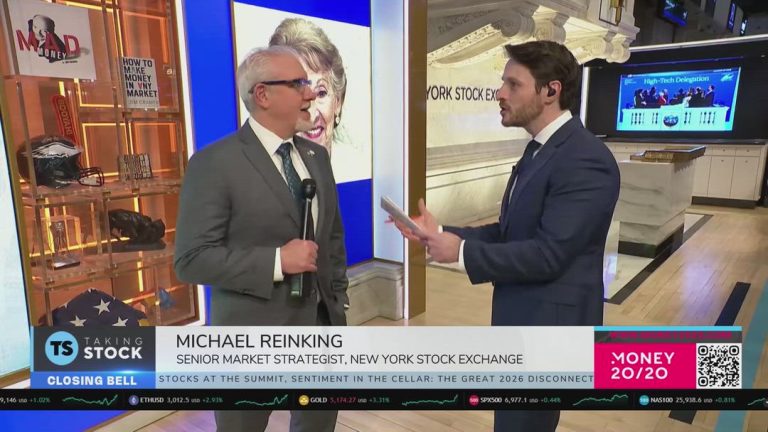
Michael Reinking, senior market strategist at the New York Stock Exchange, joins J.D. Durkin to discuss the dollar hitting four-year lows, Fed expectations, and what investors are watching as major tech earnings begin.
New York Tech Leaders See AI Driving Next Wave of Innovation
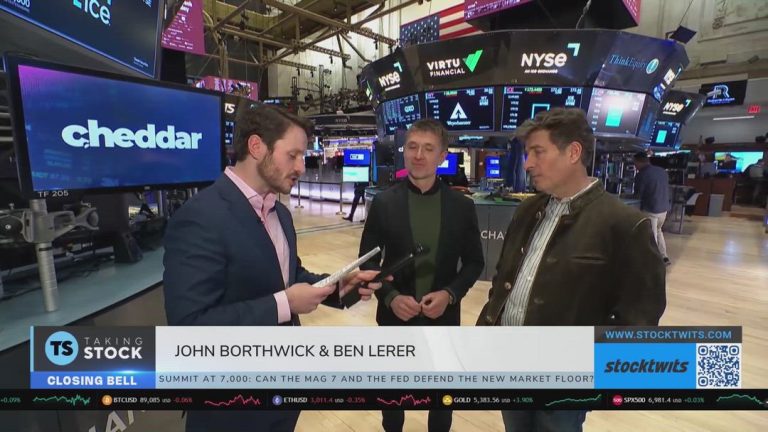
Ben Lerer, managing partner at Lerer Hippeau Ventures, and John Borthwick, CEO of Betaworks, joined J.D. Durkin to discuss the evolution of New York’s tech ecosystem and the role of AI in shaping its next phase.
J.D.: Join us down here now on the show for not a one on one interview. I guess a one on two interview. Say hello here to Ben Lerer. He’s the managing partner at Lerer Hippeau Ventures, as well as John Borthwick, the CEO of Betaworks. John, Ben, Great to have both of you guys. Thank you for being here.
Ben: Thanks for having us.
J.D.: Of course, it’s great to have you the first, first and foremost, can I get your experience to ring the closing bell to be down here at the New York Stock Exchange with us today?
Ben: It was a thrill. I had the good fortune of ringing the bell a few times with portfolio companies in the past when they went public, and it’s been a little slow on IPOs the last few years, as you know. So it’s nice to be back and very excited about 30 years in New York tech.
J.D.: That’s awesome. Congratulations. How about for you John?
John: It was awesome. I mean, I think, you know, I’ve been in the tech business both as a builder and as an investor for about 30 years. And it is new York has come a long way, and it was just a total pleasure to be here for New York and for the tech community and for our companies.
J.D.: John, in what way have you seen the tech ecosystem here in New York City evolve over the last three decades? John: I think the it’s just grown so much in size. The quality of people and talent. I mean, I remember when I first started my company in the early 90s, in ’94. People didn’t really know what the web was. And it was it was very hard to get people on board and interested. The depth of engineering talent, the amount of interest in AI. I mean, you talked at the top about AI, and AI is transforming every corner of every industry and every part of our world. And these models, you know, be they foundation models or be they small local models, open source models have been embedded in technology and every piece of our work life, play life and life. And so I think it’s a very exciting time. And New York is really good at building apps. And so I think as the app, as things migrate to the app layer, which they are definitely starting to do, we’re going to see a lot more New York tech companies here blossom.
J.D.: Ben, how about for you? I wonder what ways that the general tech landscape here has evolved in what ways it stayed the same, and how that kind of feeds into your broader work and your priorities here in 2026.
Ben: I mean, look, 30 years ago I was a small child. So it’s it’s changed a bit for me, So, you know, I got into tech in New York 20 years ago out of college. I grew up in New York, moved back here, and when I started in the New York tech scene, everybody in the New York tech scene would fit in this room and maybe fit in this corner of this room, and it’s just been amazing to see the consistent growth and the interest in technology. When I graduated from college, I didn’t know what venture capital was. And today, I think that that is like the dream job for a whole generation of kids who want to come and want to participate in this next leg of innovation.
J.D.: We talked so much about Silicon Valley out in California. When people talk tech, what are people missing about maybe the opportunities for the tech landscape right here in the Big Apple? I’ll start with you,Ben.
Ben: Look, I think that New York has very clearly established itself as the other tech metropolis in the U.S. I mean, when we got started, New York was a pimple. New York is now a place where you can do anything. can build any kind of company.
Obviously, the sort of heart of the large language models and big tech remains out west. But as John mentioned, there is so much incredible innovation happening here. New York is the best place to live in the world, and there’s going to be a bunch of fantastic founders that pick the quality of life here and the diversity and just the interesting culture that exists in New York over the sort of one note life that you get in San Francisco.
J.D.: Absolutely. And I’ll wrap things up. I got about 30s. What most excites you about where the tech landscape is today in 2026, John?
John: Yeah, I think that it’s all about AI, and AI is becoming everything. And so it’s bleeding into sort of every piece of industry and of potential technologies. And I think that I’m excited to see what the builders in New York do in the next 12, 18, five years. You know, it’s like this is an amazing city for tech, and I’m proud to be part of it.
J.D.: All right, John, Ben, welcome to the New York Stock Exchange. Welcome back to the Stock Exchange. I should say great to have both of you guys here come back anytime.
U.S. Crypto Market Structure Regulation Advances as SEC and CFTC Coordinate
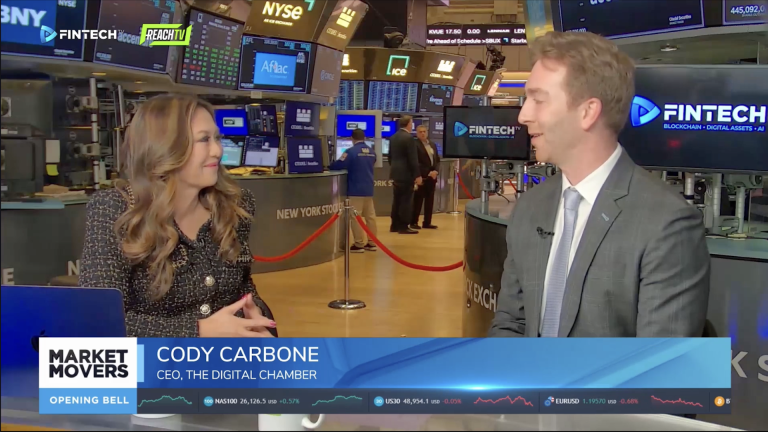
Cody Carbone, CEO of The Digital Chamber, joins Remy Blaire to discuss efforts by the SEC and CFTC to align crypto oversight as lawmakers push forward market structure legislation in 2026.
Remy: Let’s get to the big story breakdown. SEC Chair Paul Atkins and CFTC chair Michael Selig will hold a joint event tomorrow in the nation’s capital to discuss harmonizing regulations for crypto and efforts to make the U.S. the global crypto capital. Both chairs say market participants have struggled with unclear and misaligned regulatory rules, and that the session will help ensure innovation grows on American soil while protecting investors and consumers. Now, Senate committees have been working on legislation to clarify the roles of both the SEC and CFTC, but negotiations have faced delays as well as challenges. Joining me this morning here in New York at the New York Stock Exchange is Cody Carbone, who is CEO of The Digital Chamber, a nonprofit trade organization committed to promoting blockchain adoption. Cody, great to have you here. Thank you so much for joining me.
Cody: Thanks so much for having me.
Remy: Here in the northeast, we are still digging out from that winter storm we got over the weekend. So hence some of the gatherings taking place in the nation’s capital have been delayed. But what are your expectations for this gathering taking place tomorrow?
Cody: It’s a fundamental change of where we’ve been. These two regulators need to work together. You just mentioned that we are in the middle of trying to get market, comprehensive, market structured legislation, passed a foundational regulatory framework for the digital asset industry. The two most important pieces there are the SEC and the CFTC. The two market regulators. There’s going to be so much rule-making authority delegated under this bill to those two regulators, and they’re going to have to work together. A lot of the rule-making authority under this bill is having them work together in different joint exercises and task forces. So it’s fantastic to see this is not something that we saw over the last administration. The two regulators have to work together in a coordinated effort to make sure this really can be the crypto capital of the world, and this regulatory framework can be implemented effectively.
Remy: Cody, for our viewers out there who might not be as familiar with harmonized rules, what are your expectations for what will unfold and what impact will this actually have when it comes to retail investors, institutions, as well as regulatory bodies?
Cody: I think the impact for retail investors is massive and for institutions, this is going to be the comprehensive roadmap of how you’re going to operate effectively in the United States. If you’re interested in investing in a token as a retail user, you now can look at an effective regulated disclosure regime. You can look there’s more consumer protections that are being implemented here. So it is really massive. What I’m expecting is that this bill will have okay – SEC, CFTC, we want you to work together on implementing a consumer protection regime for any token that’s going to be listed. What does that mean? We want you, over the next 18 months, to get together and write those rules. And it will have a step by step guideline of what they need to present to Congress and what they need to present to the industry and the American people. So it really is a foundational step.
Remy: You are just coming back from the World Economic Forum that took place last week in Davos, Switzerland. So you speak to many stakeholders within this ecosystem. Given these expectations as well as roadblocks when it comes to market structure, where do you think we go from here and what timeline?
Cody: It was fascinating being at Davos. One that we just mentioned – it was warmer there than it is here in New York right now. The conversation still centered around crypto, and it was about how the U.S. can be the crypto leader on the world stage. The only way we can do that is if we get market structure bill done. I’m looking at this first quarter to get it done. If we don’t get it done, then politics starts to drive policy. We’re in an election year and it gets really hard as members of the Senate start to go back to their home states to run for re-election, and all the talking points become more partisan. We have to get this done now because we need to administration proof the regulatory framework for digital assets.
If we don’t get this done now and we go into the next election. Who knows what will happen. We could have a Democratic House or a Democratic Senate. We might not get a market structure bill then And then you’re leaving it up to chance in 2028. We could go back to a Gary Gensler regime. We need to make sure that we codify some of the principles that the Trump administration wants, to make sure that the U.S. can be the crypto capital of the world into law. And that’s why we need this bill.
Remy: So break this down for us given these expectations because we’re in quite a different environment in 2026 compared to last year here. even when we’re talking about retail investors, when we’re looking at crypto volume, it is significantly lower.
And given the event that happened in October 2025 regarding crypto, there’s a lot of focus moving forward on expectations and anticipations. What do you think really needs to happen here and when it comes to stablecoin yield, do you think this is a policy issue?
Cody: It is a policy issue. It is the number one issue that is holding up this bill right now. There is not unified support on both the Republican side, on the Democratic side, for what should be done with stablecoin rewards. We are pro rewards. We would like to see rewards. There is nothing in the GENIUS act that prohibits banks from issuing rewards. And so right now, it really is a negotiation between the banks and the digital asset industry. That is the bill, or that is the piece of this bill, that is holding it up. Why? I think market structure legislation is so critical. mentioned administration proofing, but really it’s about building trust and legitimacy in the US crypto markets.
It’s really difficult right now if you’re going to issue a token or to list a token to feel confident because you don’t know whether you are issuing a digital asset security or a digital asset commodity, or if you’re listing that we need the definitions that this bill provides, we need a disclosure regime that this bill provides, and we just need the peace of mind that says, okay, this is here to stay.
The U.S. wants to keep it here domestically. We don’t want talent. We don’t want projects developers going offshore. We want them to build here and want to do so safely. And we want the innovation to flourish here.
Remy: When we look ahead to the rest of this year, there are a lot of expectations. But you and I were here at the New York Stock Exchange and one of the key things when it comes to digital assets is institutional adoption, in terms of market outlook.
What are some innovations you’re watching? And given the fact that you’re just coming back from one of the biggest global gatherings, Davos, what are people actually saying about expectations for U.S. legislation?
Cody: The innovations I’m watching? I would say tokenization. Tokenization of real world assets. Tokenization of financial instruments, whether that is bonds or deposits or equities. We’re seeing that at rapid, rapid scale in terms of innovation. And then stablecoin adoption is massive for the stablecoin. The Treasury secretary said in Davos that he expects the stablecoin market to reach 3 trillion with a “T” by 2028, so that is huge. That’s why we need to get this bill done. This bill really just creates the basic guardrails of what the crypto market should look like in the U.S., and how they should be regulated. If we don’t get this bill done this year, we are leaving it up for chance and other jurisdictions are going to get ahead of us. We’re already seeing innovation in the UAE, in Singapore and EU. That’s all people talked about in Davos that the U.S. has the opportunity right now. They want the talent to be there. The talent has come back and the projects and the innovation have come back over the last year corresponding with the new administration. we don’t get this right and we leave this to partisan politics and we lose our chance, then all of that talent will go overseas.
Remy: As we look ahead to the rest of this year, I do want to zoom in on Q1 of 2025. So next week, hard to believe it is already the month of February. I understand that the DC Blockchain Summit is taking place in March, in mid-March. So tell us about what we can expect.
Cody: Cherry blossom season in Washington DC. No better time to visit. March 17th and 18th we hold the DC Blockchain Summit. It is the largest gathering of policymakers talking about blockchain technology and digital assets. We will have members of the cabinet of the Trump administration, over 30 members of Congress, and then industry leaders sharing the stage side by side. Talking about what’s next, talking about, “Okay, what do we need to do from a policy standpoint to make sure this technology can flourish here?” Whether it’s on AI and quantum or it’s on crypto or it’s on prediction markets, which have now become the hottest issue in DC, it’s the rarest place that you can see a member of Congress, a member of the administration, whether it’s the OCC, the SEC, the CFTC, sitting side by side with those industry leaders to talk about how we can work on this together.
Remy: Before we let you go, we have about 60 seconds here, and you mentioned prediction markets. So what do you expect to see unfold there when it comes to the regulatory outlook?
Cody: We want to see a federal regulatory regime. We want to see the CFTC really get involved. We don’t want to patchwork of state by state. There’s now the coalition of prediction markets. It’s a brand new advocacy organization in DC that are advocating for prediction markets. They’re getting a much larger voice. Just yesterday, Kalshi announced that they opened up a Washington, D.C., office with a head of government relations. They are going to be the hot topic in Washington for the next six months. It was crypto. It still is crypto. It was AI and especially agenetic AI. And now it is prediction markets. And everyone is talking about how crypto plays a part in prediction markets, how AI plays a part in prediction markets. It’s becoming a very hot issue. I imagine we will see policy action on this very quickly, if not this quarter.
Remy: Cody, always great talking to you. Thank you so much for joining me as we kick off 2026.
Cody: Thanks so much, Remy.
Remy: My pleasure.
Crypto Regulation Talks Resume as Lawmakers Debate Stablecoin Oversight
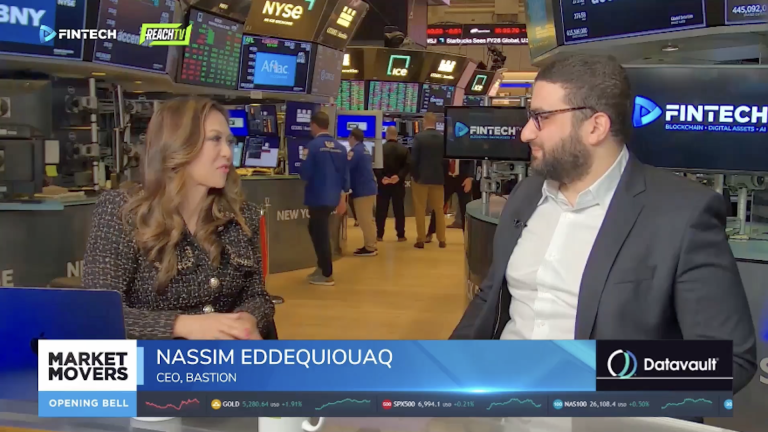
Nassim Eddequiouaq, CEO of Bastion, joins Remy Blaire to discuss stalled crypto legislation, stablecoin regulation, and what clarity from U.S. regulators could mean for digital asset adoption in 2026.
Remy: A hearing on sweeping crypto legislation pushed back due to the winter storm. The Senate committee now plans to mark up the bill Thursday, while the Senate Banking Committee has yet to reschedule its own session after Coinbase pulled support over unresolved issues. Now, the bill would expand the authority of the CFTC and is the first step toward amending a voting on federal crypto regulation. Lawmakers do continue to negotiate amendments, including concerns linked to Trump and his family’s crypto holdings, also in the nation’s capital. SEC Chair Paul Atkins and CFTC Chair Michael Selig will hold a joint event Thursday afternoon to discuss harmonizing regulations for crypto.
Joining me here live at the New York Stock Exchange is Nassim Eddequiouaq, CEO at Bastion. Nassim. Great to have you here. Thank you so much for joining me.
Nassim: Thank you so much for having me.
Remy: Here in New York, we’re focused on the nation’s capital, especially what will unfold tomorrow. So first and foremost, give us your take on the stalled Clarity act and what you believe needs to happen here.
Nassim: It’s a it’s a very interesting situation where a lot of companies are trying to push innovation forward and try to make a better form of dollar, essentially broadly adopted in the U.S. Outside of the U.S., we, for example, at Bastion, work with Sony Bank on the issuance of a stablecoin for the ecosystem that would essentially enable more people across the entire ecosystem to adopt stablecoins. In order to do that, you have to provide certain incentives.
And so there are a lot of conversations happening around yield distribution, reward distribution, by stablecoin issuers. And that is a major point of contention where there are obviously very different incentives between the incumbents and all the companies that are seeking to use stablecoins to further the U.S. dollars and their own ecosystems.
Remy: We’re just kicking off 2026, and there was a lot of anticipation when it comes to progress in terms of legislation. But of course, if it comes to digital adoption, in terms of infrastructure as well as stablecoin adoption, what do you think we’ll see in the near future? And what do you think needs to happen within the U.S.?
Nassim: We’re seeing a lot of innovation around new financial products and especially cross-border financial products, where a lot of companies in the U.S. can actually take their products global on day one, as well as non-U.S. companies that can enter the U.S. market much more easily. And so I think that we’re going to be seeing a lot of adoption in much broader scale products, as well as efficiencies from businesses that are leveraging stablecoins even for internal use cases, management of money flows between all of their entities at a global scale. I really do expect a lot of innovation from a product standpoint and then operational, optimization standpoint from especially large global businesses.
Remy: Tomorrow we will be focusing on the nation’s capital. As we get that gathering from the SEC and CFTC, which was delayed due to the winter storm that hit the northeastern U.S. But what are your expectations from that gathering?
Nassim: I think that we’re in a very good place today where the SEC has been issuing no action letters for a certain number of digital asset protocols and companies building in this space, which was not necessarily the case, I would say, last year or the year before. And so very excited for us to see regulators working hand in hand with the industry.
What I expect is a lot of clarity on where is the oversight of the CFTC happening, which assets would fall clearly under the SEC so that every single market participant, understand the rules of the of the industry and can actually obey by those rules, which has been very hard so far.
Remy: And of course, when it comes to market structure, there is a lot of uncertainty. So what do you think will happen there?
Nassim: I believe that we’re going to be seeing a lot of what has happened so far, which is the CFTC in charge of spot markets, and then the SEC taking oversight over a lot of financial assets that correspond to securities in the traditional sense of the term. My expectation is also for the stablecoin rules around rewards to be more and more clearly defined in a way that falls outside of the SEC and within the OCC, and kind of traditional banking regulators oversight.
Remy: Finally, before I let you go, as we look ahead to digital asset adoption in 2026. Which sectors do you think will shift the most this year? And of course, when we’re talking about the U.S., it’s not just on a federal level, but it’s also on a state and local level. So what do you focus on and why?
Nassim: I think that the markets that are going to be benefiting the most from the innovation are actually the companies that have the broadest adoption worldwide. They have access to those users. They want to enable financial services for those users. We’ve seen the explosion of Robinhood and Revolut and a lot of other financial services companies, and I think that a lot of the technology companies that have access to those users are going to be leveraging digital assets and stablecoins to improve drastically the set of products, essentially, that they offer to their users.
Remy: Nassim, thank you so much for joining me as we kick off a new year. Always appreciate your time and thank you so much for all of your insights.
Nassim: Thank you.
Lunate Expands Thematic ETF Offerings With Dual Listings on ADX and Xetra
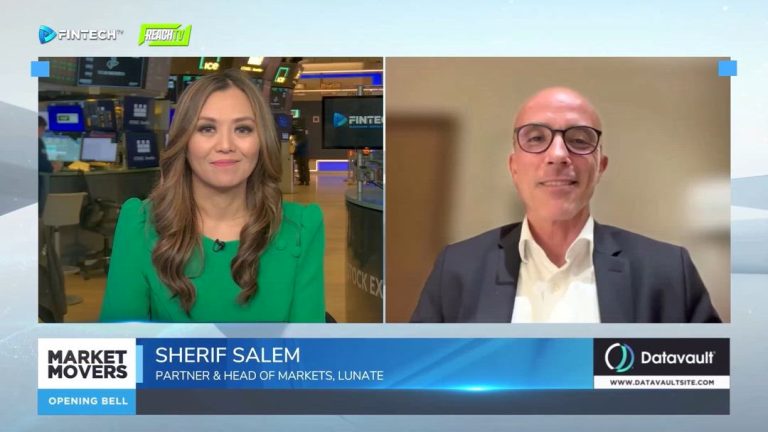
Sherif Salem, partner and head of markets at Lunate, joins Remy Blaire to discuss the launch of Boreas thematic UCITS ETFs and their dual listings on ADX and Deutsche Börse Xetra.
Remy: Welcome to FINTECH.TV. I’m Remy Blaire. This January, Abu Dhabi investment firm Lunate launched its Boreas range of UCITS compliant thematic ETFs on ADX. They also sit on the Deutsche Börse Xetra exchange, marking the first such listing from a Middle East provider in Europe. Now these include the Boreas S&P AI Data Power and Infrastructure UCITS ETF launch on ADX in mid-January and the S&P Absolute Luxury UCITS ETF launch on ADX on January 27th. They are dual listing on Europe’s Xetra exchange, along with Abu Dhabi’s ADX hints at a growing environment for innovative trading funds in those regions.
Joining me to tell us more about this launch is Sherif Salem, partner and head of markets for Lunate. So thank you so much for joining us. Tell us about the January ETF launches on the ADX.
Sherif: Thanks for having me. We launched, today, actually, the 27th. We launched a luxury ETF that we listed on the same day, in the morning at ADX. And it was followed closely, a few hours later with a cross listing on the Xetra in Frankfurt. This is the first time that a Middle Eastern asset manager has listed an ETF on a European exchange. Um, this follows our previous cross listing. So the quantum ETF, sorry, the AI Data Power ETF was cross listed into Xetra earlier this month. But the actual launch and listing on ADX was towards the end of last year. So now we have two ETFs that are listed on Xetra. They’re both UCITS compliant and accessible now to investors in Europe as well as, of course, here in the UAE.
Remy: And for our audience, can you tell us what themes your funds are exploring?
Sherif: So our range is quite diversified in terms of, we started our first launch back in 2020. All our launches, other than the two that I mentioned that we’ve crossed listed on Xetra recently are listed in the UAE – 18 of which, listed on ADX. The ETFs are basically – what we’ve tried to do is to enable investors to be able to invest, across different markets across the world in equity as well as fixed income. So we have a number of equity stock markets covered such as the U.S., China, Turkey, Pakistan, as well as, of course, the regional markets. We followed that up with the fixed income. We focus a lot on providing investors because actually something that’s missing globally is Sharia-compliant ETFs. So a lot of the ETFs that we’ve launched, ten of them, are Sharia-compliant. And of the three fixed income, one of them invests in global sukuk. Then more recently we’ve been launching the thematics, the AI data power, quantum computing, and more recently, luxury.
So we sort of started with the next generation technology. A lot of interest in AI data power, a lot of interest in quantum computing, a lot of growth happening there. And it adds a bit of, we’ve added to the portfolio of ETFs that we’re offering, a type of investment that adds a bit of risk versus the the more plain vanilla equity and fixed income markets. And we plan to expand on that going forward. As you and I have mentioned, luxury was the more recent one. It’s really trying to capture industries that are both growing, have resilience to downturns, or capturing new opportunities and new technologies.
Remy: Sharif, can you explain how Boreas and Northwind are involved here?
Sherif: Yeah. So, Northwind is a JV with Lunate, and Northwind is made up of Geir Espeskog, as well as Christopher Vass. And they bring a lot of value in terms of their experience in thematics. So they’ve helped us develop these thematic ETFs because a lot research goes into coming up with these indices with the index provider. So we’ve worked on, for example, on quantum, we’ve worked with selective on the fashion or, sorry, on the absolute luxury. We’ve worked with S&P. And it’s really trying to come up with some uniqueness to the index and how it filters the companies. So they’ve helped us with that. We’ve sort of built the, you know, first stage, second stage, in terms of equity, fixed income. And they’re helping us with the thematics and building out the thematic range of of ETFs.
Remy: Expanding on thematics., what does the environment for thematic ETFs look like in Europe as well as the Middle East?
Sherif: The Middle East is a very nascent market in terms of ETFs, in terms of technology, and in terms of the thematics themselves, in terms of industries, as you may be aware, the UAE, Saudi Arabia are investing a lot in in quantum computing and AI data power. Luxury is obviously a big sale and attraction here in the Middle East. Not just for the region, but for a lot of the tourism that comes into the region, as industries continue to grow and they continue to be invested in. In terms of ETFs, it’s still a very nascent market in the Middle East. We are the only provider currently of local providers, of ETFs. There are a couple of cross-listed now on ADX. There are a few ETF providers in Saudi Arabia, a couple in Qatar. But they’re all equity giving exposure to sort of well known indices – S&P 500, MSCI world indices – that sort of thing. But thematics is something new, and we’re the first to do that. We’re the first to offer that. We’ve seen a lot of interest on our quantum and our
AI data power. And I think a lot of that is coming from younger generation that is starting to discover the benefits, the younger generation here that’s starting to discover the benefits of investing and saving through ETF and trading ETFs.
Remy: And finally, what are your future plans at your organization?
Sherif: Well, we continue to grow. We’re fully invested in terms of time and money and effort, in building out the ETF and not just the ETFs themselves, but the ETF ecosystem. We’re building out the AP network, the market maker network. As you may have heard, we’ve signed up with Jane Street to be an authorized participant on Xetra. So, we’re making a lot of progress in that because we realize that it’s not just about launching ETFs, it’s about building the ecosystem that will drive the demand and drive the market of ETFs. And that’s what’s important. At the end of the day, it’s not only the type of ETFs that you have, but investors need to see that they’re easily traded, that they’re easily accessible. And we realize that. And that’s why we’ve also invested a lot of time in trying to build out the ecosystem around the ETFs, as well as, of course, continuing to offer more ETFs in the future.
Remy: Sherif, thank you so much for your time today. We appreciate it. And we appreciate all of your insights.
Sherif: Thank you very much. Thanks for having me.
S&P 500 Hits 7,000 as Investors Await Fed Signals on Rates
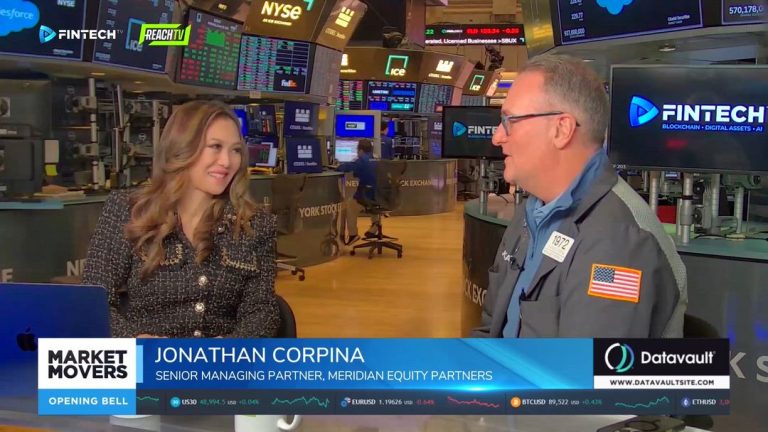
Jonathan Corpina, senior managing partner at Meridian Equity Partners, joins Remy Blaire to break down markets as the S&P 500 crosses 7,000 and investors await key signals from the Federal Reserve.
Remy: It is finally Fed Day and after a volatile start to the new year, the S&P 500 hitting new record highs and breaking 7000 for the first time ever this morning after three straight years of double digit gains. Meanwhile, the US dollar is fairly stable after extending losses. This came after Trump said he’s not concerned about the recent decline in the US currency. Joining me this morning is Jonathan Corpina, a senior managing partner at Meridian Equity Partners. Jonathan, thank you so much for joining me on S&P 500 7,000.
Jonathan: Yes. Special day.
Remy: Yeah. And so we’ve hit that level. But we are looking at mixed trading now for the major U.S. stock averages with the Dow coming below flat. So what do you make of what we’ve seen so far in 2026?
Jonathan: Right. So you know coming into 2026 high expectations to continue the follow through that we saw in 2025 I think, you know, you and I have had this conversation many times. There’s the same headwinds that are in front of us that we discussed at 2025 are still here. Clearly today we’re going to we’re going to hear a little bit more from the fed about interest rates.
We’re all planning that there’s going to be no cut, which is fine, but it’s going to be the reasoning why there was no cut. We want to hear that in the Q&A. We want to hear that in the statement and some insight moving forward. We all, we all feel and know that rates are going to come lower at some point. They moved high very fast.
It’s not it’s going to take some time for them to come back in, but hearing from the fed today is going to be very important. We still have our geopolitical risks, as we hear from President Trump today of our ships moving closer to Iran, and that slowly is starting to escalate. We’re going to continue to watch the headlines here. But as of now, yes, a little bit disconnect between the Dow and the other indices. But overall, good to see that the market is trending higher.
Remy: You bring up an important point because there’s a lot of noise out there, isn’t there? Whether we’re talking about politics or geopolitics.
Here on Wall Street, we do pay attention to what’s happening outside these walls, obviously, but we do keep an eye on those numbers. So when we break down the gains in the S&P 500, we are seeing that energy materials as well as industrials, consumer staples even are leading the way higher for the S&P 500.
So do you expect more of the same? And tell us a little bit about what you’re seeing when it comes to rotation.
Jonathan: I think we’re going to continue to see the rotation right. We’ve talked about tech stocks and the Mag 7 before. And this week is going to kick off some important earnings in that area. That will continue through next week. So for now they’ll be in the forefront. They’ll be the favorite. But we will see that rotation. I think investors are kind of trying to enjoy the best of both worlds. They want their yield. They want their return.
While this market is moving higher and don’t want to miss out on it, but they do want to protect themselves in case we do have a pullback. So you see that rotation into some of the safer sectors or the ones that can provide some of that shielding and shelter, whether that’s energy whether that’s the higher dividend stocks that are that are yielding good numbers out there.
So we will continue to see this rotation. And that’s natural as this market moves higher. Let’s just all keep in mind that as this market moves higher we are going to have some bumps in the road. We are going to have some catalysts that will cause investors to take some fear, take some risk off the table and take some of their short term profits off the table. So the volatility that we’ve seen in our markets, if you go back towards last week, the Greenland headlines hit on markets down 1.5% -almost 2% – and then bounce back the next day. We’re going to see a lot of that volatility. I would I would advise investors out there to be patient. You will see these swings, but it’s kind of a two step forward one step back mentality. We’re going to continue to tick higher.
Remy: I think that’s important as we go through earnings season to keep that in mind, especially with all of the political geopolitical headlines that are coming through. But one clear winner so far when it comes to asset classes is precious metals. We’ve seen gold and silver rally to new highs. And of course, gold may be coming off all time highs, but it is still elevated above 50 to 70. So do you expect more of the same?
Jonathan: I do. I can’t think of a headline that’s going to stop our gold and silver press higher. We’re going to still have these uncertainties in our markets, these uncertainty in our economy. Think investors have felt much more comfortable diversifying their portfolios into areas that could provide some safety.
That has been gold and now most recently silver. We’re going to continue to see that. And again, I don’t think that there’s a headline out there that’s really going to spook that market that’s there. A good sign to me is that investors are, in fact, diversifying their portfolios and are looking for safe havens there. Gold has always been that safe haven – not always traded in the same correlation of our volatility on all markets. but nice to see now that it is in the mix. It will be interesting to see if we have a 2%, 3% pullback on any headline, whether it warrants it or not. The impact of investing in gold, we’re going to probably continue to see that. So I don’t see that slowdown anywhere in sight anytime soon.
Remy: When we talk about diversification as well as volatility, we also pay attention to what’s happening in bonds, not just yields here in the US but also overseas. And of course, the FX markets, especially given what we’re seeing with the U.S. currency. So what is the key takeaway and what is the signal that you’re watching?
Jonathan: Key takeaways is that there’s a massive disconnect going on right now. We normally see this inverse relations in trading and equities and bonds. And at this point, we’re not we’re not seeing that direct correlation.
Yes. We continue to watch yields in the short term and long term bonds that that in the US and internationally. But at this point we’ll go back to the uncertainty in our markets. We’ll go back to the uncertainty in the fed. All of this changes what we were taught in the textbooks. This is kind of unchartered territory.
So I think we have to be patient. I think we we can’t be over reactionary. We have to kind of wait to see if and when dust settles, and those opportunities there. And then again, you know, coupling these geopolitical risks. The Venezuela headline went away very quickly. The Greenland headline went away very quickly.
We still have the current headlines of Iran, a few weeks ago. We saw some plans for what’s going to happen in Gaza. You and I have spoken about China, Taiwan, and that headline just always pops its head up and then goes away very quietly. So when you have these geopolitical risks that are out there, it’s going to continue to cause this uncertainty, which will cause a disconnect or fluctuation between the equity markets and the bond markets.
Remy: Finally, Jonathan, before I let you go, I do want to round out this conversation by focusing on the nation’s capital. So as you mentioned earlier, Trump will be speaking later. And later on we’ll be focusing on the Federal Reserve, not just the FOMC, but what Powell will be saying. And there are also concerns about a partial government shutdown coming down the pike. This would come on the heels of the longest government shutdown in U.S. history. So what do you think we need to be paying attention to?
Jonathan: Remy, that’s a great point. That’s another headline that’s out there that can definitely put some pressure on our markets. Of the government shutdown that’s looming at this point right now. Based off of what happens before we can see this going down a certain path that we might not want it to go down to. Listen, I think we need to get some clear messages out of DC. That might be wishful thinking, but it’s not always what we get from Powell. Today we’re going to have to get some insight, some information as to what their thought process is. I’m not saying that a pause is incorrect, but it’s always good to understand why they have that on the table.
And we can then take that information and see how that’s going to play into the next round of fed decisions. And then as far as our president is concerned, we need to we need to continue to work with this this message of working with other countries and working on tariffs and the implications of tariffs and how that all plays out. So I think we’re going to need some clear messages out of Washington. Not always what we get, but certainly on my wishlist early in the year now.
Remy: Jonathan, always great talking to you. Thank you so much for joining me on this Wednesday and I appreciate all of your insights. Thank you.
Jonathan: Have a great day. Thank you.