
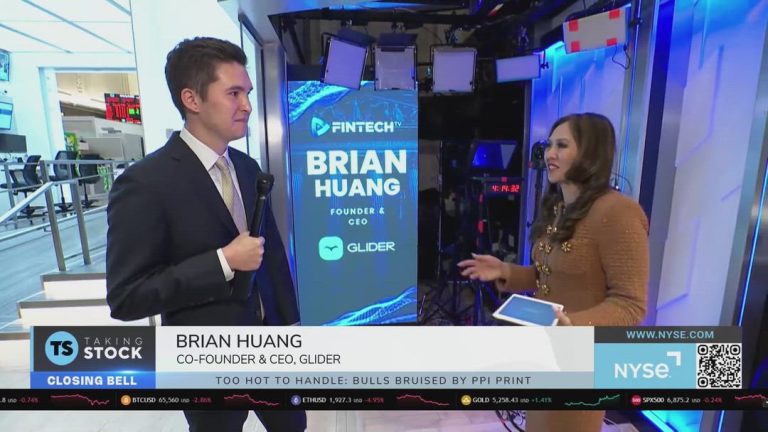
Brian Huang, co-founder and CEO of Glider, explains why he believes permissionless financial systems are the future of investing, especially as tokenized real-world assets like stocks, bonds, and credit move on-chain. He highlights how direct asset custody can empower investors to lend, margin, and manage holdings without intermediaries, while noting that institutional adoption is accelerating interest in tokenization. However, he cautions that challenges remain, particularly around liquidity gaps and pricing inefficiencies pointing out that executing a large trade in a stock like Nvidia on some on-chain platforms could still produce unacceptable spreads. Huang also stresses the need for stronger investor protections comparable to traditional markets. Looking ahead, he argues that customizable on-chain portfolios could replace traditional ETFs, giving investors both ownership and yield opportunities, and predicts a future where using crypto rails feels as seamless as trading through platforms like Fidelity or Robinhood with powerful new financial capabilities built in.
Market Risks Rising as Federal Reserve Policy Outlook Shifts
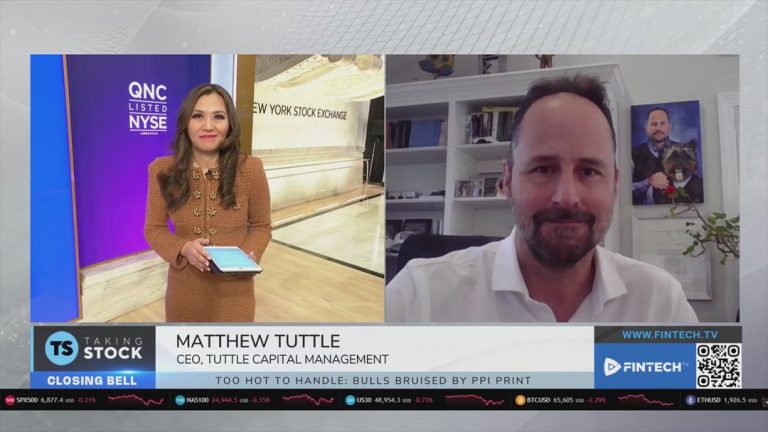
Matthew Tuttle, CEO of Tuttle Capital Management, joins us to break down a turbulent market stretch marked by sharp declines, sector rotation, and mounting concerns over AI disruption and hotter-than-expected inflation data. He explains that while headline market moves may look chaotic, the real story lies beneath the surface, where certain sectors are being heavily punished while others rally making this a true stock picker’s market rather than a broad trend. Financials were among the worst performers in the S&P 500, with private credit risks emerging as a potential systemic threat that could spill into other areas, particularly regional banks. Tuttle also warns that rising inflation could disrupt expectations for policy easing from the Federal Reserve, especially as AI-driven infrastructure spending increases demand for scarce resources. While he cautions that artificial intelligence will disrupt multiple industries, he notes that market sell-offs can create selective opportunities, pointing to companies like Snowflake and CrowdStrike as examples of stocks that may have been unfairly dragged down alongside broader declines.
How Quantum eMotion Technologies Plans to Secure the World From Quantum Threats

Dr. Francis Bellido, CEO, Quantum eMotion, joins us after celebrating a major milestone ringing the closing bell at the New York Stock Exchange following his company’s recent listing, a significant step up from its earlier presence on the TSX Venture Exchange in Canada. He describes the moment as both overwhelming and exciting, noting that the U.S. listing expands access to global capital markets and a broader shareholder base, positioning the company for rapid growth in the cybersecurity sector. At the core of that growth is its QRNG technology, or quantum random number generation, which harnesses principles of quantum physics to create truly unpredictable security architectures making systems far more resistant to hacking. Dr. Francis explains that advances in quantum computing over the past two years signal a technological revolution that could unlock groundbreaking discoveries but also pose major security risks if used maliciously, as powerful quantum machines could potentially break current encryption standards. That urgency is driving demand for next-generation defenses, and according to Dr. Francis, Quantum eMotion Technologies has already begun commercializing its solutions, aiming to help organizations prepare now for the future threat landscape rather than waiting until quantum attacks become a reality.
Block job cuts, Solcex launch, Blockchain AI, Miner loss
Here’s your daily crypto headlines roundup. The Block reports that Square and Cash App parent company Block is restructuring its workforce, reducing headcount from 10,000 to 6,000 employees, even as it beat earnings expectations and continues to face crypto-related headwinds tied to its Bitcoin holdings. Meanwhile, emerging centralized exchange Soulex has officially launched its mobile app, expanding from web access to smartphones worldwide and driving market optimism, with its native token surging more than 166% this month. In market analysis, Grayscale Head of Research Zach Pandl says blockchain technology could become the financial rails for AI agents, enabling 24/7 wallet-based global transactions while helping mitigate risks like deepfakes and centralized control. Finally, American Bitcoin Corporation, the Trump-family-backed miner that debuted strongly on Nasdaq, reported a $59 million fourth-quarter loss amid a sharp industry downturn that has erased about 90% of its market value since its September peak, according to reports from Miami.
Unlocking Liquidity: How Tokenized Treasuries are Transforming Investment
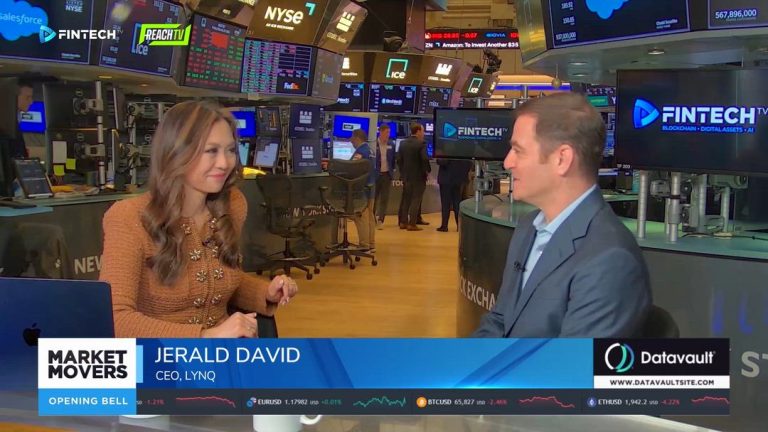
Jerald David, CEO of Lynq, joins Remy Blaire to discuss the significant advancements in the tokenized treasuries market, which has recently surpassed $10 billion. We discuss the evolution of tokenization since Arca, a Lynq-led project, tokenized the first treasury fund in 2020.
Gerald highlights the growing demand for tokenization services and the various use cases for tokenized treasuries, including their role as investment vehicles and their enhanced functionalities through blockchain technology. We explore the intersection of innovation and regulation, noting that with approximately 85% of regulatory clarity achieved, it’s now time for innovators to build and implement real products.
We also touch on the shift towards off-exchange collateral, emphasizing its importance for both institutional and retail investors, especially in light of past security breaches on exchanges. Looking ahead, Gerald shares his vision for 2026 and beyond, predicting broader adoption of tokenized treasuries and their integration into traditional workflows, particularly in risk management scenarios.
From Speculation to Adoption: The Evolution of Crypto and Prediction Markets
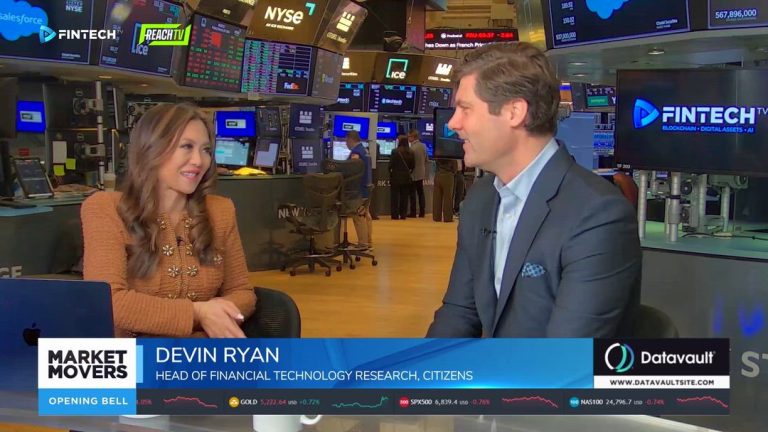
Devin Ryan, the Head of Financial Technology Research at Citizens joins Remy Blaire to delve into the latest developments in the market, particularly in relation to artificial intelligence (AI) and fintech.
We kick off the discussion by analyzing Nvidia’s impressive earnings report, which showcased over $68 billion in revenue and a forecast of up to $80 billion for Q1. Devin emphasizes the rapid changes occurring in the market, particularly in software and fintech, as companies strive to leverage AI to enhance their business models. He points out that firms like Circle are already integrating AI effectively, setting a precedent for others to follow.
We also explore the volatility across asset classes and the importance of customer acquisition and service in the fintech space. Devin discusses how companies like Robinhood, SoFi and Coinbase are integrating AI and blockchain technologies to create a multiplier effect on trading volumes and transaction activities.
The conversation shifts to the crypto market, where we acknowledged the current transition from pilot phases to mainstream adoption. Devin expresses optimism about upcoming legislative clarity, which he believes will encourage institutional adoption and drive demand for cryptocurrencies like Ethereum.
We touch on the concept of agentic AI and its implications for financial transactions, including questions around fiduciary responsibilities and potential job displacement. Devin highlights the need for regulation to catch up with technological advancements.
As we wrap up, we discuss prediction markets, where Devin forecasted a $10 billion annual revenue milestone by 2030, driven by the expansion beyond sports betting into various economic events. He emphasizes the importance of institutional adoption and market integrity to attract serious liquidity.
Nvidia’s Earnings: A Clear Signal That the AI Boom is Here to Stay
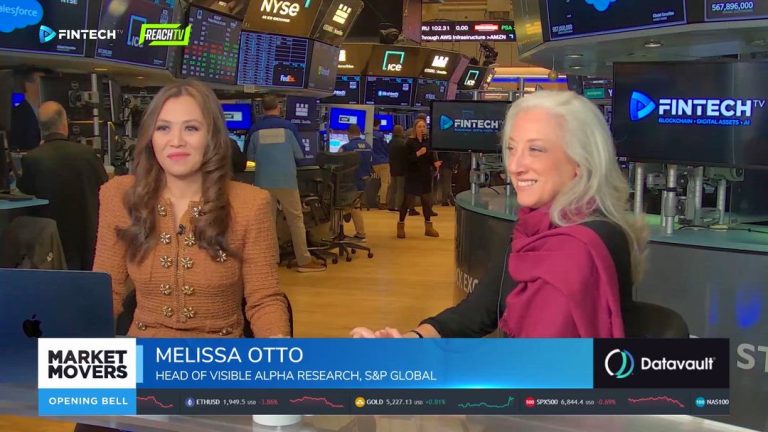
Melissa Otto, Head of Visible Alpha Research at S&P Global, joins Remy Blaire to delve into Nvidia’s recent earnings report, which has sent a strong signal that the AI boom is far from over. With a staggering market cap of nearly $5 trillion, Nvidia reported a remarkable 73% increase in fourth-quarter sales to $68 billion and nearly doubled its profit. CEO Jensen Huang emphasized that we have reached an inflection point where agentic AI is generating real-world profits.
Melissa highlights that while Nvidia’s fundamentals are solid, the market was looking for more upside in gross margins, which came in line with expectations. This has led to some underperformance in Nvidia shares, raising questions about which companies outside of big tech are effectively monetizing AI.
We also discuss the competitive landscape, with Melissa noting that Nvidia is transforming data centers to support accelerated computing, which is essential for generative AI. Additionally, we touch on Dell’s surprising performance and the strong demand for AI servers, indicating a potential shift in the market.
As we wrap up, we considered Nvidia’s guidance and the implications of their earnings call, particularly Huang’s assertion that “compute equals revenue.”
From Boom to Bust: The Future of Private Equity and Credit in a Changing Market

In this episode, we dive into the troubling signs emerging from the $1.8 trillion private credit industry, particularly in light of recent developments with Blue Owl Capital, which has halted quarterly redemptions for one of its retail-focused private credit vehicles. This move has raised concerns about potential contagion affecting major players like Eris, Blackstone, and Apollo.
Dan Rasmussen, founder and managing partner of Verdad Advisers joins Remy Blaire to provide valuable insights into the current landscape. We discuss how the private credit market, which originated in the aftermath of the 2008 financial crisis, is now facing similar risks due to aggressive lending practices. Dan highlights the significant exposure of private credit loans to the tech sector, particularly software companies, which are now under threat from AI disruption.
We also explore alarming forecast from UBS that defaults could rise from around 4% to as high as 15%, drawing parallels to the 2008 crisis. Dan argues that this figure may be conservative, especially if macroeconomic turmoil occurs. He emphasizes the importance of understanding the risks associated with higher yields in lending markets and the opaque nature of private credit.
Additionally, we touch on the rising trend of paid-in-kind (PIK) interest, which signals that borrowers may lack the cash flow to meet their obligations. Dan warns that the current environment is reminiscent of a long-term downturn, similar to the energy sector’s struggles post-2016.
As we wrap up, Dan expresses skepticism about a quick recovery in private equity and private credit, suggesting that we may be entering a prolonged period of challenges in these asset classes.
The Silent Revolution: How Tokenization is Quietly Rewiring Global Finance
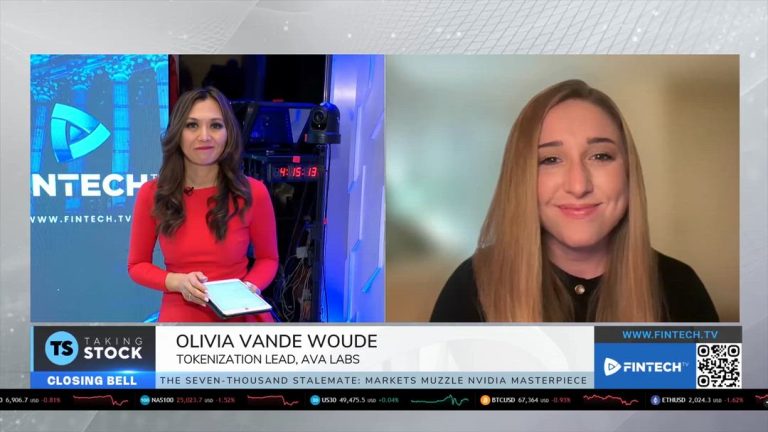
In this episode of Taking Stock, Olivia Vande Woude, Tokenization Lead at Labs, explains why the real story in crypto isn’t daily price swings but the underlying financial infrastructure quietly being built. She highlights how fintech and blockchain are converging as major players like JPMorgan, Cash App, Gusto, and Deel roll out stablecoin products, while Meta reportedly explores global payment integrations. Drawing parallels to Vanguard’s once-dismissed index fund revolution, she argues tokenization is reshaping finance through instant settlement, programmable money, and lower operational costs. With firms like Dragonfly raising major capital and platforms such as OpenTrade and Denari expanding access to tokenized assets, she says blockchain infrastructure is unlocking institutional-grade financial tools for everyday users worldwide signaling a structural shift that markets may be underestimating.
Strategic Timing: Why 2026 is Outpacing Previous IPO Cycles
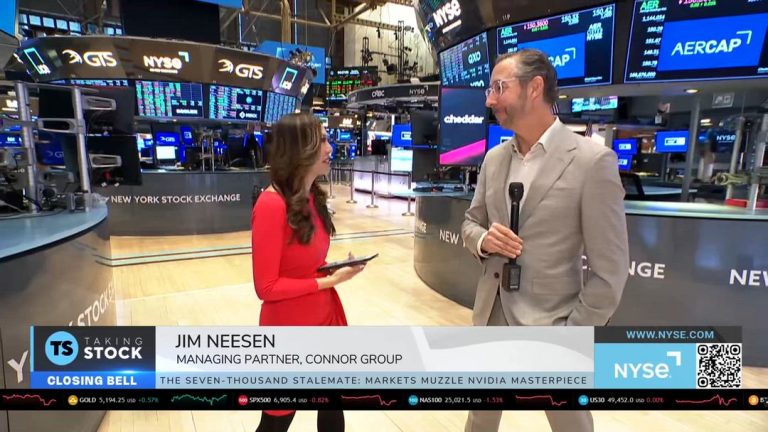
Jim Neesen, Managing Partner at Conor Group, shares a bullish outlook on the 2026 IPO market ahead of the 13th annual summit. Neeson highlights strong early-year momentum, with dozens of listings already outpacing last year’s pace and many newly public companies trading well above their debut prices. He points to a robust pipeline fueled by hundreds of unicorns preparing to enter public markets within the next 12–24 months across sectors ranging from tech and healthcare to energy and financial services. The conversation also turns to highly anticipated potential listings from giants like SpaceX, OpenAI, Anthropic, Databricks, and Stripe, with Neesen noting that while timelines may vary, these firms are well-capitalized and likely to time their market debuts strategically. He describes IPOs as career-defining milestones for companies major events that unite teams, excite investors, and signal that a business has reached the elite tier of its industry.