[stock-market-ticker symbols=" ^NYA;CRYPTO:BTC;CRYPTO:ETH;CRYPTO:USDT;CRYPTO:USDC;CRYPTO:BNB;CRYPTO:ADA;CRYPTO:XRP;CRYPTO:SOL;CRYPTO:DOGE " stockExchange="NYSENASDAQ" width="100%" transparentbackground=1 palette="financial-light"]

Home Blog Page 147

Fed Rate Cuts on the Horizon? Chris Versace Weighs In on Economic Indicators

“For it to be a real knock it out of the park event, Apple’s got to talk a little more about Apple intelligence.” – 03:23

Chris Versace, CIO of Tematica Research, joins Remy Blaire to discuss the troubling state of the U.S. labor market, which is exhibiting significant signs of strain. The latest jobs report reveals that nonfarm payrolls added only 22,000 jobs in August, indicating a sharp slowdown in hiring. The unemployment rate has risen to 4.3 percent, the highest level since 2021. Remy highlights that more industries are losing jobs than gaining them, and revisions to past data show that the three-month hiring trend is the slowest it has been in over a decade, excluding the pandemic period. While the healthcare sector remains a bright spot, it may not be sufficient to offset the broader economic weaknesses.

Chris delves into how the disappointing jobs report is shaping expectations for the upcoming Federal Reserve meeting, particularly regarding potential interest rate cuts. Chris discusses the possibility of the Fed delivering a rate cut in September and addresses the market’s expectations for multiple cuts this year. He emphasizes the importance of upcoming inflation figures and how they could influence the Fed’s decisions.

The conversation then shifts to the tech sector, with Remy looking ahead to Apple’s annual fall product event, a significant moment for both the tech industry and consumer sentiment. Chris underscores Apple’s importance within the S&P 500, suggesting that the company’s performance can impact the market as a whole. He speculates on what to expect from the event, including potential announcements about new iPhones and advancements in artificial intelligence. Chris notes that for the event to be truly impactful, Apple needs to provide more information about its AI initiatives.

Additionally, they discuss the Goldman Sachs Communicopia and Tech Conference, which is set to feature key presentations from major companies like Microsoft and Nvidia. Chris highlights the significance of this conference in the current market environment, noting that reaffirmed or raised earnings expectations could drive the market higher.

The Challenges of Climate Adaptation: Are We Falling Short?

“We have an aging infrastructure system in the United States that’s being devastated by storms.” – 03:42

Jeff Gitterman, CEO of Gitterman Asset Management, joins Remy Blaire at the New York Stock Exchange to discuss climate adaptation and the challenges it faces, particularly in light of a new report from the non-profit organization Probable Futures. The report reveals a troubling lack of consensus among global leaders on effective climate adaptation strategies, warning that poorly designed efforts could inadvertently worsen existing issues. For example, flood barriers may simply shift risks downstream, and some solutions might trade one climate threat for another.

Jeff emphasizes that the ongoing debate about the reality of climate change complicates the ability to define climate adaptation clearly. This confusion leads to fragmented efforts at the local level, with insufficient guidance from national or international bodies.

The conversation highlights the necessity of establishing a clear definition of climate adaptation and resilience, which could help identify successful investment opportunities in the capital markets. Jeff points out that for private markets to engage meaningfully in climate adaptation, they need to recognize investable themes, particularly in areas like water supply and fire resistance. He shares striking examples, such as the resilience of certain homes in Maui and Florida after devastating hurricanes, illustrating the potential benefits of targeted adaptation investments.

As Climate Week approaches, Remy and Jeff explore strategies that publicly traded companies can adopt to align with climate adaptation goals. Jeff highlights recent papers from major institutions like JP Morgan and GIC, which outline focused agendas on climate adaptation strategies. He notes that for every dollar invested in adaptation, there can be a return of $6 to $44, underscoring the economic viability of such investments.

The discussion also addresses the challenges of loss aversion in funding climate adaptation, where investments are often made to avoid future losses rather than to create new opportunities. Jeff stresses the importance of layering social and environmental benefits onto these investments to make them more appealing to Wall Street and government entities.

Navigating the Crypto Landscape: Interest Rates, Tokenized Stocks, and Retail Demand

“I think in the next 18 months to two years, you are going to see… banks shifting to that infrastructure.” – 05:10

John D’Agostino, Head of Strategy at Coinbase Institutional, joins Remy Blaire at the New York Stock Exchange to discuss the current dynamics of the cryptocurrency market, particularly in relation to macroeconomic factors and regulatory developments.

Remy opens the segment by highlighting Bitcoin’s recent fluctuations, which are influenced by broader economic trends, including a weak jobs report and the anticipation of the Federal Reserve’s interest rate decision. John emphasizes the expectation of lowering interest rates, suggesting that this could lead to a significant influx of retail investment into digital assets. He notes that with approximately $7 trillion currently sitting in money markets, a shift of even a small fraction of this capital into risk-bearing assets like cryptocurrencies could result in an exponential increase in retail flows.

The discussion then shifts to the groundbreaking developments in tokenized equities, particularly the recent tokenization of shares on Solana by Galaxy via Superstate. John reflects on the evolution of trading infrastructure, expressing optimism about the stability of blockchain technology and its potential to transform traditional trading systems. He predicts that within the next 18 months to two years, banks and major exchanges will increasingly adopt blockchain technology, overcoming the inertia that has historically slowed this transition.

As the conversation progresses, Remy and John explore the implications of retail interest on institutional adoption. John highlights the rapid growth of crypto derivatives, noting that open interest and volumes have surged significantly compared to the previous year, indicating a healthy and expanding market.

Towards the end of the segment, they discuss the market dominance of major cryptocurrencies like Bitcoin and Ethereum, as well as the potential for altcoins to gain traction. John shares insights from Coinbase research, suggesting that the market may be entering an “altcoin fall,” driven by a decrease in Bitcoin dominance and a growing focus on other cryptocurrencies.

Finally, Remy and John touch on an important upcoming event on September 29th, where the SEC and CFTC will collaborate to promote innovation in the market. John underscores the significance of this joint effort, noting that it represents a shift from enforcement-focused announcements to a more balanced approach that fosters market innovation.

Market Insights: Weaker Jobs Report Fuels Fed Rate Cut Expectations

“I surely think that 25 is a guarantee… whether we’re going to have a 50 that’s starting to grow up to as much as 12% that would be super exciting.” – 02:21

Peter Tuchman, Senior Floor Trader at TradeMas, joins Remy Blaire at the New York Stock Exchange to discuss the current state of the U.S. labor market and its implications for the Federal Reserve’s monetary policy.

The segment begins with Remy highlighting the recent jobs report, which has raised concerns about the labor market and sparked expectations of potential rate cuts by the Fed. Peter emphasizes the importance of looking beyond seasonal trends, particularly in September, as he argues that August was a month filled with significant market events, including tariffs and record highs.

Peter elaborates on the recent economic indicators, noting that unemployment is rising and job creation is softer than expected. He attributes these trends to the impact of tariffs on the economy and consumer behavior. This backdrop, he suggests, sets the stage for a potential pivot in the Fed’s policy, with a strong likelihood of a 25 basis point cut at the upcoming meeting on September 17th. He also discusses the growing probability of a more aggressive 50 basis point cut, which is becoming a topic of interest among market participants.

As the conversation shifts to market dynamics, Peter shares his observations regarding the influx of capital into the S&P 500. He notes that nearly $10 billion has flowed into the market in just the first three days of September, contributing to record highs in the S&P and other indices. Despite the underlying economic challenges, this significant investment reflects a level of confidence among investors.

Remy and Peter also discuss the performance of gold and cryptocurrencies, with Peter highlighting the maturation of retail investors. He points out that these investors are no longer merely reacting to market fluctuations; instead, they are strategically buying into various assets, including equities, gold, and crypto. This behavior indicates a strong confidence in the market’s upward trajectory.

Unlocking Transparency: How Blockchain is Transforming GDP Reporting

“This data is being able to be delivered directly to people on chain in a very low latency manner, as low as one millisecond.” – 04:08

Mike Cahill, Initial Contributor at Pyth Network, joins Remy Blaire at the New York Stock Exchange to discuss a transformative collaboration between the U.S. Department of Commerce and Pyth Network. 

Remy opens the conversation by highlighting the significance of this initiative, which allows for permissionless access to GDP statistics. Mike explains that the collaboration has been in the works for several months, emphasizing the Department of Commerce’s commitment to embracing blockchain technology. He notes that this shift represents a major milestone in making economic data more programmable and transparent.

As the discussion progresses, Remy inquires about the verification processes involved in getting the data on-chain. Mike elaborates on how Pyth Network utilizes cryptographic signatures to ensure the integrity of the data. He compares Pyth’s on-chain distribution model to traditional off-chain data services like Bloomberg, illustrating how this new approach can enhance the speed and reliability of economic data collection.

The conversation then shifts to the current economic climate, particularly focusing on the recent nonfarm payroll figures. Remy and Mike discuss the concerns surrounding the accuracy and collection processes of economic data, with Mike emphasizing the importance of transparency. He highlights how Pyth Network’s methodology can alleviate some of the scrutiny faced by traditional data sources, allowing for a more open and trustworthy data collection process.

Navigating Market Volatility: Insights from the August Jobs Report

“However you do slice it, it’s coming out in a way that reinforces this narrative of a weaker labor market, but not yet so weak that it’s affecting a lot of other economic activity.” – 02:52

Steve Sosnick, Head Trader of IBKR Securities Services, joins Remy Blaire at the New York Stock Exchange to discuss the current state of the U.S. markets following the release of the August jobs report. The episode opens with Remy noting that U.S. markets are in positive territory, despite the report indicating a slowdown in labor market growth. She highlights the 84% probability of a 25 basis point rate cut by the Federal Reserve on September 17th, emphasizing that September is historically a volatile month for markets.

Remy and Steve delve into the details of the jobs report, which shows nonfarm payrolls coming in weaker than expected and the unemployment rate rising to 4.3%. Steve describes the data as a “Goldilocks number,” suggesting it is bad enough to increase expectations for rate cuts but not so dire as to cause significant concern about the economy. He explains that the market’s narrative remains intact, as the data does not disrupt the stock market’s preferred outlook.

The conversation shifts to upcoming economic indicators, including revisions for nonfarm payrolls and CPI and PPI data. Steve points out that labor market data is less frequent than price data, making it more scrutinized and impactful on market sentiment. He notes that the current narrative suggests a weaker labor market, but not weak enough to affect broader economic activity.

Remy then asks Steve about the performance of various assets, including the 10-year Treasury yield, which is around 4.08%, and gold, which continues to rise after hitting record highs. Steve remarks that the S&P 500’s recent all-time highs are less about specific numbers and more about maintaining a positive upward trend. He emphasizes that as long as the market narrative supports growth, investors remain optimistic.

The discussion also covers the bond market, particularly the concerns surrounding overseas bonds in countries like France and Japan, where rising deficits are leading to increased bond issuance. Steve likens the U.S. bond market to the “cleanest dirty shirt in the laundry bin,” suggesting that while the U.S. has its own deficit issues, it is viewed as a relatively safer investment compared to other nations.

Navigating the Markets: Fed Rate Cuts and Job Market Insights

“Anytime you have a negative payroll growth number… that is, like I said, a big flashing red sign.” – 02:02

Sonu Varghese, Vice President Global Macro Strategist at Carson Group, joins Remy Blaire to provide expert insights into the current economic landscape. They delve into the likelihood of the Fed cutting interest rates, with the CME FedWatch indicating an 84% chance of a 25 basis point cut. Sonu emphasizes that the recent jobs report, which shows negative payroll growth and an increasing unemployment rate—the highest since October 2021—signals a pressing need for the Fed to take action.

The conversation shifts to the impact of rising import tariffs on American businesses and consumers. Sonu explains how these tariffs are affecting cyclical sectors of the economy, leading to job losses in manufacturing, wholesale trade, and construction. He highlights the relationship between income growth and consumer spending, noting that weak payroll growth and modest wage increases are contributing to economic challenges.

As they look ahead to upcoming inflation figures, including CPI and PPI, Remy and Sonu discuss the Fed’s dilemma of managing inflation, which is currently above target, while responding to a softening labor market. Sonu points out that while tariffs may contribute to inflation, the Fed faces broader challenges with services inflation also on the rise.

In the latter part of the segment, Remy and Sonu explore investment opportunities in the current market environment. Sonu advises on the importance of diversification, especially given the heavy exposure to technology within the S&P 500. He suggests looking into sectors like industrials and financials, which are performing well, and notes the recent rally in mid and small-cap stocks, as well as homebuilders benefiting from expectations of rate cuts.

DeFi lending, Trust wallet RWAs, Galaxy Digital, Walmart’s Onepay

0

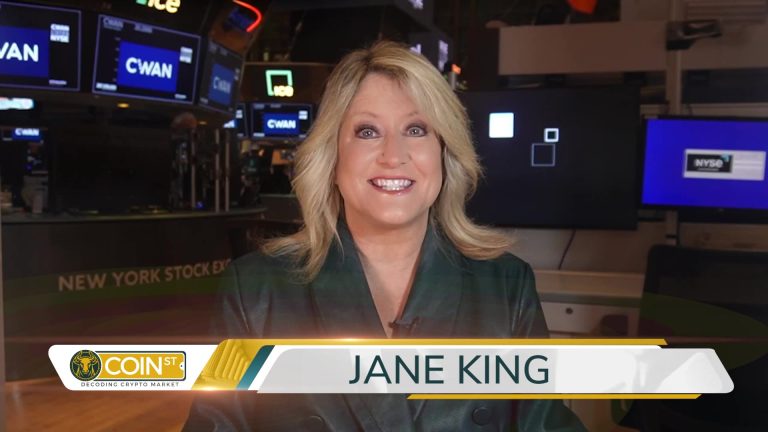
In this episode of CoinStreet, we explore the latest developments in decentralized finance (DeFi) lending, highlighting the growing institutional interest in tokenized real-world assets (RWAs) as collateral for stablecoin loans. We discuss Trust Wallet’s launch of tokenized stocks and ETFs in collaboration with Ondo Finance and 1inch, as well as Galaxy Digital’s tokenization of its publicly traded stock on the Solana blockchain. Additionally, we cover OnePay’s new wireless plan, aimed at providing a comprehensive service for users. Jane King has the latest from the NYSE.

Revving Up: Infiniti’s Bold New Direction in Luxury SUVs

0

Remy Blaire had the pleasure of speaking with Tiago Castro, the Vice President of Infiniti Americas, during the prestigious Pebble Beach Automotive Week in Monterey, California. As Infiniti faces significant challenges, including stiff competition and declining sales, Tiago shared insights into the brand’s strategic direction and upcoming product launches.

They kicked off the conversation by discussing Infiniti’s unveiling of three bold concept vehicles, including the highly anticipated QX65 monograph and two versions of the QX80. Tiago emphasized that the QX65 monograph represents a new product direction for Infiniti, set to launch next summer, and will be produced in the U.S. This marks an exciting moment for the brand as it aims to regain momentum in the luxury market.

Tiago elaborated on Infiniti’s approach to luxury, highlighting the importance of understanding customer preferences. The QX65 monograph is designed to appeal to the two-row SUV segment, which is a significant area of growth in the luxury market. Additionally, the two QX80 concepts explore unique aspects of luxury, with one focusing on performance enhancements and the other on overlanding capabilities, showcasing Infiniti’s commitment to innovation and customer engagement.