[stock-market-ticker symbols=" ^NYA;CRYPTO:BTC;CRYPTO:ETH;CRYPTO:USDT;CRYPTO:USDC;CRYPTO:BNB;CRYPTO:ADA;CRYPTO:XRP;CRYPTO:SOL;CRYPTO:DOGE " stockExchange="NYSENASDAQ" width="100%" transparentbackground=1 palette="financial-light"]

Home Blog Page 83

Unlocking Transparency: How Blockchain is Transforming GDP Reporting

“This data is being able to be delivered directly to people on chain in a very low latency manner, as low as one millisecond.” – 04:08

Mike Cahill, Initial Contributor at Pyth Network, joins Remy Blaire at the New York Stock Exchange to discuss a transformative collaboration between the U.S. Department of Commerce and Pyth Network. 

Remy opens the conversation by highlighting the significance of this initiative, which allows for permissionless access to GDP statistics. Mike explains that the collaboration has been in the works for several months, emphasizing the Department of Commerce’s commitment to embracing blockchain technology. He notes that this shift represents a major milestone in making economic data more programmable and transparent.

As the discussion progresses, Remy inquires about the verification processes involved in getting the data on-chain. Mike elaborates on how Pyth Network utilizes cryptographic signatures to ensure the integrity of the data. He compares Pyth’s on-chain distribution model to traditional off-chain data services like Bloomberg, illustrating how this new approach can enhance the speed and reliability of economic data collection.

The conversation then shifts to the current economic climate, particularly focusing on the recent nonfarm payroll figures. Remy and Mike discuss the concerns surrounding the accuracy and collection processes of economic data, with Mike emphasizing the importance of transparency. He highlights how Pyth Network’s methodology can alleviate some of the scrutiny faced by traditional data sources, allowing for a more open and trustworthy data collection process.

Navigating Market Volatility: Insights from the August Jobs Report

“However you do slice it, it’s coming out in a way that reinforces this narrative of a weaker labor market, but not yet so weak that it’s affecting a lot of other economic activity.” – 02:52

Steve Sosnick, Head Trader of IBKR Securities Services, joins Remy Blaire at the New York Stock Exchange to discuss the current state of the U.S. markets following the release of the August jobs report. The episode opens with Remy noting that U.S. markets are in positive territory, despite the report indicating a slowdown in labor market growth. She highlights the 84% probability of a 25 basis point rate cut by the Federal Reserve on September 17th, emphasizing that September is historically a volatile month for markets.

Remy and Steve delve into the details of the jobs report, which shows nonfarm payrolls coming in weaker than expected and the unemployment rate rising to 4.3%. Steve describes the data as a “Goldilocks number,” suggesting it is bad enough to increase expectations for rate cuts but not so dire as to cause significant concern about the economy. He explains that the market’s narrative remains intact, as the data does not disrupt the stock market’s preferred outlook.

The conversation shifts to upcoming economic indicators, including revisions for nonfarm payrolls and CPI and PPI data. Steve points out that labor market data is less frequent than price data, making it more scrutinized and impactful on market sentiment. He notes that the current narrative suggests a weaker labor market, but not weak enough to affect broader economic activity.

Remy then asks Steve about the performance of various assets, including the 10-year Treasury yield, which is around 4.08%, and gold, which continues to rise after hitting record highs. Steve remarks that the S&P 500’s recent all-time highs are less about specific numbers and more about maintaining a positive upward trend. He emphasizes that as long as the market narrative supports growth, investors remain optimistic.

The discussion also covers the bond market, particularly the concerns surrounding overseas bonds in countries like France and Japan, where rising deficits are leading to increased bond issuance. Steve likens the U.S. bond market to the “cleanest dirty shirt in the laundry bin,” suggesting that while the U.S. has its own deficit issues, it is viewed as a relatively safer investment compared to other nations.

Navigating the Markets: Fed Rate Cuts and Job Market Insights

“Anytime you have a negative payroll growth number… that is, like I said, a big flashing red sign.” – 02:02

Sonu Varghese, Vice President Global Macro Strategist at Carson Group, joins Remy Blaire to provide expert insights into the current economic landscape. They delve into the likelihood of the Fed cutting interest rates, with the CME FedWatch indicating an 84% chance of a 25 basis point cut. Sonu emphasizes that the recent jobs report, which shows negative payroll growth and an increasing unemployment rate—the highest since October 2021—signals a pressing need for the Fed to take action.

The conversation shifts to the impact of rising import tariffs on American businesses and consumers. Sonu explains how these tariffs are affecting cyclical sectors of the economy, leading to job losses in manufacturing, wholesale trade, and construction. He highlights the relationship between income growth and consumer spending, noting that weak payroll growth and modest wage increases are contributing to economic challenges.

As they look ahead to upcoming inflation figures, including CPI and PPI, Remy and Sonu discuss the Fed’s dilemma of managing inflation, which is currently above target, while responding to a softening labor market. Sonu points out that while tariffs may contribute to inflation, the Fed faces broader challenges with services inflation also on the rise.

In the latter part of the segment, Remy and Sonu explore investment opportunities in the current market environment. Sonu advises on the importance of diversification, especially given the heavy exposure to technology within the S&P 500. He suggests looking into sectors like industrials and financials, which are performing well, and notes the recent rally in mid and small-cap stocks, as well as homebuilders benefiting from expectations of rate cuts.

DeFi lending, Trust wallet RWAs, Galaxy Digital, Walmart’s Onepay

0

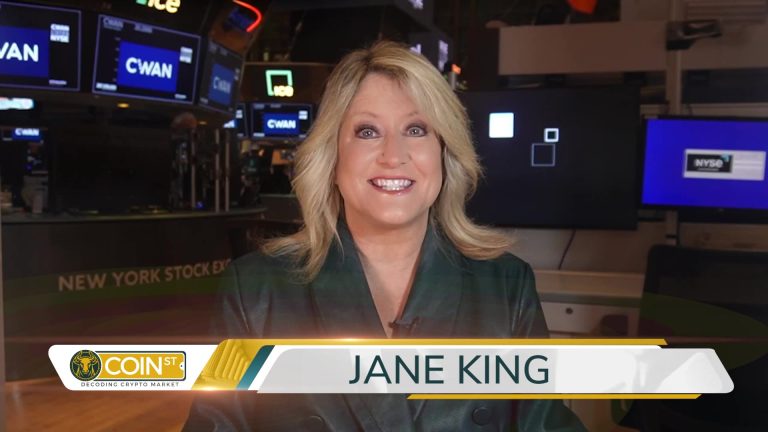
In this episode of CoinStreet, we explore the latest developments in decentralized finance (DeFi) lending, highlighting the growing institutional interest in tokenized real-world assets (RWAs) as collateral for stablecoin loans. We discuss Trust Wallet’s launch of tokenized stocks and ETFs in collaboration with Ondo Finance and 1inch, as well as Galaxy Digital’s tokenization of its publicly traded stock on the Solana blockchain. Additionally, we cover OnePay’s new wireless plan, aimed at providing a comprehensive service for users. Jane King has the latest from the NYSE.

Revving Up: Infiniti’s Bold New Direction in Luxury SUVs

0

Remy Blaire had the pleasure of speaking with Tiago Castro, the Vice President of Infiniti Americas, during the prestigious Pebble Beach Automotive Week in Monterey, California. As Infiniti faces significant challenges, including stiff competition and declining sales, Tiago shared insights into the brand’s strategic direction and upcoming product launches.

They kicked off the conversation by discussing Infiniti’s unveiling of three bold concept vehicles, including the highly anticipated QX65 monograph and two versions of the QX80. Tiago emphasized that the QX65 monograph represents a new product direction for Infiniti, set to launch next summer, and will be produced in the U.S. This marks an exciting moment for the brand as it aims to regain momentum in the luxury market.

Tiago elaborated on Infiniti’s approach to luxury, highlighting the importance of understanding customer preferences. The QX65 monograph is designed to appeal to the two-row SUV segment, which is a significant area of growth in the luxury market. Additionally, the two QX80 concepts explore unique aspects of luxury, with one focusing on performance enhancements and the other on overlanding capabilities, showcasing Infiniti’s commitment to innovation and customer engagement.

Bitcoin’s Resilience: Navigating the Crypto Landscape Amid Market Currents

“The biggest story of the year has been the rotation from Bitcoin into Ether as that narrative has picked up.” – 01:01

Andy Baehr, Head of Product & Research at Coindesk Indices, joins Remy Blaire at the New York Stock Exchange to discuss the current landscape of the cryptocurrency market, focusing on major players like Bitcoin and Ether, as well as the broader economic factors influencing these digital assets.

The segment opens with Remy discussing Bitcoin’s recent performance, noting that it is holding just below $111,000 after briefly recapturing a key technical level above $1.12. This resurgence has reignited positive sentiment in the market, especially as gold reaches new all-time highs. Remy highlights Bitcoin’s role as a macro hedge and its competition with Ether, which set a new record the previous month.

Andy provides insights into the current market dynamics, particularly the ongoing rotation from Bitcoin to Ether, driven by digital asset treasury companies and increased blockchain activity. They also discuss the upcoming non-farm payrolls report and its potential implications for the Federal Reserve’s decisions, especially with the September meeting on the horizon.

Andy emphasizes the significance of macroeconomic factors such as interest rates and tariffs, which can impact Bitcoin’s status as a store of value. He notes that while Bitcoin is currently in a moderate downtrend, Ether is showing signs of a moderate uptrend. The conversation also touches on the performance of other cryptocurrencies like Solana, XRP, and Cardano, highlighting the wide dispersion in returns within the CoinDesk 5 index.

As the discussion progresses, Remy and Andy shift their focus to the regulatory landscape, particularly the collaboration between the CFTC and SEC aimed at facilitating trading in digital assets. Andy shares exciting developments regarding tokenized equities and their intersection with the cryptocurrency market, suggesting that increased trading activity will benefit Layer 1 blockchains like Ethereum and Solana.

NFL Season Kickoff: Eagles vs. Cowboys and the $25 Billion Revenue Game

“Who wouldn’t be at the dead not to be excited by the way this is the time where the NFL really survives and thrives at twenty five billion dollar annual revenue.” – 00:39

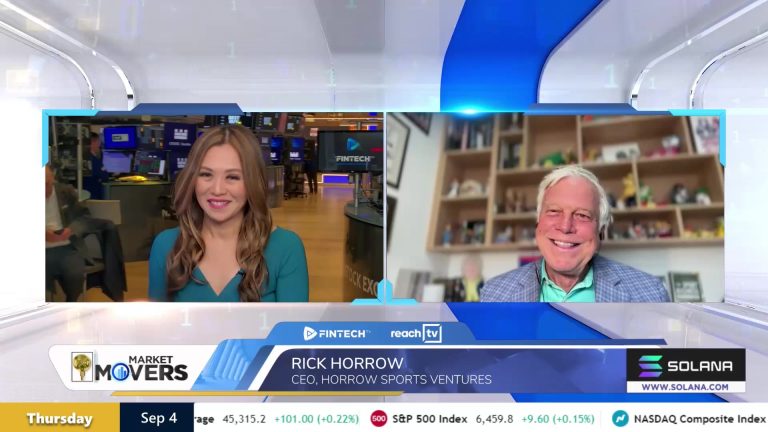
Rick Horrow, CEO of Horrow Ventures, joins Remy Blaire to discuss the return of football and the current state of college sports. The segment kicks off with excitement as the NFL season begins, featuring a highly anticipated matchup between the Super Bowl champion Philadelphia Eagles and their division rival, the Dallas Cowboys. Remy prompts Rick about his enthusiasm for the NFL’s return, to which Rick responds with fervor, highlighting the league’s impressive $25 billion annual revenue and the financial stakes involved in franchise ownership.

The conversation then shifts to college football, where Remy notes the significant investments teams are making in their rosters due to Name, Image, and Likeness (NIL) deals. Rick elaborates on the evolving landscape of athlete compensation, mentioning that Ohio State, the number one ranked team, is reportedly investing $35 million in its roster. He explains how the financial dynamics have changed, with teams now expected to invest between $40 to $50 million as NIL deals mature, contrasting this with the past when payments were made discreetly.

As the discussion progresses, Remy brings up the U.S. Open, where Rick shares his recent experiences and observations. He humorously discusses the popular “honey deuces” cocktails that have become a staple at the event, noting their high price and the staggering number sold, which contributes significantly to the event’s economic impact. Rick mentions that the U.S. Open attracts around 800,000 attendees and generates over a billion dollars in economic activity, emphasizing its status as the largest spectator sport event in New York.

Exploring the Future of Payments: Stablecoins, Tokenization, and AI in Finance

“Stablecoins are global, and so when you can pay anyone anywhere at any time, the costs go down significantly and the efficiencies increase.” – 01:57

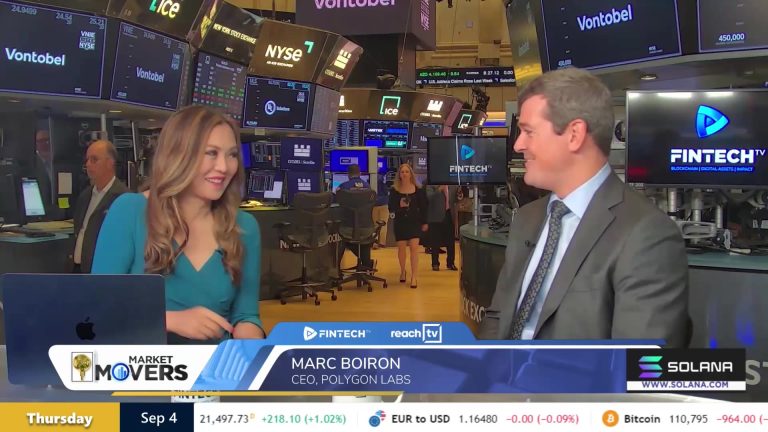
Marc Boiron, CEO of Polygon Labs, joins Remy Blaire to discuss the future of payments innovation, focusing on stablecoins, tokenization, and the role of artificial intelligence in finance.

Mark explains the concept of stablecoins as “internet native money,” which allows for global transactions that are faster and more cost-effective than traditional payment systems like FedNow in the U.S. and CEPA in Europe. He points out that stablecoins eliminate many of the restrictions associated with localized payment systems, enabling users to transact anywhere in the world.

As the discussion progresses, Remy and Mark delve into the regulatory landscape surrounding stablecoins. Mark notes that the recent passage of the Genius Act has provided much-needed clarity for stablecoin issuers, transforming the perception of stablecoins from a regulatory burden to a lucrative opportunity for fintech companies. This shift is expected to lead to significant growth in U.S.-based stablecoins, contrasting with other regulatory regimes like MICA, which have been more restrictive.

Mark shares impressive statistics about the performance of stablecoins on the Polygon platform, revealing that there is currently around $3 billion in stablecoins and a monthly transaction volume exceeding $400 million. He emphasizes the diversity of stablecoins available on Polygon, including a newly launched yen-based stablecoin, which allows users to hold and transact in various currencies beyond the U.S. dollar.

The conversation also touches on the economics of currency-backed stablecoins, with Mark explaining that they are typically backed by debt instruments, allowing issuers to generate revenue while providing users with a globally accessible form of currency. Remy and Mark discuss the importance of yield generation in the fintech space, with Mark highlighting Polygon’s focus on payments and its collaboration with other networks, such as Katana, to offer yield-bearing assets. 

Gold, Silver, and Crypto: Navigating the Precious Metals Rally

“It’s going to be cheaper to borrow money. This is very good for the markets.” – 00:51

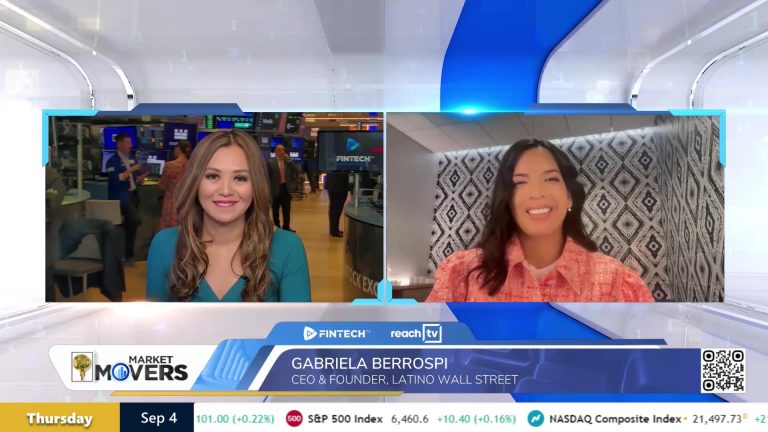
Gabriela Berrospi, CEO & Founder of Latino Wall St, joins Remy Blaire to discuss the factors driving the anticipated rate cut in September and its potential impact on the economy.

Gabby explains that the goal of lowering interest rates is to stimulate economic growth by making borrowing cheaper, which is expected to encourage investment across various sectors. She notes that this sentiment is generally positive for financial markets, including real estate, cryptocurrency, and stocks. However, Gabby also warns that the rate cuts come with inflationary risks that should not be ignored. She emphasizes that while a 25 basis point cut is anticipated, it may take several cuts to truly feel the effects, raising questions about how much of the positive sentiment has already been priced into the markets.

As the discussion progresses, Remy highlights the recent performance of major U.S. stock averages and the rally in precious metals. Gabby points out that gold and silver are currently experiencing upward trends, even as the stock market shows gains. She notes that this unusual correlation—where both precious metals and stocks rise simultaneously—raises a red flag for her. Gabby attributes this trend to a growing lack of confidence in the U.S. dollar, particularly in light of the expected interest rate cuts. She explains that as inflation rises, the purchasing power of the dollar diminishes, prompting investors and central banks to turn to gold as a traditional inflation hedge.