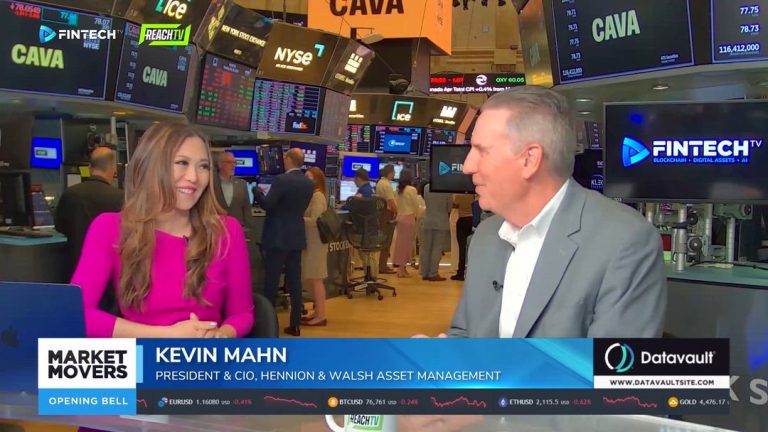
Kevin Mahn, President & CIO at Hennion & Walsh Asset Management, join Remy Blaire to discuss the current state of the U.S. stock market, which is experiencing a downturn with major indices like the Dow, Nasdaq, and S&P 500 all down by about 0.5%. They focus on key players such as Home Depot and Sherwin-Williams, which are leading the Dow lower, while Nvidia is in the spotlight as it prepares to report its first-quarter earnings this Wednesday.
Kevin introduces a new investment strategy he calls the “Air 7,” which contrasts with the well-known “Mag 7” stocks. Kevin explains that while the Mag 7 accounted for 62% of the S&P 500’s total return in 2023, their performance has significantly declined this year. The Air 7 consists of seven stocks that represent different components of the AI ecosystem, including Alphabet, Nvidia, Taiwan Semiconductor, Micron Technologies, Digital Realty, Virta, and American Electric Power.
They also discuss the geopolitical implications of Nvidia’s operations, especially in light of CEO Jensen Huang’s recent participation in the Trump-Xi business delegation. Kevin emphasizes the importance of data centers for Nvidia’s revenue, which is expected to come primarily from this sector rather than chip sales.
As they shift the focus to central banks, they touch on the G7 finance ministers’ meeting in Paris and the implications of Kevin Warsh’s upcoming swearing-in ceremony at the White House. Kevin shares his insights on the potential for interest rate hikes versus cuts, given the current economic indicators.
With rising oil prices impacting consumer spending, they explore how this could affect the economy leading into the midterm elections. Kevin suggests that American Electric Power could be a solid investment for those looking to navigate market volatility while still participating in the AI revolution.
Finally, they discuss the bond market’s current state, which reflects ongoing inflationary pressures and the potential for future rate hikes. Kevin advises investors to stay invested and avoid trying to time the market, emphasizing the importance of maintaining a consistent investment strategy.