[stock-market-ticker symbols=" ^NYA;CRYPTO:BTC;CRYPTO:ETH;CRYPTO:USDT;CRYPTO:USDC;CRYPTO:BNB;CRYPTO:ADA;CRYPTO:XRP;CRYPTO:SOL;CRYPTO:DOGE " stockExchange="NYSENASDAQ" width="100%" transparentbackground=1 palette="financial-light"]

Home Blog Page 46

Blackstone’s 40th Anniversary: Transforming Finance Together

0

Stephen Schwarzman and Jon Gray, the influential figures behind Blackstone, recently celebrated the firm’s 40th anniversary at the New York Stock Exchange (NYSE). This moment marks not just a significant milestone for Blackstone, but also showcases their enduring commitment to innovation in finance, particularly as it relates to private credit and artificial intelligence. Known for their forward-thinking approach, the duo shared insights about Blackstone’s core values, strategic playbook, and their adaptation to transformative technologies like AI.


Hailing from Blackstone: Legacy of Leadership in Finance


For 40 years, Blackstone has been at the forefront of the financial industry, from real estate investment to private equity, showcasing an ability to adapt and thrive through various market cycles. Schwarzman articulated how their continued success stems from a playbook centered on defining objectives and seeking to be the best in their chosen fields. Core principles such as honesty, integrity, cooperation, and customer focus remain the bedrock of their operations. Schwarzman underscores the importance of delivering high returns while maintaining ethical standards in a constantly changing financial environment.


Private Credit: A Strategic Shift for Investors


Under Jon Gray’s leadership, Blackstone has effectively managed over half a trillion dollars in private credit. He emphasized the growing importance of direct lending, which bridges the gap between investors and borrowers. This new structure not only reduces costs but allows investors to reap higher returns while simultaneously enhancing the overall financial system’s health. In an age where traditional lending methods can be cumbersome, private credit offers a streamlined approach beneficial to both consumers and financial institutions.


Core Values that Endure


Schwarzman highlighted that the core values that have propelled Blackstone for the past four decades are unwavering. The commitment to ethical practices, hard work, and a culture free of internal politics and glass ceilings is paramount. This organizational culture encourages innovation and ensures that all team members are focused on the customer’s best interests. Such an environment not only attracts top talent but also fosters a sense of ownership among employees, driving long-term growth and customer satisfaction.


Harnessing the Power of Artificial Intelligence


As the conversation turned toward technology, Gray expressed strong optimism about artificial intelligence (AI). He believes that AI will fundamentally transform the landscape of business, driving productivity gains through significant investments in infrastructure such as data centers and software. Blackstone is strategically positioning itself by investing in essential technologies that will support the evolution of AI, focusing on “the picks and shovels” needed for a future where AI-driven operations will reshape industries. This forward-looking vision reflects Blackstone’s long-standing philosophy of adapting to paradigm shifts to deliver value for its customers.


Looking Ahead: The Next 40 Years of Blackstone


With Blackstone poised to leverage new technologies and adapt its investment strategies, both Schwarzman and Gray expressed confidence in the firm’s future. Their proactive approach, combined with a commitment to core values and customer-centric strategies, positions them well for continued success in a rapidly evolving financial landscape. The company’s ability to harness trends in private credit and AI is likely to set them apart as leaders in impact investing and sustainable financial practices.


Conclusion: Blackstone’s Legacy of Innovation


In celebrating 40 years of significant impact on the financial services industry, Schwarzman and Gray exemplify how leadership, core values, and adaptability can foster longevity and excellence. As we move into an era defined by technology and sustainability, the lessons learned from their journey will be crucial for aspiring entrepreneurs and established leaders alike. Blackstone’s narrative is not just about financial success; it’s also about shaping a future where innovative solutions and ethical practices can coalesce to create a meaningful impact on global markets.


Revolutionizing Cross-Border Payments: Codex’s Focus on Stablecoins

0

Remy Blaire welcomes Haonan Li, co-founder and CEO of Codex, a global blockchain startup focused exclusively on stablecoins to discuss Codex’s mission to enhance cross-border payments by concentrating on stablecoins, which have gained significant legitimacy and regulatory support in the U.S. market.

Haonan explains that the company is not only expanding in North America and Europe but is also targeting Africa, where the local financial infrastructure presents unique challenges. He emphasizes that stablecoins are particularly well-suited for frontier markets, where traditional financial systems are lacking.

They delve into the critical issue of the fiat-to-crypto boundary, with Haonan highlighting the inefficiencies in foreign exchange (FX) transactions. Codex aims to create a more liquid on-chain FX stablecoin facility to address these challenges.

While privacy is a topic of interest, Haonan notes that it is not currently a top priority for users compared to other pressing issues. He points out that the focus should be on making stablecoin systems more accessible and useful to a broader audience by reducing time and cost frictions.

As they discuss the competitive landscape, Haonan shares insights on the potential for both dominant stablecoin chains and individual stablecoins to emerge, emphasizing the importance of distribution and economic viability in this space. Finally, they touch on the future of non-dollar stablecoins, with Haonan expressing optimism about their growth and the potential for global commerce to evolve beyond reliance on the U.S. dollar.

From $100M to $35 Billion: How Injective Became a Leader in Asset Tokenization

0

In a recent discussion, Eric Chen, co-founder of Injective, shared valuable insights into the transformative potential of blockchain technology in finance. At the heart of their innovation lies Injective, a unique platform that empowers users to create complex financial products on a blockchain. It stands out in the burgeoning cryptocurrency ecosystem with its impressive volume, which exceeds $80 billion.

Injective is revolutionizing asset tokenization, marking a significant shift in how real-world assets interact with the decentralized finance (DeFi) realm. With over $35 billion already tokenized on their platform, Eric reflected on the rapid growth of this sector, surprising himself and industry observers alike. Initially, the tokenized value was modest, only a few hundred million dollars; however, it has skyrocketed thanks to broad institutional adoption.

The conversation highlighted the importance of recognizing not just the volume of assets being minted, but also the active trade volume across various assets. In just the last month, Injective processed $1 billion in trading volume over diverse assets, including equities and commodities, demonstrating the platform’s role as a gateway for global investment engagement.

This surge in activity is emblematic of a larger trend where traditional financial systems are starting to meld with blockchain technologies. The juxtaposition of legacy finance and innovative DeFi solutions is a focal point for many businesses, including Injective, which aims to facilitate decentralized finance’s capabilities amid rising interest and liquidity.

As the discussion progressed, Eric pointed out that recent events, such as the $19 billion liquidation during a flash crash, have illustrated both the volatile nature of the crypto market and its resilience. Despite temporary setbacks in liquidity, many assets showcase strong recovery, further solidifying confidence in the decentralized framework.

Eric also addressed the future of perpetual futures contracts and the anticipated integration of real-world assets within this space. He emphasized that decentralized financial instruments have already shown remarkable strength and reliability, often outpacing traditional platforms in periods of instability. This reinforces the notion that DeFi solutions are not just viable alternatives but potentially superior options compared to traditional systems.

Looking forward into 2026, Injective plans to expand aggressively, engaging a broader range of developers and enhancing platform capabilities with the imminent launch of their Ethereum Virtual Machine (EVM). This update is expected to unlock new features and functionalities, amplifying their user base and solidifying their position within the cryptocurrency landscape.

The discussion with Eric Chen encapsulates the dynamic shifts occurring within the cryptocurrency and blockchain sectors. As entities like Injective continue to innovate and push boundaries, their journey reflects the larger narrative of finance evolving through technology. The integration of sustainability through blockchain technology not only aligns with the growing demand for responsible investing but also caters to the evolving needs of diverse global communities seeking impactful financial solutions.

In conclusion, as crypto continues to disrupt traditional financial landscapes, the engagement of platforms like Injective offers a glimpse into a future where financial products are not only democratized but are also more resilient and adaptable to market changes. This progress reflects a conscientious movement towards a more transparent, inclusive, and sustainable economic environment.

From Service to Finance: How Academy Asset Management Is Solving Veteran Underemployment

0

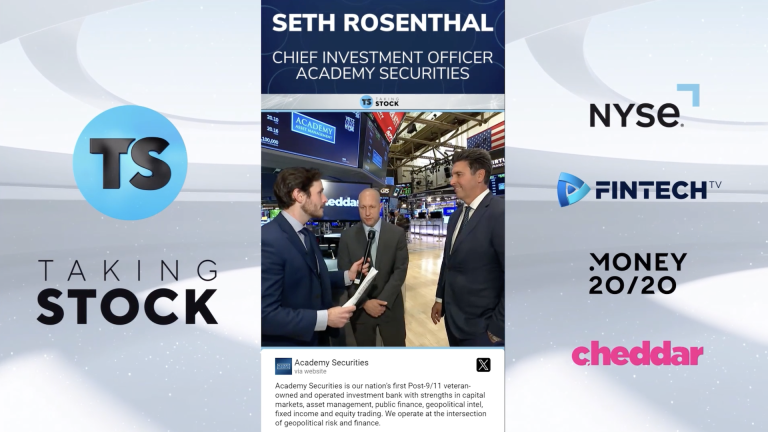
In a special tribute to Veterans Day, Seth Rosenthal and Chance Mims, co-founders of Academy Asset Management, recently celebrated their commitment to military veterans by ringing the closing bell at the New York Stock Exchange. This moment was not only significant for them but also emblematic of their mission to mentor, hire, and train veterans for success in the investment industry.

The experience of ringing the bell was described by both Rosenthal and Mims as “magical and incredible,” a sentiment that was amplified by the presence of military veterans celebrating this important day. Rosenthal emphasized the unique honor of being there on Veterans Day, stating that it offered a remarkable opportunity to recognize and celebrate the sacrifices made by service members.

Academy Asset Management stands firm on its mission to employ veterans, with a remarkable 50% of its workforce consisting of military veterans. The core values of integrity, teamwork, and decision-making under pressure shape their approach to asset management, making veterans uniquely equipped to contribute to the finance sector. As Rosenthal noted, “The skills that veterans possess transition exceptionally well into the asset management industry.”

For veterans transitioning from military life to civilian careers, the journey can be daunting. Mims shared his own experience as a U.S. Navy veteran, recalling the challenges of translating military skills into a civilian resume. The common struggles among veterans often include confusion about how their experiences align with private sector demands. Academy Asset Management is committed to bridging this gap, helping veterans understand their unique skill sets, and instilling a culture similar to that of the military, which emphasizes teamwork and camaraderie.

Despite improvements in veteran employment rates since their firm’s inception, challenges persist. Rosenthal noted that while unemployment rates for post-9/11 veterans have improved significantly, underemployment remains a critical issue. Many veterans possess skills that are underappreciated or misunderstood in the private sector, making it necessary for organizations like theirs to advocate for these talented individuals.

Their commitment is reflected not only in the success of Academy Asset Management but also in a broader effort to ensure that every veteran seeking employment receives guidance and support. “Every veteran that contacts us, we help them out,” Mims remarked. Their dedication exemplifies the growing recognition of the value veterans bring to various industries, particularly in finance and asset management.

On this Veterans Day, both Rosenthal and Mims encouraged the public to reflect on the sacrifices made by military members. “We’re here to be thankful for those that have raised their hands to defend our freedoms,” emphasized Rosenthal, highlighting the profound respect and gratitude owed to veterans worldwide. Academy Asset Management not only recognizes the contributions of veterans but also utilizes their skills to foster a beneficial work environment and improve corporate culture.

The story of Academy Asset Management is not just about financial returns; it’s about creating a lasting impact on the lives of those who have dedicated their lives to serving the country. In the intersection of finance and social responsibility, the firm stands as a beacon for sustainable investing aligned with the Sustainable Development Goals (SDGs). Through their mission, Rosenthal and Mimz showcase how impact investing and entrepreneurship can create meaningful change in both the finance industry and the lives of veterans.

The ringing of the closing bell at the New York Stock Exchange marked not just a ceremonial moment but a pivotal point in highlighting the importance of supporting our veterans in their transition to civilian life. Academy Asset Management continues to lead by example, fusing skill development with a deep respect for the sacrifices made by service members. Their journey reiterates that investing in people—especially veterans—yields dividends far beyond profit margins.

Navigating the Cannabis Landscape: Insights from Rob Sechrist of Pelorus Capital Group

0

Remy Blaire is joined by Rob Sechrist, the President of Pelorus Capital Group to discuss the firm’s strategic shift from lending in the cannabis real estate sector to launching a new billion-dollar equity growth fund aimed at ownership in the cannabis industry.

Rob explains the differences between limited and unlimited state licensing systems, emphasizing how location restrictions still apply even in states without license caps. Drawing from his extensive experience as a lender, he shares insights on how Pelorus has developed a data project to track borrower success and market trends, which informs their underwriting process.

Rob highlights the maturing cannabis market and the potential for favorable changes under the Trump administration, including the possibility of rescheduling cannabis and the implications of IRC Section 280E on taxation. He elaborates on how Pelorus approaches the decision-making process for saving companies, focusing on best practices and market trends.

They also delve into the unique challenges of restructuring cannabis businesses, particularly the absence of federal bankruptcy protections, which necessitate state receiverships. Rob shares details about a significant turnaround project involving StateHouse Holdings, a California operator, and how Pelorus identifies acquisition targets through careful monitoring and data analysis.

Cityscape Global 2025: Unveiling Saudi Arabia’s Real Estate Revolution

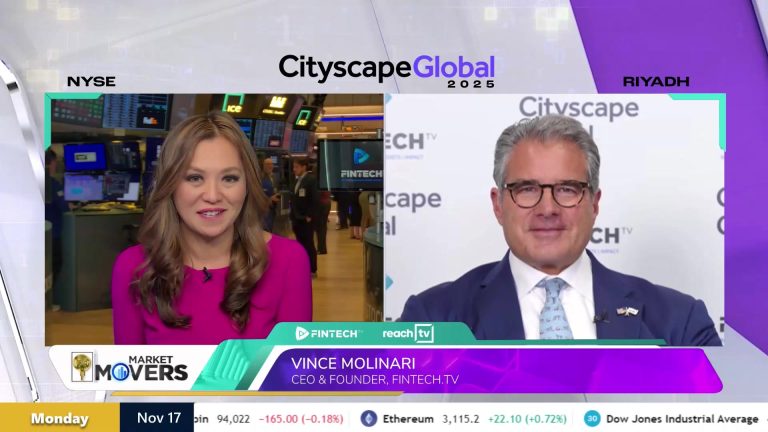
Remy Blaire welcomes Vince Molinari, the CEO and Founder of FINTECH.TV, live from Cityscape Global 2025. The event, taking place at the Riyadh Exhibition and Convention Center in Saudi Arabia, is one of the most significant real estate conferences in the world, attracting a staggering 170,000 attendees and featuring over 500 speakers across six venues.

Remy and Vince discuss the vibrant energy of the conference, highlighting the immense opportunities in Saudi Arabia’s real estate market. Vince notes that recent regulatory changes have allowed non-Saudi individuals and companies to invest in real estate, a development that occurred in July. This shift is part of Saudi Arabia’s Vision 2030 initiative, which aims to diversify the economy and reduce its reliance on oil.

The conversation shifts to the sectors and megaprojects that are garnering attention from global investors. Vince mentions the Red Sea Project, a massive undertaking focused on luxury resorts and high-end tourism, as well as ITIA, a significant development centered around entertainment, sports, culture, and the arts. Both projects are designed to enhance leisure opportunities for residents and attract foreign tourism.

Vince also elaborates on the importance of technology and smart city initiatives in the region. He highlights NEOM, a groundbreaking smart city project that spans over 26,000 square kilometers, emphasizing its focus on sustainability, advanced mobility, and the Internet of Things.

AI-Driven Data Centers: The Future of U.S. Economic Growth

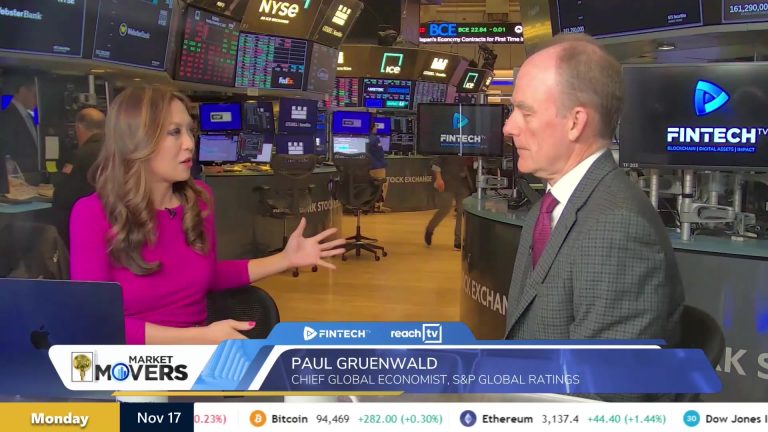
Remy Blaire engages in a thought-provoking discussion with Paul Gruenwald, the Chief Global Economist at S&P Global Ratings. The conversation centers around the significant impact of AI-driven data center investments on the U.S. economy, particularly as the year draws to a close.

Remy opens the segment by highlighting the current growth projections that emphasize labor productivity over the size of the labor force, raising questions about guaranteed GDP gains. Paul explains that while artificial intelligence is set to drive economic activity for years to come, the benefits of this growth may not be evenly distributed. He stresses the importance of monitoring wages, jobs, and public sentiment to ensure broad support for AI, which hinges on fair distribution and strong governance.

As the discussion progresses, Remy asks Paul about the current state of the economy and the role of data center investments. Paul reveals that these investments have been a major driver of growth, accounting for approximately 80% of domestic expenditure in the first half of the year. He notes that the tech sector, along with government and manufacturing, is experiencing job losses, while healthcare remains the only sector adding jobs, suggesting that the short-term outlook for labor may not be as positive as anticipated.

Remy then shifts the focus to future growth expectations, inquiring about the factors influencing Paul’s forecasts for the U.S. economy. Paul identifies three key drivers of growth: the labor force, capital investment, and productivity. He acknowledges the current boom in capital investment but points out the shrinking labor force due to demographic changes and immigration policies. Paul anticipates GDP growth to remain around 2% for the near future, which is close to the economy’s potential.

The conversation also touches on how companies should allocate potential economic windfalls resulting from the AI revolution. Paul discusses the uncertainty surrounding the magnitude of these gains and the various strategic options available to companies, including investment, debt reduction, and employee compensation.

For retail investors, Remy asks Paul to break down the sectors that are likely to benefit from the AI revolution beyond data centers. Paul outlines four key areas of focus: capital structure investment, hardware, software, and energy, which he identifies as the building blocks of the AI boom.

Finally, Remy and Paul discuss the broader implications of the AI revolution for American workers and the economy over the next decade. Paul expresses optimism about the U.S. leading the AI race, noting that while there is competition from countries like China and India, the majority of the benefits are expected to remain within the U.S.

Earnings Season Insights: What to Expect from NVIDIA and Retailers”

Remy Blaire discusses the current state of the U.S. stock market with Peter Tuchman, a Senior Floor Trader at TradeMas. As the market opens on a Monday morning, major stock averages are positioned below the flat line, reflecting a shift in investor sentiment following the recent government shutdown. Initially, there was a sense of relief when the shutdown ended, leading to a significant rally of 1,000 points. However, this optimism quickly dissipates as concerns arise over key economic data releases scheduled for the week.

Remy and Peter analyze the market’s reaction to the government reopening and the subsequent sell-off, which Peter attributes to a complex narrative surrounding the tech sector, particularly companies like NVIDIA and Palantir. He highlights the skepticism in mainstream media regarding the viability of AI and questions whether the recent market movements signify a bubble. Peter argues that the tech sector is not solely responsible for the market’s performance, pointing out that major companies like Meta, Google, Microsoft, and Oracle have invested heavily in AI, indicating a broader commitment to the technology.

The conversation shifts to the Federal Reserve’s stance on interest rates, with Peter noting that Fed Chair Jerome Powell has indicated that a rate cut in December is not guaranteed. This uncertainty has led to a 50-50 market outlook on potential rate cuts, prompting many funds to engage in profit-taking as they close their books for the year. Peter emphasizes the importance of understanding these dynamics, suggesting that the recent 8% market sell-off may be more about profit-taking than a definitive market top.

As they look ahead, Remy and Peter discuss the upcoming earnings reports from NVIDIA and several retailers, as well as the September jobs report. Peter expresses his belief that the recent strength in the healthcare and energy sectors may indicate a rotation in market trends rather than a permanent shift. He explains that while some stocks may experience pullbacks, this behavior is typical in a healthy market correction.

Powering the AI Revolution: The Critical Role of Energy in Tech Growth

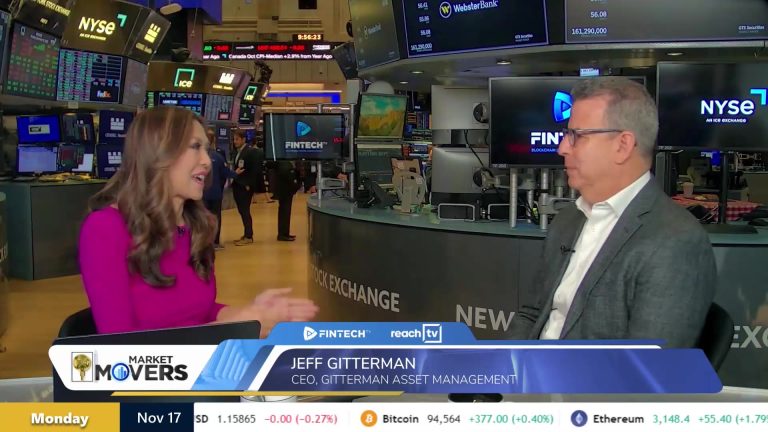
Remy Blaire is joined by Jeff Gitterman, CEO of Gitterman Asset Management, to discuss the critical relationship between energy availability and the burgeoning field of artificial intelligence (AI). Broadcasting live from the New York Stock Exchange, Remy sets the stage by emphasizing that all digital activity, including AI, cloud computing, and cryptocurrency applications, fundamentally relies on physical electricity generation and grid infrastructure.

Remy and Jeff delve into the alarming statistics surrounding computing power and energy usage. Jeff reveals that while computing power has surged by an astonishing 360,000 percent over the past decade, energy availability has only increased by a mere 1.6 percent. This stark contrast raises significant concerns about the capacity of the current energy grid to support the growing demand for data centers, which are essential for AI and other digital technologies. Jeff highlights that many data centers remain unused due to a lack of secured power and water agreements, particularly in regions like Phoenix, which is already facing water scarcity issues.

The conversation shifts to the sources of energy that will be necessary to sustain this digital revolution. Jeff points out that China is aggressively expanding its energy infrastructure, investing in coal, nuclear, and solar power at an unprecedented rate. In contrast, the U.S. struggles with a grid that is already at maximum capacity. Jeff warns that without the necessary transformers, natural gas turbines, and raw materials like steel and copper, the U.S. is heading toward a crisis where the energy demands of tech companies cannot be met.

Remy also raises concerns about the implications of rising energy costs for American consumers. Jeff notes that energy prices have already doubled or tripled, and the environmental impact of data centers is becoming increasingly troubling, particularly for lower-income communities. As corporations prioritize contracts with data centers, local communities often suffer from increased energy demands and costs.

To address these challenges, Jeff advocates for a systematic rebuilding of the energy grid, likening the current situation to a historical gold rush where miners rushed in without the necessary tools. He argues that instead of pouring money into future tech demands, investments should focus on sustainable infrastructure and renewable energy sources, including battery storage, to ensure a reliable energy supply.

The Market Dynamics: Insights from Eric Criscuolo at NYSE

0

In an insightful discussion with Eric Criscuolo, a market strategist at the New York Stock Exchange, we delve into the current state of the U.S. financial markets. The dialogue touches on various elements, including the impact of Federal Reserve policies, recent market trends, and crucial earnings reports. This analysis offers a comprehensive look at how different sectors perform amid macroeconomic pressures, particularly in the realm of technology and consumer behavior.

The Current Market Surge and Sentiment

As of the latest trading week, the markets experienced an unexpected surge, with a notable rise of over 1.5% on Monday. Eric highlighted a shift in market sentiment, primarily influenced by the cessation of speculation surrounding a government shutdown. This optimism was compounded by gains in technology stocks, particularly the ‘Magnificent Seven’—a group of major tech companies including Google and Nvidia, which demonstrated strong performances, bolstered by positive investor sentiment in artificial intelligence (AI) and broader tech innovation.

A Closer Look at the Tech Giants

The conversation then pivoted to the ‘Magnificent Seven’, with particular emphasis on tech titans like Microsoft, which recently ended its eight-day losing streak, and Nvidia, which is expected to unveil its quarterly results soon. Investors are eyeing these companies closely, as their performance often sets the tone for the overall market direction. Eric noted that while these companies are stabilizing and gaining momentum, the gains in other sectors follow suit, further emphasizing the interconnected nature of tech performance with overall market health.

Understanding Earnings Season and Market Reactions

Regarding earnings reports, Eric conveyed that the current season has seen companies generally beating expectations. However, he also pointed out a troubling trend: despite many corporations surpassing earnings estimates, the stock market has not reacted as positively as one might expect. This reflects a market that is increasingly discerning, as stocks that miss expectations are penalized more harshly than those that exceed them. This indicates that while earnings are strong, the high expectations previously set by analysts may diminish the immediate impact on stock prices.

The Consumer Landscape: Divided and Under Pressure

Moreover, the discussion touched on the duality of the current consumer landscape. Eric pointed out that high-income consumers continue to spend robustly while those in lower-income brackets are increasingly feeling the pressure due to prolonged economic challenges. This disparity raises concerns about overall consumer expenditure, crucial for economic recovery and growth, particularly with inflation and high-interest rates plaguing the economy. It becomes clear that the financial strain on lower-income demographics creates a bifurcated market environment, affecting companies heavily reliant on consumer spending.

The Federal Reserve’s Future Decisions

As the end of the year approaches, the Federal Reserve’s upcoming decisions remain a focal point. Eric noted the divided opinions within the Fed regarding interest rates as more data becomes available. While markets anticipate a potential rate cut, Eric expressed skepticism about the certainty of such an action, particularly in light of the economic uncertainty and upcoming FOMC meetings. Keeping an eye on Fed communications will be vital in understanding future market conditions and consumer sentiments.

Conclusion: Navigating the Complex Landscape

The insights from Eric Criscuolo illustrate the complexity of today’s financial landscape, characterized by a fragile balance between consumer behavior, corporate earnings, and the Federal Reserve’s monetary policy. As investors navigate this environment, a keen understanding of these interwoven factors will be essential for making informed decisions. Whether investing in technologies leveraging blockchain, engaging in sustainable finance practices, or identifying opportunities in AI development, a strategic approach informed by ongoing market analysis promises to be critical in these evolving times.