[stock-market-ticker symbols=" ^NYA;CRYPTO:BTC;CRYPTO:ETH;CRYPTO:USDT;CRYPTO:USDC;CRYPTO:BNB;CRYPTO:ADA;CRYPTO:XRP;CRYPTO:SOL;CRYPTO:DOGE " stockExchange="NYSENASDAQ" width="100%" transparentbackground=1 palette="financial-light"]

Home Blog Page 33

Decentralized Intelligence: Bridging the Gap Between AI and Crypto

Evan Malanga, the Chief Revenue Officer of Yuma joins Remy Blaire to delve into the intriguing intersection of artificial intelligence (AI) and cryptocurrency. The discussion focuses on how decentralized systems are reshaping the landscape of AI.

Evan highlights the current state of the AI sector, where a few large companies dominate, creating high barriers to entry for both investors and builders. He explained how Yuma is leveraging the BitTensor network to democratize access to AI projects through token-based incentives, fostering a more open and innovative environment.

They discuss the fundamental differences between centralized and decentralized systems, with centralized players being large tech companies and decentralized players promoting open-source innovation. Evan likens BitTensor to the World Wide Web, emphasizing its role in providing access to intelligence across various projects.

Throughout the conversation, they explore real-world applications of decentralized AI, where builders compete to produce AI outputs, validated by a network of miners and judges. This model not only incentivizes innovation but also allows for rapid progression in the field.

As we look ahead, Evan expresses optimism about the future of decentralized AI and its integration with traditional finance (TradFi). He notes that we are likely to see more TradFi rails entering the crypto ecosystem, ultimately leading to a convergence of finance sectors.

Macro Concerns Eclipse AI Optimism as Dollar Stabilizes, Gold Near 5,000

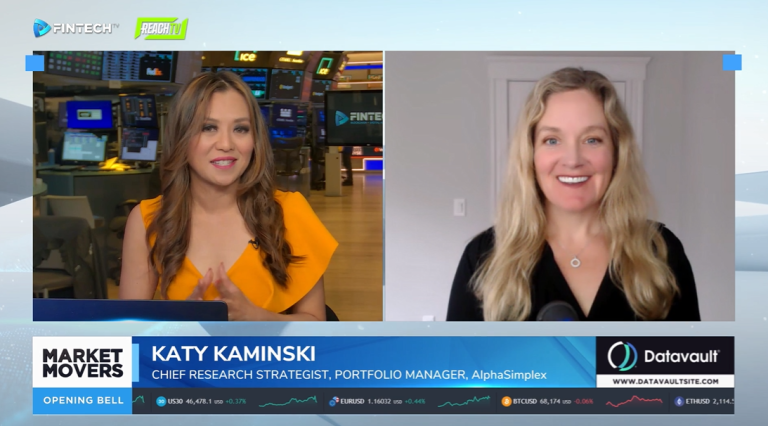
Katy Kaminski, Chief Research Strategist at AlphaSimplex, joins Remy Blaire to break down equities, bonds, currencies, commodities, and the Fed outlook for the rest of 2026.

U.S. markets are opening lower as investors digest fresh earnings, rising Treasury yields, and the latest Federal Reserve minutes. Retailer Walmart delivered slight beats on both EPS and revenue thanks to strong holiday shopping — but a cautious fiscal year outlook is weighing on sentiment. This follows a positive session yesterday, where tech stocks rebounded and fears around AI overvaluation eased during the holiday-shortened week.

Meanwhile, the 10-year Treasury yield is moving higher after last week’s pullback, as markets reassess the Fed’s path following a slightly hawkish tone in the January meeting minutes. Notably, stocks and bonds are both under pressure — signaling renewed macro concerns.

In currencies, the U.S. dollar index is hovering near the 98 level. After months of dollar weakness, recent shifts in rate expectations and risk sentiment may be creating a pause in that trend.

Commodities remain a major focus: gold is hovering just below the 5,000 level after reclaiming that key technical threshold, precious metals have rallied strongly in 2026, though volatility is increasing, energy markets are breaking out, with Brent crude back above $70 per barrel and the energy sector is up roughly 22% year-to-date, far outperforming the broader S&P 500.

How Blockchain Is Transforming Business and Finance

0

In this episode, we’re joined by Santiago Roel Santos, CEO of Inversion, who shares insights into how blockchain technology is reshaping the future of business and finance. Santos introduces Inversion as a private equity fund focused on acquiring companies and partnering with management teams that recognize blockchain’s potential to drive efficiency, transparency, and cost savings. With more than a decade of experience investing in crypto, he explains that the biggest opportunity today isn’t simply buying digital assets like Bitcoin, but rather implementing technologies such as tokenization and stablecoins to streamline operations and modernize financial workflows. He emphasizes that these tools are increasingly regulated, practical, and scalable, making them viable solutions for real-world business challenges.

The conversation also explores how market volatility in major cryptocurrencies does not necessarily reflect the value of blockchain technology itself. Santos compares this misconception to judging cloud computing adoption based solely on stock prices of major tech providers, arguing that the real story lies in how the technology improves efficiency.

Markets Near Record Highs? Eric Riscolo Breaks Down AI Volatility, Global Outperformance & What’s Next at the New York Stock Exchange

0

On this episode market strategist, Eric Chriscuolo breaks down the latest action on Wall Street as equities hover near record highs, with technology and consumer discretionary sectors leading a steady rotation rather than signalling a defensive, risk-off environment. He explains that recent volatility was driven by sweeping fears that artificial intelligence could disrupt entire industries, sending shockwaves beyond software into sectors like real estate and financial data, impacting companies such as Moody’s and CBRE before signs of stabilization and selective rebounds emerged. On the technical side, he notes the S&P 500 remains range-bound below the key 7000 resistance level, with traders closely watching moving averages and options-expiration volatility for clues about the next breakout. The discussion also highlights a growing global trend: international markets are currently outperforming U.S. equities, with standout strength in countries like South Korea and regions such as Europe, Japan, and Southeast Asia as investors rotate into overseas opportunities after years of strong U.S. performance.

Global Markets Shift? Swen Lorenz Breaks Down Why United Kingdom Stocks May Lead Next

0

In this insightful episode, Remy Blaire is joined by Swen Lorenz, CEO and founder of Sarnia Asset Management, to break down global investing trends as 2026 gets underway. While the U.S. market posted its third straight year of double-digit gains in 2025, international equities outperformed even more strongly surpassing domestic stocks and the S&P 500for the first time in years. Lorenz explains why he believes this may signal the beginning of a multi-year cycle where international markets, particularly the U.K., could shift from being viewed merely as diversification plays to becoming powerful growth drivers. He highlights that investors can currently access world-leading companies in the U.K. at unusually low valuations, calling it a rare generational opportunity despite ongoing political and economic headwinds.

Duke Energy’s 100-Year Dividend Milestone & $103B Growth Plan

0

Fresh off ringing the closing bell at the New York Stock Exchange, Harry Sideris, President and CEO of Duke Energy, joined us to reflect on the milestone moment and share insights into the company’s future. He described the experience as a dream come true, celebrating not only the honor of standing on one of the world’s most-watched financial stages often seen on CNBC but also marking 100 years of consistently paying cash dividends to investors through historic challenges like economic downturns and global crises. The conversation highlighted the company’s dual celebration of a century of dividends and 65 years listed on the exchange, alongside its ambitious $103 billion five-year capital plan aimed at supporting rapid growth driven by migration to regions such as Carolinas and Florida, increased onshoring, and rising demand from data centers. Sideris emphasized disciplined investment, affordability for customers, and long-term shareholder value, noting that strategic contracts and infrastructure expansion are designed to keep costs stable while supporting record growth.

How Gauntlet is Bridging Traditional & On-chain Markets

Long known as the quantitative backbone of decentralized finance, Gauntlet is now bridging traditional capital and on-chain markets — managing over $2 billion in TVL across curated vaults on Morpho, Drift, and Kamino. Through simulation-driven risk modeling, the firm is helping institutional allocators access sophisticated yield strategies in DeFi.

At the Ondo Summit 2026, Rahul Goyal, Head of Institutional Partnerships at Gauntlet, joined Remy Blaire to discuss: why this year feels “night and day” compared to 2025 — and how regulatory clarity has shifted firms from research mode to product launches, the difference between Prime and Frontier vaults — and how users can deposit stablecoins to earn yield based on collateral risk profiles, why NASDAQ-listed BTCS is allocating capital into DeFi vaults — and how Gauntlet’s risk modeling builds institutional confidence.

They also discuss Gauntlet’s leveraged RWA strategy, launched with Apollo Global Management, Securitize, Morpho and Polygon

Finally, they have a conversation on how Gauntlet stress-tests DeFi markets are simulating extreme scenarios like 60% BTC drawdowns to optimize allocations and manage liquidations and how tokenization and 24/7 markets are leveling the playing field for global investors.

Market Structure at a Crossroads: Bipartisan Hurdles, CFTC Tensions, and the Rise of Crypto Voters

Following the second White House summit on stablecoin yield, no formal compromise was reached. However, the power dynamics are clearly shifting. Major financial institutions are coming to the table with detailed principles and concrete proposals, while crypto executives are asserting their leverage and demanding a permanent seat in shaping long-term digital asset policy.

Cleve Mesidor, Executive Director of the Blockchain Foundation joins Remy Blaire, to break down what really happened behind closed doors — and what it means for crypto market structure legislation.

Cleve shares the relationship between Wall Street CEOs and crypto-native leaders, why banks are presenting more specific yield frameworks, how the White House appears to be listening — and preparing to negotiate, why the crypto industry must respond with detailed counterproposals.

With the Senate Banking Committee’s digital assets markup falling apart, they also discuss: why bipartisan support is essential — especially in a midterm election year, how political gridlock and regulatory turf battles (including the CFTC’s recent moves) could complicate progres and why both Democrats and Republicans may see crypto legislation as a potential bipartisan “win”.

They also discuss the need for stronger consumer data in shaping policy, the growing influence of crypto voters in midterm elections and why policymakers must listen beyond CEOs — including CFOs and community financial leaders.

Blockchain Meets Wall Street: 200+ Stocks Now On-Chain

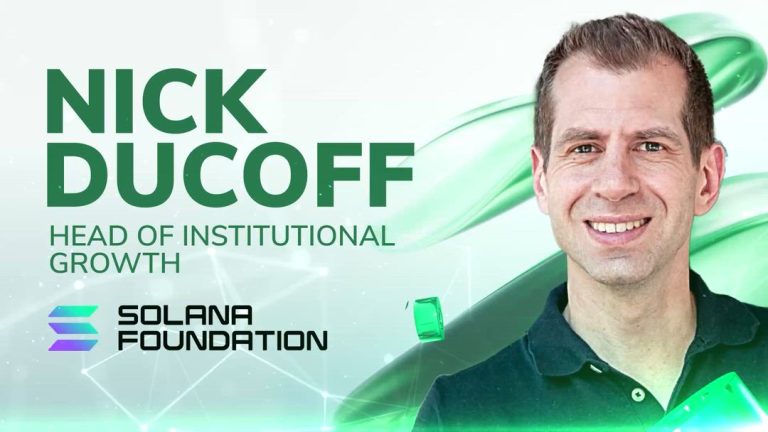
At the 2026 summit in New York City, FINTECH.TV speaks with Nick Ducoff, the Head of Institutional Growth at Solana Foundation about the rapid expansion of tokenized markets and what it means for investors worldwide. With more than 200 tokenized U.S. stocks and ETFs now live on Solana through Ondo Finance, global users can access traditional securities on public blockchain rails while maintaining price parity with traditional exchanges like the New York Stock Exchange.

The conversation explores explosive network growth metrics, the rise of “internet capital markets,” and how blockchain infrastructure could unlock investing for millions of people who have crypto wallets but no brokerage accounts. We also dive into institutional adoption, with major financial players such as JPMorgan and BlackRock increasingly entering the tokenization space, and discuss evolving regulation from the U.S. Securities and Exchange Commission.

24/7 Tokenized Stocks? How On-Chain Markets Are Expanding Global Access

At the New York summit, FINTECH.TV sits down with Armand Khatri, the Head of Ecosystem at Ondo Finance to discuss the rapid evolution of tokenized securities and what 2026 could mean for global investors. With products now live across networks like Ethereum and Solana, the firm is rolling out new tools designed to let users outside the United States trade perpetual futures tied to major U.S. stocks around the clock.

The conversation explores how real-world assets on blockchain rails could reshape access to financial markets, why liquidity and deep order books are critical for adoption, and how tokenized equities may replicate or even improve traditional trading infrastructure. We also cover regulatory momentum, including developments involving the U.S. Securities and Exchange Commission and Commodity Futures Trading Commission, and what bipartisan legislation could mean for the future of digital assets.