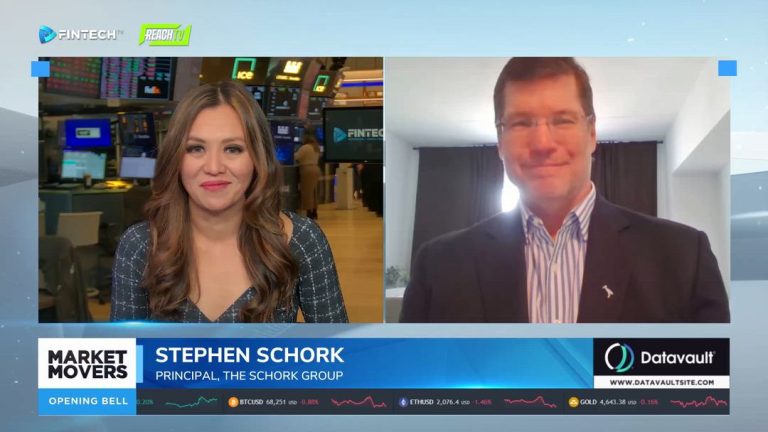
Stephen Schork, principal of the Schork Report, joins Remy Blaire to delve into the current state of oil prices, focusing on the significant pricing spread between WTI and Brent crude. With WTI prices hovering just below $116 a barrel and a 3% increase, we discuss the impact of geopolitical tensions, particularly the U.S. military actions in Iran and the ongoing conflict affecting oil supply.
He explains how WTI, traditionally trading at a discount to Brent due to its landlocked nature, is now experiencing an extreme demand from Asian and European refineries, leading to a notable increase in its price.
Stephen highlights the importance of the May WTI contract, which is set to expire soon, creating a short-term disconnect in pricing compared to Brent. He also addresses concerns about rising gasoline prices, projecting a national average of around $4.25 a gallon, with potential challenges to the $5 mark in the near future.
We discuss the implications of OPEC’s warnings about supply disruptions and the lasting damage from recent attacks on oil infrastructure. Despite high U.S. oil supplies, Stephen emphasizes the risk premium being priced into the market and the potential for long-term oil prices to rise to around $80 a barrel if the conflict persists.
As we wrap up, Stephen cautions that without an increase in supply or a decrease in demand, we could see significant price volatility, reminiscent of the 2008 oil crisis.
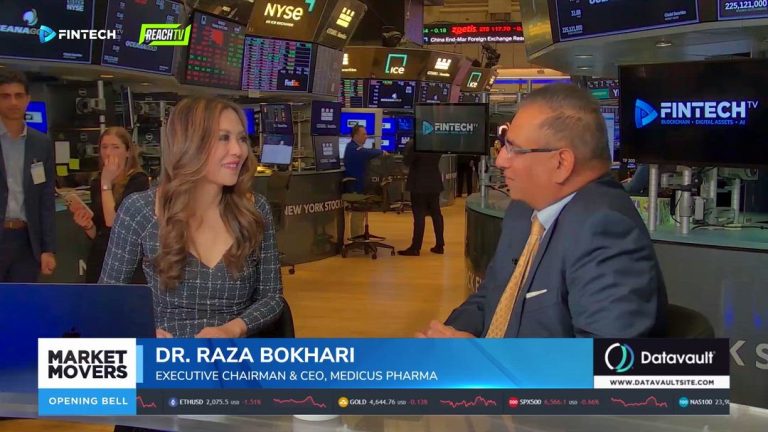
In this episode of Market Movers, we dive into the current state of the biotech sector, which is showing resilience and outperforming the broader market despite recent volatility. Dr. Raza Bokhari, Executive Chairman and CEO of Medicus Pharma, joins Remy Blaire to provide insights into the factors driving this resurgence.
Dr. Bokhari highlights that after a challenging period for biotech, often referred to as a “nuclear winter,” we are now witnessing a positive shift. Key drivers of this recovery include increased M&A activity, the success of weight loss drugs, and a more stable interest rate environment. He emphasizes the importance of access to capital, noting that while it can be expensive, companies with good trading volume are still able to secure funding.
We also discuss the impact of geopolitics and tariffs on the biotech industry, particularly the crucial role of global integration in R&D and clinical trials.
Additionally, we explore differences across market-cap sectors, with a focus on pre-revenue companies like Medicus Pharma. Dr. Bokhari explains that while valuations may remain depressed, there is a renewed interest in biotech, especially as big pharma companies look to optimize their late-stage development and commercialization efforts.
Finally, we touch on the looming patent cliff facing the pharmaceutical industry. Dr. Bokhari points out that while the expiration of patents presents challenges, it also opens doors for emerging companies to introduce novel therapies, particularly in areas like skin cancer and women’s health.
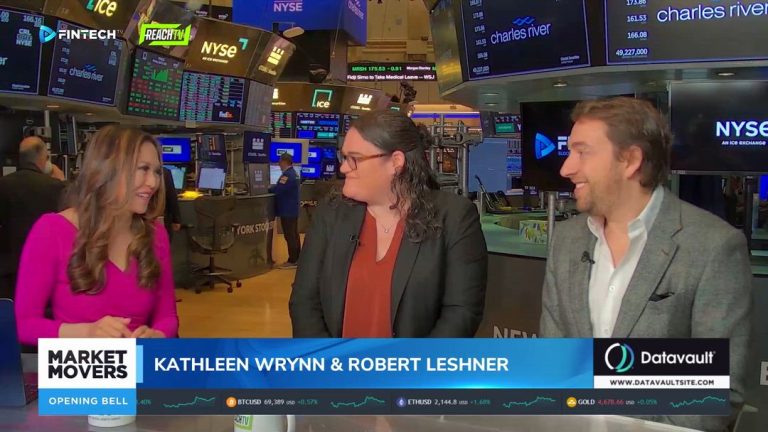
Kathleen Wrynn, the Global Head of Digital Assets for Invesco, and Robert Leshner, CEO and co-founder of Superstate, joins Remy Blaire to discuss the partnership between Invesco and Superstate, marking a significant shift in the tokenized U.S. Treasury market. With Invesco taking over the management of Superstate’s flagship tokenized fund, we explore how this collaboration leverages blockchain technology for near-instant settlement and 24/7 access, fundamentally changing how institutional money operates.
Kathleen emphasizes that this partnership represents a structural shift in asset management, allowing Invesco to utilize Superstate’s leading infrastructure while applying their extensive investment management expertise. Robert highlights the significance of Invesco as the first independent asset manager to join forces with Superstate, transitioning from an in-house model to a collaborative approach with top asset managers.
We discuss the implications of managing funds on blockchain rails, the strategic importance of tokenization for Invesco, and how this partnership sets the stage for scaling tokenized offerings in the future. Both guests share their insights on the current landscape of digital assets, with Kathleen referring to the ongoing “stablecoin summer” and Robert coining the term “tokenized security summer,” indicating a growing momentum in the market.
As we look ahead, we touch on the regulatory environment and the potential for innovation in the space, with both guests expressing optimism about the future of blockchain in financial markets.
Network’s Rapid Audience Growth Drives Launch of Two New Daily Content Franchises Across Newsletter and Social Media
NEW YORK, NY / ACCESS Newswire / April 7, 2026 / FINTECH.TV, the global broadcasting platform for entrepreneurs and investors headquartered at the New York Stock Exchange, today announced the launch of two new daily content franchises, The Signal, a curated morning investor newsletter, and Pre-Market Pulse, a live social media show, alongside the hiring of Anastasia Kinsky as Newsletter Editor and Mark Payton as Social Anchor. The launches are a direct response to FINTECH.TV’s accelerating audience growth across its website and social media platforms.
Audience Growth Is Driving Demand
In the first quarter of 2026 alone, FINTECH.TV’s digital footprint grew sharply across every measurable dimension. The platform added 103,300 new website users, a 27.5% increase over the prior period, while active users rose 19.3% to nearly 100,000. On social media, FINTECH.TV’s content reached 3.6 million people, up 10.8%, with link clicks surging 30.6% to more than 10,000, a clear signal that audiences are not just watching, but actively seeking more. That audience spans the globe: top markets include the United States, India, the United Kingdom, and the UAE, reflecting the international reach that sets FINTECH.TV apart from any other financial media platform.
That momentum made one thing clear: FINTECH.TV’s audience wants more. More context before the bell, more access to market-moving stories throughout the day, and a direct editorial voice they can rely on every morning. The Signal and Pre-Market Pulse are built to deliver exactly that.
The Signal: A Daily Newsletter for the Investor Community
The Signal is FINTECH.TV’s new daily morning newsletter, delivering curated coverage of the stories shaping blockchain, digital assets, AI, and global finance, written and edited by Anastasia Kinsky. It arrives in subscribers’ inboxes before the opening bell, giving investors and financial professionals the context they need to start each trading day informed.
Kinsky is a fintech journalist with deep expertise in blockchain and macroeconomic markets. Her editorial voice brings clarity and precision to one of the most dynamic beats in modern finance, making The Signal a daily anchor for the investor community FINTECH.TV has built.
The Signal is available today at www.fintech.tv. Sponsorship opportunities, including presenting sponsor, branded editorial, and Chart of the Day placements, are now available.
Pre-Market Pulse and Fast Five: Live Social Content with Mark Payton
Pre-Market Pulse launches today on FINTECH.TV’s social media channels, going live each weekday at 8:30 AM ET. Hosted by veteran broadcast journalist Mark Payton, the show delivers a fast, focused breakdown of the morning’s breaking news: what’s moving markets, what’s ahead for the trading day, and the headlines investors need before the opening bell.
Payton also hosts Fast Five, a daily afternoon recap that covers the day’s five most important stories in a conversational, podcast-style format. Together, the two franchises give FINTECH.TV’s social audience a daily content cadence from morning context to market close.
Payton brings a career in broadcast journalism that spans live, breaking news coverage. His instinct for what matters, and his ability to deliver it with clarity and pace, make him a natural fit for FINTECH.TV’s growing social-first audience.
About FINTECH Media Group
FINTECH Media Group is a global financial media company building the future of multi-platform financial content. Through its properties FINTECH.TV and Breakout, FINTECH Media Group delivers premium financial news, market insights, and real-time audience engagement across broadcast, digital, and social audio channels. FINTECH.TV is a first-of-its-kind global media platform covering Blockchain, Digital Assets, and AI, broadcasting live from the floor of the New York Stock Exchange with studios in Dubai and Abu Dhabi. Breakout is a real-time social audio and messaging platform connecting thought leaders, entrepreneurs, and global audiences through the power of live voice – with users in over 24 countries. Together, FINTECH Media Group’s properties connect the people shaping the future of finance with the audiences that need to hear from them.
In this episode of Market Movers, we dive into the complex implications of the escalating war in Iran on global energy markets and sustainability investments. Jeff Gitterman, Managing Director of Gitterman Asset Management, joins Remy Blaire to provide valuable insights into how this conflict is reshaping the renewable energy landscape.
We discuss the significant upfront costs associated with renewable energy projects and how rising interest rates, driven by inflation, pose a challenge for their affordability. Jeff highlights the shift in focus among nations towards energy security, with some countries, like India, pivoting towards nuclear energy as a more stable option. In contrast, the U.S. appears to be stepping back from climate initiatives, favoring fossil fuel development instead.
The conversation also touches on the geopolitical aspects of energy security, emphasizing that renewable energy can provide a more reliable and less vulnerable energy source compared to traditional fossil fuels. Jeff points out that countries like Pakistan and China are investing heavily in renewables to reduce reliance on supply chains.
For American investors interested in green energy, Jeff recommends looking into smaller utility-backed projects that incorporate solar and renewable batteries, as these are currently the safest investments.
Finally, we address the environmental impact of the ongoing conflict, noting the severe consequences for the climate and the atmosphere, particularly in regions like Tehran.
Stephen Orr, the founder and CEO of Quasar Markets, joins Remy Blaire to delve into the evolving landscape of global commodities, particularly focusing on the emerging significance of electricity as a new commodity, especially in relation to AI compute.
Stephen shares his insights on the current state of the oil market, expressing his belief that a pullback is imminent due to geopolitical factors. He emphasizes the growing electricity demand, driven by the surge in AI usage, and discusses the need for consumers and institutions to upgrade their technology for better efficiency.
As we look ahead to the upcoming earnings season, Stephen highlights the competitive landscape of AI companies, noting the rapid advancements and challenges faced by major players like Google, OpenAI and Anthropic. He also touches on the pivot of some crypto mining companies towards AI and quantum computing, specifically mentioning Hut 8 as a promising investment.
We explore sector performance within the S&P 500, particularly in IT, and discuss the potential of companies involved in the space race. Stephen also provides his perspective on precious metals, expressing skepticism about gold and silver due to recent trends in sovereign wealth funds selling off these assets.
In this episode of Market Movers, we delve into the ongoing U.S.-Iran war, which has now entered its sixth week. As we navigate through a volatile week, there are reports of discussions for a potential 45-day ceasefire, raising hopes for a permanent resolution. However, with a looming deadline and escalating tensions, the situation remains precarious.
Patrick L. Young, Chairman and founder of Exchange Invest, joins Remy Blaire to provide insights into the current state of the conflict and the dynamics within NATO, especially with Mark Rutte’s upcoming visit to Washington, D.C. We explore the challenges Europe faces in terms of defense and military reliance on the U.S.
We discuss President Trump’s increasing threats against Iran following a successful military rescue of an American airman, and the implications of Russia sending a second oil tanker to Cuba, testing the U.S. energy blockade.
Additionally, we analyze the critical situation in the Strait of Hormuz, where oil traffic is dwindling, and the potential impact of military actions on global energy markets. Patrick emphasizes the importance of diplomatic efforts from Iran as they face military pressure.
Melissa Otto, Head of Visible Alpha Research at S&P Global Market Intelligence, joins Remy Blaire to discuss the implications of the ongoing geopolitical tensions, particularly the Iran war, on the tech industry’s massive investments in artificial intelligence. With Big Tech companies like Microsoft, Amazon, Alphabet and Meta projected to spend an astonishing $635 billion on AI infrastructure by 2026, we explore how rising energy costs and a critical shortage of electrical equipment could lead to significant revisions in these spending plans.
We discuss the potential impact of these factors on corporate IT budgets, especially as chip makers like Samsung and Micron shift their focus to high bandwidth memory for AI data centers. Melissa highlights the strong demand for memory chips and the upward revisions in pricing, indicating that non-AI enterprise buyers may bear the brunt of the costs associated with this tech transition.
We also take a closer look at Japan’s macroeconomic landscape, where tighter monetary policy could affect global liquidity. Melissa shares her observations on the relatively low cost of living in Japan compared to the U.S. and Europe, and we discuss the country’s efforts to revitalize its domestic semiconductor industry. While this resurgence is crucial for alleviating supply bottlenecks, there are concerns about the potential for overcapacity in the future.
As we approach earnings season, we reflect on the uncertainty surrounding corporate guidance and the importance of how companies navigate the current geopolitical challenges. Melissa emphasizes that the upcoming quarter’s performance and management’s outlook will be critical for market sentiment.
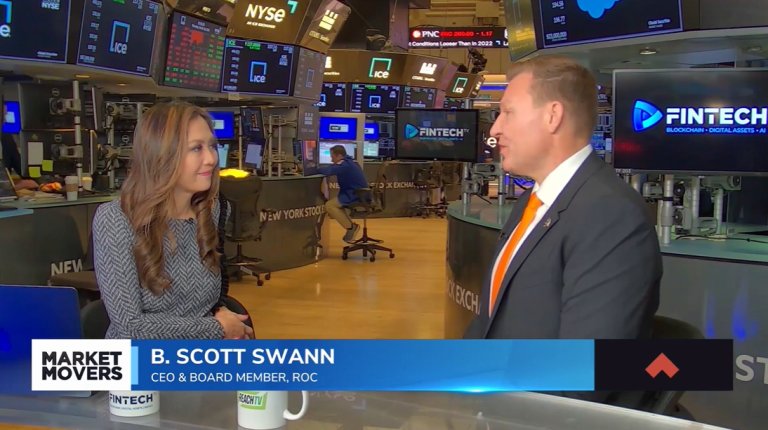
B. Scott Swan, the CEO of ROC, joins Remy Blaire to share insights into the company’s mission and the importance of transitioning to public markets through an IPO, which will enable the company to scale and compete against billion-dollar foreign-owned companies in the AI space. He emphasizes the critical need for trusted, domestically developed security technology, particularly in national security systems that rely on foreign AI technologies.
We discuss how ROC is evolving from selling components to building a full platform that integrates various biometric and video systems, enhancing the intelligence available to both government and commercial customers. Scott highlights the growing demand for identity security and the role of biometrics in providing frictionless access and improved safety measures.
As we explore the future of AI and technology, Scott expresses excitement about the potential for coalescing data from different systems to create more powerful solutions. He also addresses concerns about privacy and the ethical use of biometrics, stressing the importance of responsible governance and protocols in utilizing these powerful technologies.
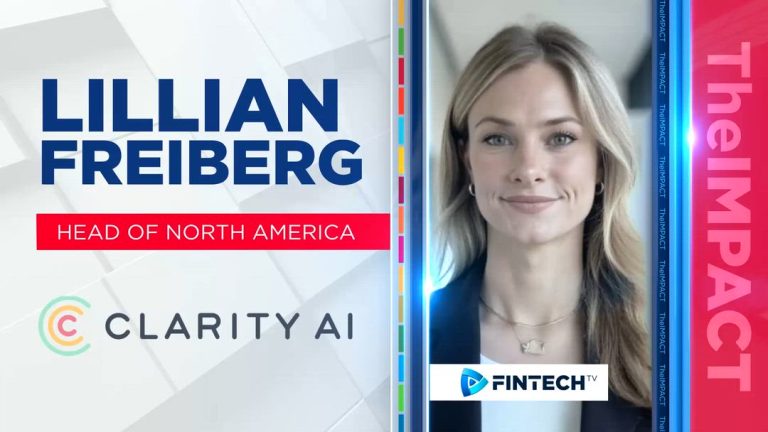
In this episode of The Impact on FINTECH.TV, Lillian Freiberg, the head of North America for Clarity AI, joins Jeff Gitterman to have a conversation on the intersection of AI, finance, and impact. We kick off our conversation by discussing Lilian’s motivations for working in the impact space rather than traditional finance, emphasizing the importance of making change from within the system.
Lillian provides valuable insights into Clarity AI, which she described as an AI-native, tech-first intelligence layer designed to enhance investment workflows. We explore how Clarity AI addresses complex problems for clients, from risk mitigation for institutional banks to portfolio analysis for activist hedge funds.
A significant portion of our discussion focuses on the role of AI in the financial sector. Lillian highlights how Clarity AI has been utilizing AI since its inception in 2017, allowing them to develop a robust and flexible architecture that can handle vast amounts of unstructured data. We talk about the challenges companies face in integrating AI into their operations and the importance of trust and transparency in AI systems.
As we delve into the current landscape of AI, Lillian notes that many companies feel pressured to adopt AI to remain competitive, but the real challenge lies in effective integration. We also touch on the ongoing ESG controversy and how it has influenced Clarity AI’s approach to risk assessment and investment performance.
Finally, we discuss the potential impact of AI on jobs and the importance of interpersonal skills and emotional intelligence in the workforce of the future. Lillian emphasizes that while AI will change the landscape, it will also create new opportunities.