[stock-market-ticker symbols=" ^NYA;CRYPTO:BTC;CRYPTO:ETH;CRYPTO:USDT;CRYPTO:USDC;CRYPTO:BNB;CRYPTO:ADA;CRYPTO:XRP;CRYPTO:SOL;CRYPTO:DOGE " stockExchange="NYSENASDAQ" width="100%" transparentbackground=1 palette="financial-light"]

Home Blog Page 28

Stablecoins and Tokenization Growth Reshape Digital Asset Investing

The digital asset market has faced renewed volatility in recent weeks as investors weigh inflation data, labor market softness, and shifting liquidity conditions. Despite short term price pressure across cryptocurrencies, long term trends point to structural growth driven by stablecoins and tokenized assets.

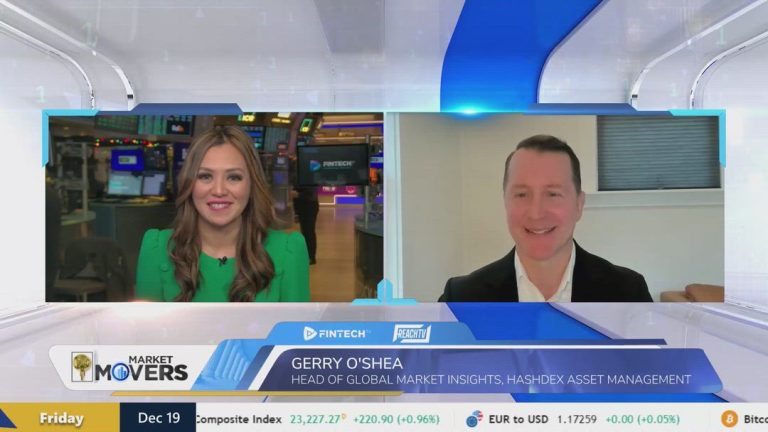
Gerry O’Shea, head of global market insights at Hashdex Asset Management, says market weakness does not undermine the broader investment case for digital assets. Instead, he sees the current environment as a reset that highlights where durable value is forming.

Following the November CPI report, crypto prices struggled to find direction. Investor sentiment weakened as the jobs market showed signs of slowing and risk appetite faded. Even so, activity within decentralized finance continued to expand. Stablecoins and tokenized real world assets gained traction, reinforcing the view that infrastructure adoption is advancing even when prices stall.

O’Shea noted that Bitcoin’s softer performance late in the year reflects liquidity dynamics rather than declining relevance. Earlier momentum in 2025 was driven by regulatory progress and broader institutional participation. In the fourth quarter, long term holders reduced exposure as market liquidity improved, creating short term pressure without altering long term fundamentals.

Looking ahead, Hashdex expects stablecoins and tokenization growth to accelerate. O’Shea projects the stablecoin market could expand from roughly $300 billion to $600 billion as regulatory clarity improves and payment use cases scale. Legislation such as the GENIUS Act is expected to support tokenization across equities, money market funds, and other traditional assets.

Major financial leaders have reinforced this outlook. Estimates suggest tokenized assets could reach $10 trillion to $15 trillion in value over the next five years. Tokenization offers efficiency gains, broader access, and continuous settlement that traditional markets struggle to match.

Another major catalyst is the convergence of artificial intelligence and blockchain infrastructure. O’Shea explained that AI systems increasingly depend on decentralized networks for data verification, payments, and automation. As AI adoption expands, demand for blockchain native rails is expected to rise alongside it.

Institutional behavior reflects this shift. Firms including Bank of America and Morgan Stanley have begun supporting crypto exposure for clients. Hashdex now recommends a 5% to 10% allocation to digital assets for diversified portfolios, up from earlier guidance. The change reflects declining performance from traditional 60/40 portfolios and the growing role of crypto as an alternative asset class.

O’Shea emphasized that smart contract platforms stand to benefit most from these trends. As stablecoins, tokenized assets, and AI applications converge, blockchain ecosystems that support scale and security are positioned for sustained growth.

As digital assets mature, stablecoins and tokenization growth are reshaping how investors think about crypto. Price cycles remain volatile, but the underlying transformation of financial infrastructure continues. For investors focused on long term positioning, the evolution underway may prove more important than short term market swings.
November CPI Inflation Report Lifts Stocks, Clouds Fed Outlook

U.S. stocks rallied after the November CPI inflation report showed price pressures cooling more than expected, renewing investor optimism that inflation may be easing. The positive market reaction came despite growing concerns over the reliability of the data following the recent government shutdown, which disrupted several federal data collection processes.

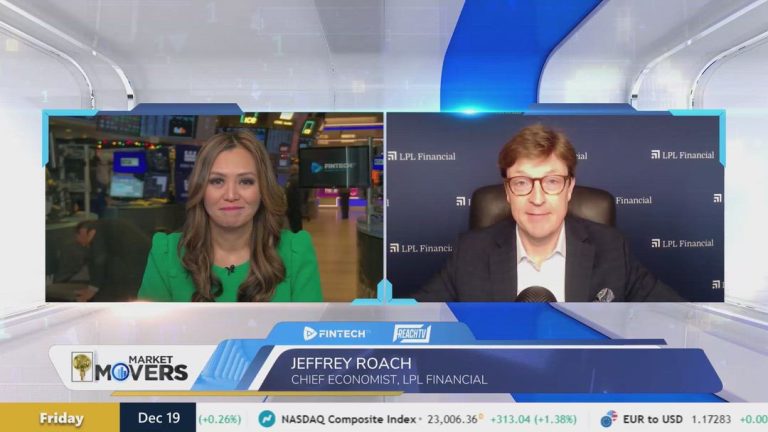
New York Fed President John Williams cautioned that technical factors may have influenced the November CPI inflation report, raising questions about how accurately the data reflects underlying inflation trends. To assess the broader economic implications, LPL Financial Chief Economist Jeffrey Roach weighed in on what the latest figures may mean for markets and monetary policy.

Roach said inflation appears to be moving in the right direction but warned investors against placing too much weight on a single report. He attributed some of the volatility in the November CPI inflation report to shutdown-related disruptions and data inconsistencies. Even so, Roach expects inflation to continue easing, projecting a rate of roughly 2.5% by the end of 2026.

Market conditions remain complicated as year-end liquidity events approach. Roach noted that trading activity is being influenced by triple witching expiration and S&P quarterly index rebalancing, both of which can amplify short-term market swings. Against that backdrop, attention remains focused on the Federal Reserve’s next steps.

Roach expects at least two interest rate cuts in 2026, driven largely by a cooling labor market and a gradual rise in unemployment. He forecast economic growth between 2.1% and 2.2%, supported by falling inflation and improving productivity. Productivity gains, he said, could help offset weaker job growth while allowing inflation to continue moderating.

Global central banks are taking increasingly divergent paths, adding another layer of complexity for investors. The Bank of England recently cut interest rates following softer inflation data, while the European Central Bank held policy steady. Meanwhile, the Bank of Japan raised rates for the first time in more than three decades.

Roach highlighted Japan as a potential standout in 2026, citing rising wages and higher input costs as drivers of further rate hikes. These policy differences could lead to heightened volatility in currency and international equity markets, creating both risks and opportunities for investors.

Looking ahead, Roach outlined a constructive outlook for 2026. He projects economic growth of approximately 2.2%, supported by increased tax refunds, targeted fiscal measures, and resilient consumer spending. Based on current conditions, he does not expect the U.S. economy to slip into recession next year.

While the market rally following the November CPI inflation report reflects growing optimism, uncertainties remain. Data reliability, shifting central bank policies, and global economic divergence will continue to shape market conditions. Investors navigating 2026 will need to balance optimism with caution as inflation trends, interest rates, and productivity remain in focus.

Crypto Market Outlook 2026 Highlights Institutional Adoption

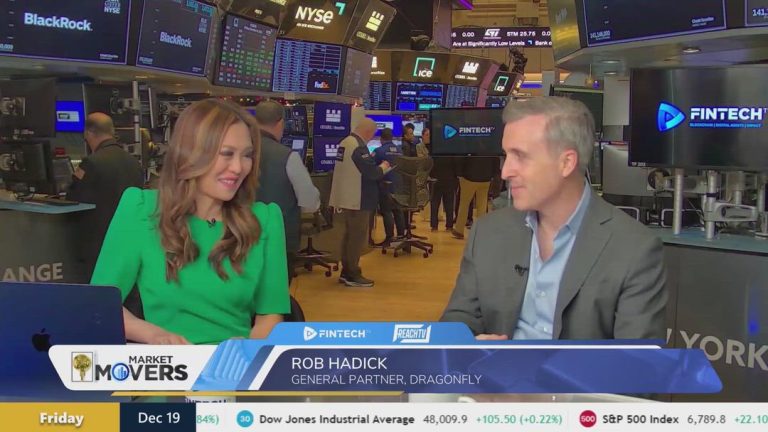
The crypto market outlook 2026 is coming into sharper focus as the digital asset industry closes out a pivotal year marked by accelerating institutional adoption and infrastructure maturity. In a recent discussion, Rob Hadick, general partner at crypto-native venture capital firm Dragonfly, outlined how the sector has evolved from speculative experimentation into a more structured financial ecosystem, with stablecoins, tokenized assets, and prediction markets emerging as key growth drivers.

Hadick, who has been active in the crypto space since 2018, explained that the foundational infrastructure supporting digital assets has advanced dramatically. Earlier cycles were dominated by initial coin offerings designed primarily to introduce the concept of crypto to the public. Today, institutions such as JPMorgan and the Depository Trust and Clearing Corporation are actively building blockchain-based solutions, lending new credibility and durability to the market. This shift marks a meaningful step toward long-term institutionalization.

Stablecoins were a central theme in the crypto market outlook 2026. Hadick noted projections suggesting that stablecoin payment volumes could double in the coming year, driven by their ability to improve capital efficiency and enable seamless cross-border transactions. Major players including Visa and JPMorgan are already leveraging blockchain rails to support stablecoin settlement, allowing transactions to occur around the clock. This always-on settlement capability represents a structural improvement over traditional payment systems.

Tokenization of real-world assets is another area poised for expansion. Hadick highlighted growing interest in tokenized equities and money market funds as firms seek faster settlement and improved liquidity. Companies such as Circle and Figure, both moving toward public listings, illustrate how tokenization is transitioning from theory into active market infrastructure. As adoption increases, tokenized assets are expected to reduce friction across financial markets and broaden access for investors.

Prediction markets also featured prominently in the discussion. These platforms allow participants to express views on future outcomes in a structured, market-driven format. Hadick pointed to the recent investment by Intercontinental Exchange, the parent company of the New York Stock Exchange, in Polymarket as a strong signal of institutional acceptance. He added that prediction markets could serve practical use cases, including risk hedging for insurance firms and other financial institutions.

Looking ahead, the crypto market outlook 2026 includes a potential wave of public offerings across the sector. Hadick cited growing investor appetite for high-growth technologies at the intersection of crypto and artificial intelligence. Firms such as Kraken and BICO are among those preparing for IPOs, reflecting renewed confidence in public market demand. This trend is expected to expand retail investor access to digital asset exposure through traditional financial channels.

Regulation remains a defining variable for the year ahead. Hadick identified the Clarity Act as a focal point for the evolving regulatory environment, noting that regulators are likely to play a larger role than legislators in shaping implementation. Clear rules governing investor protections and the integration of digital assets into traditional finance will be essential for sustaining momentum and managing risk.

In summary, Rob Hadick’s perspective reinforces the view that the crypto market outlook 2026 is defined by maturation rather than speculation. Stablecoins, asset tokenization, and prediction markets are moving from niche concepts to functional components of global finance. As institutional participation deepens and regulatory clarity improves, digital assets are increasingly positioned as a durable layer within the broader financial system.

U.S. CPI Inflation Outlook Remains Uncertain After November Data

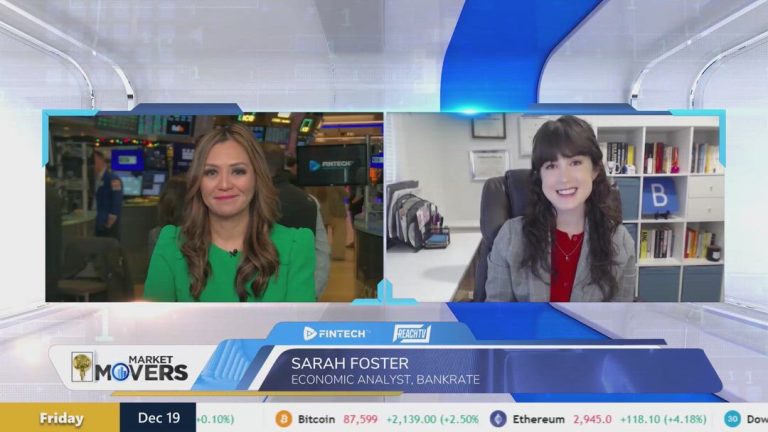
U.S. CPI inflation outlook remains at the center of economic debate as economists and markets digest the latest Consumer Price Index data, a key gauge of inflation trends. Among those weighing in is Sarah Foster, an economic analyst at Bankrate, who recently discussed what the November CPI figures may signal for households, policymakers, and financial markets.

The November CPI report showed inflation rising 2.7% year over year, a reading that came in below expectations and underscored the uneven nature of price pressures across the economy. Core CPI, which excludes food and energy, registered an even lower 2.6%. However, Foster cautioned that the underlying components reveal a more complicated story, with shelter and energy costs continuing to rise while categories such as lodging, recreation, and apparel posted declines, reflecting shifting consumer behavior and sentiment.

As Americans look toward 2026, questions surrounding the CPI data are becoming increasingly urgent. Will easing inflation translate into meaningful relief for households and financial markets? Foster stressed that interpreting the data requires nuance, warning that overly optimistic narratives around inflation can fuel unrealistic expectations. She reiterated a familiar principle in finance, if the numbers appear too favorable, they often warrant closer scrutiny.

Attention quickly turns to the Federal Reserve and how policymakers may respond. Foster noted that the Fed faces persistent challenges in interpreting inflation metrics due to technical distortions that have historically complicated economic reporting. With inflation patterns still unsettled, rising rents and essential living costs continue to inject uncertainty into the outlook, even as headline figures cool.

Consumer sentiment further complicates the picture. Bankrate polling shows that since 2018, roughly one-third of Americans expect their financial situations to deteriorate. That pessimism reflects the strain of elevated living costs combined with modest wage growth, suggesting that improvements in macroeconomic data may not be broadly felt. This dynamic raises a critical question for policymakers, how can the Federal Reserve support economic stabilization without worsening financial stress for everyday households.

Foster highlighted sectors likely to be especially sensitive to data distortions, including housing and retail. Labor market indicators, in particular, are flashing warning signs. Potential job losses could indicate an economy more fragile than headline data suggests, placing the Fed in a difficult position as it attempts to manage inflation while responding to softening employment conditions.

These tensions illustrate the close link between inflation trends, consumer confidence, and borrowing costs. Even as softer inflation fuels speculation around future rate cuts, consumers remain cautious, delaying major financial decisions such as home purchases amid persistent uncertainty.

As markets move forward, investors, business leaders, and policymakers will be closely watching how inflation, interest rates, and employment data evolve. In an environment defined by shifting economic signals, staying alert to both risks and opportunities will be essential as fiscal realities continue to unfold.

Solayer Targets Real-Time Financial Markets Following Mainnet Alpha Launch

0

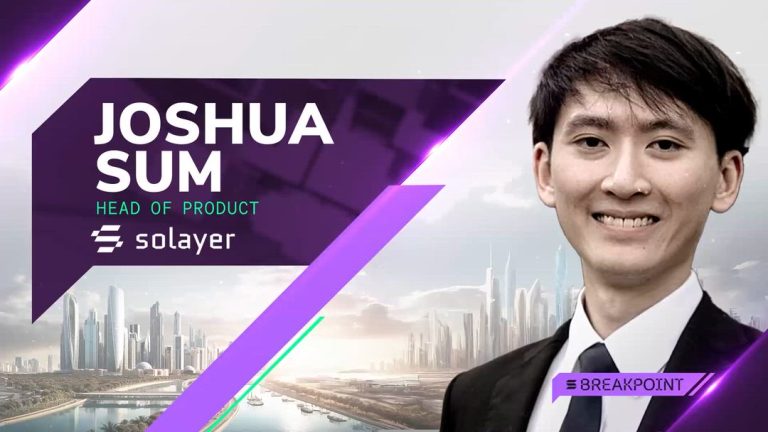
Solayer real-time financial infrastructure is emerging as a focal point in the evolution of global markets, according to Joshua Sum, head of product at Solayer, who spoke during the Solana Breakpoint conference in Abu Dhabi following the successful launch of Solayer’s Mainnet Alpha. His remarks outlined how the company is positioning its technology to transform transaction processing and infrastructure design across blockchain, cryptocurrency, and sustainable finance.

At the core of Solayer’s thesis is the need for financial infrastructure capable of supporting real-time settlement. Sum explained that legacy systems and manual workflows have historically slowed global markets, creating delays that are increasingly incompatible with modern financial demands. Moving from traditional settlement cycles such as T+2 and T+1 toward T+0, he said, is essential—but achieving that shift requires a fundamental reengineering of existing market structures.

Solayer is building a low-latency blockchain designed to process extremely high transaction volumes. The network has already demonstrated the ability to handle approximately 300,000 transactions per second, placing it among a small group of blockchains capable of supporting real-world financial activity such as swaps and lending. By incorporating expertise drawn from artificial intelligence and high-frequency trading, Solayer is positioning itself not as a niche protocol, but as a serious contender in next-generation financial market infrastructure.

User experience remains a critical focus of the platform’s development. Sum emphasized the importance of reducing the human effort often associated with transaction confirmations in crypto. By pairing backend performance with improved UI and UX design, Solayer aims to deliver transactions that feel instantaneous to users. He compared the challenge to waiting on email confirmations—technically fast, but perceptually slow—highlighting the need to align system speed with user expectations.

Following the Mainnet Alpha launch, Solayer has outlined an ambitious roadmap. The company plans to scale throughput to one million transactions per second and deploy a $35 million ecosystem fund to support startups building applications on the network. An accelerator program is also in development, designed to attract teams using Solayer’s infrastructure to introduce new financial solutions.

As blockchain and cryptocurrency markets continue to evolve, Solayer’s approach to real-time financial systems is drawing attention from sectors focused on sustainability, impact investing, and the UN Sustainable Development Goals. With significant venture backing and a commitment to ecosystem development, the company is positioning itself at the intersection of finance, technology, and long-term economic efficiency.

Ultimately, Sum’s vision extends beyond raw performance metrics. Solayer’s mission centers on modernizing financial systems to meet the demands of real-time global markets. With its Mainnet Alpha now live, the company is emerging as a foundational layer for faster, more efficient, and more transparent financial infrastructure.

Ledger Takes on Crypto’s Security Crisis as Hacks Surge

0

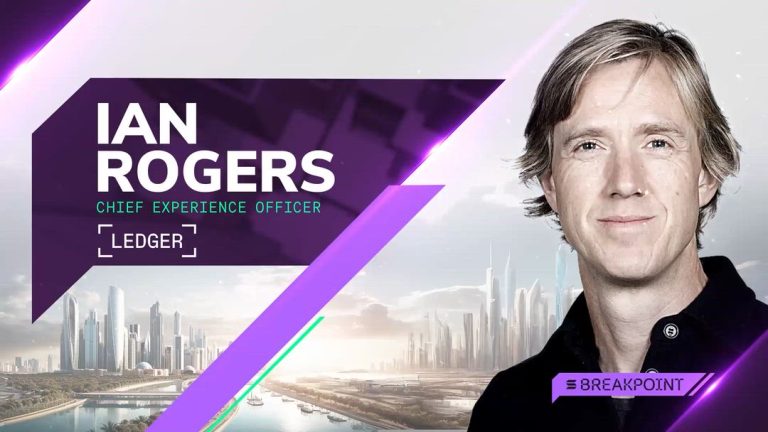
In the fast-moving world of cryptocurrency, security remains one of the industry’s most pressing challenges. As digital assets grow in value and adoption, so does the incentive for malicious actors to exploit vulnerabilities. At Solana Breakpoint in Abu Dhabi, FintechTV’s Rachel Pether spoke with Ian Rogers, chief experience officer of Ledger, to examine the evolving threat landscape, the rising risks faced by institutions, and how Ledger is adapting its security solutions to meet these demands.

Founded more than a decade ago, Ledger was built with a singular mission: protecting private keys, the foundation of secure cryptocurrency ownership. Rogers noted that 2023 has been one of the most damaging years on record for crypto security, with hacks and breaches resulting in unprecedented losses. As asset prices climb, attackers become more sophisticated, reinforcing the importance of self-custody, a core principle that underpins Ledger’s products.

Institutional scrutiny around digital security has intensified. Rogers highlighted a concerning trend in which smaller institutions and organizations rely on free or consumer-grade software to secure billions of dollars in digital assets. This approach, he warned, exposes firms to significant financial and operational risk. In response, Ledger has expanded its enterprise-grade solutions tailored for banks, governments, and exchanges, combining high-level security with usability designed for large-scale operations.

Ledger’s product evolution has played a central role in its growth. Rogers described how the company moved beyond its original USB-style hardware wallet to more advanced devices with improved interfaces and functionality. Through collaboration with renowned designer Tony Fadell, the inventor of the iPod, Ledger has focused on enhancing user experience without compromising security. These efforts culminated in products such as Ledger Stax and Ledger Flex, which offer intuitive interaction alongside robust protection.

The company’s scope has also broadened beyond secure storage. Today, Ledger users can manage multiple global currencies, swap assets, and spend crypto directly using a Ledger-issued credit card. This expansion allows users to earn yield on stablecoins while retaining the ability to transact seamlessly, mirroring traditional financial behavior within a secure self-custody framework. Ledger’s strategy positions it as a secure alternative to conventional banking rather than just a storage solution.

The conversation between Rogers and Pether underscored the delicate balance between innovation and security as the cryptocurrency industry matures. With threats continuing to evolve, the establishment of strong security standards and collaboration with experienced providers has become essential. Ledger’s focus on user-centric, enterprise-ready security solutions reflects its role as a leader in shaping best practices across the digital asset ecosystem.

As cryptocurrency adoption accelerates, the importance of security and effective self-custody will only increase. Ledger’s ongoing product development and proactive approach aim not only to protect assets but also to redefine how individuals and institutions interact with wealth in a blockchain-based economy. In a rapidly changing fintech landscape, solutions that combine security, usability, and innovation will be critical to building trust and enabling long-term adoption.

Freedom Capital Markets’ Strategist on Stocks to Watch Heading Into 2026

0

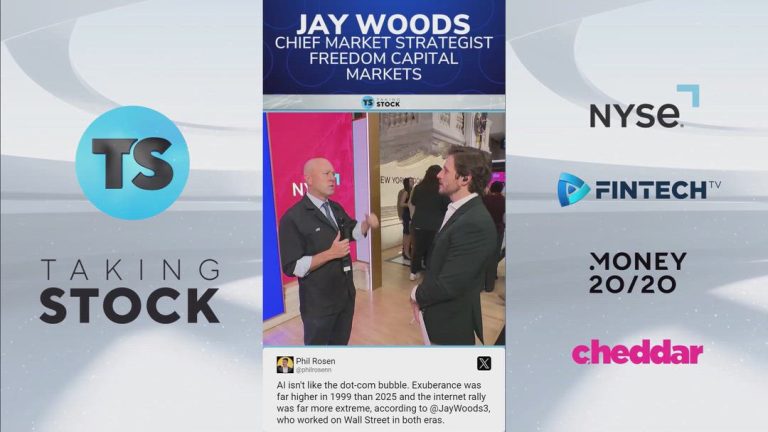
Jay Woods, chief market strategist at Freedom Capital Markets, recently shared his outlook on the economy and equity markets as investors prepare for 2026. Against a backdrop of shifting inflation data, Federal Reserve uncertainty, and evolving sector leadership, Woods outlined where market participants may find both opportunity and risk in the year ahead.

Woods began by addressing the latest consumer price index data, which surprised markets by falling to 2.7%, below expectations of 3.0%. While the decline fueled optimism around potential Federal Reserve action, Woods cautioned against drawing firm conclusions from a single data point. He stressed that inflation trends require confirmation over multiple readings before policymakers are likely to pivot.

Federal Reserve independence remains a central theme as Jerome Powell approaches the final phase of his tenure. According to Woods, Powell is likely focused on preserving the Fed’s credibility and securing a legacy defined by a successful soft landing. With lingering disruptions from a recent government shutdown complicating economic data, Woods noted that determining a clear path toward a January rate cut remains difficult.

Turning to equities, Woods highlighted several stocks attracting investor attention as the calendar turns. Micron Technology posted a strong quarterly performance, yet its stock has struggled to reclaim prior highs. Woods said this disconnect raises broader questions about the semiconductor sector, particularly as stocks like Broadcom and Nvidia consolidate after substantial gains. These patterns suggest a market digesting outsized performance rather than signaling a fundamental breakdown.

Woods also pointed to strength in transportation stocks, singling out FedEx, which has risen roughly 33% over the past six months. He suggested the stock is worth close monitoring as transportation averages begin to show renewed momentum. In parallel, Woods noted improving technical signals in defensive names such as General Mills, which recently broke a prolonged downtrend. These moves reflect investor efforts to balance growth exposure with stability amid macro uncertainty.

Tesla emerged as a standout name heading into 2026. Woods expects meaningful volatility and potential upside, particularly as Elon Musk returns to a more active leadership role. He also cited the possibility of a SpaceX IPO as a catalyst that could reshape investor sentiment around Tesla. Woods framed the stock as one that could regain leadership status if execution aligns with renewed strategic focus.

Overall, Woods emphasized the importance of discipline as markets transition into the new year. Economic signals remain mixed, sector leadership is rotating, and investor sentiment continues to adjust to a world shaped by policy uncertainty and technological disruption.

As blockchain, AI, and impact investing gain prominence alongside traditional financial metrics, Woods’ analysis underscores the need for diversified portfolios. Stability, selectivity, and openness to innovation will be essential as investors navigate the evolving market landscape of 2026.

Algorand Targets Financial Inclusion With Fast, Low-Cost Blockchain

0

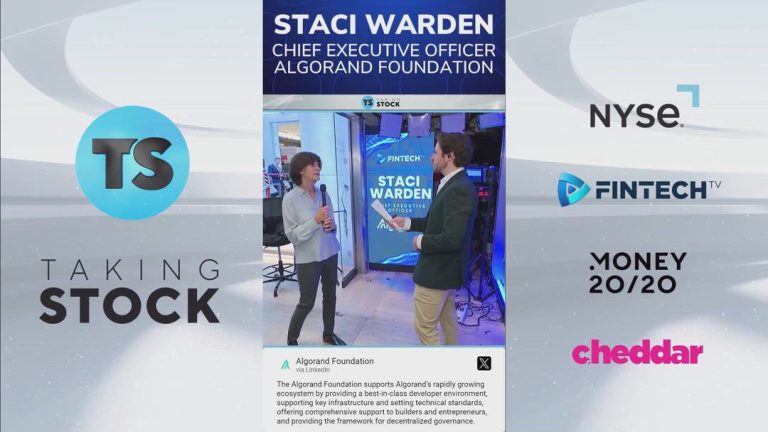
Staci Warden, CEO of the Algorand Foundation, recently joined FintechTV to discuss the growing role of blockchain technology in financial empowerment and global payments. As one of the earliest blockchain networks, Algorand continues to focus on reducing barriers to financial access while enabling fast, low-cost transactions that operate without reliance on traditional banking systems. Warden outlined how Algorand is positioning itself to meet real-world financial needs while addressing emerging challenges in the cryptocurrency landscape.

Algorand is often described as an original blockchain, having been built with financial inclusion as a core design principle rather than an afterthought. Warden emphasized that the network’s speed and efficiency are already delivering tangible results. She pointed to humanitarian payment platforms such as HesabPay, which uses Algorand infrastructure to distribute roughly 50,000 aid payments into Afghanistan. These use cases highlight Algorand’s ability to support large-scale, real-world financial activity while maintaining accessibility for everyday users.

Beyond payments, Algorand is increasingly enabling access to complex financial instruments for retail participants. Warden highlighted Lofty AI, a platform that allows users to invest in tokenized real estate and earn rental income with minimum investments as low as $50. This model of fractional ownership illustrates how blockchain can expand participation in wealth-building opportunities that were historically limited to institutional or high-net-worth investors. Such innovations align closely with Sustainable Development Goals (SDGs) centered on financial inclusion and economic opportunity.

Warden also addressed ongoing volatility in the cryptocurrency market, comparing price fluctuations to Adam Smith’s concept of the invisible hand. She noted that recent downturns driven by macroeconomic developments, including tariff concerns raised by the former President of the United States, demonstrate how external policy shifts continue to influence crypto markets. Warden observed that technology-focused investors often overlap across sectors, stating that AI-focused investors and crypto-focused investors tend to be closely aligned in their risk appetite and capital allocation decisions.

A significant portion of the conversation focused on the long-term security of blockchain networks, particularly in light of advancements in quantum computing. Warden acknowledged that practical quantum capabilities could emerge within the next 5 to 10 years, posing potential risks to cryptographic systems. She emphasized that Algorand was designed by a leading cryptographer with quantum resistance in mind, giving the network an advantage in preparing for future threats. Ensuring that wallets and surrounding infrastructure remain quantum secure, she noted, will be a critical priority across the industry.

Warden’s perspective reflects confidence in blockchain’s durability and adaptability. Algorand’s emphasis on speed, security, and inclusivity positions the network to serve as foundational infrastructure for next-generation financial systems. As interest in sustainable investing grows, blockchain platforms that deliver measurable social impact while maintaining technical resilience are likely to gain increased attention from both institutions and entrepreneurs.

Overall, Staci Warden’s insights underscore Algorand’s commitment to building financial systems that are efficient, inclusive, and future-proof. By expanding access to payments, investment opportunities, and secure digital infrastructure, Algorand continues to align technological innovation with global economic needs.

As financial markets evolve alongside advances in AI, blockchain, and digital assets, leadership focused on long-term stability and inclusion will remain essential. Algorand’s trajectory under Warden reflects a broader shift toward responsible innovation, positioning the network as a key participant in the future of global finance.

Inside Xen’s Rise as a Global Marketing Platform for Gaming

0

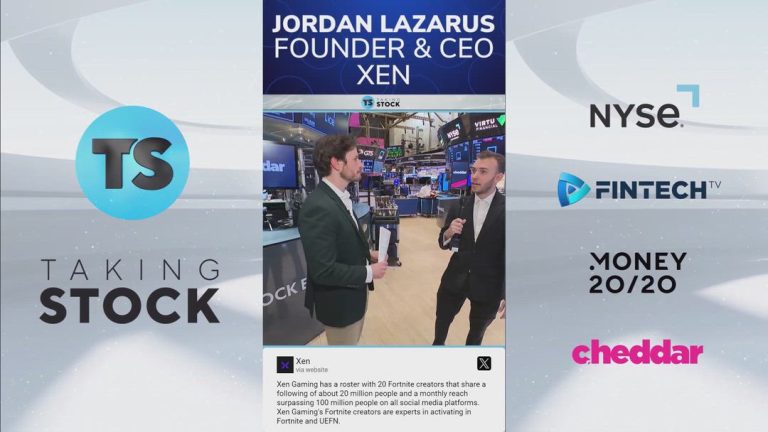
Jordan Lazarus, founder and CEO of Xen, recently shared his journey from launching a company in a basement to building a global gaming brand that now reaches more than 45 million followers. In an interview on the trading floor, Lazarus explained how Xen has reshaped the way gaming creators connect with major brands, closing long standing gaps and providing operational support that allows talent to scale sustainably.

Lazarus began Xen while studying finance and investments in Manhattan, initially planning for a career on Wall Street. After graduating, he chose instead to commit fully to his growing business. What started with roughly 3 million followers has since expanded dramatically, generating millions of monthly views and establishing Xen as a major force in gaming and entertainment marketing. The company’s growth, Lazarus noted, is driven not only by audience size but by meaningful influence and measurable impact.

Xen’s partnerships with global brands including Disney, Amazon, and Walmart underscore its effectiveness in the marketplace. Lazarus detailed how Xen supports brand marketing within gaming ecosystems by managing top creators across titles such as Fortnite and Call of Duty. The firm ensures campaigns reach highly targeted audiences, a precision approach that differentiates Xen from traditional influencer agencies. Understanding the priorities of both creators and corporate partners has become a central pillar of the company’s strategy.

Relationship building remains core to Xen’s business model. The firm acts as infrastructure for creators, providing access to brand opportunities that many would struggle to secure independently. By handling legal negotiations, communications, and deal execution, Xen allows creators to focus on content while unlocking scalable revenue opportunities. This full service structure positions Xen as a centralized partner for creators navigating an increasingly complex digital economy.

The challenges facing creators today continue to shape Xen’s mission. Lazarus emphasized that many gamers possess significant reach but lack the tools to monetize it effectively. Xen aims to address that imbalance by connecting creators with brands that recognize the value of gaming audiences. This approach reflects broader shifts toward entrepreneurship, financial literacy, and creator led business models in the digital age.

A recent milestone highlighted Xen’s momentum. Lazarus pointed to the company’s performance at the FNTS Fortnite Championship in Lyon, France, where the Xen team placed fifth against top competitors without any external funding. The result underscored both operational discipline and the viability of creator driven organizations competing on a global stage.

Looking ahead to 2026, Lazarus outlined a clear objective: enabling creators to pursue gaming as a sustainable full time career. As the gaming industry continues its rapid expansion, Xen is positioning itself to support long term growth through structured partnerships, financial access, and brand alignment.

Jordan Lazarus’s trajectory reflects the evolving intersection of technology, finance, and entertainment. As digital platforms, crypto, and blockchain technologies continue to reshape monetization and ownership models, companies like Xen are helping define the future of work in gaming. By combining scale, strategy, and creator empowerment, Xen is shaping how success is built in the modern digital economy.

Solana Startup Decal Simplifies Stablecoin Payments for Real World Commerce

0

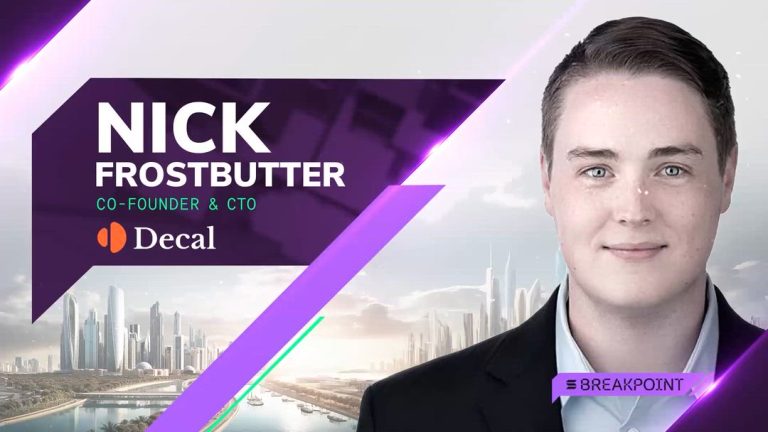
At Solana Breakpoint in Abu Dhabi, a conversation with Nick Frostbutter, co-founder and CTO of Decal, offered insight into how the company is positioning itself at the intersection of blockchain technology and everyday commerce. Emerging from the Solana ecosystem, Decal is focused on simplifying payment experiences and making decentralized finance practical for real world use.

Frostbutter and his co founder began their collaboration while working at the Solana Foundation, where they were involved in several initiatives, including the launch of the Blinks protocol. During that time, they repeatedly encountered a common issue. Companies building on Solana often ignored guidance on how to properly use the blockchain’s capabilities. That frustration became the catalyst for founding Decal, with the goal of addressing inefficiencies in how crypto payments are implemented.

A central theme of the discussion was the need to move beyond the crypto native audience. Frostbutter emphasized that Decal is designed to reach users outside the traditional crypto bubble, targeting people engaged in everyday transactions. The company’s vision centers on making stablecoins usable in routine commerce, rather than limiting them to niche financial applications.

Decal’s smart payment solution was highlighted as a core innovation. Paying with stablecoins typically requires users to manage token swaps, gas fees, and compatibility issues. Decal removes these obstacles by abstracting the complexity from the user. With its smart payment system, users can tap and pay without needing to know which stablecoin is being used or how fees are handled behind the scenes. The result is a smoother, more familiar payment experience.

Currently, Decal supports the top five USD backed stablecoins on the Solana blockchain. Its routing engine is built to accommodate additional stablecoins as they emerge, allowing for seamless expansion. Frostbutter also outlined the company’s near term roadmap, which includes expanding the Decal mobile app to both Google and Apple app stores.

Beyond mobile payments, Decal is working toward deeper merchant integration. The team is developing point of sale compatibility with established systems such as Square and Clover. This would allow merchants like coffee shops and bookstores to accept stablecoin payments directly, without changing their existing infrastructure.

Decal’s approach reflects a broader push to demonstrate how blockchain technology can function alongside traditional financial systems. By prioritizing user experience and simplicity, the company is positioning stablecoins as a practical payment option rather than a speculative asset.

Frostbutter’s journey from protocol development to product execution underscores how industry experience can translate into meaningful innovation. Decal’s focus on everyday usability highlights the growing demand for crypto solutions that solve real problems.

As finance continues to evolve, efforts like Decal’s align with broader goals around financial inclusion and accessibility. By lowering barriers to digital payments, the company contributes to a more connected global economy and supports the long term adoption of blockchain based financial tools.