[stock-market-ticker symbols=" ^NYA;CRYPTO:BTC;CRYPTO:ETH;CRYPTO:USDT;CRYPTO:USDC;CRYPTO:BNB;CRYPTO:ADA;CRYPTO:XRP;CRYPTO:SOL;CRYPTO:DOGE " stockExchange="NYSENASDAQ" width="100%" transparentbackground=1 palette="financial-light"]

Home Blog Page 25

Market Momentum: Big Tech and Crypto Insights from Money20/20

“I think we all know we’re already tired of the uncertainty, right, and the terror of the trade war that’s overhanging us for the better half of this year.” – 01:57

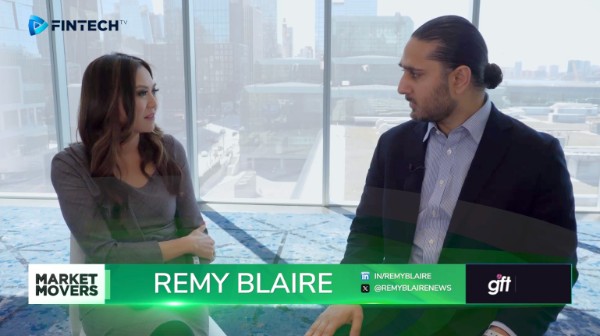
Remy Blaire welcomes Tongtong Gong, the Chief Operating Officer at Amberdata, for a live discussion from the Money20/20 conference in Las Vegas. The conversation begins with an overview of the current financial markets, highlighting the recent record highs in U.S. equities, particularly in big tech, while noting the sluggish performance of major cryptocurrencies like Bitcoin and Ethereum, as well as precious metals such as gold and silver.

Remy and Tongtong discuss the factors contributing to the market’s upward momentum, including the anticipation of a 25 basis point interest rate cut from the Federal Reserve. They explore the implications of this potential decision and how it aligns with the expected earnings reports from major companies like Apple, Alphabet, and Meta. Tongtong emphasizes the importance of these developments in shaping investor sentiment.

The discussion then shifts to the geopolitical landscape, focusing on President Trump’s recent trip to Asia and the anticipated meeting with China’s leader, Xi Jinping. Tongtong expresses optimism about the potential for productive dialogue, particularly in light of ongoing trade tensions and issues such as fentanyl and agricultural trade. She highlights the significance of face-to-face meetings in resolving uncertainties that have affected the global economy.

As the conversation progresses, Remy and Tongtong examine the performance of various asset classes as they approach year-end. Tongtong shares her bullish outlook on Bitcoin, predicting it could surge past $120, with hopes for it to reach $140 by the end of the year. This leads to a broader discussion on the implications of fintech and digital assets, especially in the context of the innovations showcased at Money20/20.

Tongtong highlights the growing adoption of cryptocurrencies by major financial institutions and the increasing interest in ETFs and asset tokenization. She notes that regulatory developments, such as the Genius Act and Clarity Act, are helping to reduce uncertainty and foster innovation in the industry.

The Future of Payments: Exploring Stablecoins and Global Adoption

“Stablecoins are the best way that we have to export the U.S. dollar.” – 02:37

Remy Blaire engages in a compelling discussion with Kevin Lehtiniitty, the CEO of Borderless.xyz, as they explore the evolving landscape of stablecoins during the Money20/20 conference in Las Vegas. As the conference comes to a close, Remy and Kevin delve into the significant developments surrounding stablecoins and their implications for the global payments market.

Remy begins by asking Kevin to define what a stablecoin is. Kevin explains that a stablecoin is a blockchain-based asset that is fully backed one-to-one by a fiat currency, such as the US dollar. He uses USDC, Circle’s stablecoin, as an example, illustrating how it maintains its intrinsic value despite market volatility. This foundational understanding sets the stage for a deeper exploration of stablecoins’ role in the financial ecosystem.

As they reflect on the conference, Kevin highlights the increasing interest from institutional and enterprise players in stablecoins, marking a shift from niche discussions among blockchain enthusiasts to mainstream conversations involving well-known brands like FIS, WorldPay, and Wise. He emphasizes that this year’s conference feels like a turning point for stablecoins, as they finally gain the attention they deserve.

The conversation then shifts to the concept of “borderless” finance. Kevin discusses how stablecoins serve as a means to export the US dollar to emerging markets that experience currency instability and high inflation. He points out that in countries like Brazil, Argentina, and Nigeria, consumers are increasingly adopting stablecoins to preserve their purchasing power, showcasing the real-world utility of these digital assets.

Remy and Kevin also address the challenges posed by fragmentation in the stablecoin market. Kevin explains that, unlike traditional payment networks, which have established systems for interoperability, the stablecoin landscape lacks a universal exchange or index. This fragmentation leads to significant discrepancies in liquidity and pricing across different venues, complicating the global payments ecosystem.

Tech Layoffs and Earnings: What’s Next for Amazon and the Major Players?

“There’s a lot of shorts on the market, but the volume is not there. There is not enough metals to go around for the actual appetite of the people buying it.” – 04:04

Remy Blaire welcomes David Stryzewski, CEO of Sound Planning Group, to discuss the current state of the financial markets live from Money20/20 U.S. in Las Vegas. The segment opens with a focus on Wall Street, which has recently hit record highs, buoyed by positive earnings figures and optimism surrounding potential rate cuts from the Federal Reserve. Despite some recent volatility, the bulls appear to have regained control, prompting a discussion about the implications for various asset classes, including precious metals and cryptocurrencies.

David provides insights into the stability of the equity markets, noting that major companies have reported decent earnings and that the U.S. dollar remains relatively stable. He mentions President Trump’s upcoming visit to China and the recent peace developments in the Middle East as contributing factors to the positive market sentiment. However, he also highlights the uncertainty created by the government shutdown, which has resulted in a lack of updated economic data, including crucial metrics like CPI, GDP, and job numbers. David points out that Amazon is undergoing significant job cuts, which he believes reflects broader trends in the tech industry where companies are reassessing their workforce in light of changing market conditions.

The conversation then shifts to precious metals, particularly gold, which recently soared to record highs before pulling back. David describes this pullback as an opportunity, emphasizing that global demand for precious metals remains strong. He explains that while gold and silver prices may fluctuate, the underlying demand continues to grow, especially as the world moves toward a potential gold-backed standard. He also discusses the critical role of silver in the semiconductor industry, linking it to the performance of tech companies like Nvidia.

As the discussion progresses, Remy and David delve into the cryptocurrency market, analyzing the recent price action of Bitcoin and Ethereum following a liquidation event earlier in the month. David describes the volatility in the crypto market, attributing it to institutional interest and the use of leverage by investors. He encourages listeners to remain optimistic about the future of blockchain technology, likening the current moment to a revolutionary shift akin to the rise of ChatGPT.

The Crypto Comeback: JPMorgan and Citi’s Bold Moves in Digital Assets

“You’re seeing a lot around AI, not only empowering these businesses, but VCs investing at that intersection because the incentives make sense together.” – 02:26

Remy Blaire engages in a compelling discussion with Anthony Vassallo, the Senior VP of Crypto at Silicon Valley Bank, live from the Money20/20 U.S. in Las Vegas. The segment opens with significant news in the financial sector, highlighting JPMorgan Chase’s decision to accept Bitcoin and Ethereum as collateral for loans by the end of the following year. This announcement marks a notable shift from CEO Jamie Dimon’s previous critical stance on cryptocurrencies, indicating a broader acceptance of digital assets among major banks.

Remy and Anthony delve into the factors driving the growth of crypto, noting that clients are increasingly confident in raising capital and making announcements due to improved regulatory clarity. Anthony emphasizes that venture capitalists are not merely speculating but are actively investing in projects that demonstrate real utility, particularly at the intersection of blockchain and fintech. He points out that despite general headwinds in venture capital, there are significant tailwinds in this sector.

The conversation shifts to the evolving categories within the crypto space, with Anthony humorously suggesting that PitchBook may need to recategorize investments as the lines between blockchain and fintech continue to blur. He discusses the growing interest in artificial intelligence (AI) and how it intersects with blockchain technology, providing infrastructure and trust that can enhance AI’s capabilities while addressing concerns about data privacy and censorship.

Stablecoins Explained: Lessons from Casino Chips and Regulatory Challenges

“This town has a decades long settlement token they have used. This whole beautiful convention center… exists because the widespread use of this settlement token.” – 00:02:48

Remy Blaire engages in a compelling discussion with Kyle Hauptman, the Chairman of the National Credit Union Administration (NCUA), live from Money20/20 USA in Las Vegas. The conversation centers around the recently passed Genius Act, which has received bipartisan support and aims to define stablecoin payments, establish standards for issuers, and enforce strong reserve backing to protect consumers while enhancing the U.S. currency’s role in global finance.

Remy and Kyle delve into the implications of the Genius Act as regulators begin to implement the law. They discuss the various tasks that lie ahead, including drafting capital and risk rules for issuers, setting conditions for non-financial firms that issue stablecoins, and updating anti-money laundering (AML) regulations. Kyle emphasizes the importance of these regulations in ensuring the stability and reliability of stablecoins in the financial ecosystem.

The conversation shifts to the concept of the “great wealth transfer,” where Kyle highlights how credit unions can engage with the younger generation. He notes that many view credit unions as traditional institutions, often associated with older generations. Kyle shares his personal experience of inheriting money through a credit union and stresses the need for these institutions to adapt their services to attract younger customers who may inherit wealth from their parents. He points out that credit unions must work to convince these young individuals to keep their money within their institutions by offering the services they need.

As the discussion progresses, Kyle addresses the regulatory landscape surrounding digital assets and the future of stablecoins. He explains that Congress has tasked him and four other agencies with the rulemaking for the Genius Act, with a deadline of 262 days. Kyle draws an analogy between stablecoins and casino chips, explaining that just as casino chips serve as a reliable form of settlement in Las Vegas, stablecoins must maintain a consistent value equivalent to fiat currency to function effectively.

Kyle also discusses the necessary guardrails for stablecoins, particularly in relation to KYC and AML regulations. He outlines the importance of issuers maintaining sufficient reserves to back their stablecoins, ensuring that for every dollar issued, there are adequate assets in place. Additionally, he raises concerns about liquidity, especially regarding the timing of cash withdrawals and the need for immediate settlement.

DeFi Evolution: Insights from Money20/20 with OKX’s Roshan Robert

“The Genius Act has really opened the doors to the evolution of stablecoins as an ecosystem.” – 03:13

Remy Blaire engages in a compelling discussion with Roshan Robert, the CEO of OKX U.S., live from Money20/20 USA in Las Vegas. The conversation centers around the transformative changes occurring in decentralized finance (DeFi) and its growing relationship with traditional finance (TradFi) in 2025.

Remy opens the segment by highlighting the significant developments in the financial landscape, noting that banks are increasingly offering crypto products and services to their clients. He mentions the remarkable growth of tokenized real-world assets, which have reached a value of $20 billion this year. Roshan responds by emphasizing the ongoing conversations among traditional financial institutions regarding DeFi, driven by the impressive growth of the DeFi ecosystem, which has seen the total value locked rise to approximately $230 billion.

The discussion shifts to the concept of “institutional DeFi,” as Roshan explains how traditional institutions are looking to harness the benefits of DeFi while maintaining the regulatory controls established over the years. Remy prompts Roshan to share insights on the most promising areas of digital asset innovation, to which Roshan identifies four key opportunity sets: the expanding spot market, derivatives, real-world assets (RWAs), and the intersection of stablecoins and payments. He notes that OKX U.S. is at various stages of development in these areas and anticipates increased partnerships between traditional institutions and the crypto space.

As the conversation progresses, Remy and Roshan delve into the regulatory landscape, particularly the impact of the Genius Act on the evolution of stablecoins. Roshan expresses optimism about the future of the stablecoin ecosystem, predicting significant growth that will influence both payments and capital markets. He clarifies that OKX U.S. remains agnostic regarding stablecoin issuers, believing there is sufficient room for multiple players in the market.

The Future of Investment: Voice-Powered AI and Its Impact on Financial Services

“The machine is listening and proactively offering ideas, thoughts, or even reports that I may find interesting.” – 01:34

Remy Blaire engages in a thought-provoking discussion with Geoffrey Clauss, the Chief Revenue Officer at Boosted.AI. The conversation begins with Remy highlighting a significant statistic from MIT research, which indicates that approximately 95% of internal AI buildouts fail. This sets the tone for an exploration of the challenges companies face, including issues related to poor quality, biased, or fragmented data, often compounded by legacy systems.

Geoffrey shares insights into Boosted.AI’s innovative partnership with ElevenLabs, which has resulted in the launch of the first voice-powered AI tailored for investment professionals. He explains how this technology allows users to communicate verbally with AI, enhancing the way teams interact and collaborate. Geoffrey emphasizes the potential of this voice-powered AI to listen during meetings and provide real-time insights, thereby enriching investment strategies and decision-making processes.

As the discussion progresses, Remy and Geoffrey delve into the critical importance of regulatory guardrails in the financial services industry. Geoffrey expresses his belief that firms must establish guidelines and controls to ensure the safe operation of AI technologies. He discusses how Boosted.AI prioritizes compliance with regulations such as GDPR and SOC 2, while also considering the future implications of AI behavior and the necessary boundaries to maintain safety and integrity.

The conversation also touches on the significance of robust infrastructure in supporting agentic AI. Geoffrey reflects on the rapid evolution of the industry, noting the advancements in infrastructure since the rise of chat technologies in 2022. He asserts that continued investment in infrastructure will lead to substantial improvements in AI production and application.

Michael Saylor on Bitcoin’s Ultimate Utility & Strategy’s Standing As The World’s Largest BTC Treasury

“Our long-term plan is to sell billions, tens of billions, and then hundreds of billions of dollars of digital credit that’s backed by Bitcoin to buy the Bitcoin.” – 02:31

Remy Blaire interviews Michael Saylor, the Executive Chairman of Strategy, during the Money20/20 USA in Las Vegas. The conversation begins with the announcement of Strategy receiving a ‘B-‘ credit rating from S&P Global Ratings, marking a historic moment as the first Bitcoin treasury company to achieve such a rating from a major credit agency. Michael expresses his excitement about this milestone, emphasizing its significance for the entire industry and how it will unlock access to hundreds of billions of dollars in capital for their digital credit instruments.

Remy and Michael then shift their focus to the current state of the cryptocurrency market, particularly the price of Bitcoin. Michael shares insights from equity analysts, indicating a consensus price target of approximately $160,000 by the end of the year, while Strategy’s own guidance is set at $150,000. This optimistic outlook reflects the growing confidence in Bitcoin’s future value.

The discussion takes a turn as they delve into a recent acquisition by Strategy, where they purchased 390 Bitcoin totaling $43 million, bringing their total Bitcoin holdings to over 640,000. Michael highlights the uniqueness of this purchase, noting that it was entirely funded through credit instruments without selling any equity. He elaborates on their long-term strategy to leverage Bitcoin-backed digital credit to continue accumulating Bitcoin.

As the conversation progresses, Remy and Michael discuss the evolving regulatory landscape for digital assets, particularly the anticipated Clarity Act, which aims to provide clearer regulations for the industry. Michael points out the increasing acceptance of Bitcoin by major banks, suggesting that this trend will be a key driver for the industry, potentially leading to new all-time highs.

Remy also asks Michael to reflect on the recent liquidation event in early October. Michael describes Bitcoin as a highly volatile asset, attributing its fluctuations to its utility and the significant leverage available in the market. Despite this volatility, he remains optimistic about Bitcoin’s performance, predicting it will continue to outperform traditional markets.

Unlocking Private Credit: Peggy Choi on Craftt’s Mission for Transparency and Efficiency

0

Fintech TV’s founder and CEO Vince Molinari is joined Peggy Choi, the founder of Craftt, a tokenized credit platform aimed at enhancing transparency, efficiency, and liquidity in the private credit market. Peggy explains how Craftt is addressing the challenges within this space, particularly the need for greater transparency and accessibility for retail investors who are often excluded from private credit opportunities.

They discuss the potential of blockchain technology to revolutionize the credit market by providing solutions that reduce friction for borrowers and streamline the investment process. Peggy envisions a future where digital wallets and banking apps will offer users easy access to various asset classes, including private credit options, thereby making capital markets more efficient and direct.

Peggy highlights her experience at Hub71 in Abu Dhabi, a rapidly growing center for innovation in finance, and how it has facilitated valuable connections for Craftt. Finally, Peggy shares her insights on the future of blockchain in capital markets, predicting that in the next three to five years, blockchain will become an embedded infrastructure that users interact with seamlessly.

BTC Valuation, Bitcoin Treasuries, Startups on Blockchain, Bitcoin manufacturing

0

In this episode of the Coin Street headlines, we dive into the latest headlines impacting the world of cryptocurrency. We explore the forecasted peak price of $222,000 and the caution advised by André Dragosch, the European head of research at Bitwise, regarding the valuation framework. Discover how companies are rebranding as Bitcoin treasuries, with holdings nearing 1.05 million BTC, and learn about Willem Schroé’s vision for turning dormant assets into yield-generating opportunities. Hear from Coinbase CEO Brian Armstrong about his plans to transition every stage of a startup’s journey onto the blockchain, from incorporation to public trading. And finally, we analyze the correlation between the Institute for Supply Management’s Manufacturing Purchasing Managers Index and Bitcoin’s market cycles, a pattern highlighted by Real Vision’s Raoul Pal. Jane King with the latest from the NYSE.