
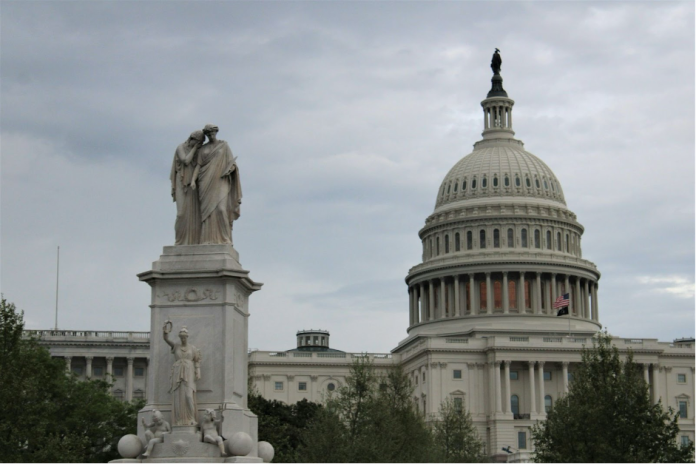

The U.S. Senate passed an 89-10 vote to block the Fed from issuing a digital dollar, but the provision’s survival depends on a House chamber with different priorities
The U.S. Senate has voted to ban the Federal Reserve from issuing a central bank digital currency (CBDC), but the measure arrived in an unusual vehicle: a sweeping bipartisan housing bill that has little else to do with digital finance, and that now faces significant headwinds in the House of Representatives.
The 21st Century ROAD to Housing Act passed the Senate by an overwhelming 89-10 margin, with the CBDC prohibition tucked into a standalone section near the end of the 303-page bill. The provision, which occupies just two pages of legislation, bars the Fed from issuing or creating a central bank digital currency, or any digital asset substantially similar to one, directly or indirectly through a financial institution or other intermediary, with a sunset clause running through December 31, 2030. A carve-out preserves permissionless, private dollar-denominated currencies that fully protect the privacy of users.
The housing bill’s primary focus is entirely separate. The legislation aims to lessen government regulations on housing and provide incentives for state and local governments to ease land-use regulations, while also controversially banning large investors from purchasing single-family homes, a provision demanded by President Trump but opposed by many free-market conservatives.
The CBDC language was reportedly added at the urging of House conservatives, who had pressed leadership to secure a ban as part of earlier compromises on crypto-related measures. The White House issued a statement supporting the bill and explicitly backing the CBDC restriction, an unusual alignment given that Democrats, who helped carry the Senate vote, have generally resisted efforts to pre-emptively limit the Fed’s ability to study or develop a digital dollar.
Industry groups based in the U.S. praised the vote. Cody Carbone, CEO of the Digital Chamber, said financial privacy is a cornerstone of American freedom and that any decision to authorize a CBDC must remain with Congress and the American people. Blockchain Association CEO Summer Mersinger argued that a government-issued CBDC would threaten core American values including financial privacy, civil liberties, and limits on state power.
The path forward is far from clear. House Republicans have skirmished with their Senate counterparts for weeks over key provisions, including the ban on large institutional investors in single-family homes. Rep. French Hill, chair of the House Financial Services Committee, said it is critical to get the details right and address concerns raised by House members with the Senate bill. Some conservative Republicans in the House are also unhappy that the CBDC provision is temporary rather than permanent. President Trump, meanwhile, has threatened to veto all legislation until Congress passes the SAVE Act, a voter-ID reform bill, adding another layer of uncertainty to the timeline.
The Senate vote places the U.S. sharply at odds with the directions taken in the European Union and UK, where authorities are actively developing, rather than restricting, CBDCs. The European Central Bank is pressing ahead on both retail and wholesale fronts. Assuming EU co-legislators adopt the enabling regulation during 2026, a pilot exercise and initial transactions could begin as early as mid-2027, with a potential first issuance of the digital euro targeted for 2029, according to the ECB.
In the UK, the Bank of England and HM Treasury are still working through a multi-year design phase, with a decision on whether to proceed expected later in 2026 and the earliest possible issuance of a digital pound placed in the second half of the decade. Unlike the EU, the UK has yet to lay out a specific legal framework for a digital pound, reflecting a more cautious posture, though one that stops well short of an outright ban.
The Bank for International Settlements has long positioned itself as a cautious but broadly supportive voice on CBDCs, describing them as a potential “sea change” for the monetary system. Its annual survey found that by late 2024, 43% of central banks had stepped up wholesale CBDC work in direct response to the rise of private digital currencies and stablecoins.