
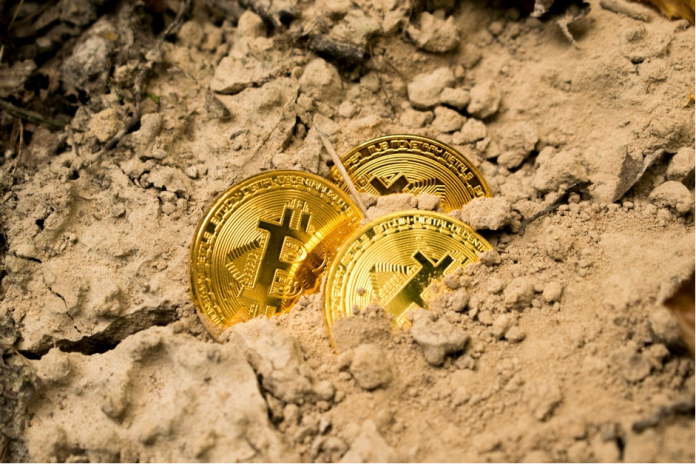

The bitcoin network crossed a historic threshold this week when the 20 millionth coin was mined, leaving just 1 million btc remaining to be issued as block rewards. The event, 16 years in the making, has prompted some assessment across the mining industry about what comes next, and for many operators, the answer increasingly has nothing to do with bitcoin.
The significance of the milestone lies in what it reveals about bitcoin’s core design. Satoshi Nakamoto, the pseudonymous creator of the network, capped total supply at 21 million coins and built in a mechanism, the halving, that cuts miner rewards in half approximately every four years.
The remaining 1 million coins, according to Wolfie Zhao, head of research at TheEnergyMag, could take roughly another 115 years to fully unlock. That timetable frames the mining industry’s dilemma in stark terms: sustaining operations for more than a century on progressively smaller rewards is not a business model many companies can support.
John Todaro, managing director and senior research analyst at Needham & Company, expects the shakeout to accelerate well before then. He told Decrypt that he anticipates a large portion of publicly traded bitcoin miners will sell down nearly all of their bitcoin holdings before year-end 2026, funding a pivot toward AI and high-performance computing workloads. By 2027 and 2028, he expects many to exit bitcoin mining altogether.
The economics are hard to argue with: “Stubbornly low hash price combined with the upcoming 2028 halving presents a concerning environment for bitcoin mining operations,” he said. “Many operators are at or near breakeven costs today, while NOI margins in HPC are north of 80%.” Every publicly traded miner his firm covers has already allocated some share of its computing capacity to AI infrastructure.
The pivot is already well underway at some of the industry’s most prominent names. Bitdeer, the Singapore-based miner led by Bitmain co-founder Jihan Wu, is converting facilities into AI data centers while simultaneously developing its own next-generation mining chips. Ross Gan, Bitdeer’s chief communications officer, framed vertical integration as the defining competitive advantage going forward. “The miners that endure will be the ones that control more of the stack themselves,” he told Decrypt. HIVE Digital Technologies, which began investing in HPC infrastructure earlier than most of its peers, echoed a similar philosophy. Executive Chairman Frank Holmes argued that the miners best positioned for the future will be those who can source low-cost, stranded energy and convert it into durable computing infrastructure, whether for bitcoin or something else entirely.
Not everyone sees the transition as a retreat. Holmes characterized the upcoming halving not as an endpoint but as a filter. “Block rewards will decrease, but that does not mean the industry will disappear. It means the bar rises,” he told Decrypt.
For bitcoin’s price, the implications of a shrinking miner cohort may be more limited than they appear. Todaro pointed out that miners have already lost much of their historical influence over the market. They currently hold roughly 0.5% of circulating supply, while Strategy, the world’s largest corporate holder of bitcoin, holds seven times more bitcoin than all miners combined. Selling pressure from miners liquidating holdings, while real, is likely to be modest relative to the broader holder base.
The 20 million-milestone is a reminder that bitcoin’s supply mechanics have always been the headline. The harder question, one the mining industry is now being forced to answer, is whether the businesses built around those mechanics can survive long enough to see the final coin issued.